A bandana looks like the simplest thing you can wear: a printed square of cotton. Yet buyers who want their own soon find a long list of choices. Which size? Cotton or polyester? Screen print or sublimation? Square, triangle or tube? Hemmed or overlocked? Kids’ size, pet size or oversized? Our custom bandanas page shows what we make; this guide explains the whole product so you can make those choices with confidence.
It is the starting point of our bandana guides. Each section below gives the short answer and links to a detailed guide where there is more to say, from sizes and fabrics to printing, artwork, cost, pet bandanas and the paisley pattern. Bandanas are one of several square scarves, and our overview of the different types of scarves shows where they sit next to neckerchiefs, silk squares and long scarves.
What is a bandana?
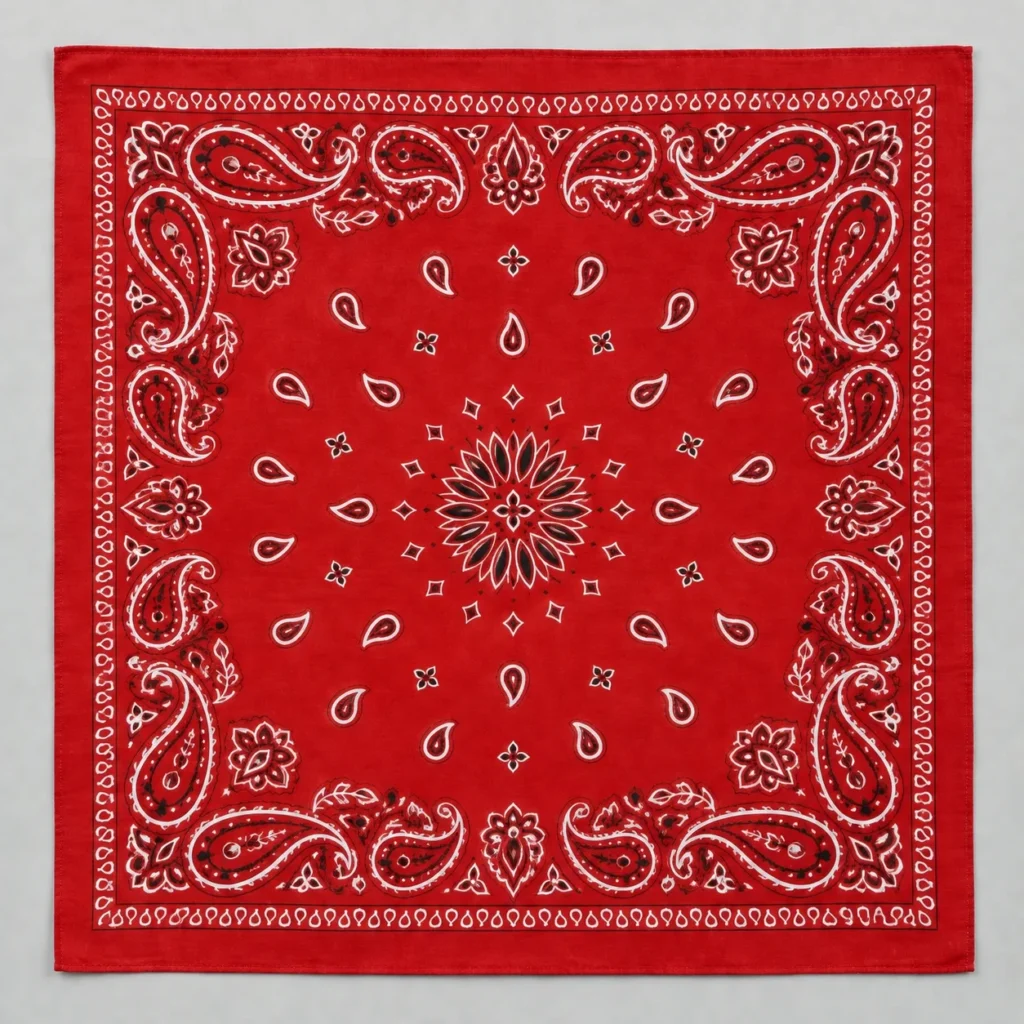
A bandana is a square of light, usually printed fabric, typically 56 × 56 cm (22 × 22 in), that is folded into a triangle or a band and tied around the neck, the head or the wrist. Most bandanas are cotton with a hemmed edge on all four sides, and the classic design is a paisley pattern inside a printed border.
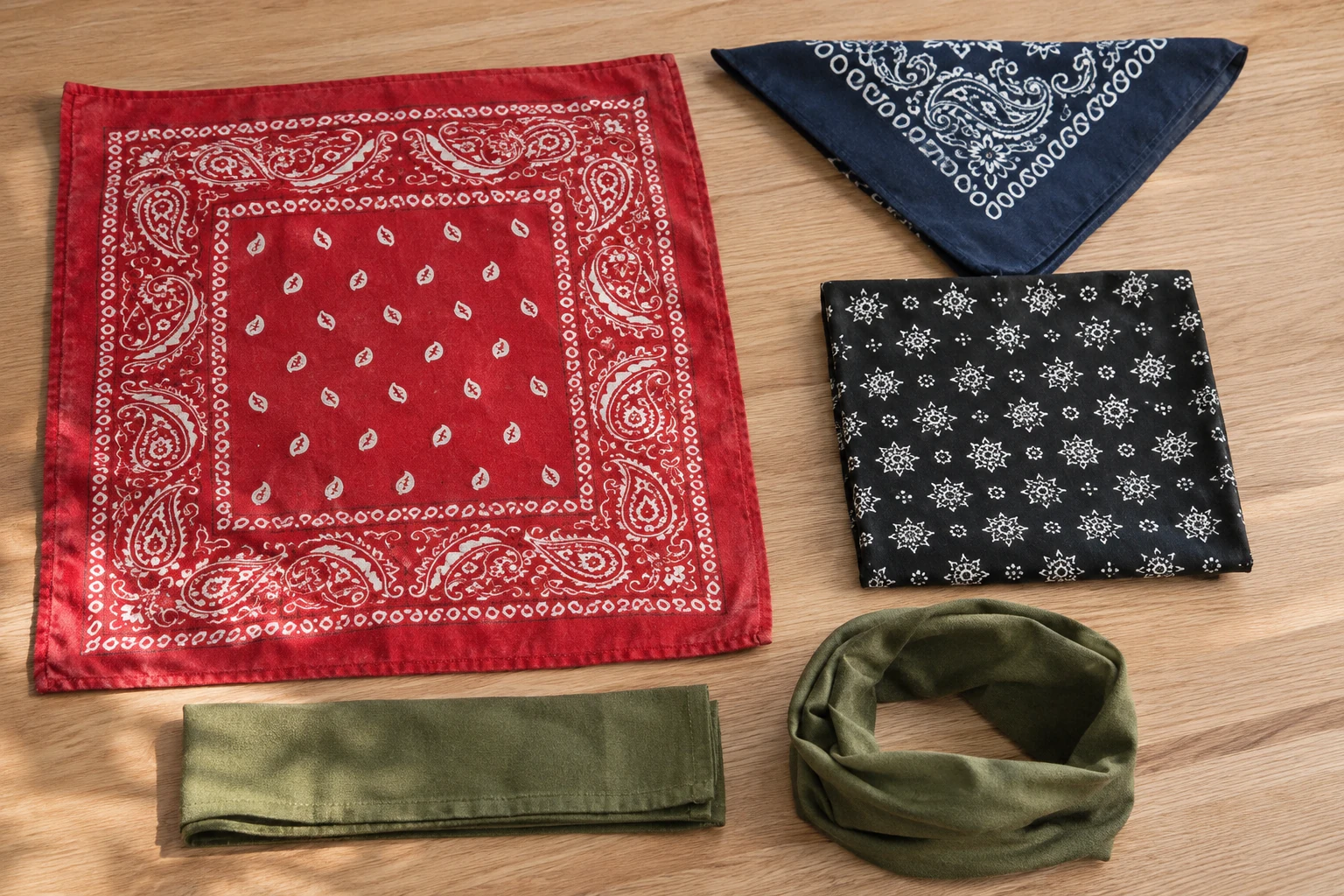
What makes a bandana a bandana is how it is used rather than one exact size or fabric. A handkerchief is smaller and carried in a pocket; a neckerchief is folded and worn at the neck, often as part of a uniform; a bandana is the larger, all-purpose square that is worn and tied in many ways. Today the same name covers printed squares, tube bandanas that pull on over the head, small triangles for dogs and oversized squares for head wraps.
The spelling varies too. “Bandana” is the usual spelling today; “bandanna” is an older form that is still used, and in many languages people say “bandana” for any printed cotton square worn at the neck or on the head.
Where does the word bandana come from?
The word comes from South Asia. It entered English in the 18th century from Hindi and Urdu, where bāndhnū means tie-dyeing, and goes back to the Sanskrit bandhana, “a bond” or “tying”. Early English spellings included “bandannoe”.
The first bandanas traded to Europe were bright silk and cotton handkerchiefs from India, often with small white spots on a red or dark ground, made by tying off tiny points of cloth before dyeing (the technique known as bandhani). European printers later copied the look. Turkey red, a strong and lasting red on cotton, and discharge printing, which bleaches a light pattern out of a dyed ground, made red bandanas with white patterns affordable and common in the 19th century. Paisley, a motif with roots in Persian and Kashmiri textiles, became the pattern most people now picture on a bandana.
From there the bandana became workwear, cowboy gear, campaign souvenir and fashion accessory. Our guide to the history and meaning of the paisley bandana follows that path step by step, with dates and how the pattern is printed today.
What types of bandanas are there?
Bandanas differ by design, construction and size. The classic paisley, logo, all-over and plain bandanas are all hemmed squares that differ in print; tube, pet and kids’ bandanas differ in shape or size; embroidered bandanas differ in how the logo is applied.
| Type | What it is | Usual fabric and decoration | Who it suits |
|---|---|---|---|
| Classic paisley bandana | The traditional square with a paisley pattern and border | Cotton poplin, screen printed; discharge on dark grounds | Shops, streetwear and heritage brands |
| Logo bandana | Your logo or name in the centre, a corner or the border | Cotton, screen printed | Merchandise, clubs, promotions |
| All-over or sublimated bandana | A full-colour design printed edge to edge | Polyester twill or satin, sublimation | Festivals, sports teams, photo designs |
| Plain bandana | One solid colour, no print | Dyed cotton poplin | Uniforms, workwear, blanks for later decoration |
| Embroidered bandana | A small logo stitched into one corner | Cotton, embroidery | Brands that want a raised, stitched mark |
| Tube bandana | A stretch tube pulled on over the head, no knot | Polyester microfibre or jersey, sublimation | Running, cycling, outdoor and event packs |
| Kids’ bandana | A smaller square for children | Cotton, screen or digital print | Schools, camps, party and gift packs |
| Pet bandana | A triangle or square sized for dogs and cats | Cotton, screen or digital print | Pet brands, groomers, pet shops |
| Oversized bandana | A larger square for head wraps and long ends | Cotton or polyester, any print | Riders, outdoor and fashion ranges |
Classic paisley and logo bandanas
The paisley bandana is the one most people picture: red, navy or black cotton with a white and black paisley pattern and a decorative border. A logo bandana keeps the same square but carries your name or mark, either as a small logo in one corner, a centre motif or a line of text in the border. Many brands combine both and place a logo inside their own paisley artwork.
All-over, sublimated and plain bandanas
An all-over bandana is printed edge to edge in as many colours as the artwork needs, often a photo, a gradient or a busy festival design. Sublimation on polyester is the usual way to do this, because it dyes the design into the fibre rather than laying ink on top. A plain bandana goes the other way: one solid dyed colour, often used for uniforms or teams, or as a blank that is decorated later with embroidery or a label.
Embroidered and tube bandanas
An embroidered logo bandana carries a small stitched logo, usually in one corner so it shows when the bandana is folded into a triangle. Embroidery adds texture and a crafted look, and works well for short marks and simple shapes. A tube bandana is a different product: a stretch tube of about 25 × 50 cm that pulls on over the head and is worn as a neck gaiter, headband or head cover without a knot. We make it either as a seamless knitted tube or cut from stretch fabric and sewn with one seam. For gaiters in heavier fabrics and more styles, see our custom neck gaiters.
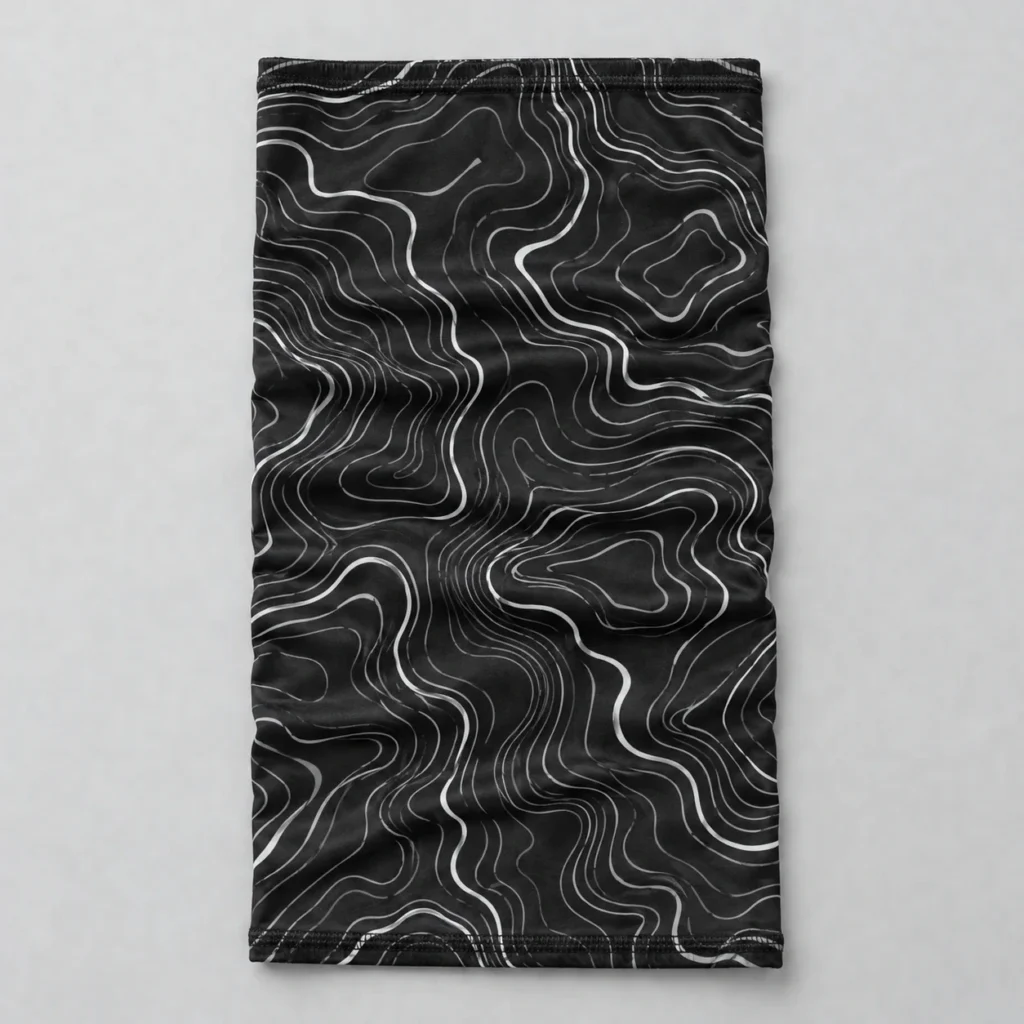
Kids’, pet and oversized bandanas
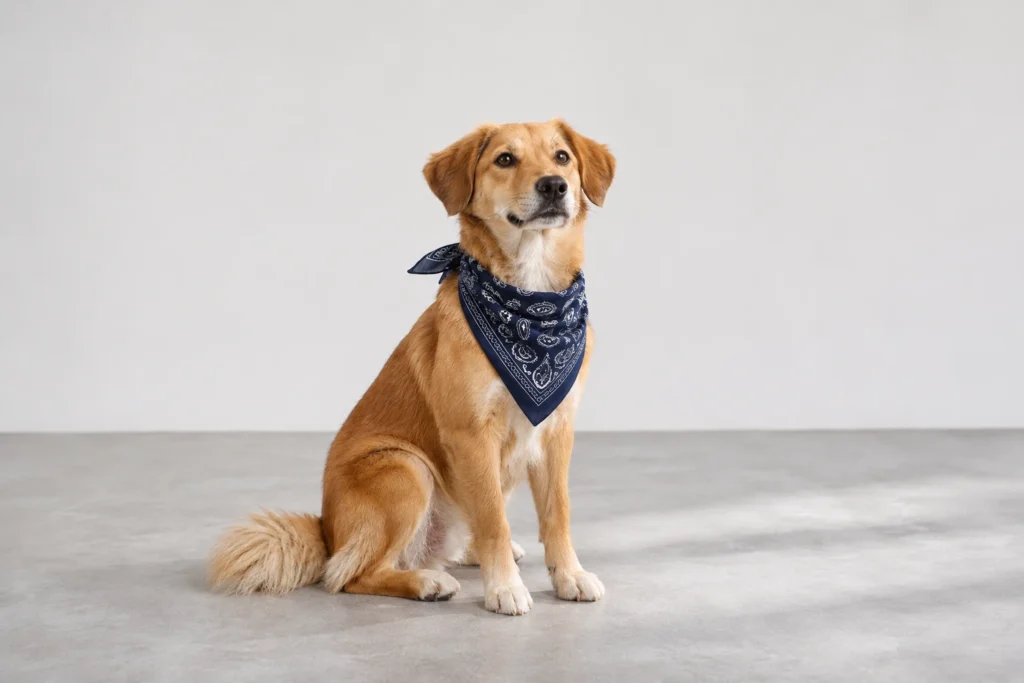
Kids’ bandanas are usually the 51 cm (20 in) square, light enough for small heads and necks. Pet bandanas come as a triangle or a square in S, M, L and XL, sized by the neck of the dog; our dog bandana size chart gives typical measurements and explains how pet bandanas are made. Oversized bandanas, usually 69 cm (27 in), have more fabric for head wraps and longer ends when knotted at the neck.
For children and pets we keep the design simple and safe in use: no cords, toggles, bells or small attached parts. A pet bandana is a styling piece: put it on while someone is around, and take it off rather than leave an animal unattended in it.
What sizes do bandanas come in?
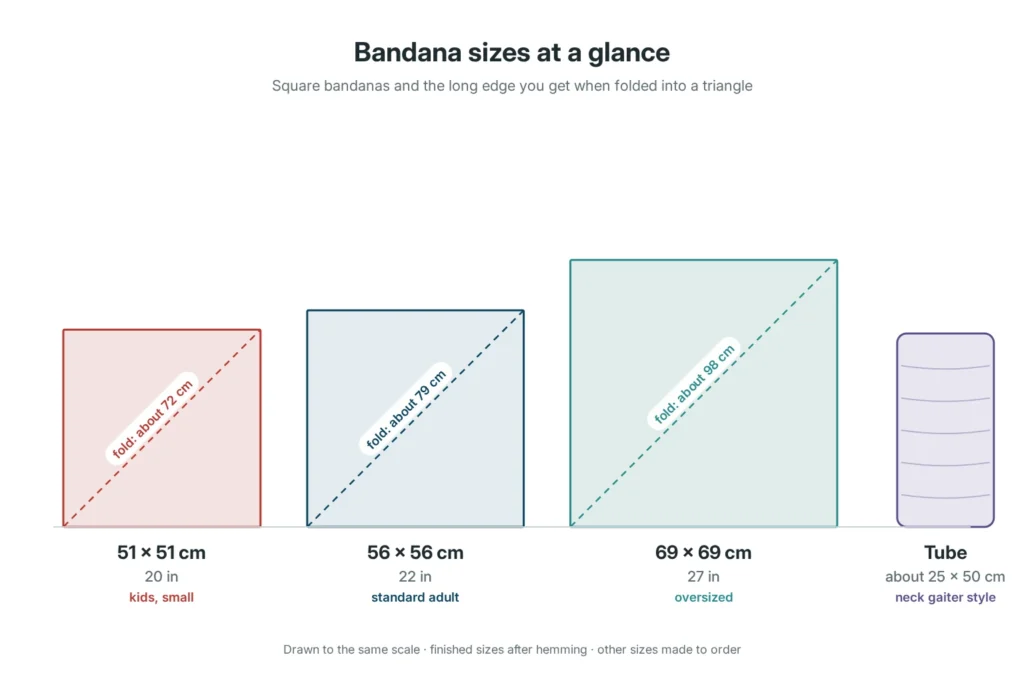
The standard adult bandana is 56 × 56 cm (22 in). Kids’ and small bandanas are usually 51 × 51 cm (20 in), oversized bandanas 69 × 69 cm (27 in), and tube bandanas about 25 × 50 cm; any other size can be made to your specification.
| Bandana | Centimetres | Inches | Folded triangle, long edge about | Typical use |
|---|---|---|---|---|
| Kids’ or small | 51 × 51 cm | 20 × 20 in | 72 cm (28 in) | Children, small necks, gift and party packs |
| Standard adult | 56 × 56 cm | 22 × 22 in | 79 cm (31 in) | The classic bandana for neck, head and pocket |
| Oversized | 69 × 69 cm | 27 × 27 in | 98 cm (38 in) | Head wraps, riders, long ends at the neck |
| Tube bandana | About 25 × 50 cm | About 10 × 20 in | — | Pulled on as a neck gaiter or headband |
| Pet bandana | S, M, L, XL | S, M, L, XL | Sized by neck circumference | Dogs and cats; typical sizes confirmed with your quote |
| Your size | To specification | To specification | — | Brand-specific formats and packs |
Two things are worth knowing about bandana sizes. First, a bandana is folded before it is worn, so the long edge of the triangle (the diagonal of the square) decides whether it ties comfortably; a 56 cm square gives about 79 cm, enough to knot around most adult necks and heads. Second, sizes on the market vary: many mass-market cotton bandanas measure a little under 22 in after hemming, and European shops often sell squares between 50 and 55 cm. Our full bandana size chart for adults, kids, pets and tubes explains which size suits which use, and our guide to scarf sizes and shapes compares the bandana with every other scarf format.
What fabric are bandanas made of?
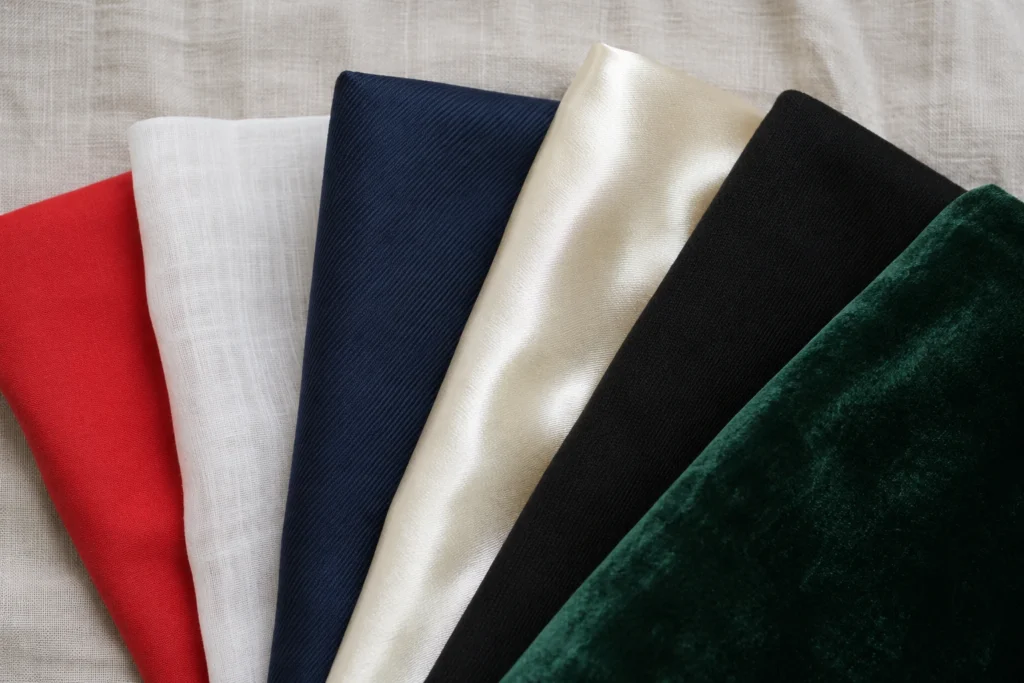
Most bandanas are made of cotton poplin, a light, tightly woven plain cotton that folds and knots easily and takes printing well. Polyester twill and satin are used for full-colour sublimated bandanas, polyester microfibre or jersey for tube and sports bandanas, and cotton voile, silk, satin or velvet for fashion pieces.
| Fabric | Feel and look | Prints with | Typical bandana |
|---|---|---|---|
| Cotton poplin | Soft, matte, absorbent; softens with washing | Screen, discharge, digital, embroidery | Classic paisley, logo, kids’, pet |
| Cotton voile | Very light, airy, slightly sheer | Digital; screen for simple designs | Summer and fashion bandanas |
| Cotton twill | Slightly heavier, with a fine diagonal weave | Screen, digital, embroidery | Workwear and sturdier bandanas |
| Polyester twill | Smooth, light, dries quickly | Sublimation edge to edge, screen | All-over, festival and team bandanas |
| Polyester satin | Glossy face, fluid drape | Sublimation, digital | Fashion and hair bandanas |
| Polyester microfibre knit or jersey | Stretchy, soft, light | Sublimation | Tube and sports bandanas |
| Silk, satin, velvet | Silky sheen or a soft pile | Digital or sublimation, depending on the fibre | Fashion and gift ranges |
The fabric and the print method are chosen together: cotton suits screen and discharge printing, polyester suits sublimation. If you want the soft, traditional bandana that gets softer with every wash, choose cotton poplin. If the design is a photo or runs edge to edge in many colours, choose polyester twill. For a sports bandana that should stay light when worn during activity, polyester jersey or microfibre is the usual choice.
All bandana fabrics come from partner mills; we cut, print, hem, finish and brand them in-house in Sialkot, Pakistan. Fabrics from OEKO-TEX® certified mills are available on request; the certificate is the mill’s. Our bandana fabrics guide compares each fabric in detail, and the wider comparison of scarf fabrics covers silk, viscose and wool as well.
How are bandanas printed?
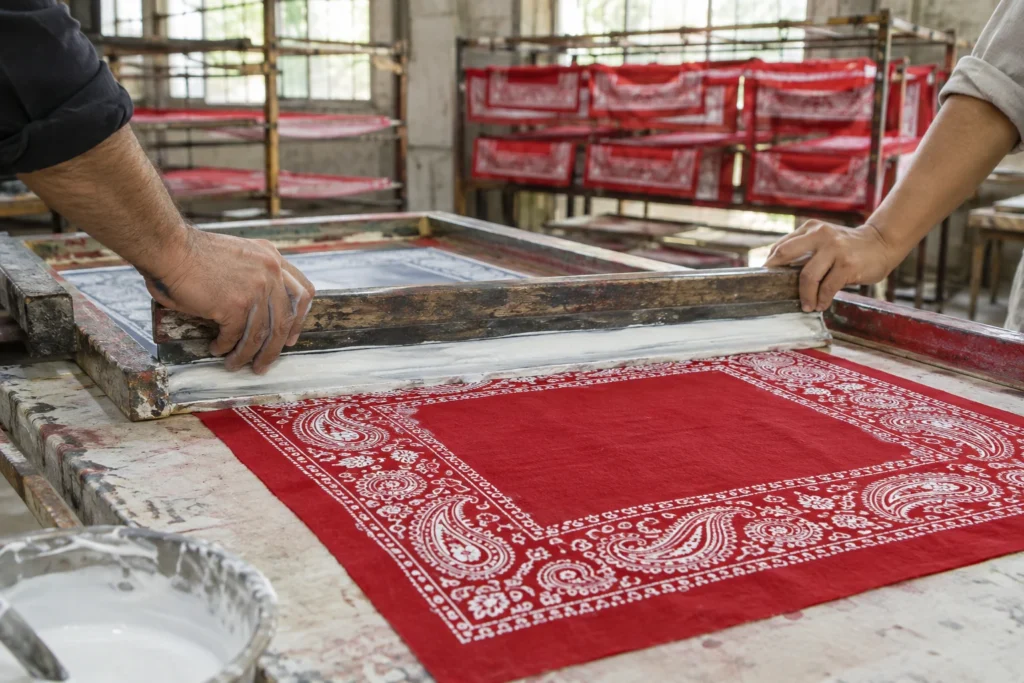
Bandanas are printed by screen printing, discharge printing, digital printing or sublimation, and logos can also be embroidered. The right method depends on the fabric and the artwork: screen and discharge for cotton with a few flat colours, digital for detailed designs on cotton, sublimation for full colour on polyester.
| Method | How it works | Suits | Good to know |
|---|---|---|---|
| Screen printing | Ink is pushed through a fine mesh screen, one screen per colour | Cotton; paisley, logos, flat colours | The classic bandana print; each extra colour adds a screen |
| Discharge printing | A paste removes the dye from dark cotton where the design goes | Dark cotton with light designs | Very soft feel, because no ink layer sits on top |
| Digital printing | Ink is printed straight from the file, like a large inkjet | Cotton and voile; fine detail, many colours | No screens, so detailed artwork suits it |
| Sublimation | Heat turns dye into a gas that bonds with polyester fibres | Polyester on a light base; full colour, edge to edge | Not for cotton; the back is usually lighter than the front |
| Heat transfer | A printed film is pressed onto the fabric | Small logos where suitable | Suits some small marks; checked for each design |
| Embroidery | The logo is stitched with thread | Cotton; a corner logo | Raised, textured mark; simple shapes work well |
One detail often surprises buyers: on cotton, a bandana is usually printed on one side, and the colour soaks through so the back shows a lighter version of the design. Colours are matched as closely as possible to your Pantone references; a Pantone colour code in your file helps, and printed colours on fabric can differ slightly from a screen. Our guide to bandana printing methods compares each method by fabric, colour count and feel, the Help Center lists all decoration methods we offer, and our scarf printing and finishing guide covers the same methods on other scarves.
How are bandana edges finished?
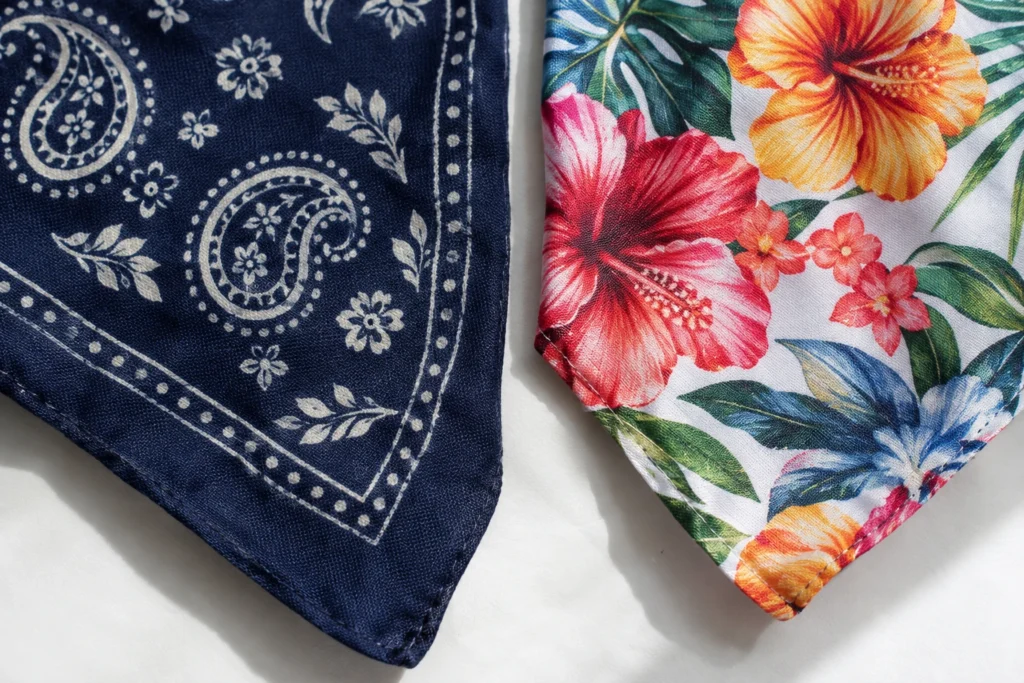
Most bandanas have a narrow machine-rolled hem on all four sides: the edge is turned twice and stitched, so it stays flat and clean. Overlocked edges, where a thread wraps the raw edge, suit tube and sports bandanas and give a lighter, more casual finish. Hand-rolled hems are possible on request for fine fabrics such as voile, satin and silk.
How do you design artwork for a bandana?
Design on a square the size of the finished bandana, add a bleed on every side and keep important details away from the edges and the fold. Supply vector files (AI, EPS, PDF or SVG) for logos and flat colours, or high-resolution images for photos and all-over designs.
- Print area and bleed: the artwork is usually set up with 5 mm of bleed on each side, so the print runs cleanly into the hem.
- Safe zone: keep text and logos a little inside the hem line, where the folded edge will not hide them.
- The fold: a bandana is often worn as a triangle, so half of the square shows; place the logo in the corner that faces out when folded.
- Colours: give Pantone references for screen and discharge printing; for sublimation and digital printing, a full-colour file works.
- Rights: we print only designs you own or are licensed to use.
Before production we send a mockup of your design on the bandana, and production starts only after you approve it. Our bandana artwork guide and free template shows the print area, bleed and fold in centimetres, and the Help Center explains which artwork files work. If you only have a sketch or a logo, our design support team can help turn it into a print-ready layout.
How do you wear a bandana?
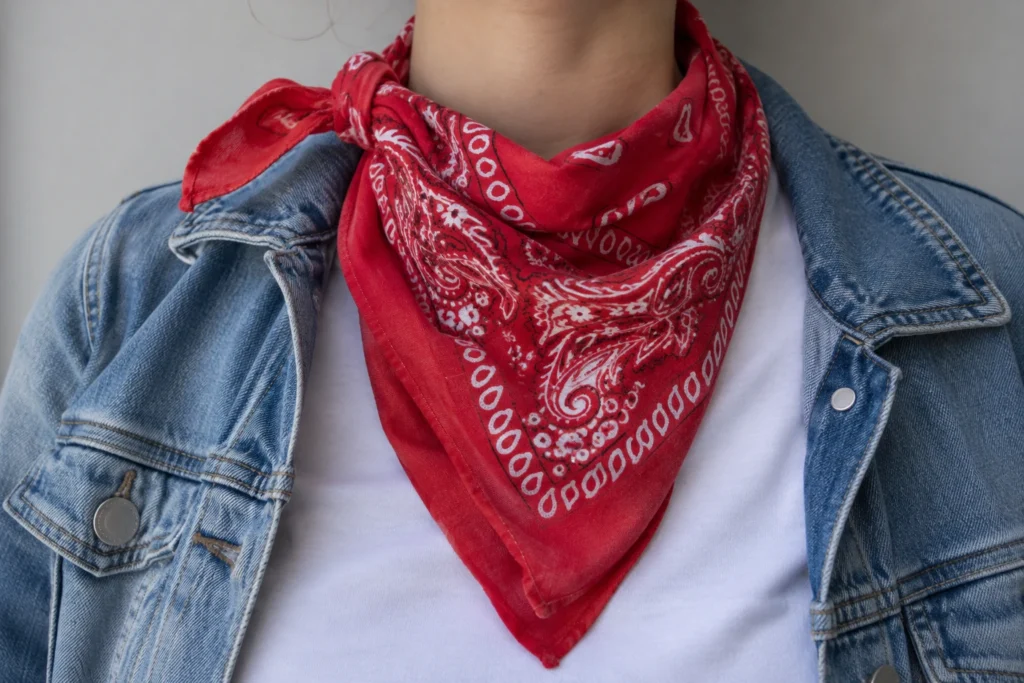
A bandana is usually folded into a triangle or a band and tied around the neck, on the head, around the wrist or on a bag. Most styles start from one of these two folds.
- Neck triangle: folded corner to corner, knotted at the back or tied with the point at the front in the cowboy style.
- Headband: folded into a narrow band and tied at the back of the head or under the hair.
- Head wrap: a triangle over the head with the ends knotted at the nape; oversized bandanas give more fabric for this.
- Hair tie and ponytail wrap: a narrow band tied around a ponytail or bun.
- Wristband: folded into a thin band and wrapped around the wrist.
- Pocket and bag: folded into a square for a back pocket, or tied to a bag strap or belt loop.
- Tube bandana: pulled on over the head and worn at the neck, as a headband or as a head cover.
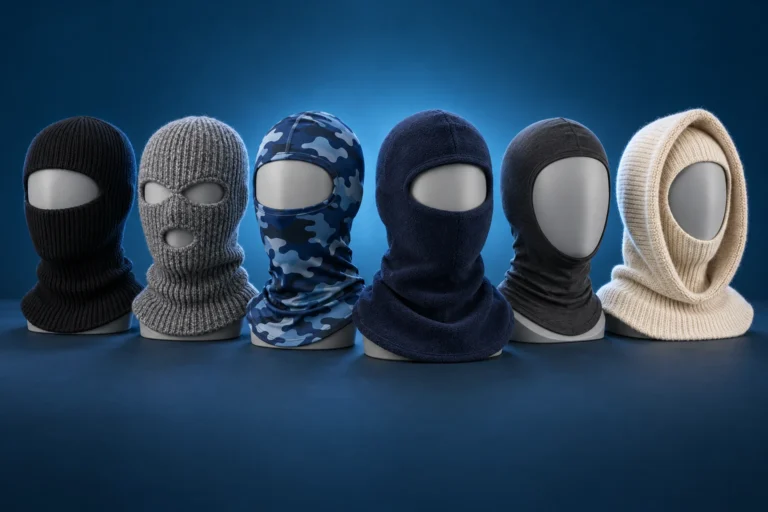
Each style is explained with photos in our guide on how to tie a bandana, step by step. For colder days, a large square can also be tied to cover more of the head and neck; see how to tie a scarf like a balaclava.
Is a bandana the same as a neckerchief or a handkerchief?
Not quite. A handkerchief is a smaller square, usually about 30 to 40 cm, carried for wiping; a neckerchief is a square or triangle worn folded at the neck, often as part of a uniform; a bandana is the larger, all-purpose printed square, worn and tied in many ways. A neck gaiter is a tube, like a tube bandana but often in a heavier fabric.
| Item | Shape and size | Usually worn | Typical fabric |
|---|---|---|---|
| Bandana | Square, about 51–69 cm | Neck, head, wrist, pocket | Printed cotton or polyester |
| Neckerchief | Square or triangle, size by use | Folded at the neck, often with a uniform | Cotton, polyester twill |
| Handkerchief | Smaller square, about 30–40 cm | In a pocket | Light cotton |
| Tube bandana or neck gaiter | Tube, about 25 × 50 cm | Pulled on at the neck or head | Stretch polyester, jersey, fleece |
Our comparison of bandana vs neckerchief vs handkerchief vs neck gaiter explains the differences in detail. If you are planning a uniform, a scout troop or a hospitality team, our custom neckerchiefs are made the same way as our bandanas, and the neckerchief catalogue shows the styles.
Who orders custom bandanas, and why?
Custom bandanas are ordered by brands, event organisers, clubs and companies that want a low-cost, wearable item carrying their design. A bandana is light to ship, easy to brand and useful long after the event.
| Buyer | Why they order bandanas | Common choices |
|---|---|---|
| Streetwear and fashion brands | A signature accessory or a collaboration drop | Own paisley or colourway, woven label, retail pack |
| Merchandise companies and bands | An easy add-on next to T-shirts and caps | Logo bandana, screen print, polybag |
| Festivals and events | Wearable souvenirs and team identification | All-over sublimated or logo cotton bandana |
| Sports clubs and teams | Team colours for players and supporters | Polyester or tube bandanas, team logo |
| Promotional and advertising agencies | A branded give-away for a client | Corner logo, short runs per design |
| Pet brands and groomers | Branded pet accessories and gift items | Pet triangles S to XL, cotton, simple prints |
| Retailers and online shops | Own-label bandanas for their range | Classic paisley, plain colours, kids’ sizes |
Most requests we receive start the same way: can you print our logo or our own design, in our colours, at a small quantity, and can we see a sample first? The answer to all four is usually yes. Under private label, the bandanas carry only your brand; Mr Balaclava’s name never appears on your products. For a finished example, see our screen-printed cotton bandana project, and for every way of adding your brand, our customization and branding options.
How are custom bandanas made at Mr Balaclava?
Custom bandanas go from your brief to a mockup, a sample, cutting, printing, hemming, finishing, inspection and packing. Bulk production takes approximately 14 days after sample approval.
- 1. Brief: you send your artwork or idea, the size, fabric, quantity per design, deadline, labels, packaging and delivery country.
- 2. Mockup: we show your design on the bandana, with the print method and colours, and adjust it until you approve.
- 3. Sample: either a pre-paid physical sample in about 5–7 days (paid 100% in advance and deducted from the order only at 1,000 pieces or more; shipping is extra and not refundable), or a free pre-production sample after the order and the 30% advance, approved by photos or video.
- 4. Fabric and cutting: the fabric comes from partner mills and is cut into squares, triangles or tube panels in-house.
- 5. Printing or embroidery: screen, discharge, digital or sublimation printing, or embroidery, according to the approved sample.
- 6. Hemming and finishing: narrow rolled hems, overlocked edges or hand-rolled hems; tubes are knitted seamless or sewn with one seam.
- 7. Labels and packing: woven or printed labels, hang tags, folded retail packs, header cards or polybags, as you specify.
- 8. Inspection and shipping: pieces are checked against the approved sample, packed and shipped with tracking.
All of this happens in our factory in Sialkot, Pakistan, where bandanas are cut, printed, hemmed, finished and branded; very large runs may also use our other units or partner mills. Our capacity is around 100,000 pieces a month. Our manufacturing process shows each step in more detail, the Help Center compares the two sample types, and our quality control page explains how pieces are checked. ISO 9001 certification and Sedex membership are held by Eco Jersey Limited, which powers Mr Balaclava.
Payment follows our 30/30/40 terms: 30% to confirm the order and begin production, 30% during production after you have reviewed the work-in-progress update, and 40% once the goods have passed quality control and are ready for shipment. Express shipping usually takes 3–6 working days. Shipping is charged by weight, agreed for each order and confirmed before shipment; the Help Center explains how shipping cost is worked out.
How much do custom bandanas cost?
Catalogue bandanas start at about $1.30–$2.70 per piece at 50 pieces, depending on fabric, size and print. More customization — your own artwork, more print colours, all-over or two-sided prints, embroidery, special fabrics, labels and packaging — raises the price, and our team confirms the price for every custom order.
Unit prices usually fall as quantities rise, because setup work such as screens and sampling is shared across more pieces. The minimum order is 50 pieces per design, and each colourway counts as its own design, so two colourways start at 100 pieces. The Help Center explains how the minimum order works, our small runs page shows how short orders are handled, and our guide to what custom bandanas cost goes through every price factor in turn.
What labels and packaging do bandanas need?
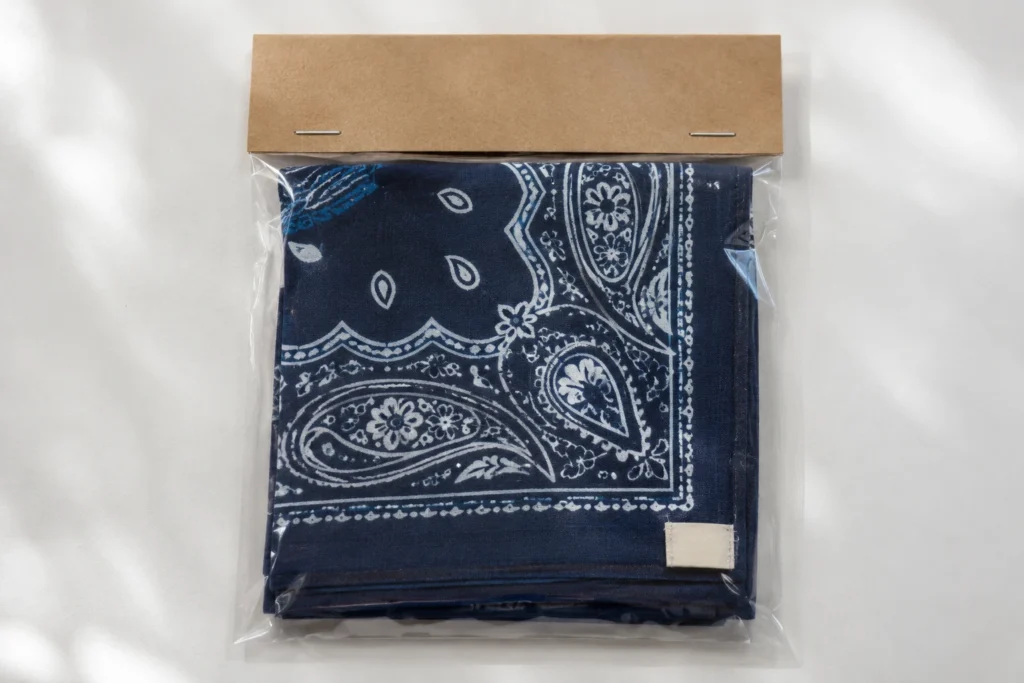
Bandanas sold in shops usually need a label showing fibre content and country of origin, and often care instructions. Packaging ranges from a simple polybag to a folded retail pack with a header card or a printed band.
Labelling rules depend on where the bandanas are sold. In the United States, the Textile Fiber Products Identification Act usually requires fibre content, country of origin and the maker’s identity on scarves and handkerchiefs. In the European Union, Regulation (EU) No 1007/2011 sets the rules for fibre names and labelling, and care symbols commonly follow ISO 3758. We are happy to add the labels you need, but please check your market’s rules for your product; this is general guidance, not legal advice. The Help Center lists our labels and packaging options.
How do you wash and care for a bandana?
Wash a cotton bandana in cool water with similar colours, and wash new dark or bright bandanas separately for the first few washes. Dry it flat or on a line and iron cotton on a medium setting while slightly damp.
- Cotton: softens with every wash; a printed cotton bandana usually holds its colour well when washed as recommended.
- Polyester: dries quickly and keeps its shape; wash cool and iron on a low setting, if at all.
- Satin, silk and velvet: gentle hand wash or a delicate cycle, and no wringing.
- Embroidered bandanas: turn inside out or wash in a laundry bag to keep the stitches neat.
For your own range, the care label should match the fabric and print; the Help Center has general care advice for our products.
How do you choose the right bandana?
Start with how the bandana will be worn and by whom, then choose the size, fabric and print method to match. Five questions settle most orders.
| Question | If the answer is… | Choose |
|---|---|---|
| Who wears it? | Adults / children / pets | 56 cm (22 in) / 51 cm (20 in) / pet S–XL |
| How is it worn? | Neck or pocket / head wrap / no knot | Standard square / 69 cm (27 in) oversized / tube bandana |
| What does the design look like? | A few flat colours / photo or edge-to-edge colour / light design on dark cotton | Screen print / sublimation on polyester / discharge print |
| What feel do you want? | Soft, classic, washes softer / smooth and bright / light and airy | Cotton poplin / polyester twill or satin / cotton voile |
| How should the logo look? | Printed / stitched and raised | Print in the design / embroidered corner logo |
If two options seem equally good, choose the one that suits the artwork; the print method has the biggest effect on how the finished bandana looks. The Help Center’s guide to choosing a fabric helps when you are unsure, and our custom scarves range shows the other squares and scarves we make if a bandana is only part of your collection.
Ordering custom bandanas from Mr Balaclava
We make custom bandanas from 50 pieces per design, with production approximately 14 days after sample approval. Send us your brief and we reply with options, a mockup and a quote.
What to send with your bandana request
- Your artwork or logo (vector or high-resolution file) and Pantone colours if you have them
- The size: 51, 56 or 69 cm, a tube, pet sizes or your own measurements
- The fabric, or how you want the bandana to feel, and the print method if you know it
- The quantity per design and per colourway (from 50 pieces each)
- Your deadline, so we can plan the sample and production
- Labels, hang tags and packaging, if needed
- The delivery country, so we can work out shipping by weight
Frequently asked questions
What is the standard size of a bandana?
The standard bandana is a 56 × 56 cm (22 × 22 in) square. Kids’ bandanas are usually 51 cm (20 in) and oversized bandanas 69 cm (27 in).
Can you print our logo in one corner of a bandana?
Yes. A corner logo is one of the most common requests; it is screen printed, discharge printed or embroidered and placed so that it shows when the bandana is folded into a triangle.
What is the minimum order for custom bandanas?
The minimum is 50 pieces per design. Each colourway counts as its own design, so a design in two colourways starts at 100 pieces.
Can I get a sample before the bulk order?
Yes. You can order a pre-paid physical sample, ready in about 5–7 days and paid 100% in advance, or choose a free pre-production sample after the order and the 30% advance, approved by photos or video.
Are cotton or polyester bandanas better?
It depends on the design and use. Cotton poplin is the classic, soft choice for screen and discharge prints; polyester takes full-colour sublimation edge to edge and dries quickly.
Why is the paisley pattern used on bandanas?
Paisley spread from Kashmiri shawls to European printed textiles in the 19th century, when affordable printed cotton handkerchiefs copied the fashionable shawl motif. It has stayed the traditional bandana pattern ever since.
Browse our bandana catalogue, compare bandanas with the different types of balaclavas for full head coverage, or send us your bandana brief for a quote.