Ask ten suppliers how big a scarf is and you will get ten answers, often in inches and often without saying whether the fringe is included. Yet size decides how a scarf is worn, how the print is laid out and what it costs. This guide gives the usual sizes of every common scarf shape in centimetres first, so brands, shops, clubs, schools, uniform buyers and promotional companies can set the right measurements before they ask for a quote.
Size and shape are one layer of a scarf; construction, fabric, decoration and finish are the others, and our guide to the different types of scarves explains how they fit together. Here we stay with measurements: the shapes, the sizes we make, the typical ranges you will see elsewhere and how to choose.
What are the standard scarf sizes?
There is no single standard, but most scarves fall into a few size families: long scarves of about 170–200 cm, squares from 50 to 90 cm, bandanas of 51–69 cm, and wide wraps and hijabs of about 70–100 × 180–200 cm. The table below lists our catalogue sizes and the typical ranges for shapes we make to order.
| Shape | Usual size (W × L) | How it is worn | Typical use |
|---|---|---|---|
| Knitted long scarf | About 25–30 × 170–200 cm | Wrapped once or twice, ends hanging | Winter retail, uniforms, gifts |
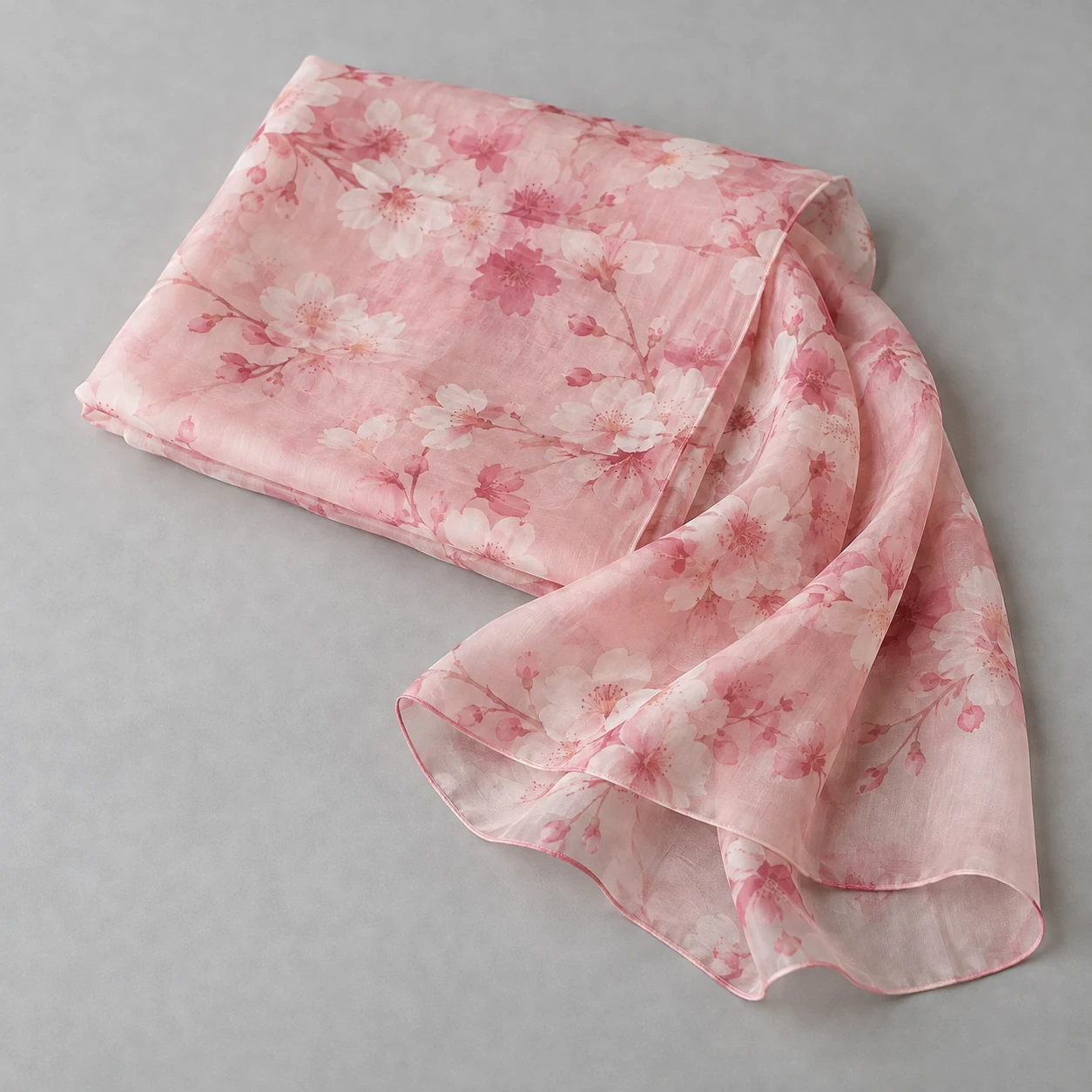
| Printed or woven long scarf | About 55–70 × 180 cm | Draped, looped or knotted | Fashion, gifts, all seasons |
| Skinny scarf | About 5–8 × 120–150 cm | Tied at the neck, hair or bag | Fashion accents, uniforms |
| Small square | 50 × 50 cm | Hair, neck or bag | Hair scarves, accessories |
| Neck square | 53 × 53 cm (55 × 55 cm also common) | Folded and knotted at the neck | Neckerchiefs, uniforms |
| Medium square | 70 × 70 cm | Neck, head or shoulders | Corporate and gift scarves |
| Large square | 90 × 90 cm | Folded to a triangle, many ways | Classic printed silk squares |
| Triangle scarf or neckerchief | Short sides about 50–70 cm | Point at the front or back | Scouts, groups, fashion |
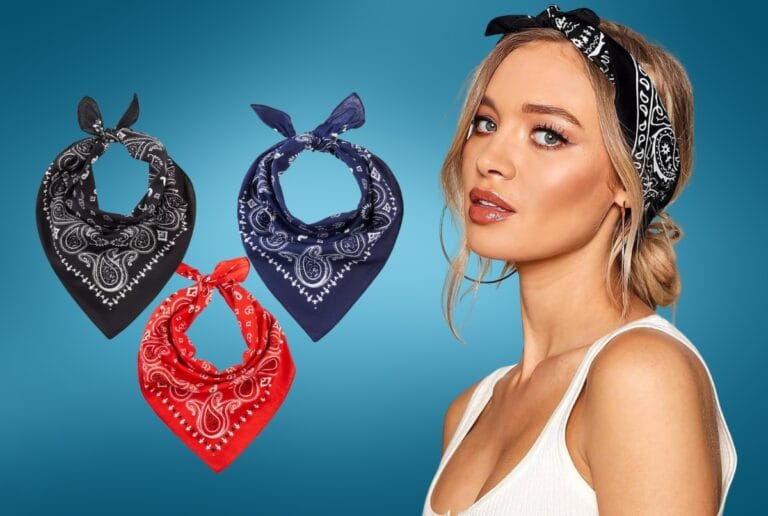
| Bandana | 51, 56 or 69 cm square (20, 22 or 27 in) | Headband, neck, face or pocket | Merchandise, workwear, events |
| Tube bandana | About 25 × 50 cm tube | Pulled over the head to the neck | Sports, outdoor, events |
| Football or fan scarf | About 18 × 150 cm plus fringes | Round the neck or held up | Clubs, fans, events |
| Kids scarf | About 15 × 120 cm (knit); 14 × 110 cm (fan) | Wrapped once, short ends | Schools, kidswear, clubs |
| Infinity or loop scarf | Typically 120–180 cm round × 15–70 cm wide | Worn single or doubled | Fashion, retail |
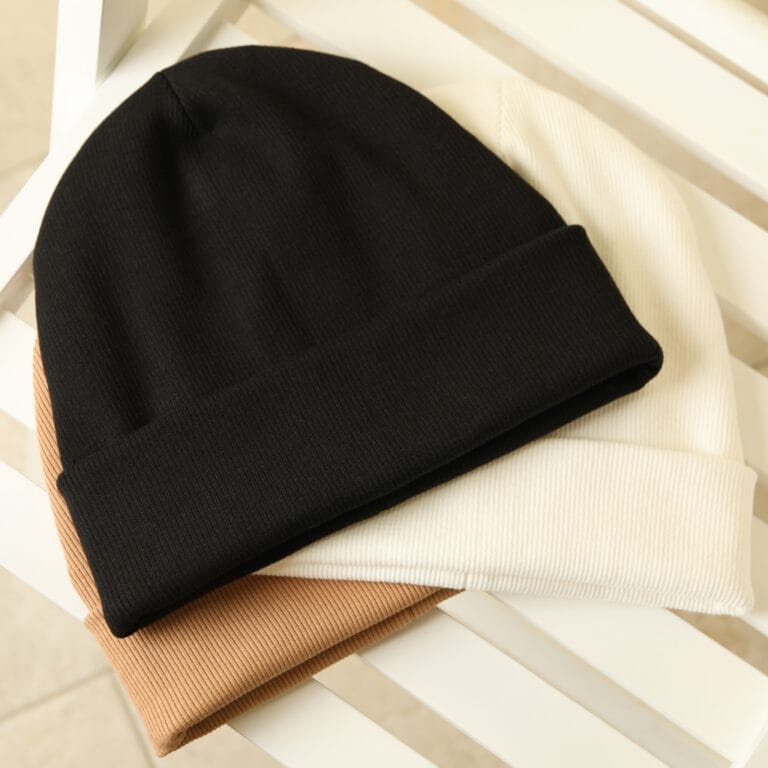
| Snood | Typically about 25–30 cm high × 50–60 cm round | Pulled over the head, sits at the neck | Outdoor, sport, kids |
| Stole, wrap or shawl | Typically 50–100 × 180–200 cm | Over the shoulders | Evening, gifts, travel |
| Hijab | About 70 × 180 cm; also 100 × 200 cm | Wrapped round the head | Modest-wear brands |
| Sarong or beach wrap | Typically 100–115 × 160–180 cm | Tied at the waist or chest | Beach and resort wear |
How long is a long scarf?
A classic long scarf is usually about 170–200 cm long. That length lets it go round the neck twice, or once with both ends hanging to the chest.
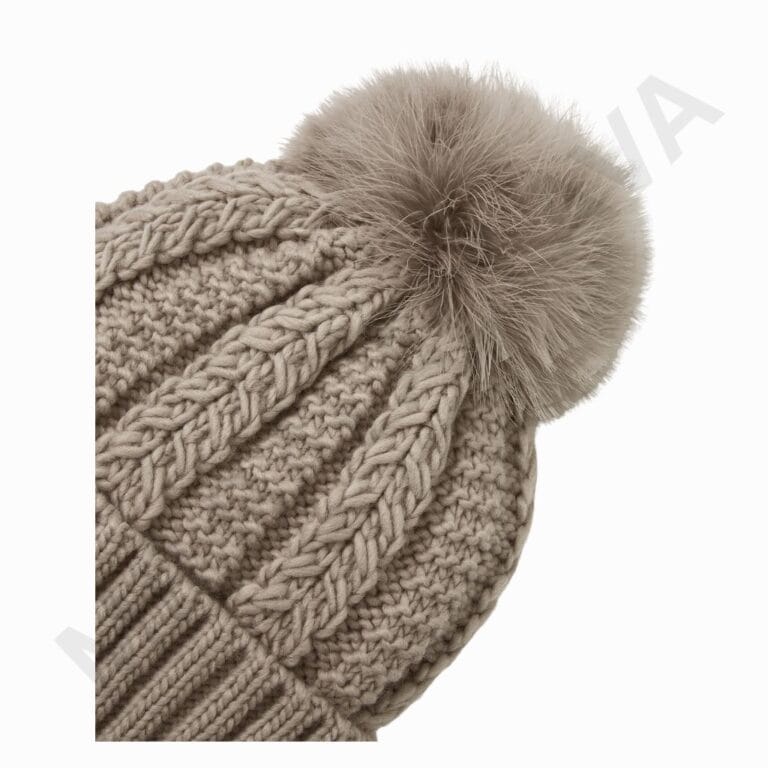
Knitted and woven long scarves are cut differently. Our knitted scarves, such as the ribbed acrylic, merino and cashmere-blend styles, are about 25–30 cm wide and 170–200 cm long; a knit is thick, so it does not need to be wide to keep the neck warm. Printed and woven long scarves are lighter and wider, about 55–70 cm × 180 cm, so they can be folded, draped or looped. The width is what makes them look different on: a 70 cm viscose or silk habotai scarf can be worn over the shoulders, while a 25 cm knit cannot.
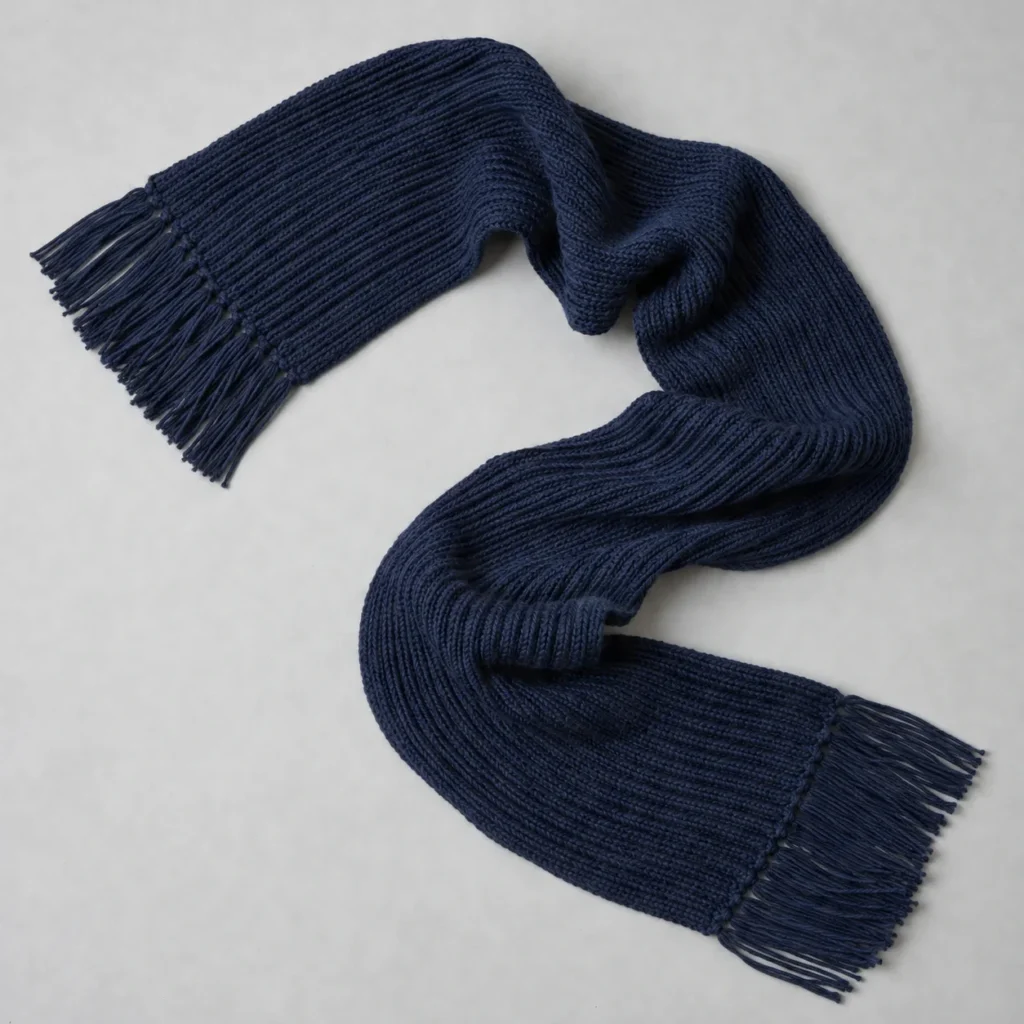
Oversized or blanket scarves go further, typically about 60–115 cm wide and 190–210 cm long, and are worn as a wrap. Our guide to knitted and woven scarves explains why the construction changes the width and weight you need.
Skinny scarves
A skinny scarf is a narrow strip, usually about 5–8 cm wide and 120–150 cm long. It is an accent rather than a warm layer: tied at the neck, worn as a hair ribbon or knotted on a bag handle. Uniform buyers also use it as a neat neck tie. Our skinny silk twill scarf measures about 8 × 120 cm; polyester satin and polyester twill versions are made in the same way.
What sizes do square scarves come in?
Square scarves usually come in 50, 53, 70 or 90 cm. The smaller sizes are tied at the neck or in the hair, and the 90 cm square is the classic printed scarf that is folded into a triangle and worn many ways.
- 50 × 50 cm: hair scarves, bag scarves and small neck scarves. Easy to tie and economical to print.
- 53 × 53 cm: the neck square or neckerchief size, often in silk satin or silk twill.
- 70 × 70 cm: a versatile middle size for corporate and gift scarves; big enough to knot at the neck with ends showing.
- 90 × 90 cm: the large square, folded into a triangle for the head or neck, or over the shoulders.
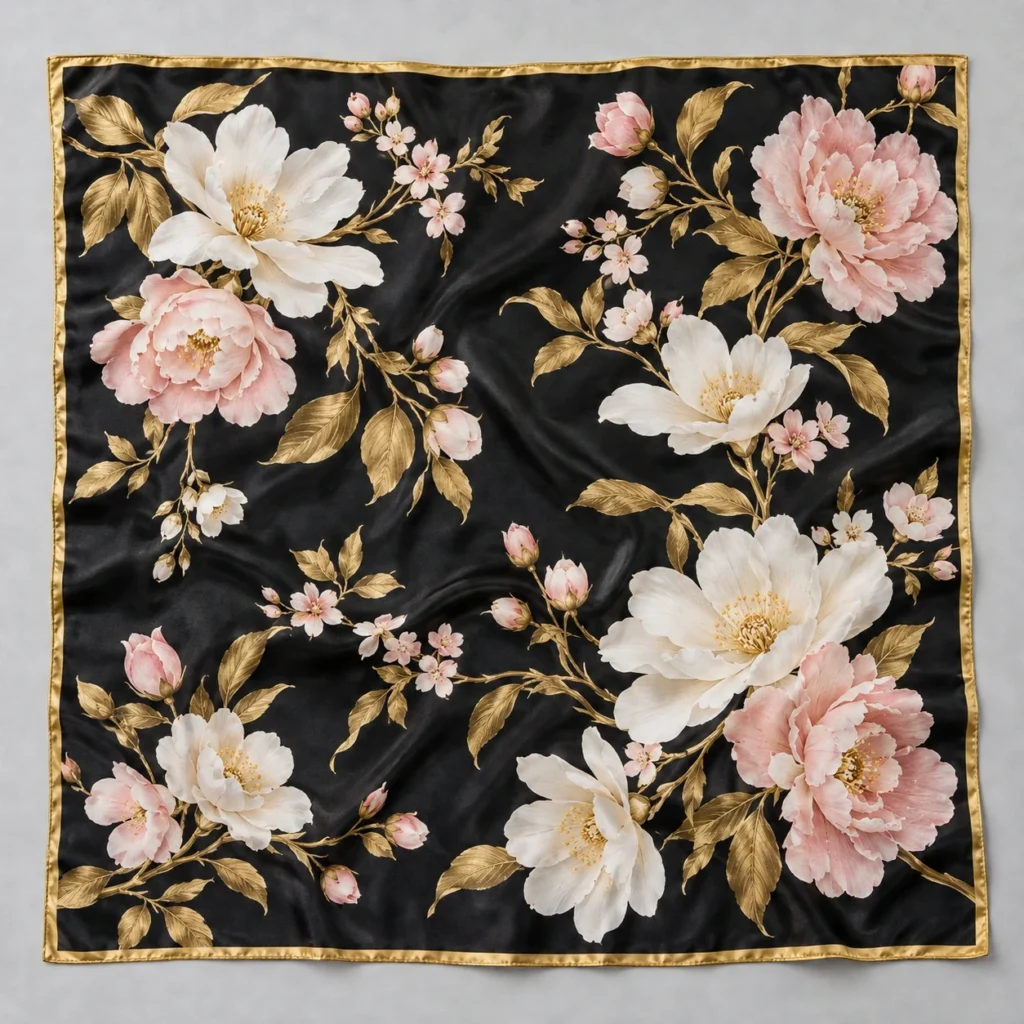
Larger squares of about 110–140 cm are typically worn as shawls or square hijabs and are made to order. On every square, the artwork is designed for the exact size, because a border or a corner motif has to land on the edge after hemming; our guide to scarf printing and finishing covers that step.
What is the difference between a neckerchief, a triangle scarf and a bandana?
A neckerchief is named by how it is worn: knotted at the throat, often as part of a uniform. A triangle scarf is cut as a triangle, and a bandana is a square, traditionally printed cotton.
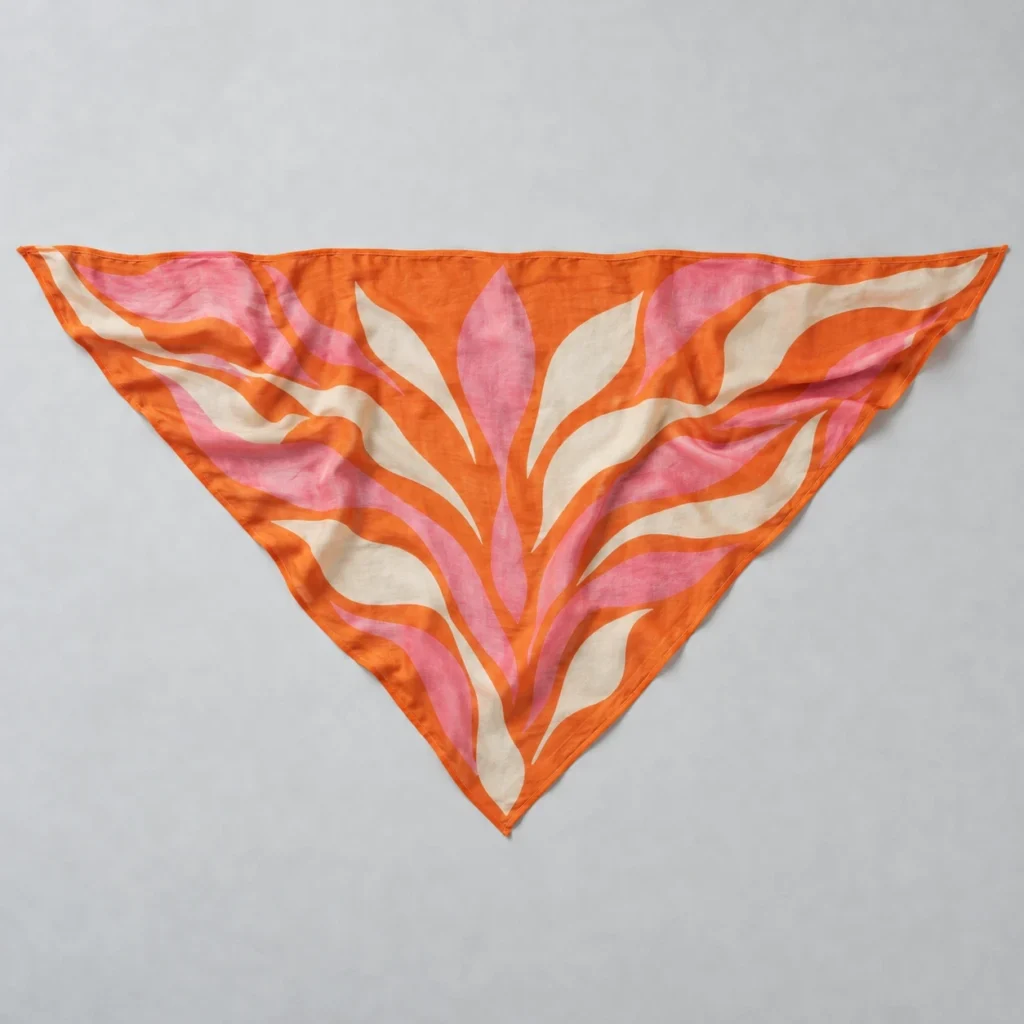
In practice the sizes overlap. A neckerchief can be a 50–55 cm square folded corner to corner, or a cut triangle with short sides of about 50–70 cm, like our scout and group neckerchief. A cut triangle uses less fabric and usually sits flatter, without a double layer at the knot. Our neckerchiefs page shows the uniform and fashion styles.
What size is a bandana?
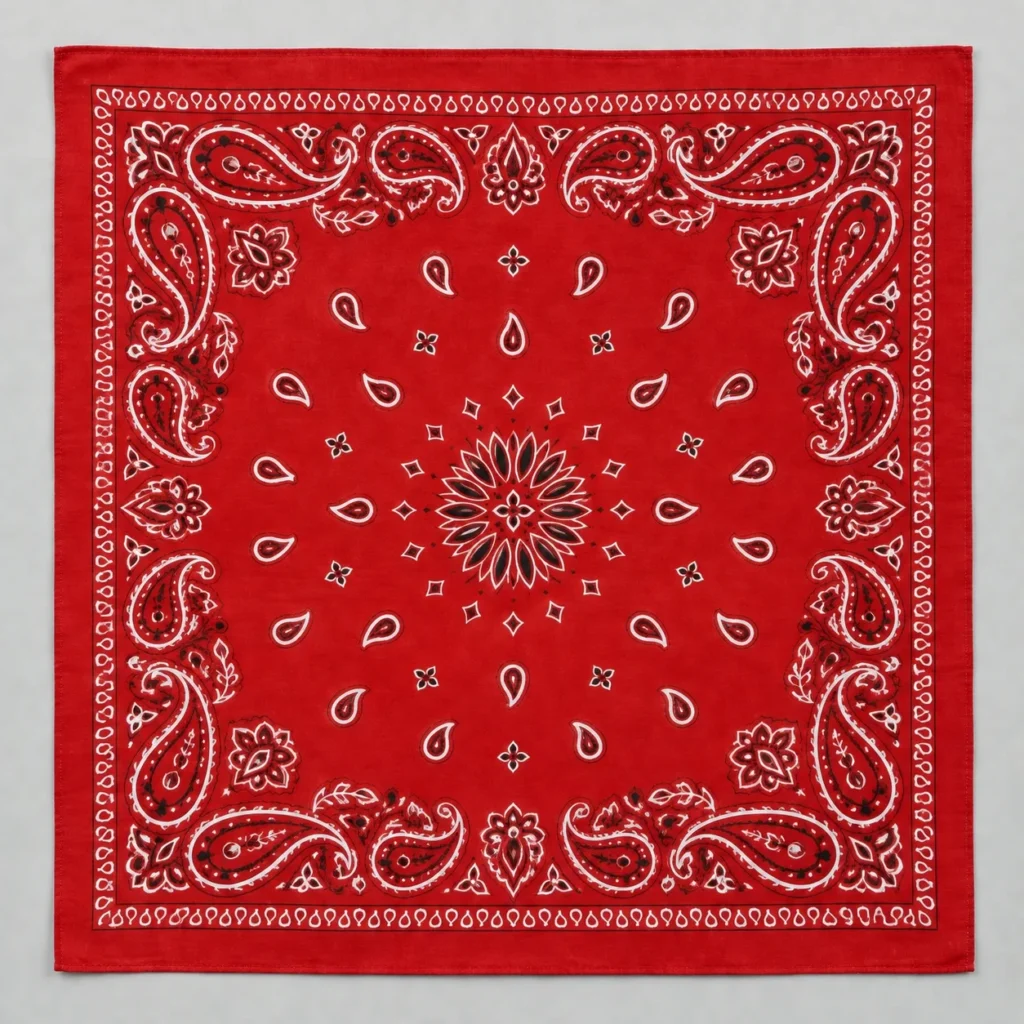
The common bandana size is 56 × 56 cm, about 22 inches. We also make 51 × 51 cm (20 in) for children and 69 × 69 cm (27 in) for a larger fold that ties more easily round the head or face.
The 22 in bandana is the one most people picture: printed cotton, folded into a triangle or a band. The 27 in size gives longer ends when it is tied, which suits biker and outdoor styles. A tube bandana is a different product: a seamless knitted tube of about 25 × 50 cm, pulled over the head to sit at the neck or worn as a headband. Our bandana sizes and printing guide goes deeper into fabrics and print methods for each size.
How big is a football scarf?
A football or fan scarf is usually about 18 cm wide and 150 cm long, plus fringes at both ends. The fringe is measured separately, so check whether a size quoted elsewhere includes it.
Our double-layer and single-layer jacquard football scarves are about 18 × 150 cm, the skinny retro fan scarf about 13 × 150 cm and the kids football scarf about 14 × 110 cm with short fringes. Printed fan scarves in polyester satin or fleece are about 15–20 × 140–150 cm. The width matters for the design: a crest or a club name has to fit across about 18 cm of knit, which is one reason the football scarf guide recommends simple, bold artwork.
What size is an infinity scarf or a snood?
An infinity scarf is a closed loop, typically about 120–180 cm round so it can be worn single or doubled. A snood is a shorter, snug loop, typically about 25–30 cm high and 50–60 cm round, pulled over the head to sit at the neck.
We make both to specification rather than from a stock size. A knitted loop can be knitted as a tube with no side seam, while a woven loop is sewn into a ring. For the styles, see our pages on infinity scarves and snoods. A snood overlaps with a neck gaiter, which is usually a stretch tube made for outdoor and sports use; our neck gaiters cover that version.
How big are wraps, shawls and stoles?
A stole is typically about 50 × 180 cm, while wraps and shawls are wider, typically about 70–100 cm × 180–200 cm. The three names overlap, and buyers use them for any large rectangle worn over the shoulders.
These sizes are made to order in woven fabrics such as viscose, modal, silk and woven cashmere blends. Width decides how the piece is worn: about 50 cm folds neatly round the neck, while 70 cm and more covers the shoulders. Fabric and size go together, as our scarf fabrics comparison explains.
What size is a hijab?
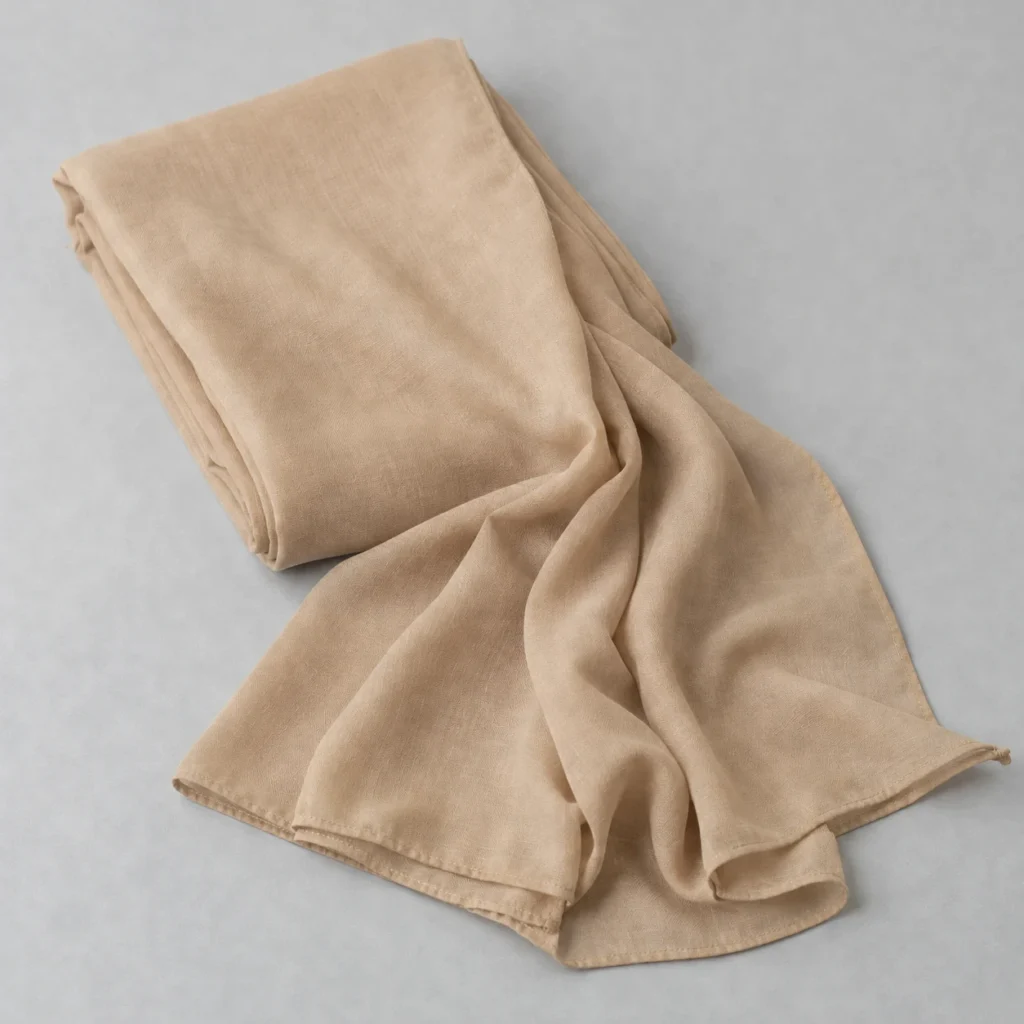
A rectangular hijab is usually about 70 × 180 cm, which is our standard size. We also make 100 × 200 cm for a fuller wrap and other sizes to order.
The 70 × 180 cm size suits most everyday wrap styles in chiffon, viscose, modal, satin and jersey. The wider 100 × 200 cm gives more fabric to drape over the shoulders and chest. Square hijabs, folded into a triangle, are typically about 90–110 cm and are made to order. Our hijab fabrics guide compares drape, grip and how see-through each fabric usually is.
What size is a sarong or beach scarf?
A sarong or beach wrap is typically about 100–115 cm wide and 160–180 cm long, large enough to tie at the waist or the chest. It is made to order, usually in light viscose, cotton voile or polyester chiffon.
A smaller 70 × 180 cm printed scarf also works as a beach cover over the shoulders or the head on sunny days. Our beach scarves and sarongs page shows the fabrics and print options.
What sizes suit children?
Children’s scarves are shorter and narrower than adult ones: our kids knit scarf is about 15 × 120 cm, the kids football scarf about 14 × 110 cm and the kids bandana 51 × 51 cm (20 in).
Children’s scarves are better without long loose ends or cords that could catch on play equipment or in doors, which is why our kids knit scarf has plain ends and no fringes, and the kids football scarf has only short fringes. For younger children, many brands choose a snood instead of a long scarf. Rules for children’s products differ by market, so your market’s labelling and safety requirements are confirmed with the quote.
How are scarf sizes measured?
A scarf is measured laid flat and relaxed, without stretching it: width across, then length from end to end. Fringes and tassels are measured separately and are not included in the length.
- Woven and printed scarves: measured after hemming, edge to edge. Squares are measured on both sides.
- Knitted scarves: measured relaxed. A knit can stretch in length when it hangs, so it is not measured while pulled.
- Loops, snoods and tube bandanas: laid flat, giving the height and the width across; doubled, the width gives the circumference.
Every value is read as “about”, with a small tolerance that is usually a little larger on knits than on hemmed wovens, because a knit relaxes after finishing. The Help Center page on sizes and colours covers the basics, and each product page in our catalogue lists the measurements of that scarf.
How do you choose the right scarf size?
Start from how and where the scarf will be worn, then pick the shape, and only then the exact size. The list below matches common uses to the sizes that usually suit them.
- Winter retail and gifts: a knitted long scarf of about 25–30 × 170–200 cm.
- Clubs, fans and events: a football scarf of about 18 × 150 cm plus fringes, or a printed 70 × 70 cm square for lighter merchandise.
- Uniforms and hospitality: a 50–55 cm neck square, a triangle neckerchief or a skinny scarf of about 8 × 120 cm.
- Fashion and accessories: a 90 × 90 cm printed square, a 70 × 180 cm long scarf or a 50 × 50 cm hair scarf.
- Merchandise and workwear: a 56 cm (22 in) bandana, or a tube bandana for sports.
- Modest-wear brands: hijabs of about 70 × 180 cm, with 100 × 200 cm for fuller styles.
- Schools and kidswear: kids scarves of about 15 × 120 cm, or snoods for younger children.
Can scarves be made in a custom size?
Yes. Any size can be made to your specification. Woven scarves are cut from partner-mill fabric to your size, and knitted scarves are knitted to your width and length on our flatbed machines in Sialkot.
A few points help. Printed scarves need artwork made for the final size, including the area lost in the hem. Very wide pieces depend on the width of the fabric roll, so the maximum is confirmed with the quote. You can approve the size on a pre-paid physical sample, made in about 5–7 days, or on a free pre-production sample approved by photos, videos or a video call after the order; our guide to sample types compares the two.
Ordering scarves in your sizes from Mr Balaclava
Every shape in this guide can be made in our standard sizes or to your own measurements. The minimum order is 50 pieces per design, and standard production takes approximately 14 days after sample approval.
What to send us
- The shape and the size in cm, or a reference scarf or photo.
- The fabric or yarn, and the colours.
- Your artwork or pattern, with its position on the scarf.
- Edge finish: hem, fringe or tassels.
- For children’s scarves, the age group and the markets you sell in.
- Quantity per design and per size, labels and packing.
Labels can carry your own size and care details, and Mr Balaclava’s name never appears on your products.
Frequently asked questions
What is the most common scarf size?
For knitted winter scarves, about 25–30 × 180 cm. For printed scarves, the 70 × 180 cm long scarf and the 90 × 90 cm square are the most familiar sizes, and for bandanas it is 56 cm (22 in).
How long should a scarf be to wrap twice?
Usually at least about 170–180 cm. Shorter scarves of 120–150 cm wrap once, and loops of about 150–180 cm round can be doubled.
Is the fringe included in the length?
Not in our measurements. A football scarf of 18 × 150 cm has its fringes on top of the 150 cm, and our product pages give the size without the fringe.
What is the difference between a 22 in and a 27 in bandana?
A 22 in bandana is 56 × 56 cm, the usual size for folding and tying at the neck. A 27 in bandana is 69 × 69 cm and leaves longer ends when tied round the head or face.
Can one design be made in several sizes?
Yes. A print can be redrawn for a 70 cm and a 90 cm square, or a fan scarf made in adult and kids sizes. Tell us the quantity per size when you ask, and how the minimum of 50 pieces per design applies to your split is confirmed with your quote.
Browse every size in our scarf catalogue, see the full range on the custom scarves page, or send us your sizes for a quote.