Two scarves can share a size and a fabric and still look nothing alike. This guide is for brands, clubs, companies, schools and promotional buyers who want a scarf with their own design. It explains each way of printing and decorating a scarf, which fibres each one suits, and how the edges and labels are finished, so you can choose before you ask for a quote.
Decoration and finish are two layers of a scarf; shape, construction and fibre are the others, and our guide to the different types of scarves shows how they fit together. The construction matters most here: a knitted scarf and a woven scarf are decorated in different ways, as our knitted vs woven scarves guide explains.
How are custom scarves printed and decorated?
Woven scarves are printed: by digital printing, screen or rotary screen printing, sublimation, heat transfer or discharge printing. Knitted scarves have the design knitted in as jacquard. Both can add embroidery, woven labels, patches, hang tags and branded packaging.
We knit our knitted scarves in-house in Sialkot on flatbed machines. Woven fabrics come from partner mills and are cut, printed, hemmed, finished and branded in-house. A flat print does not sit well on a knit, because the ink breaks up across the stitches when the scarf stretches, so the design of a knitted scarf is usually part of the knit itself.
What is digital printing on scarves?
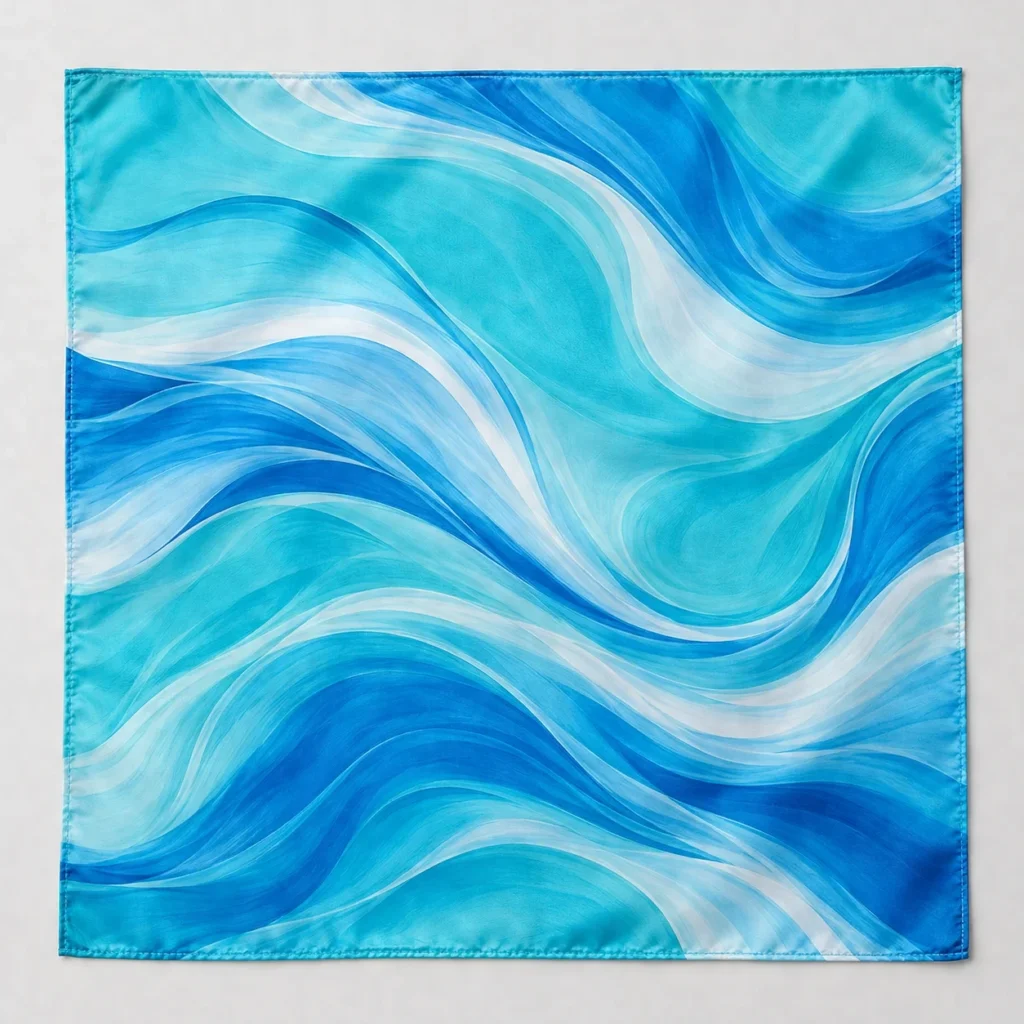
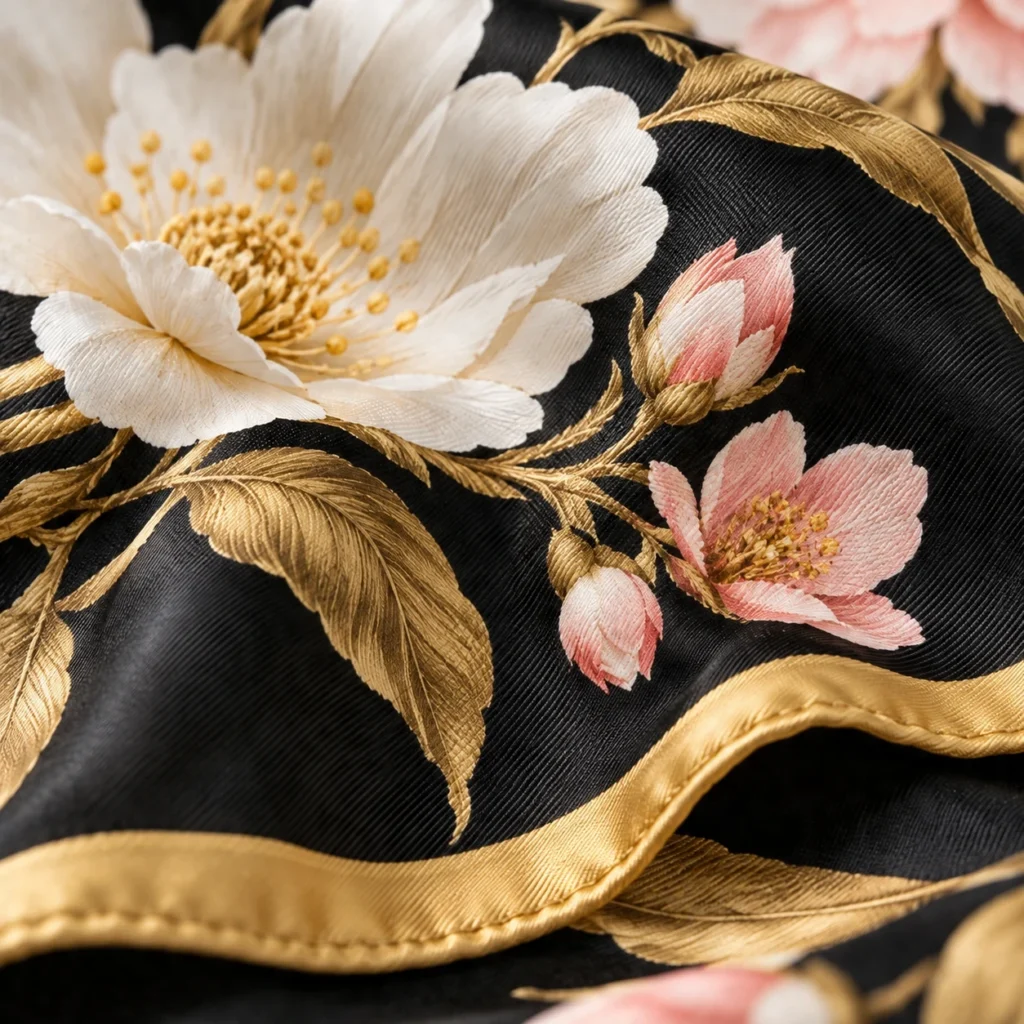
Digital printing sprays dye onto the fabric from your file, like an inkjet printer, so there are no screens and no limit on colours. It suits photos, gradients and detailed patterns on silk, viscose, modal, cotton and polyester.
How it is done: the fabric is prepared, printed with dyes matched to the fibre (acid dyes on silk, reactive dyes on cotton, viscose and modal), then usually steamed and washed so the colour sets in the fibre. The print becomes part of the fabric and keeps its soft hand. Our mulberry silk twill squares are printed this way.
Limits: colours are matched closely to your references, but each fabric takes dye a little differently, so the colour is approved on the sample. Because there is no setup per colour, digital printing usually suits small runs and many designs.
When is screen printing the right choice?
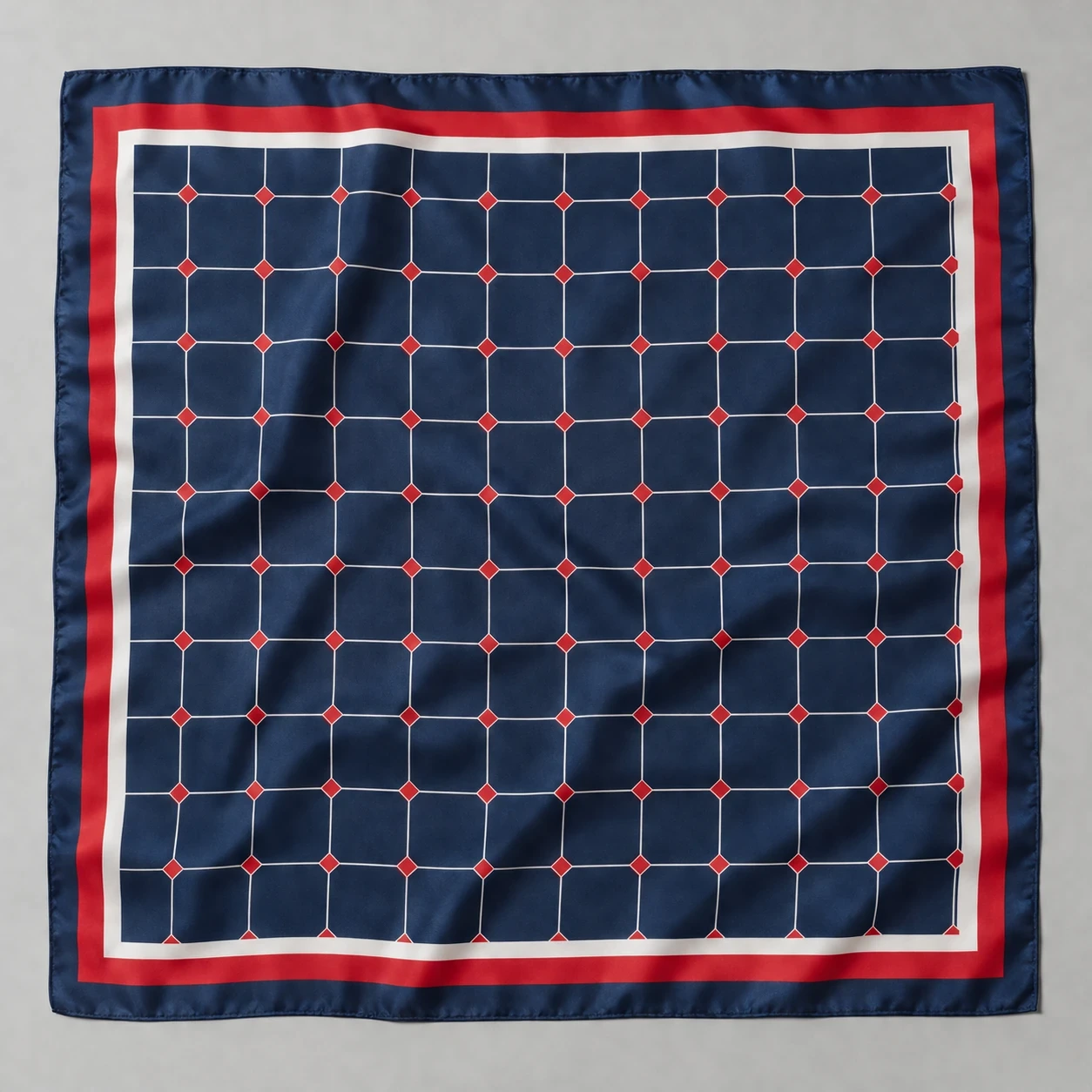
Screen printing pushes ink or dye through a fine mesh screen, one screen per colour. It gives strong, solid colours and close colour matching, and suits designs with a few flat colours, such as logos, borders and classic bandana patterns.
Each colour needs its own screen, so a design with fewer colours is simpler to set up, and the method tends to suit larger runs of the same design. Cotton bandanas are the classic example: our paisley cotton bandana is screen printed. The screen printing glossary entry explains the terms.
Rotary screen printing
Rotary screen printing uses cylinders instead of flat screens, one per colour, and prints the fabric as it runs through. It suits long runs of a repeating pattern, for example on viscose for long scarves, before the fabric is cut into pieces.
What is sublimation, and which scarves can be sublimated?
Sublimation prints the design on paper and transfers it into the fabric with heat, where the dye bonds with the fibre. It works only on polyester with a light base, and gives bright, edge-to-edge colour with no feel on the surface.
Sublimation suits polyester satin, polyester twill, polyester chiffon and fleece: printed fan scarves, promotional squares and sports bandanas. It cannot be used on silk, cotton, viscose or modal, because the dye does not bond with those fibres, and it cannot print white, since white is the fabric itself. The sublimation glossary entry gives a short explanation.
Heat transfer and discharge printing
Heat transfer prints a logo or name on a film and presses it onto the fabric. Discharge printing removes the dye from a dark fabric where the design sits, which leaves a soft, light print on dark cotton.
Heat transfer adds a thin layer on top of the fabric, so it is usually kept to small logos, names or numbers on smooth fabrics such as polyester and fleece. On fine, drapey silk it is not the usual choice.
Discharge printing is the classic method for light designs on black or navy cotton, such as biker and skull bandanas. Because the print is part of the fabric rather than a layer on top, it stays soft. Whether a ground colour discharges well is checked on the sample.
How do knitted-in jacquard designs work?
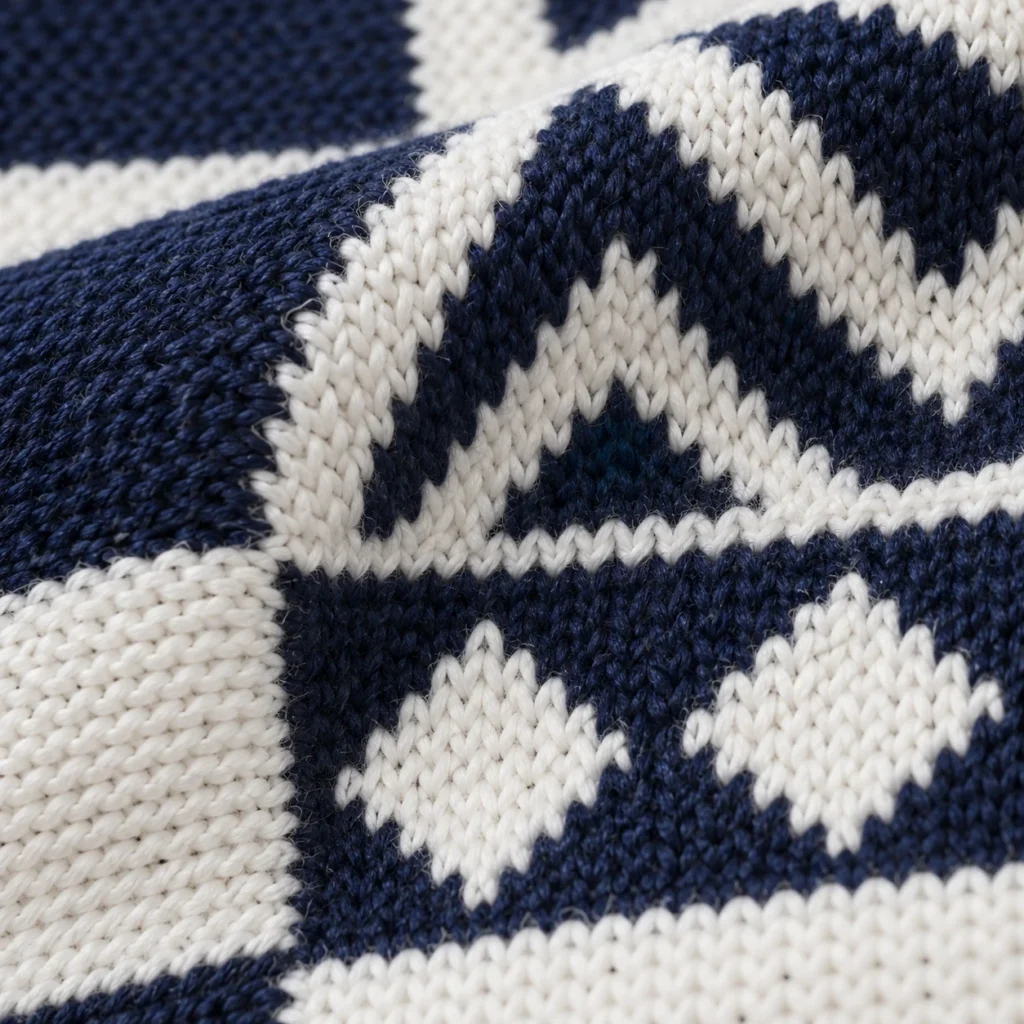
A jacquard scarf has the design knitted in with several yarn colours, usually 2–4, so the pattern is the knit itself and there is nothing to crack or peel. It is the classic method for football, club and fan scarves and for corporate winter scarves.
How it is made: your artwork is turned into a knit file, stitch by stitch, and knitted in-house on our flatbed machines. On a single-layer jacquard the design shows on the front and in reverse colours on the back. A double-layer jacquard is two knitted layers joined together, so both faces are clean and the scarf is warmer; double-layer fan scarves can usually show a different design on each side, like our half-and-half match scarves. The double-layer acrylic jacquard knit is the fabric behind most of them.
Limits: detail is set by the stitch, so very fine lines and small text are simplified; bold crests, club names and stripes work well. Our football scarf guide goes deeper into designing for jacquard, and the same principles apply to beanies, as the beanie logo guide shows.
Embroidery, woven labels and patches
Embroidery stitches a logo or initials into the scarf, usually small and near one end or in a corner. Woven labels and patches carry the brand on a separate piece sewn onto the scarf, which many scarf brands prefer to a logo on the fabric itself.
Embroidery suits knitted scarves, fleece and cotton bandanas well. On thin silk, chiffon or voile it is tested first, because fine fabric can pucker around the stitches, so small initials or a small logo usually work better than a large one. Our embroidered logo bandana has a corner motif.
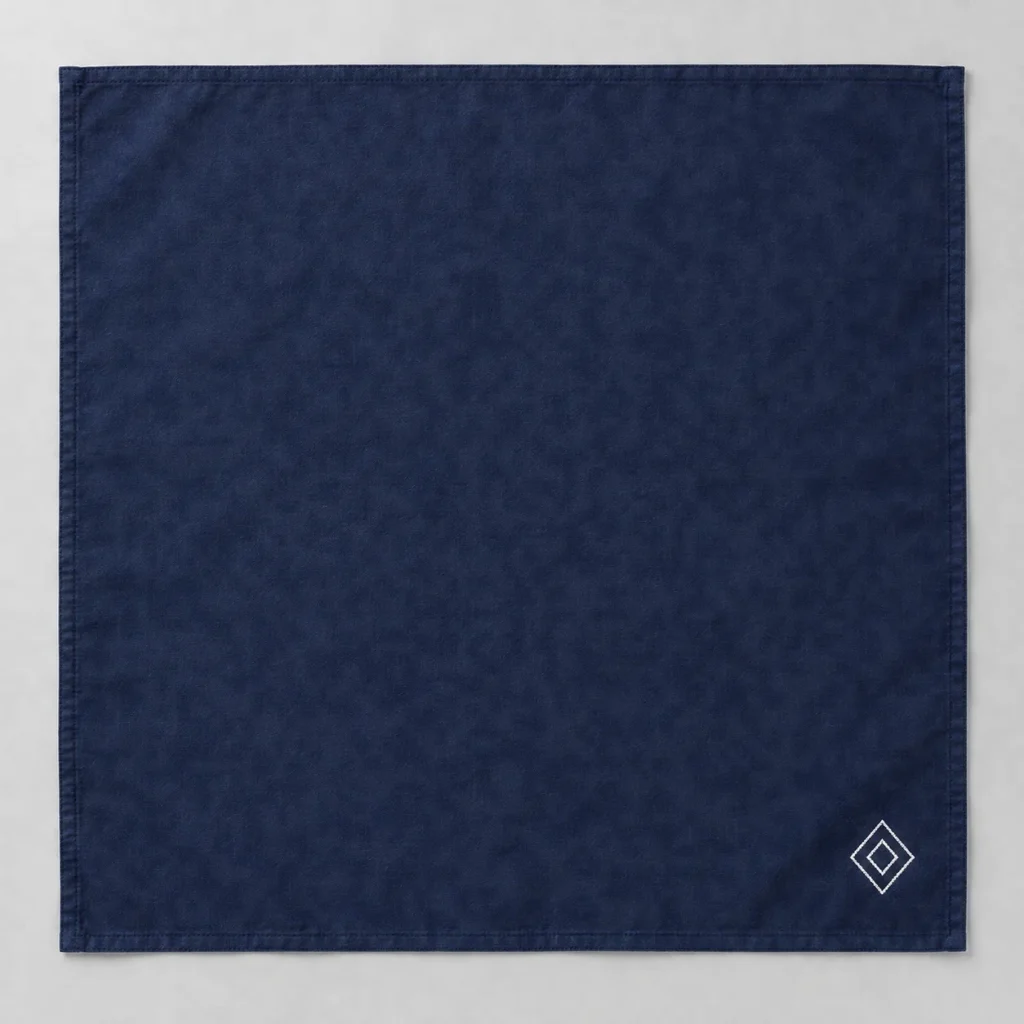
For discreet branding, a woven or satin label at one end, or an embroidered tag stitched on, keeps the scarf itself clean. Patches suit knitted and fleece scarves. The woven label glossary entry explains the label types.
Hang tags and packaging
Finishing touches matter too: hang tags with your brand and barcode, plain or branded polybags, header cards and retail boxes for gift scarves. Our labels and packaging guide lists the options, and Mr Balaclava’s name never appears on your products.
Which method suits which fibre?
The fibre decides the method: sublimation needs polyester, silk and other natural fibres are digitally or screen printed, and knits are knitted with jacquard or embroidered. The table gives the usual pairings.
| Method | Silk | Polyester (satin, twill, chiffon) | Viscose and modal | Cotton (poplin, voile) | Knitted (acrylic, wool) | Fleece |
|---|---|---|---|---|---|---|
| Digital printing | Yes (acid dyes) | Yes | Yes (reactive dyes) | Yes (reactive dyes) | No | Not usual |
| Screen printing | Yes | Yes | Yes | Yes | No | Yes |
| Rotary screen printing | Not usual | Possible | Yes, long repeats | Possible | No | No |
| Sublimation | No | Yes, light base | No | No | No | Yes (polyester) |
| Heat transfer | Test first | Yes, small logos | Test first | Yes, small logos | Test first | Yes |
| Discharge printing | No | No | Test first | Yes, dark grounds | No | No |
| Knitted-in jacquard | No | No | No | No | Yes, usually 2–4 colours | No |
| Embroidery | Test first, small | Test first | Test first | Yes | Yes | Yes |
| Woven label or patch | Label | Label | Label | Label | Label or patch | Label or patch |
Our Help Center page on decoration methods gives the same overview for all our products.
One-sided or double-sided print?
Most printed scarves are printed on one side. On light, open fabrics the design usually shows through to the back in a lighter tone; on heavier silk twill and satin the back is usually paler and less sharp.
On thin silk chiffon, habotai and polyester chiffon, the back of a one-sided print often looks close to the front, which suits long scarves and hijabs that are draped. On heavier squares, where both faces show when the scarf is knotted, two printed layers can be sewn together, or double-sided printing can be discussed on request. Both add work, so the options are confirmed with the quote. Knitted scarves work differently: a double-layer jacquard shows the design on both faces.
Which edge finishes are there for scarves?
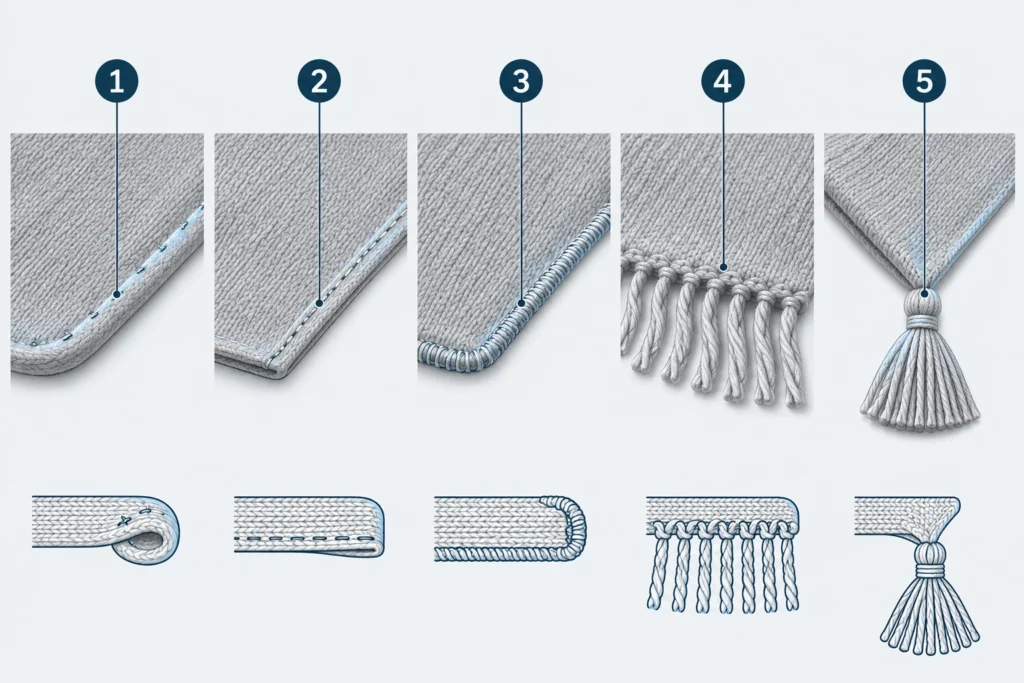
Woven scarves are finished with a hem: hand-rolled on silk and fine wovens, or machine rolled or overlocked on most others. Knitted scarves usually end in a yarn fringe or a plain edge, and tassels or twisted fringes can be added to many styles.
| Finish | Usual fabrics | Look and feel | Notes |
|---|---|---|---|
| Hand-rolled hem | Silk twill, silk satin, silk chiffon | Soft, rounded edge with small hand stitches | Slower to make, so it tends to add time and cost |
| Machine rolled hem | Polyester, viscose, cotton, silk | Narrow, flat edge with one stitch line | The usual hem on printed scarves and bandanas |
| Overlock edge | Jersey, fleece, chiffon, tube bandanas | Thread wrapped over the edge | Practical and quick; suits stretch and sports pieces |
| Knitted fringe | Knitted and fan scarves | Yarn fringe at both ends | Short fringes on kids styles, or plain ends |
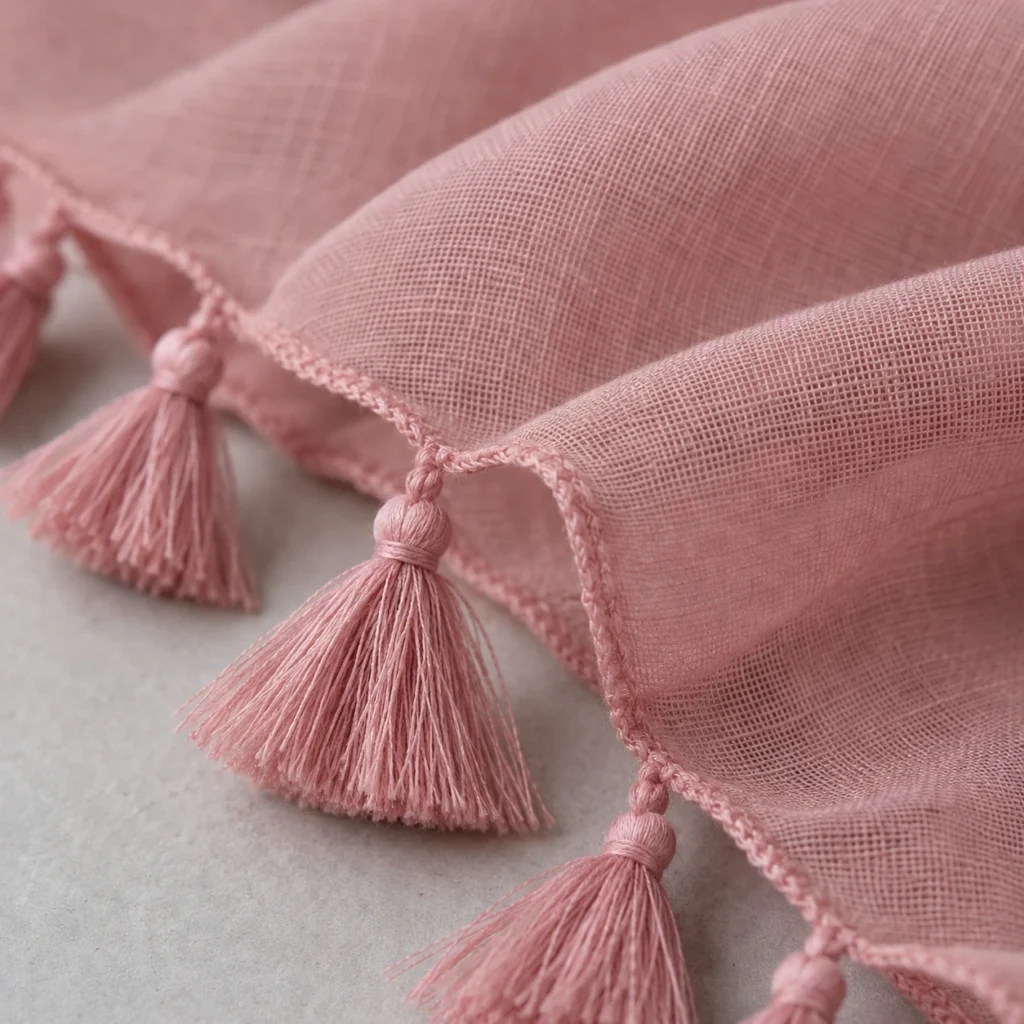
| Tassels | Fan scarves, hijabs, fashion wovens | Tufts of yarn at the ends or corners | Usually in the scarf’s colours or a contrast |
| Twisted or braided fringe | Viscose, woven wool and cashmere blends | Twisted cords of yarn at the ends | Common on woven long scarves and wraps |
| Other finishes on request | Depends on the fabric | Raw or frayed edges, picot or baby hems, pom-poms on knits | Possible on request; confirmed with the quote |
Hand-rolled or machine hem?
A hand-rolled hem rolls the edge into a soft tube and stitches it by hand, so it drapes softly and suits printed silk squares. A machine hem is narrower and flatter, and suits most polyester, viscose and cotton scarves. Our printed silk twill squares have hand-rolled hems.
Fringes and tassels
On knitted and fan scarves the fringe is made from the scarf’s own yarn at both ends, so it matches. Tassels suit fan scarves, hijabs and fashion scarves, and twisted or braided fringes are common on woven long scarves and wraps. For children’s scarves, short fringes or plain ends are the usual choice, without long loose ends that could catch.
What artwork do you need for a printed scarf?
Send your design at the final scarf size, ideally as a vector file for logos and a high-resolution file for photos and detailed prints, with Pantone references for the key colours. We prepare a mockup for your approval before sampling.
The artwork includes the area lost in the hem, so borders and corner motifs land in the right place. Pantone codes help match colours across screen prints, jacquard yarns and labels; the Pantone glossary entry explains how they are used, and our artwork file guide lists the formats. If you only have a sketch, our design support can help turn it into print-ready artwork.
Can you print a club crest, band name or famous logo?
We only print or knit designs you own or are licensed to use. Club crests, band names and logos, faces of known people and brand marks belong to their rights holders, so their written permission is needed.
With your artwork you confirm that you may use it; if anything is unclear, we ask before sampling.
How do you choose the right print and finish?
Start from the fabric and the look you want, then choose the method that suits both.
- Photo prints and many colours on polyester: sublimation, edge to edge.
- Detailed prints on silk, viscose or modal: digital printing, with a hand-rolled hem on silk squares.
- A few flat colours on cotton bandanas: screen printing; discharge for light designs on dark cotton.
- Club and fan scarves: knitted-in jacquard, double-layer for two clean faces, with a knitted fringe.
- Discreet retail branding: a woven label or an embroidered tag, with hang tags and branded packaging.
- Corporate and uniform scarves: a printed logo repeat or a small embroidered logo in a corner.
Ordering printed and finished scarves from Mr Balaclava
Every method and finish in this guide can be combined with our standard sizes or your own. The minimum order is 50 pieces per design, and standard production takes approximately 14 days after sample approval. You can approve the print and the edges on a pre-paid physical sample, made in about 5–7 days, or on a free pre-production sample approved by photos, videos or a video call after the order.
What to send us
- The scarf type, size and fabric, or a reference scarf or photo.
- Your artwork, with Pantone references for the key colours.
- The print or knit method, if you already have a preference.
- Edge finish: hand-rolled or machine hem, fringe or tassels.
- Labels, hang tags and packing.
- Quantity per design and confirmation that you own or are licensed to use the design.
Frequently asked questions
Can silk scarves be sublimation printed?
No. Sublimation dye only bonds with polyester, so silk is digitally printed with acid dyes or screen printed. If you want the look of a sublimated print at a lower price, polyester satin or polyester twill is the usual alternative.
Can you print white on a dark scarf?
Not by sublimation, which cannot print white. On dark cotton, discharge or screen printing can give light designs, and on knitted scarves white is simply one of the jacquard yarns.
Can the logo go only on the label?
Yes. Many scarf brands keep the scarf clean and put the brand on a woven label, an embroidered tag or a hang tag. The scarf can still be printed or knitted with your own pattern.
What is a hand-rolled hem?
An edge rolled into a small, soft tube and stitched by hand. It is the traditional finish on printed silk squares and drapes more softly than a flat machine hem.
Do printed scarves look the same on both sides?
Not usually. On thin fabrics the back is close to the front; on heavier silk and satin it is paler. A sewn double layer or double-sided printing can be discussed when both faces matter.
Compare fabrics in our scarf fabrics guide, check measurements in our scarf sizes guide, or send us your artwork for a quote.