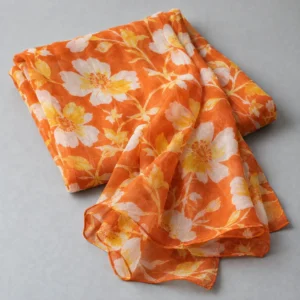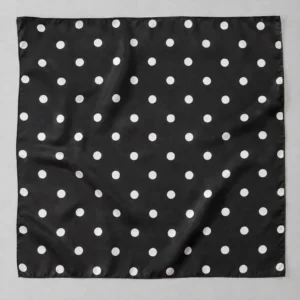
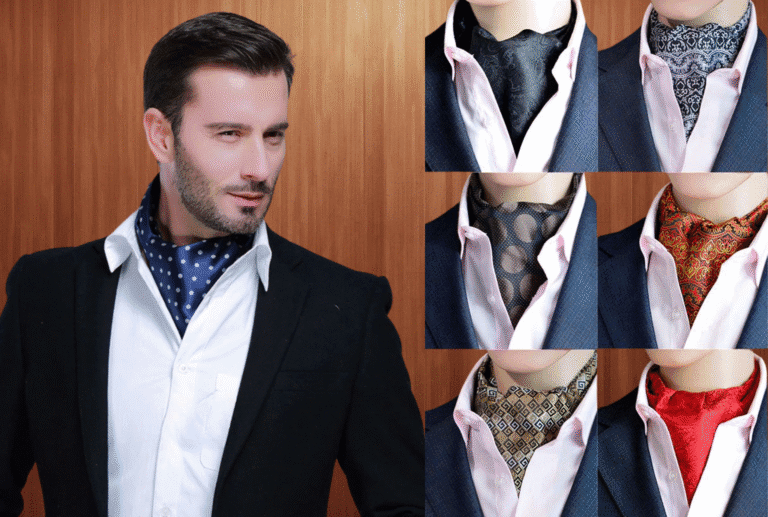


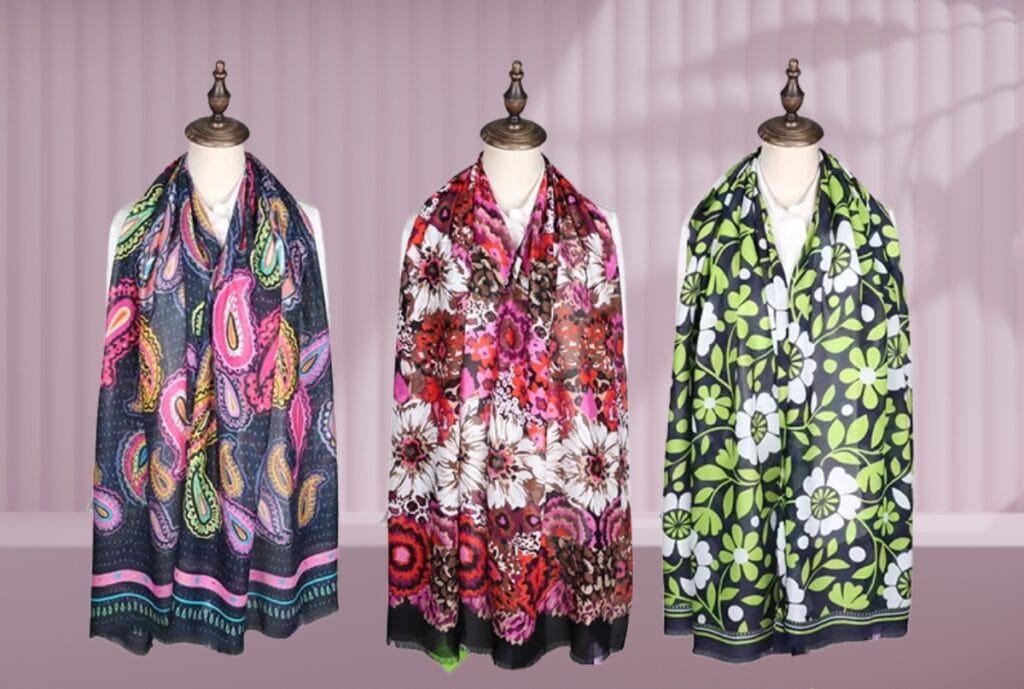
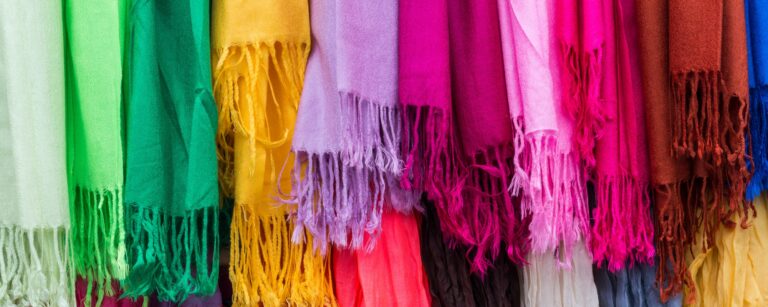
Printed Viscose Long Scarf
Custom Scarves
- Price range
- $2.85 – $3.80 / pc
- Minimum order
- 50 pcs
- SKU
- MRB-SCF-113
Custom scarves · Category
Printed scarves carry your artwork edge to edge: squares, neck scarves, hair scarves and long scarves in polyester satin and twill, chiffon, viscose, modal and cotton voile. The fabric comes from partner mills; Mr Balaclava prints, hems and brands every scarf in Sialkot, from 50 pieces per design and with a standard lead time of about 14 days.
Updated
Specifications
What we can build into a printed scarf, and the terms that apply to every order.
| Fabrics | Polyester satin, silk-touch twill and chiffon, recycled polyester on request; viscose, modal and cotton voile |
|---|---|
| Sizes | Squares from 50 × 50 to 90 × 90 cm, oblong scarves from 30 × 150 to 70 × 180 cm, bandanas, snoods or your own measurements |
| Printing | Sublimation on polyester, digital printing, rotary and flat screen printing, heat transfer for logos |
| Edges | Machine-rolled and narrow hems, overlocked edges, fringes |
| Branding | Woven, satin or printed labels, printed or embroidered logos and monograms, hang tags and branded packaging |
| Minimum order | 50 pieces per design |
| Samples | Pre-paid physical samples in about 5–7 days, paid 100% in advance; or a free pre-production sample approved by photos or video after the order |
| Lead time | Approximately 14 days after sample approval as standard; the confirmed schedule is agreed for each order |
Focused guides
Two printed-scarf requests have their own page with the details buyers ask about.
Buyer's guide
Polyester is strong, light and quick-drying, and it resists creasing, shrinking and fading. It is also the fibre that takes sublimation printing: heat bonds the dye to the fibre, so all-over designs stay sharp and bright without changing the feel of the fabric.
The same fibre can be woven as glossy satin, sheer chiffon or soft microfibre, or knitted as fleece, so polyester covers everything from fashion squares to fan and winter scarves. Recycled polyester, made mainly from recycled plastic bottles, offers the same performance for eco collections.
Printed scarves with your logo and colours for campaigns, trade shows and events.
Sublimated fan scarves and snoods in team colours.
Satin and chiffon squares with full-colour designs for accessory ranges.
Easy-care scarves for airline, hotel and retail staff uniforms.
Compare
A scarf design is printed on the fabric, knitted into it or added afterwards. We recommend the method that suits your fabric, artwork and quantity, and show the result in a sample before bulk production.
| Method | How it works | Fabrics | Best for |
|---|---|---|---|
| Digital printing | The artwork is printed straight onto the fabric, with unlimited colours and fine gradients | Silk, satin, chiffon, viscose, cotton, linen and polyester | Photographic and detailed designs, many designs in small runs |
| Rotary screen printing | Cylindrical screens print a continuous repeat along the fabric roll, one screen per colour | Cotton, viscose and polyester | Long runs of all-over repeat patterns |
| Flat screen printing | Flat screens print one colour at a time on a printing table | Silk, cotton and polyester | Bold placement prints, borders and bandanas |
| Sublimation | Heat turns the dye into a gas that bonds with the fibre, so the print keeps the fabric's feel | Polyester and high-polyester blends | All-over prints for sports and promotional scarves |
Satin
Satin can be woven from different fibres. Silk satin is the most luxurious: light, cool and with a deep lustre. Polyester satin looks similar at a lower price, is very durable and takes sublimation prints. Viscose satin is softer and less shiny, with a fluid drape.
Satin shows prints with sharp detail and rich colour, which is why it is the classic fabric for printed squares, neck scarves and hair scarves. Matte satin keeps the smooth handle with less shine.
Viscose and modal
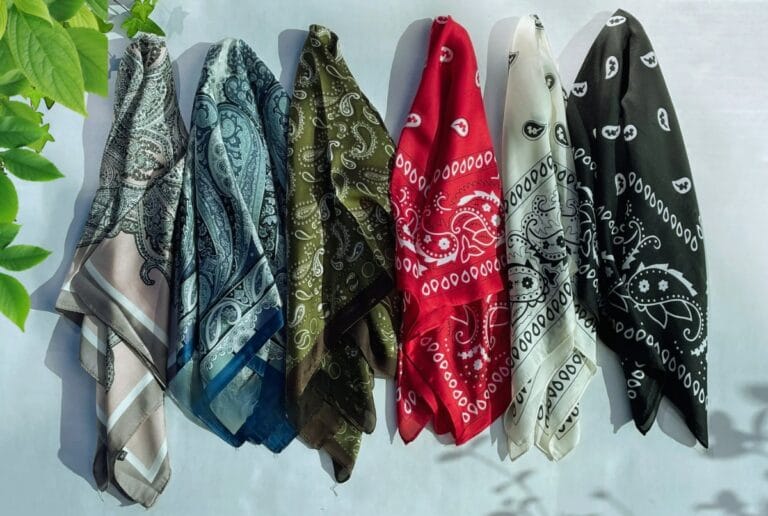
Viscose is a regenerated cellulose fibre: wood pulp is dissolved and spun into a soft filament. The fabric feels cool and smooth like silk, breathes like cotton and drapes fluidly, at a much lower price than silk. Modal is a refined viscose that is softer and keeps its shape better after washing.
Viscose absorbs dye well, so digital and rotary screen prints come out bright and detailed, which makes it a favourite for printed fashion scarves and beach wraps.

Hair scarves
Hair scarves should hold without damaging the hair. Silk and satin have a smooth surface that creates little friction, so they are kind to curls and styled hair; cotton and jersey grip better and suit headbands and head wraps for active wear.
Small squares and skinny scarves show off detailed prints, so digital printing on silk or satin is the most popular choice. The same print can be made in several sizes, for example a small square for the hair and a larger square for the neck.
Customization
Every part of the design is yours. Our design team sends a mockup of each print, logo and label placement before production starts.
Polyester satin or twill for sublimation and value, chiffon for sheer prints, viscose or cotton voile for soft, matte prints.
All-over sublimation for photographic and edge-to-edge designs, screen printing for bold spot colours.
Squares, oblongs, bandanas or snoods, with rolled or narrow hems, overlocked edges or fringes.
Printed logos, woven labels, hang tags and branded packaging.
How ordering works
Every order starts with your brief and ends with tracked delivery.
Tell us the style, fabric, size, quantities, design and deadline. We reply with a quote and suggest a suitable fabric, print method and finish.
We confirm every measurement, colour, print and label placement in a mockup and a tech pack, then make your sample in about 5–7 days. Samples are paid 100% in advance.
Standard production lead time is approximately 14 days after sample approval. Every piece is inspected, pressed, packed to your specification and shipped with tracking.
B2B catalog
Developed styles you can order with your own branding, or use as the starting point for a custom design.
Custom Scarves
Custom Scarves
Custom Scarves
Custom Scarves
Custom Scarves
Custom Scarves
Custom Scarves
Custom Scarves
More categories
See the other scarf categories we make, or compare the whole range on the custom scarves page.
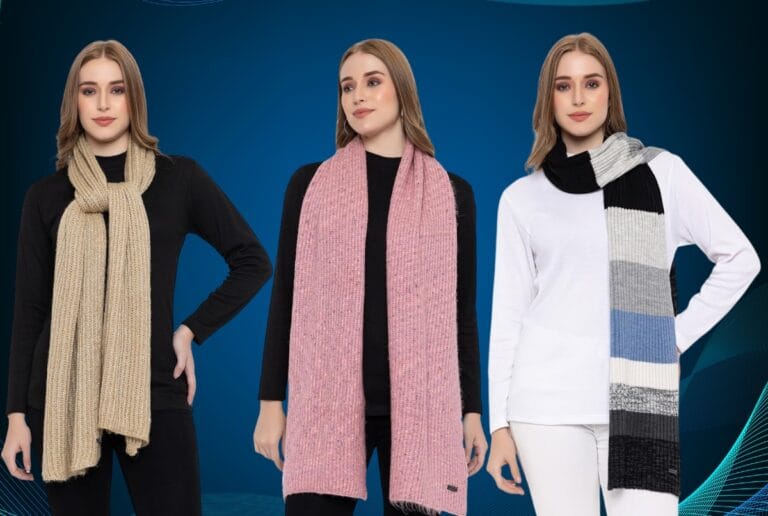 Knitted ScarvesAcrylic, wool, merino and cashmere scarves knitted in-house.
 Football ScarvesJacquard, bar and printed scarves in club colours.
 Silk ScarvesSilk twill, habotai, satin, chiffon and georgette scarves.
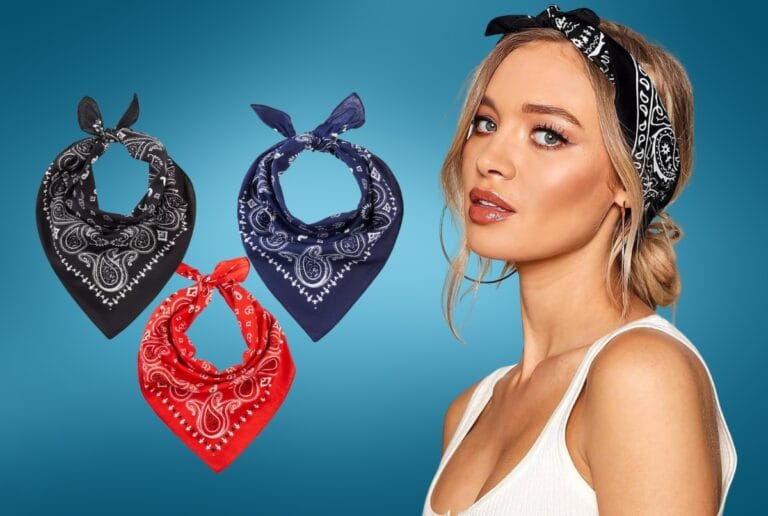 BandanasPrinted cotton and polyester bandanas with your logo.
 NeckerchiefsUniform neckerchiefs and neck scarves in your brand colours.
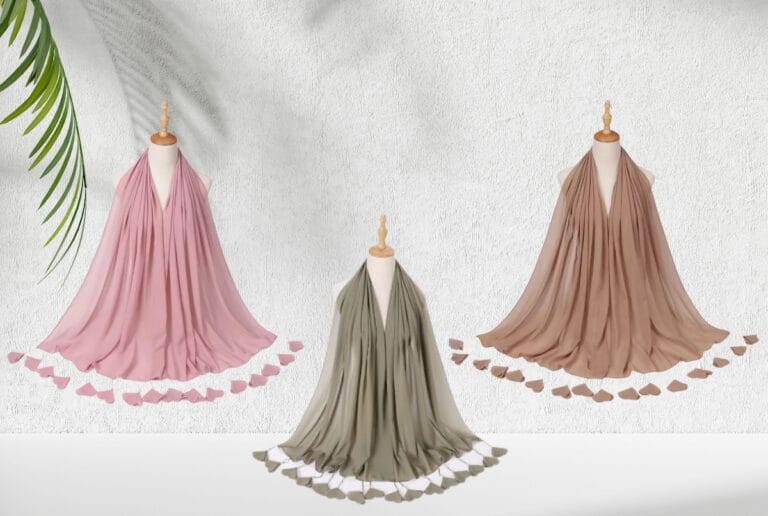 HijabsChiffon, georgette, viscose and modal hijabs under your label.
FAQ
The minimum order is 50 pieces per design. Larger runs are made on the same lines, with a monthly capacity of around 100,000 pieces.
Sublimation uses heat to turn the dye into a gas that bonds with polyester fibres. The print becomes part of the fabric, so it does not crack, peel or change the feel, and it can cover the scarf edge to edge.
Yes. It is durable, affordable and easy to wash, and it prints logos and brand colours brightly, so it is the most common fabric for promotional, event and fan scarves.
Yes. Recycled polyester fabrics are available in satin, chiffon, twill and fleece qualities and print the same way as virgin polyester. The composition is stated on the quote and on the care label.
Viscose absorbs dye evenly, so prints look bright and detailed on a soft, matte fabric that drapes well.
Silk and satin are the most popular because their smooth surface causes less friction and frizz. Cotton and jersey grip better for headbands and active wear.
Standard production lead time is approximately 14 days after sample approval. Actual lead time depends on the product, quantity, customization and material availability, and the confirmed schedule is agreed for each order. Express shipping by DHL, FedEx or UPS then takes 3–6 working days.
Buyer guides
Guides from the Journal on custom scarves and private label ranges.
 Materials & Fabrics · 6 min readSilk Momme Explained: Choosing Fabrics for Printed ScarvesSilk momme explained: typical weights of silk twill, habotai, satin, chiffon and georgette, and how silk compares with polyester and viscose for scarves.Read the guide
 Private Label & OEM · 6 min readHow to Start a Private Label Scarf Line: From Brief to DeliveryPrivate label scarves explained: choose categories and fabrics, prepare a tech pack, pick a sample type, plan MOQ per design, labels, timing and payment.Read the guide
 Style & Trends · 8 min readScarfs for Every Season: Fashion Meets Function in Every ThreadDiscover how scarfs for every season bring fashion and function together in every thread. Explore styling tips, seasonal trends, fabricsRead the guide