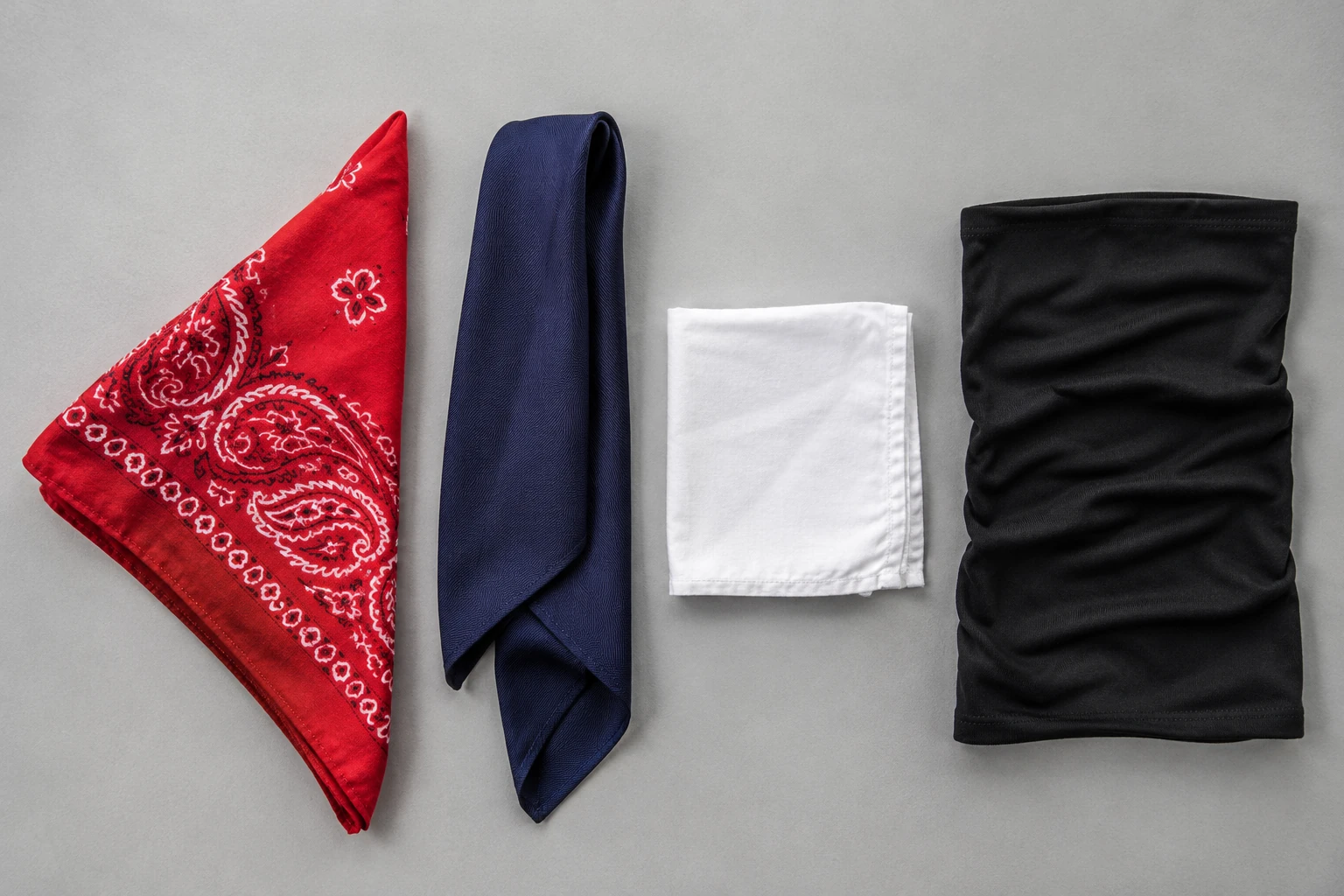
Bandana, neckerchief, handkerchief, kerchief, neck gaiter, tube bandana: the names are used loosely, and shops often sell the same square under two of them. For a buyer, the difference matters, because each one has its own usual size, fabric, print method and customers. Our complete guide to bandanas covers the bandana itself in depth; this article sets it next to its closest relatives.
Below you will find a short definition of each, a comparison table with sizes in centimetres, advice on when to choose which, and how we make each one in Sialkot, Pakistan. If you already know you need bandanas, our custom bandanas page shows the options.
What is the difference between a bandana and a neckerchief?
A bandana is a larger printed square, usually cotton, folded and worn in many ways. A neckerchief is a smaller, neater square or triangle knotted at the throat, often in polyester twill or silk, and is the usual choice for uniforms.
The two overlap. A bandana tied at the neck is worn as a neckerchief, and some neckerchiefs are cut from bandana cotton. The difference lies less in the object than in the purpose: a bandana is a casual accessory with a bold print, while a neckerchief is part of an outfit, often matched to a uniform and worn the same way by everyone in a team.
What is a bandana?
A bandana is a square of light fabric, traditionally printed cotton, that is folded before it is worn: around the neck, on the head, at the wrist or tied to a bag.
The standard adult bandana measures 56 × 56 cm (22 in); 51 cm (20 in) suits children and small styles and 69 cm (27 in) is the oversized size for head wraps. Classic bandanas are cotton poplin, a light, tightly woven plain cotton, printed with a paisley, a logo or an all-over pattern. Our bandana size chart lists every size in centimetres and inches, and our guide on how to tie a bandana shows twelve ways to wear one.
What is a neckerchief?
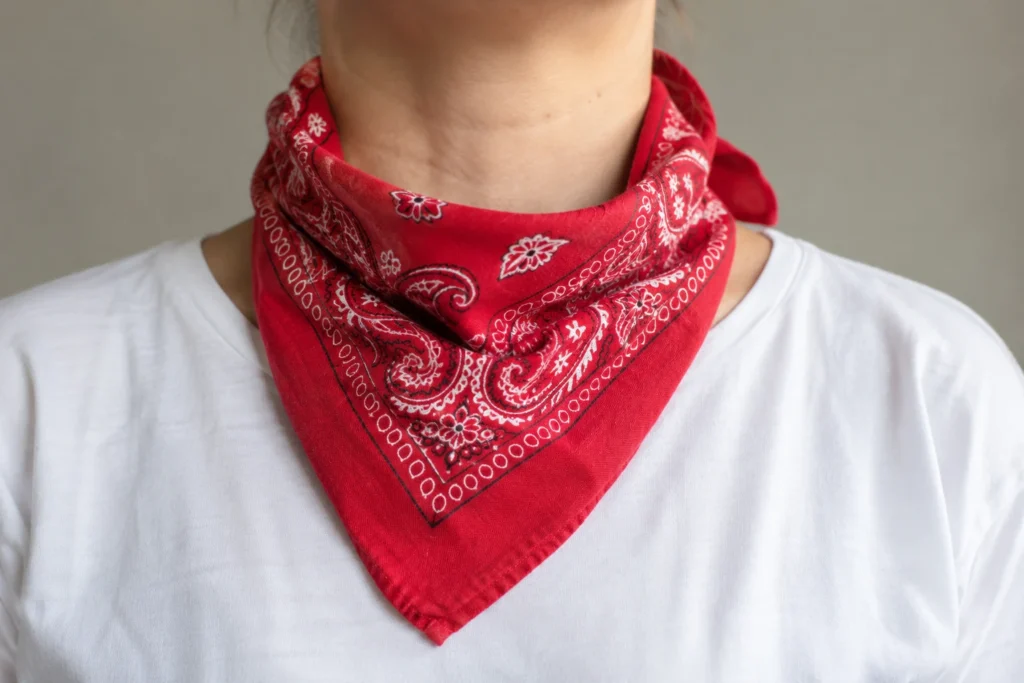
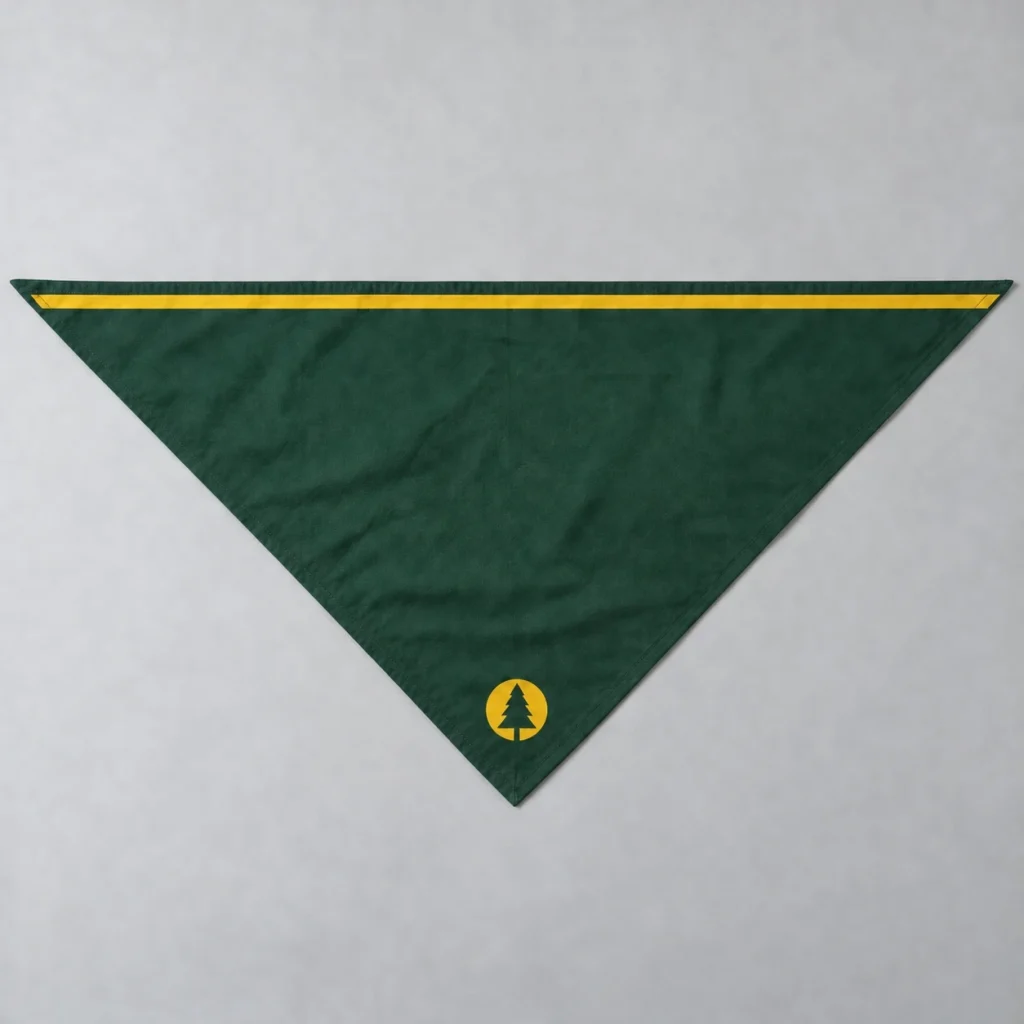
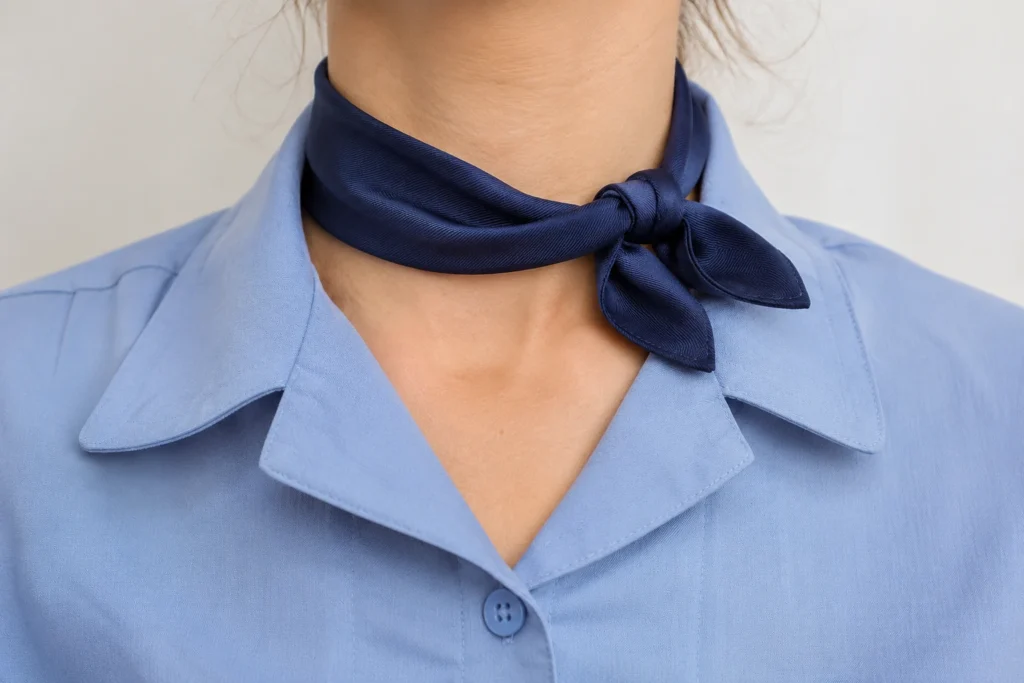
A neckerchief is a small square or triangle of fabric tied neatly at the throat. The name describes how it is worn: as part of a uniform, a group outfit or a smart look.
Neckerchiefs are usually about 50 × 50 to 70 × 70 cm, or cut as triangles so they tie without folding. The usual fabrics are polyester silk-touch twill and polyester satin, because they hold a neat knot, print brand colours brightly and are easy to wash; silk twill is chosen for smarter uniforms, and cotton for a casual look. Airlines, hotels, banks, retail staff, scout and youth groups and event crews wear them. Scout neckerchiefs are often held with a ring or slide instead of a knot. See our custom neckerchiefs for the full range.
A folded bandana and a cut triangle neckerchief can look alike once tied, but they wear differently. Folding a square into a triangle doubles the fabric, so a bandana knot is fuller and softer. A neckerchief cut as a single-layer triangle lies flatter and ties a smaller knot, which is why uniform buyers often prefer it. It also uses less fabric per piece, while a bandana can be worn more ways.
What is a handkerchief?
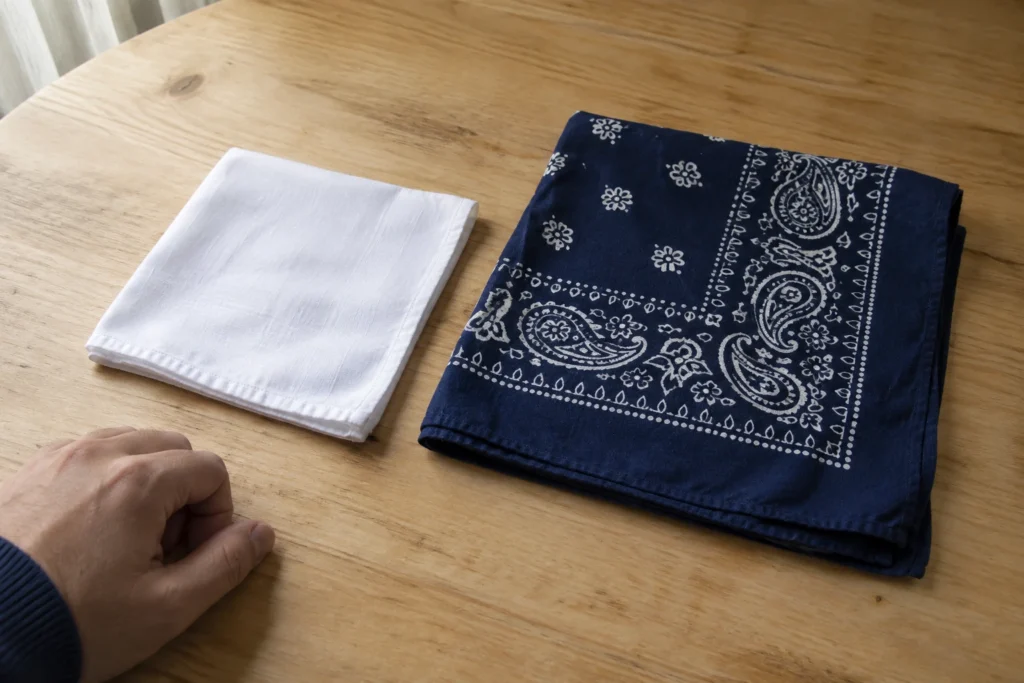
A handkerchief is a small square of thin fabric, usually about 30–40 cm (12–16 in), carried in a pocket or bag and used to wipe the hands or face, or folded as a pocket square.
Handkerchiefs are usually fine cotton or linen, plain white or lightly patterned, with narrow hems. The bandana grew out of the handkerchief: early bandanas were bright cotton or silk handkerchiefs with spotted or printed patterns; our history of the paisley bandana tells that story. Today the two have split: a handkerchief is carried, a bandana is worn.
What is a neck gaiter or tube bandana?
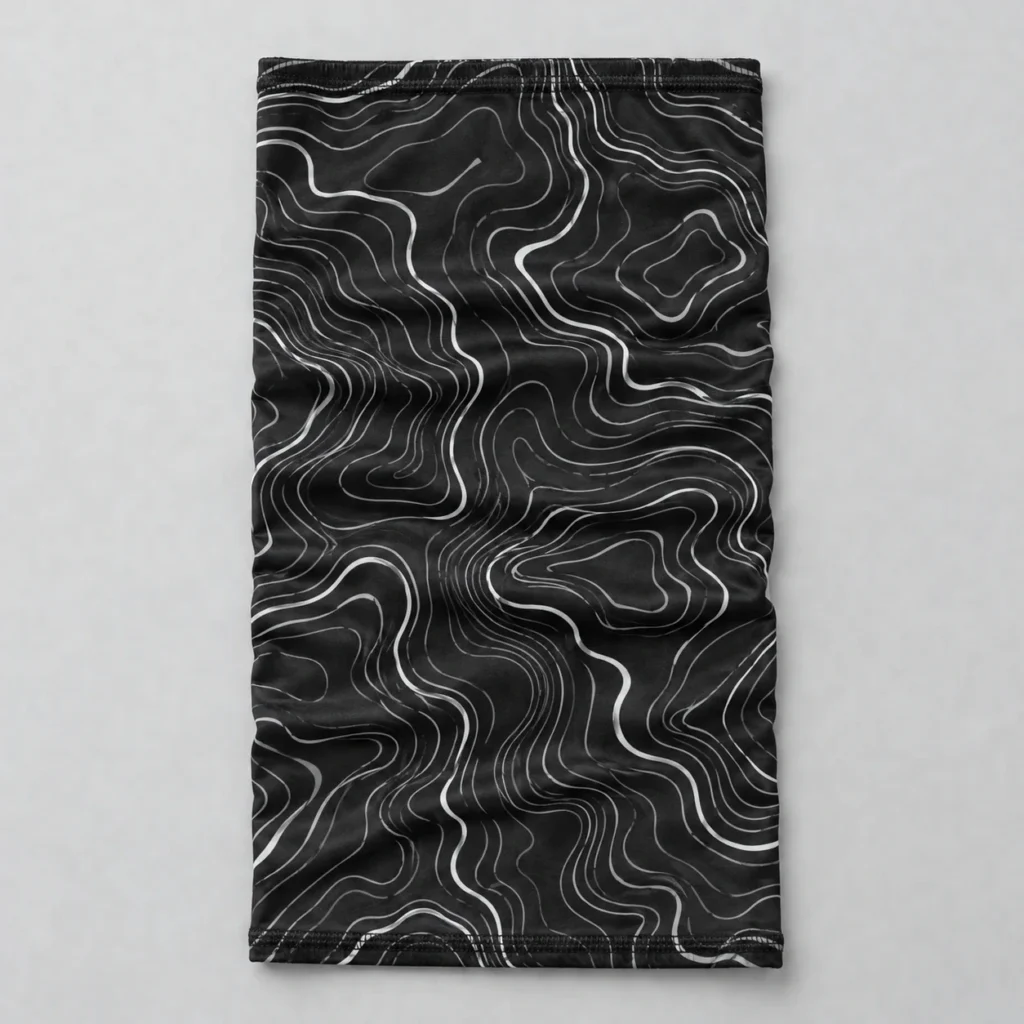
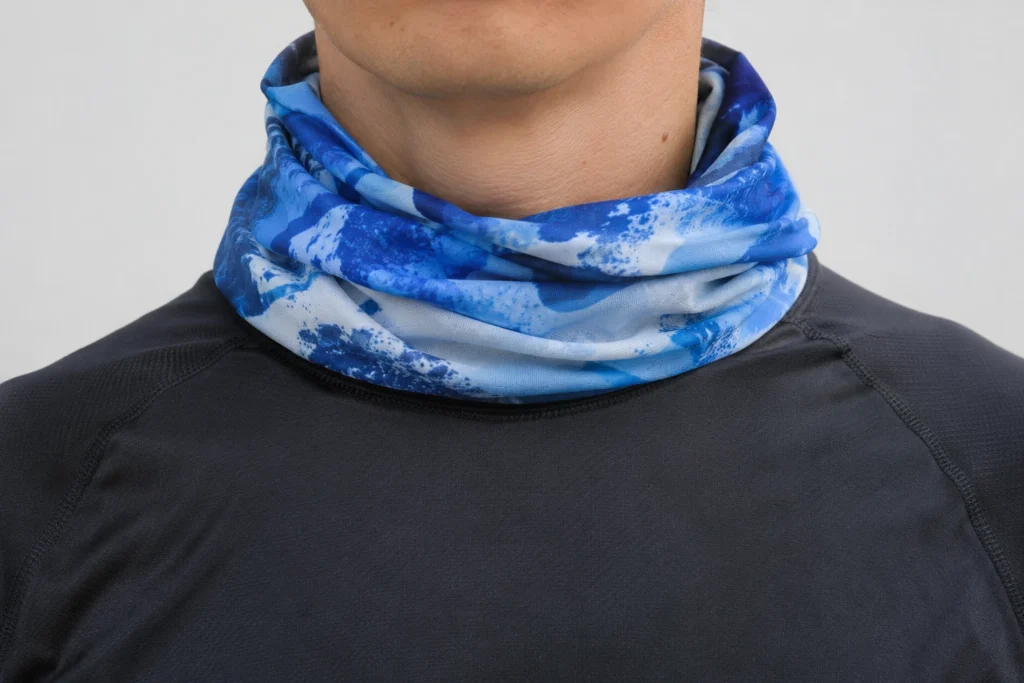
A neck gaiter is a stretch tube that pulls over the head and sits around the neck; it needs no knot. A tube bandana is a light, printed neck gaiter, typically about 25 × 50 cm, that can also be worn as a headband or hair wrap.
The two names describe the same idea; “tube bandana” is used for light, printed, one-layer tubes for festivals, running and merchandise, while “neck gaiter” also covers warmer styles such as fleece-lined neck warmers. Tube bandanas are usually polyester microfibre or jersey, printed all over by sublimation. We make them either as a seamless knitted tube or cut from stretch fabric and sewn with one seam. See our neck gaiters for the wider range.
Bandana, neckerchief, handkerchief and neck gaiter compared
The quickest way to tell them apart is shape and size, then fabric and use. Sizes below are typical; each can be made to your own measurements.
| Item | Shape | Typical size | Usual fabric | How it is worn | Typical buyers |
|---|---|---|---|---|---|
| Bandana | Square | 51, 56 or 69 cm (20, 22, 27 in) | Cotton poplin; polyester twill or satin; cotton voile | Folded: neck, head, wrist, bag, pocket | Streetwear and merch brands, festivals, sports clubs, promo companies, pet brands, retailers |
| Neckerchief | Small square or cut triangle | About 50 × 50 to 70 × 70 cm; triangles | Polyester twill or satin, silk twill, cotton | Knotted neatly at the throat, or with a slide | Airlines, hotels, banks, retail staff, scout and youth groups, events |
| Handkerchief | Small square | About 30–40 cm (12–16 in) | Fine cotton or linen | Carried in a pocket; pocket square | Menswear and gift brands, hospitality |
| Tube bandana / neck gaiter | Seamless or one-seam tube | About 25 × 50 cm | Polyester microfibre or jersey; fleece-lined for warmers | Pulled on: neck, headband, hair wrap | Running and cycling events, teams, festivals, outdoor brands |
| Scarf | Long, square, loop or triangle | From about 50 cm squares to 70 × 180 cm | Knits, silk, viscose, wool, polyester and more | Wrapped or tied at the neck or shoulders | Fashion, fan, uniform and gift ranges |
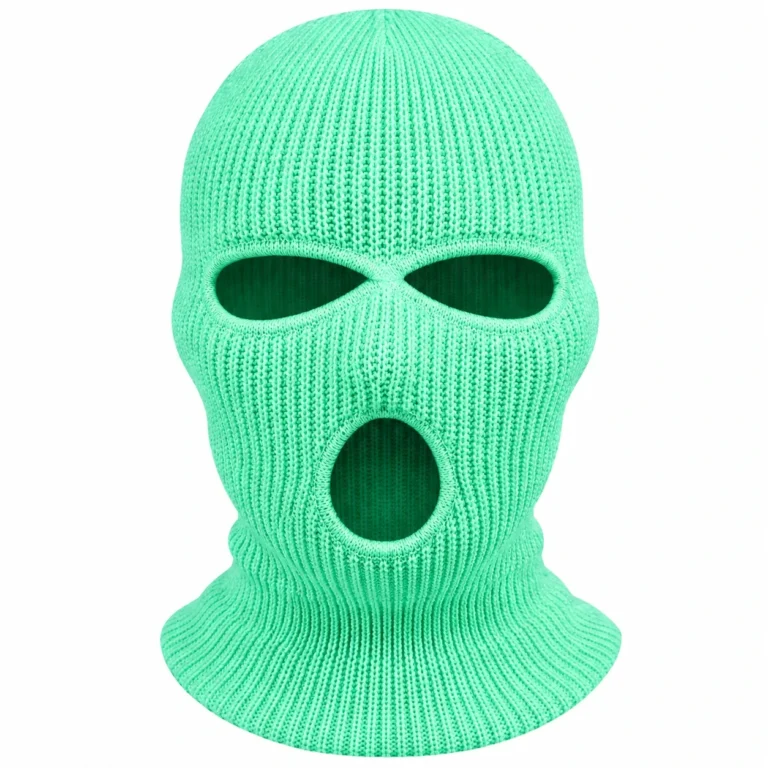
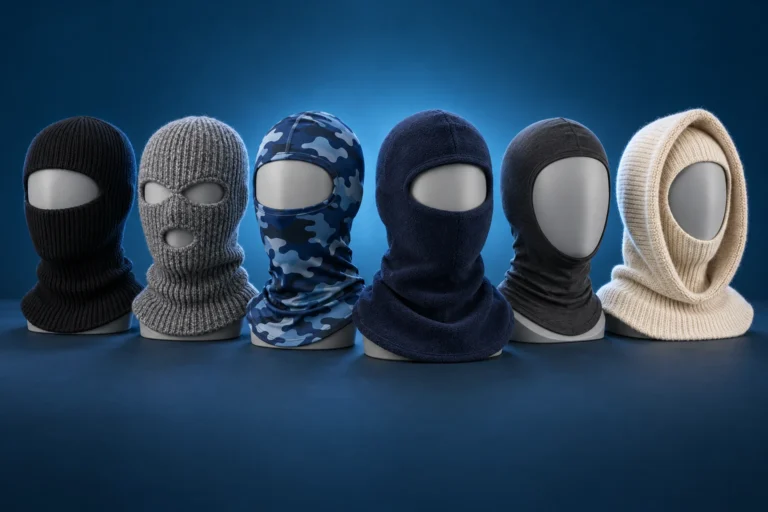
| Balaclava | Shaped hood | One size or graded sizes | Knits, fleece, polyester | Pulled over the head, covers head and neck | Outdoor, winter sports, streetwear |
Where do scarves and balaclavas fit in?
A bandana and a neckerchief are both small types of scarf, and a neck gaiter sits between a scarf and a balaclava. Scarves cover a much wider range of shapes and fabrics, while a balaclava is a shaped hood that covers the head and neck.
For the whole scarf family, from oblong knits to silk squares, see our guide to the different types of scarves. If what you need covers the head as well as the neck, our guide to the different types of balaclavas explains the main styles.
When should you choose a bandana, a neckerchief or a tube?
Choose a bandana for a printed accessory people wear their own way; a neckerchief when a team must look the same; a tube bandana when nobody wants to tie a knot.
- Merch, streetwear and festivals: a printed cotton bandana in 56 cm (22 in). It carries an all-over design or a logo and is worn many ways.
- Uniforms and staff: a neckerchief in polyester twill or satin, in your brand colours, sampled with the knot your staff will wear.
- Scout and youth groups: a triangle neckerchief in a group colour, with a contrast border or a printed badge.
- Running, cycling and team events: a tube bandana, printed all over, with no knot to come undone.
- Pet brands: a triangle pet bandana sized by neck; our dog bandana size guide gives S to XL.
- Gift and menswear: a small bandana folded as a pocket square, made to your size.
Fabric matters as much as the name. Cotton is soft, matt and absorbent and softens with washing; polyester twill holds a crisp knot and takes full-colour sublimation; satin gives a glossy look. Our bandana fabrics guide compares them in detail.
How does Mr Balaclava make each one?
All woven squares start from fabric supplied by partner mills, which we cut, print, hem, finish and brand in-house in Sialkot. Tubes are knitted seamless or cut and sewn from stretch fabric.
| Item | Fabrics we use | Decoration | Edges and finish |
|---|---|---|---|
| Bandana | Cotton poplin, cotton voile, cotton twill, polyester twill and satin, silk, velvet; others on request | Screen, discharge, digital, sublimation on polyester, embroidery | Narrow machine-rolled hems, overlocked edges, hand-rolled on request |
| Neckerchief | Polyester silk-touch twill and satin, silk twill, cotton, cotton voile | Sublimation on polyester, digital, screen for spot colours, embroidered logos | Machine-rolled, hand-rolled or narrow hems |
| Tube bandana / neck gaiter | Polyester microfibre or jersey; fleece-lined for warmers | Sublimation all over; printed or embroidered logo on solid colours | Seamless knitted tube or one seam; overlocked ends |
Discharge printing removes the dye from dark cotton to print light designs with a soft feel, which is why it suits the classic black or navy bandana; sublimation dyes polyester and works only on polyester with a light base. Our bandana printing methods guide explains each method by fabric.
Whatever the item, buyers usually need a fibre-content and country-of-origin label: the US Textile Act names both handkerchiefs and scarves, and the EU textile regulation 1007/2011 asks for fibre content on most textiles, although for some items, such as handkerchiefs, one label for a whole batch is usually enough. Care labels usually follow the ISO 3758 symbols. Check your own market’s rules; our labels and packaging help lists the label options we offer.
Ordering custom bandanas from Mr Balaclava
Bandanas, neckerchiefs and tube bandanas all start at 50 pieces per design, with production approximately 14 days after sample approval. You can test the design with a pre-paid physical sample in about 5–7 days, or with a free pre-production sample after the order and 30% advance, approved by photos or video. We send a mockup first, and production starts only after you approve it. Mr Balaclava’s name never appears on your products. A real example is our screen-printed cotton bandana project.
What to send with your request
- Which item: bandana, neckerchief, tube bandana, or not sure yet
- Your artwork or logo, and the colours (Pantone references help)
- Size and fabric, or how it will be worn
- Quantity per design (from 50 pieces)
- Your deadline
- Labels, hang tags or folded retail packs
- Delivery country
Frequently asked questions
Is a bandana the same as a neckerchief?
Not quite. Both are squares tied at the neck, but a bandana is a larger, casual printed cotton square worn many ways, while a neckerchief is smaller and neater, usually polyester twill or silk, and worn as part of a uniform.
What is the difference between a bandana and a handkerchief?
Size and use. A handkerchief is about 30–40 cm and carried in a pocket; a bandana is about 51–69 cm and worn on the head, neck or wrist.
Is a tube bandana the same as a neck gaiter?
Yes, in practice. “Tube bandana” usually means a light printed stretch tube of about 25 × 50 cm, while “neck gaiter” also covers warmer, fleece-lined styles.
What is a kerchief?
Kerchief is the general word for a square of cloth worn on the head or around the neck; a neckerchief is a kerchief for the neck, and a bandana is a printed kerchief.
Can one design be made as a bandana and a neckerchief?
Yes. The same artwork can be printed on cotton bandanas and polyester twill neckerchiefs; each item usually counts as its own design, with 50 pieces minimum, and colours may look slightly different on each fabric.
Compare styles in our bandana catalogue and neckerchief catalogue, or send your brief for a quote.