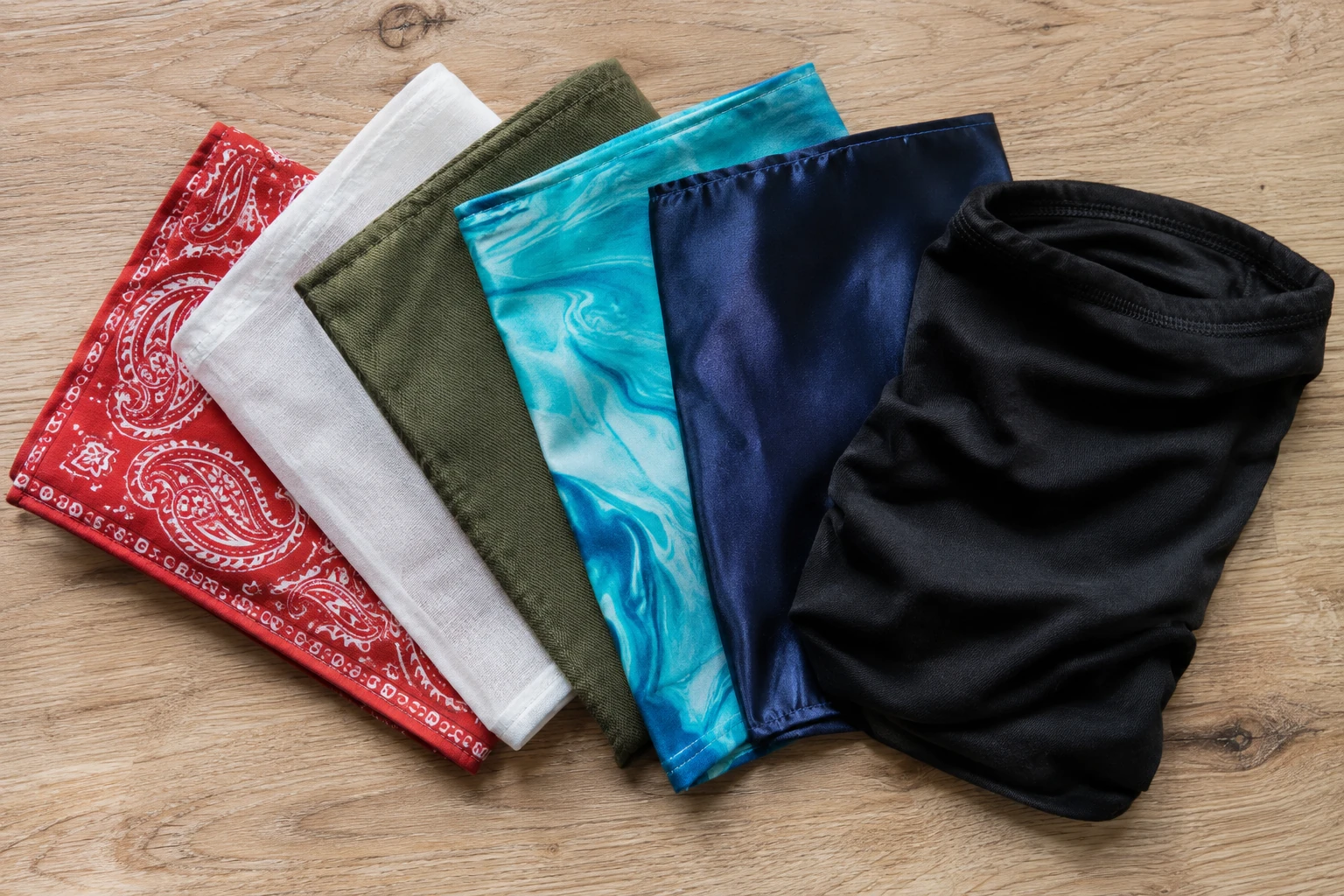
The fabric decides how a bandana feels, knots, prints and washes. This guide is for brands, merchandise and promotional buyers, events, sports clubs and pet brands choosing a bandana fabric before they ask for a quote. For the bigger picture of shapes, sizes, prints and uses, start with our complete guide to bandanas.
Each fabric is compared by feel, look, printing, use and care, followed by a table and a guide by use. All our bandana fabrics come from partner mills and are cut, printed, hemmed, finished and branded in-house in Sialkot, Pakistan. You can see the finished range on our custom bandanas page.
What fabric are bandanas made of?
Most bandanas are made of cotton poplin, a light, tightly woven plain cotton. Polyester twill and satin are the usual choice for full-colour sublimated bandanas, and stretch polyester microfibre or jersey is used for tube and sports bandanas.
Cotton voile, cotton twill, silk, satin and velvet are made for lighter, sturdier or fashion pieces, and other fabrics on request. Two terms help here. A plain weave (such as poplin or voile) crosses the threads one over, one under, which gives a flat, matte surface. A twill crosses them in a diagonal pattern, which gives a softer drape and a fine diagonal line, and a satin floats the threads over several others for a smooth, glossy face.
Cotton poplin: why is it the classic bandana fabric?
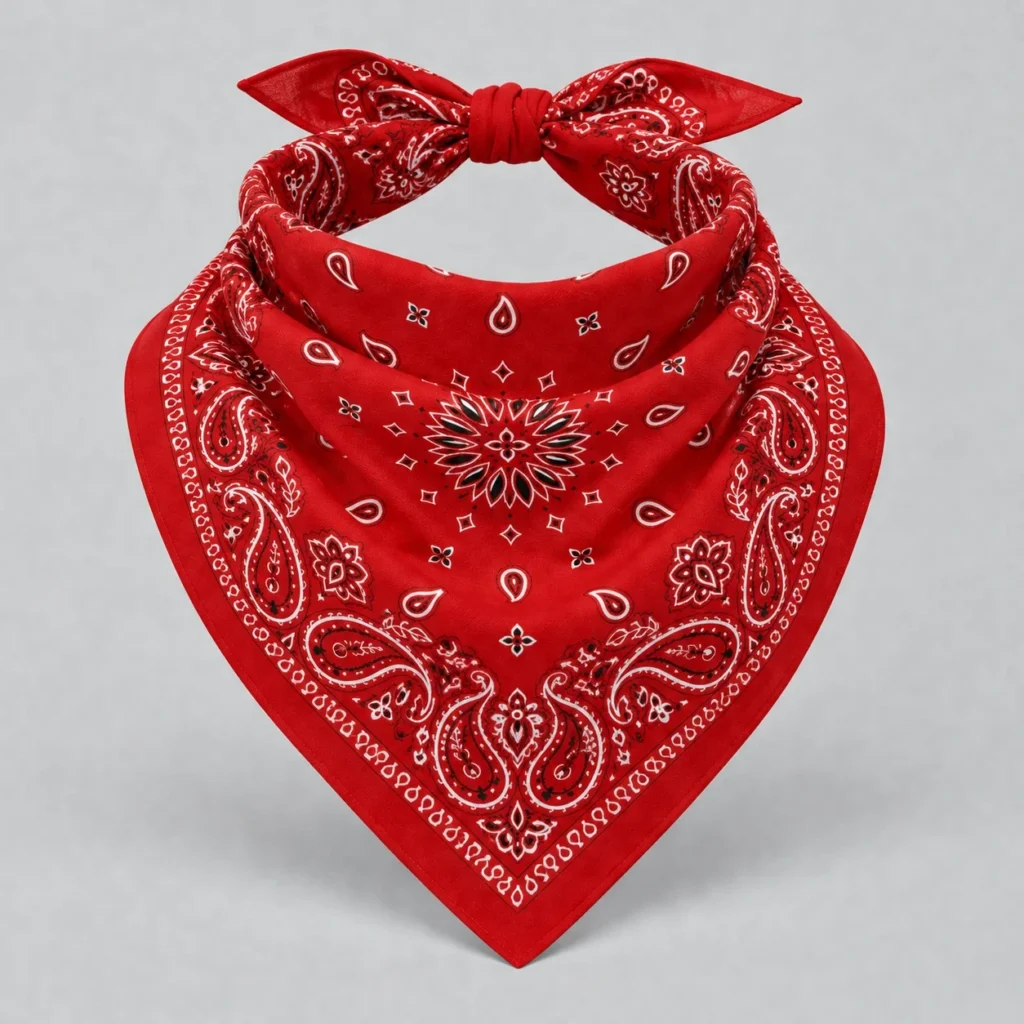
Cotton poplin is light enough to fold and knot easily, firm enough to hold a crisp printed outline, and soft against the skin. It is the cloth behind the traditional paisley bandana.
- Feel: soft, matte and dry to the touch; it usually becomes softer with every wash.
- Look: flat and even, so printed lines stay sharp; the colour has a natural, slightly muted look rather than a sheen.
- Printing: screen printing, discharge printing (light designs on dark grounds), digital printing, heat transfer and embroidery. Sublimation is not suitable, because the dye does not bond with cotton.
- Typical use: classic paisley and logo bandanas, merchandise, festivals, workwear and outdoor brands, kids’ and pet bandanas.
- Care: wash new dark or bright bandanas separately in cool water for the first few washes, as cotton may release some dye at first; air-dry and iron warm if needed.
Our bandana cotton poplin record lists the details; poly-cotton blends are also made.
Cotton voile: when do you want a lighter bandana?
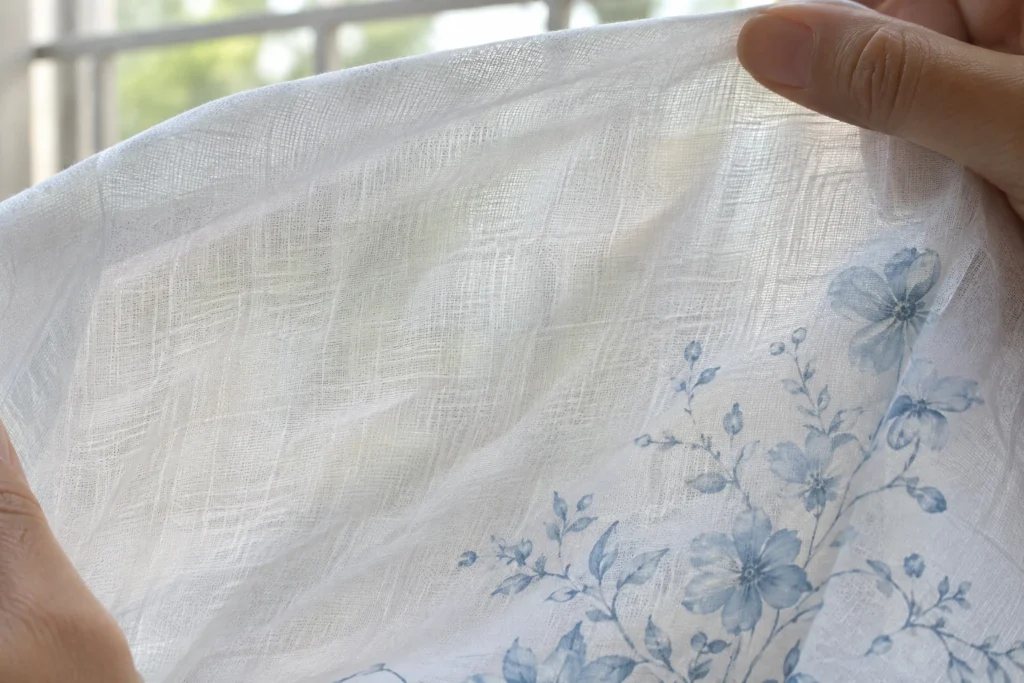
Cotton voile is a fine, open plain weave that is noticeably lighter and more see-through than poplin. Choose it for summer, hair and fashion bandanas.
- Feel: very light, airy and soft; it drapes and gathers easily in a knot.
- Look: slightly sheer, so prints look softer and a little lighter than on poplin.
- Printing: digital printing suits it well, including detailed and many-colour designs; screen printing works for simple designs. Embroidery and heat transfer are tested first, as the fine cloth can pucker.
- Typical use: summer and hair bandanas, fashion and lifestyle brands, gift sets.
- Care: gentle wash in cool water, no wringing, dry flat or on a line; a cool iron.
See the cotton voile record for the fabric details, or our cotton voile bandana for a finished example.
Cotton twill: is it a good choice for bandanas?
Cotton twill is sturdier and a little heavier in the hand than poplin, with a fine diagonal line on the face. It suits workwear-style and outdoor bandanas that should feel robust, and it is available on request.
- Feel: firmer and denser than poplin, with a smooth, slightly brushed surface; it softens with washing.
- Look: a subtle diagonal texture and a deeper colour, which suits solid colours and bold prints.
- Printing: screen printing, digital printing and embroidery; very fine lines can soften slightly on the diagonal texture.
- Typical use: workwear and outdoor brands, uniforms, scout-style neckerchiefs and bandanas that are folded into thicker headbands.
- Care: as for poplin; it usually holds its shape well wash after wash.
A twill bandana is bulkier when tied, so 56 cm and 69 cm sizes suit it better than small squares; see our bandana size chart.
Polyester twill: why is it used for full-colour bandanas?
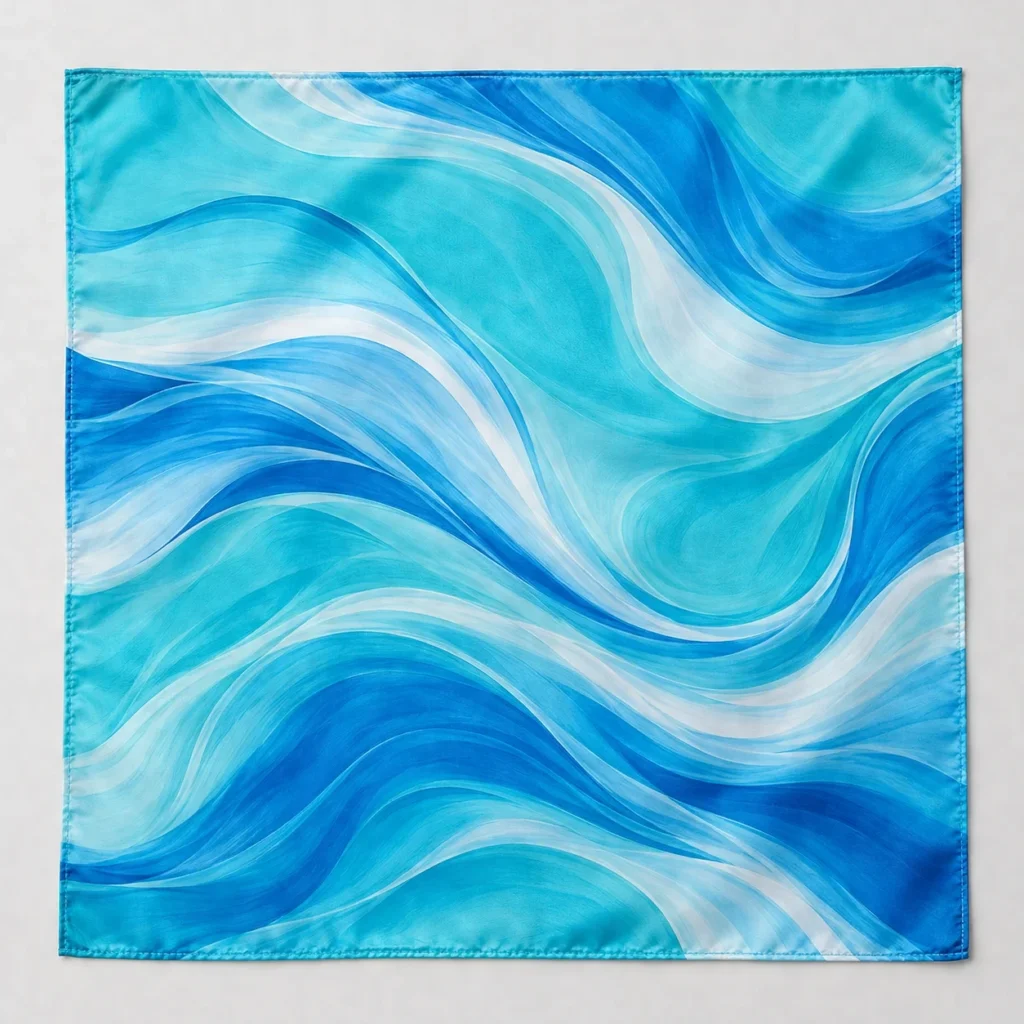
Polyester twill is the usual fabric for sublimated bandanas: the dye bonds with the polyester, so photos, gradients and edge-to-edge designs print brightly with no feel on the surface.
- Feel: smooth and soft, often called “silk-touch”; slicker than cotton.
- Look: vivid, saturated colour with a soft sheen; prints reach right to the hem.
- Printing: sublimation (light base only, as sublimation cannot print white), screen printing and heat transfer; embroidery works on small logos.
- Typical use: promotional and event bandanas with full-colour artwork, sports clubs, festival merchandise, designs with photos or many colours.
- Care: machine wash cool, no high heat; it usually dries quickly and needs little ironing.
Our polyester silk-touch twill is the fabric behind our sublimated bandanas.
Polyester satin: what does a satin bandana feel like?
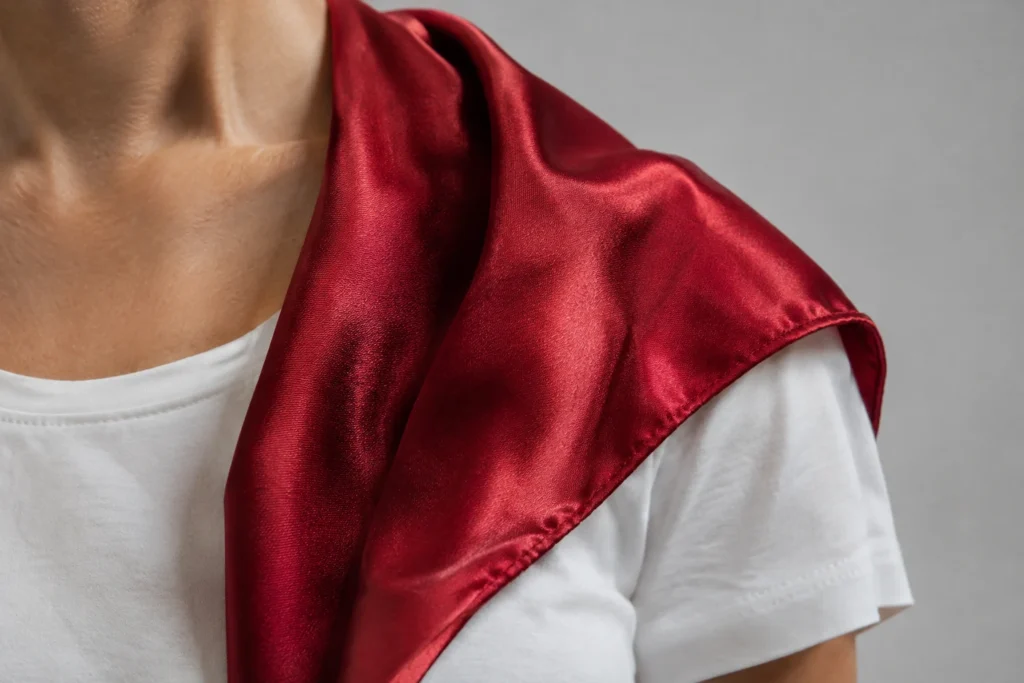
Polyester satin has a smooth, glossy face and a fluid drape. It is chosen for hair and fashion bandanas, where it glides over the hair.
- Feel: slippery and smooth on the face, matte on the back.
- Look: a clear sheen that makes colours look deeper; it moves with the wearer.
- Printing: sublimation and digital printing for full colour; screen printing for simple designs. Embroidery is tested first, as satin can pucker.
- Typical use: hair bandanas and head scarves, fashion and beauty brands, gift sets.
- Care: gentle wash in cool water, dry flat, iron on the back at a low setting.
Satin can loosen in a knot more easily than cotton, so a double knot usually helps; our guide on how to tie a bandana shows styles that hold well. See the polyester satin record for details, and our satin bandana for a finished piece.
Polyester microfibre and jersey: which fabric is used for tube and sports bandanas?
Tube and sports bandanas use stretch knitted polyester, such as microfibre knit or jersey, so they pull on and keep their shape. Tube bandanas are made either as a seamless knitted tube or cut from stretch fabric and sewn with one seam.
- Feel: light, stretchy and smooth; it sits close without being tied.
- Look: a soft matte or slightly lustrous surface; sublimated designs print all the way round.
- Printing: sublimation for full-colour designs; printed or embroidered logos on solid colours.
- Typical use: tube bandanas, running and cycling clubs, team and event merchandise, outdoor brands.
- Care: machine wash cool, no fabric softener, air-dry; it usually dries quickly.
The polyester microfibre knit is used for our tube bandana, and polyester jersey for square and triangle sports bandanas. Longer tubes are in our neck gaiters range.
Silk, satin and velvet: are they used for bandanas?
Yes, for fashion and gift pieces rather than everyday wear, made on request.
Silk
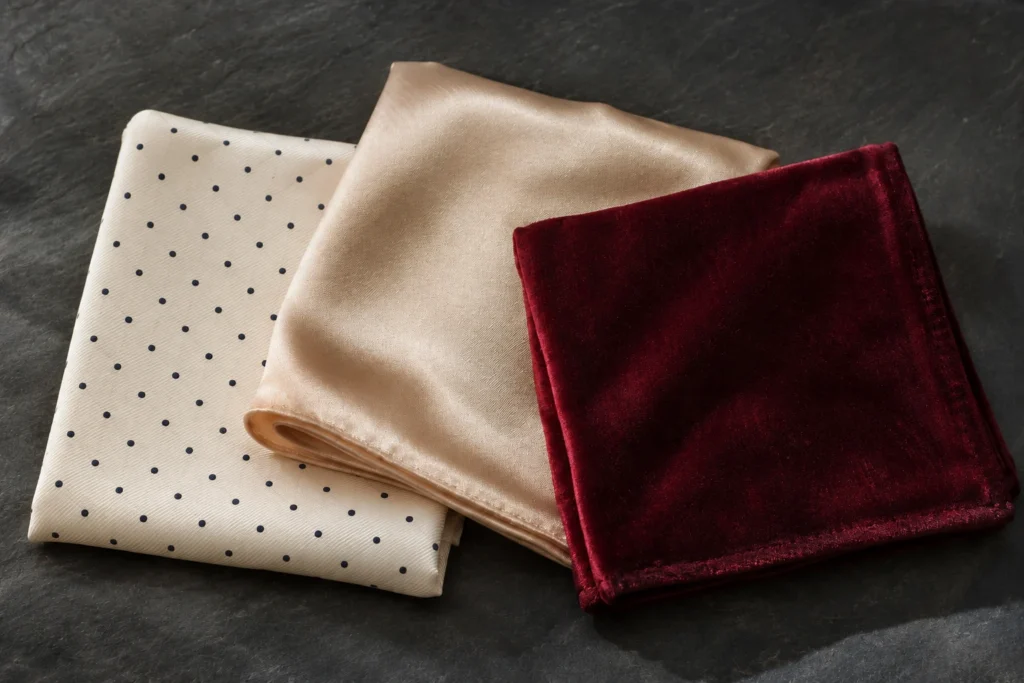
A silk bandana, usually silk twill or habotai, is fine, smooth and lustrous. It is digitally printed with dyes matched to silk, which keeps the soft hand and fine detail, and suits fashion labels and gift boxes. Hand wash cool or dry clean. See our mulberry silk twill for the fabric most silk squares use.
Satin
Satin is a weave, not a fibre, so a satin bandana can be polyester satin (described above) or silk satin. Silk satin has a similar sheen with a softer, more natural feel.
Velvet
Velvet has a short, dense pile that looks deep and rich and feels soft to the touch. Stretch velvet (knit velour) can be sublimated, which gives vivid colour with the pile still soft. It is heavier than cotton, so it suits headbands and neck pieces more than tight knots. The stretch velvet record lists the details.
Other fabrics, such as linen, modal or blends, are possible on request and confirmed with the quote.
How do bandana fabrics compare side by side?
The table puts the main points together. “Test” means the method is possible but checked on a sample first.
| Fabric | Feel | Look | Print methods | Typical use | Care |
|---|---|---|---|---|---|
| Cotton poplin | Soft, matte, softens with washing | Flat, crisp prints | Screen, discharge, digital, heat transfer, embroidery | Classic, merch, festivals, kids, pets | Cool wash, darks separately at first |
| Cotton voile | Very light, airy | Slightly sheer, softer prints | Digital, screen (simple); embroidery test | Summer, hair, fashion | Gentle wash, dry flat |
| Cotton twill | Firm, smooth | Diagonal texture, deep colour | Screen, digital, embroidery | Workwear, outdoor, uniforms | As poplin |
| Polyester twill | Smooth, “silk-touch” | Vivid colour, soft sheen | Sublimation, screen, heat transfer | Full-colour promo, events, sports | Cool wash, quick dry |
| Polyester satin | Slippery, fluid | Glossy, deep colour | Sublimation, digital, screen; embroidery test | Hair, fashion, gifts | Gentle wash, low iron |
| Polyester microfibre / jersey | Stretchy, light | Matte to slightly lustrous | Sublimation, printed or embroidered logo | Tube, sports, clubs | Cool wash, no softener |
| Silk / silk satin | Fine, smooth | Natural lustre or sheen | Digital, screen | Fashion, gifts | Hand wash or dry clean |
| Velvet | Soft pile | Deep, rich | Sublimation (stretch velvet) | Fashion, seasonal | Gentle wash, no iron on the pile |
Each print method is explained in our bandana printing methods guide. For a wider comparison that includes wool, cashmere and viscose, see scarf fabrics compared.
How do you choose a bandana fabric by use?
Start with who will wear it, then pick a fabric that takes the print you need.
| Use | Usual fabric | Why |
|---|---|---|
| Merchandise and brand bandanas | Cotton poplin | The classic feel; logos and paisley screen print cleanly; discharge for light logos on dark grounds |
| Festivals and events | Cotton poplin or polyester twill | Poplin for a classic look; polyester twill for full-colour artwork and line-ups |
| Sports clubs and running | Polyester jersey, microfibre or a tube | Stretch, light and quick to dry; sublimated team colours |
| Fashion and hair | Polyester or silk satin, silk, voile, velvet | Sheen, drape and a softer hand |
| Kids | Cotton poplin in 51 cm | Soft and easy to wash; no cords, toggles or small parts |
| Pets | Cotton poplin | Soft, washable and easy to print; triangle or square in S to XL |
| Workwear and outdoor | Cotton twill or poplin | Sturdy, softens with use, takes bold prints |
Pet bandanas should be worn while the pet is supervised, not left on unattended; sizes are in our dog bandana size guide.
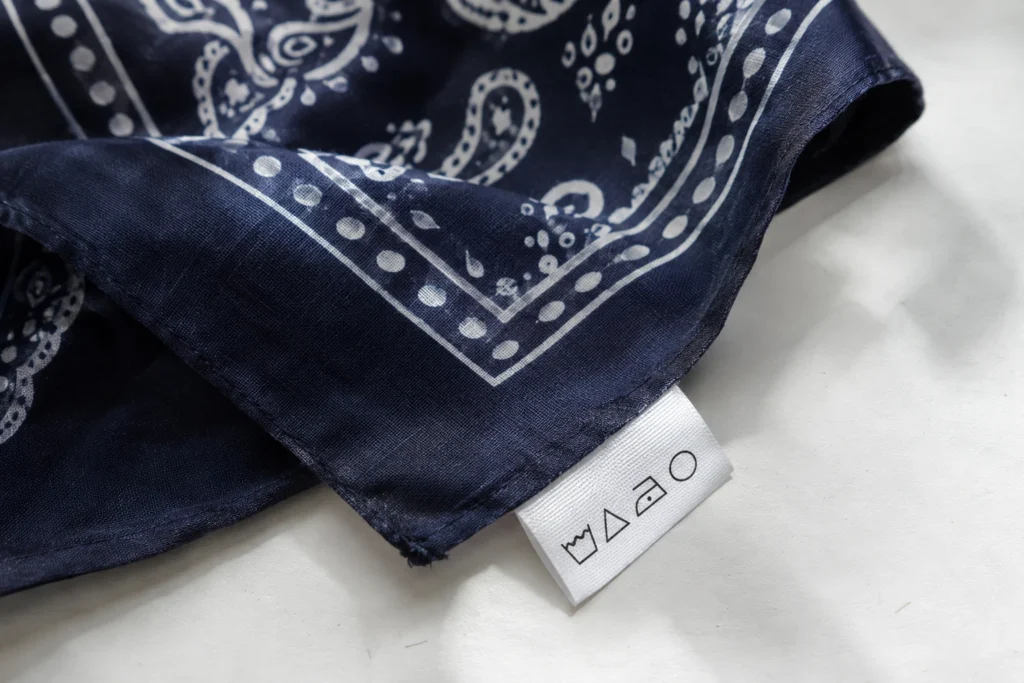
Plan the labels with the fabric: buyers usually need a label with the fibre content and country of origin (for example under the US Textile Act and EU Regulation 1007/2011), and care symbols are commonly shown to ISO 3758. Fabrics from OEKO-TEX® certified mills are available on request; the certificate is the mill’s. See also our help article on choosing a fabric.
How should bandanas be washed so they keep their colour?
Wash cool and gently, keep new dark or bright cotton separate for the first few washes, and air-dry. A bandana usually holds its colour well when washed as recommended. Embroidered pieces are ironed from the back.
We can print or weave your care instructions on the label; see our product care help for the symbols we usually use.
Ordering custom bandanas from Mr Balaclava
Bandanas are made to order from 50 pieces per design, with a pre-paid sample (about 5–7 days) or a free pre-production sample after the order and 30% advance, approved by photos or video. Production takes approximately 14 days after sample approval, and Mr Balaclava’s name never appears on your products. What drives the price is explained in our custom bandana cost guide.
What to send us
- Your artwork or logo (vector or high-resolution file)
- Size: 51, 56 or 69 cm, tube, pet or your own size
- Fabric, or the use, so we can suggest one
- Quantity per design
- Your deadline
- Labels and packaging
- Delivery country
Frequently asked questions
Is cotton or polyester better for a bandana?
Neither is better for every use: cotton poplin feels softer and suits screen and discharge prints, while polyester takes sublimation for full-colour, edge-to-edge designs and dries quickly.
Are bandanas 100% cotton?
Classic bandanas usually are, in cotton poplin. Many promotional and sports bandanas are polyester, and poly-cotton blends are also made.
Can you sublimate a cotton bandana?
No. Sublimation dye bonds only with polyester, so cotton bandanas are screen, discharge or digitally printed instead.
What fabric is a satin bandana made of?
Usually polyester satin, which is smooth and glossy and takes sublimation and digital prints. Silk satin is made on request for fashion and gift pieces.
Will a new cotton bandana bleed in the wash?
Dark and bright cotton can release some dye in the first washes, so wash it separately in cool water at first.
Ready to choose? Browse our bandana catalogue, or send your design through the quote form and we will suggest the fabric.