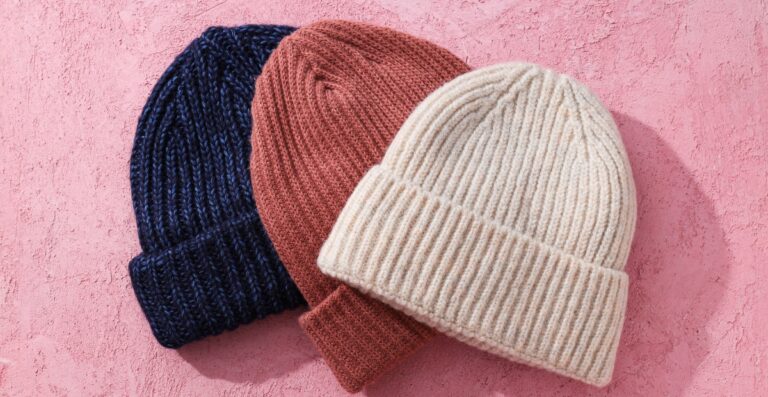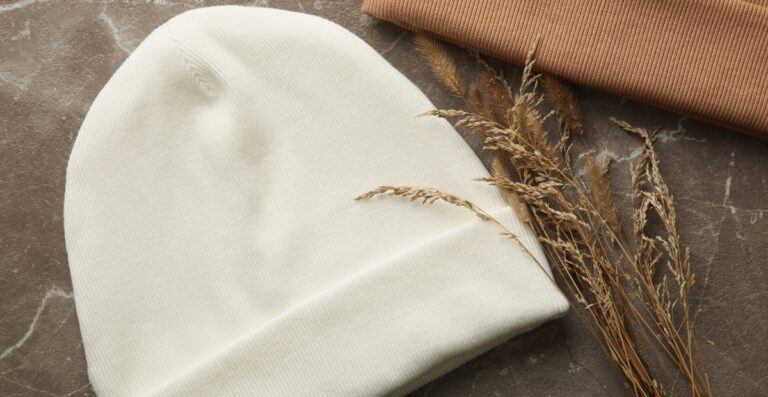

Almost every beanie is knitted. What separates a chunky winter beanie from a thin running beanie is not the shape but three choices made before anything else: the gauge of the knitting machine, the stitch and the yarn. Together they decide warmth, stretch, drape, weight and how sharply a logo or pattern shows.
This guide explains each choice in the order we settle them with buyers. Mr Balaclava knits beanies on flatbed and circular knitting machines in Sialkot, Pakistan; you can see every style on our custom beanies page and the knitting options on the knit beanies and gauges page.
What does gauge mean on a beanie?
Gauge, written GG, is the number of needles per inch on the knitting machine. The lower the number, the thicker the yarn and the chunkier the knit; the higher the number, the finer, lighter and smoother the beanie.
Gauge is fixed by the machine, so it is chosen first. A 3GG machine cannot knit a fine 14GG helmet liner, and a 14GG machine cannot knit a bulky cable. Once the gauge is set, the yarn thickness and the stitch follow from it.
Which gauge suits which beanie?
| Gauge | Knit look | Typical yarns | Typical beanies |
|---|---|---|---|
| 3GG | Very chunky, bold stitches | Bulky wool, acrylic and blends | Chunky knit, cable and big pom-pom styles |
| 5GG | Chunky | Wool, acrylic and wool blends | Cable knit, fisherman and winter beanies |
| 7GG | Classic medium knit | Acrylic, wool blends and merino | Cuffed and high top beanies, most logo beanies |
| 9GG | Medium-fine | Acrylic, merino and cotton | Slouchy beanies and jacquard patterns |
| 12GG | Fine | Merino, cotton and fine acrylic | Lightweight, skull cap and sports beanies, detailed jacquard |
| 14GG | Very fine | Merino, cotton and synthetic blends | Summer beanies and helmet liners |
For a classic logo beanie, 7GG is the usual choice. For a chunky winter look, 3–5GG. For a light, smooth beanie or a detailed jacquard, 12–14GG. If you are not sure, send a reference beanie or a photo and we recommend the gauge in your quote.

Rib, jersey or cable: which stitch should you choose?
Rib alternates knit and purl stitches, so it stretches and hugs the head; it is the standard for cuffs, cuffed beanies and fisherman beanies. Jersey is flat and smooth on the outside and drapes better; it is used for slouchy, skull cap and turban beanies.
- Rib (1×1 or 2×2): stretchy and close-fitting, the standard for cuffed and logo beanies.
- Jersey: smooth and flat, with a softer drape, used for streetwear beanies and skull caps.
- Cable and waffle: raised texture for premium winter styles, knitted at low gauges; see pom-pom and winter beanies.
- Jacquard and stripes: patterns and logos knitted in several colours, sharpest at fine gauges; see jacquard and graphic beanies.
Which yarn is best for a custom beanie?
Acrylic is the most common beanie yarn: it is durable, easy to care for and holds bright, even colours. Wool and merino add natural warmth and a premium feel, cotton suits lighter wear and sensitive skin, and recycled polyester suits ranges with a recycled-content story.
| Yarn | Feel and warmth | Care | Best for |
|---|---|---|---|
| Acrylic | Soft, light, warm | Easy care, holds colour well | Logo beanies, promotions, retail basics |
| Wool blend | Warmer, with a natural touch | Easier than pure wool | Winter retail and workwear |
| Merino | Fine, soft and warm, breathes well | Gentle washing | Premium, sports and outdoor beanies |
| Lambswool | Soft, lofty and warm | Gentle washing | Premium winter and gift ranges |
| Cotton | Smooth and breathable, less warm | Easy care | Kids, summer and all-season beanies |
| Recycled polyester | Light and quick-drying | Easy care | Sports beanies and recycled-content ranges |
Anti-pilling acrylic, cashmere, alpaca, mohair, chenille and bamboo blends are also available. Every yarn we use is listed in our Material Library.
Does the gauge change how a logo looks?
Yes. A knitted jacquard logo is made of stitches, so finer gauges show small logos and text more sharply than chunky gauges. Embroidery, woven labels and patches look much the same on any gauge, which is why they are the usual choice on chunky knits.
For a chunky 3GG or 5GG beanie with a detailed logo, a woven label or a leather patch on the cuff keeps the logo clean. For a large knitted logo or an all-over pattern, choose 9GG or finer.
What about linings and pom-poms?
A fleece, cotton or satin lining adds warmth and comfort under any knit and can be placed in the crown, the cuff or the earflaps. Pom-poms are made from yarn, faux fur or related materials, fixed or detachable.
Frequently asked questions
Is a higher gauge better quality?
No. Gauge describes the knit, not the quality. A 3GG chunky beanie and a 14GG fine beanie are different products made for different uses; quality depends on the yarn, the finishing and the inspection.
Can you match a beanie we already sell?
Yes. Send the beanie or clear photos and its measurements; we identify the gauge, stitch and yarn, and confirm them in a tech pack before sampling.
What is the minimum order?
The minimum order is 50 pieces per design. Standard production lead time is approximately 14 days after sample approval; the confirmed schedule is agreed for each order.
Browse the beanies catalog, compare the knits on the knit beanies and gauges page, or send us a reference beanie for a quote.