Search for “types of beanies” and you will find lists that put a slouchy beanie next to a cashmere beanie next to a pom-pom beanie, as if they were the same kind of choice. They are not. One describes the shape, one the yarn and one a trim, and a single hat can be all three.
This guide sorts 40 beanie styles along clear lines: shape, knit, yarn, lining, trims and decoration, plus styles named after a look or a use. Each gets a short definition, how it is usually made and who it suits. It is written for brands, shops, clubs and event companies that want their own beanies; our custom beanies page shows what we make.
What is a beanie?
A beanie is a close-fitting, brimless knitted hat that stretches to fit the head. Because it is knitted, it needs no darts or panels; it is closed at the crown and often finished with a folded cuff.
The same hat has many names. In Canada it is a toque or tuque; in the UK a woolly hat, or a bobble hat when it has a pom-pom. In the US you will hear knit cap, stocking cap and watch cap, the last for a snug cuffed rib hat once worn by sailors on watch. A skull cap is a thin beanie without a cuff. In parts of the US, “beanie” can also mean a small cap sewn from fabric panels, a different product.
How beanies differ: shape, knit, yarn, trims and decoration
Every beanie combines choices on six lines. A cuffed, 1×1 rib, acrylic, unlined beanie with an embroidered logo is one example.
| Line | The choices | What it decides |
|---|---|---|
| Shape and fit | Cuffed, uncuffed, slouchy, fisherman, oversized, high top, skull cap | The look, how it sits and where the logo goes |
| Knit and texture | Rib, jersey, cable, waffle, chunky or fine gauge, crochet | Stretch, thickness and how much detail a knitted-in logo shows |
| Yarn | Acrylic, wool blends, merino, cashmere blends, cotton, recycled and organic yarns | Warmth, softness, care and price |
| Lining and warmth | Unlined, fleece band, full lining, double-layer knit | Warmth over the ears and feel next to the skin |
| Trims | Pom-pom, earflaps, visor, ponytail opening, built-in headphones | Function and character |
| Decoration | Embroidery, patches, knitted-in jacquard, labels, stripes and patterns | How the beanie carries a brand |
Gauge links shape, knit and logo. Gauge (GG) is the number of needles per inch on the knitting machine: 3GG or 5GG gives a chunky knit, 12GG or 14GG a fine, smooth one. We knit from 3GG to 14GG, in-house in our factory in Sialkot, Pakistan; for very large runs our team may also use our other units or partner mills we work with closely. See how a beanie is made, from yarn to finished hat.
All types of beanies at a glance
The 40 styles in this guide, grouped by line. Each is explained below.
| Type | Group | In one line |
|---|---|---|
| Cuffed beanie | Shape | Rib beanie with a fold-up cuff; the classic logo beanie |
| Uncuffed beanie | Shape | No fold; a finished band at the forehead |
| Slouchy beanie | Shape | Extra length that drapes at the back |
| Fisherman beanie | Shape | Short and shallow, sits above the ears |
| Dock worker beanie, watch cap | Shape | Snug workwear rib beanies |
| Oversized beanie | Shape | Larger and longer all over |
| High top beanie | Shape | Tall crown that stands up |
| Skull cap beanie | Shape | Thin, cuffless, follows the head |
| Ribbed knit beanie | Knit | Rib columns that stretch and recover |
| Chunky knit beanie | Knit | Thick yarn on a 3–5GG gauge |
| Fine knit beanie | Knit | Smooth, light knit on 12–14GG |
| Cable knit beanie | Knit | Crossed stitches forming raised twists |
| Crochet beanie | Knit | Hook-made loops, open texture |
| Wool beanie | Yarn | Wool, merino or wool blend |
| Cashmere beanie | Yarn | Cashmere or cashmere blend |
| Organic cotton beanie | Yarn | Cotton with the spinner’s organic certificate |
| Sustainable beanie | Yarn | Recycled or organic yarns with supplier documents |
| Fleece-lined beanie | Lining | Fleece sewn inside, as a band or full lining |
| Thermal beanie | Lining | Double-layer, lined or heavier knit |
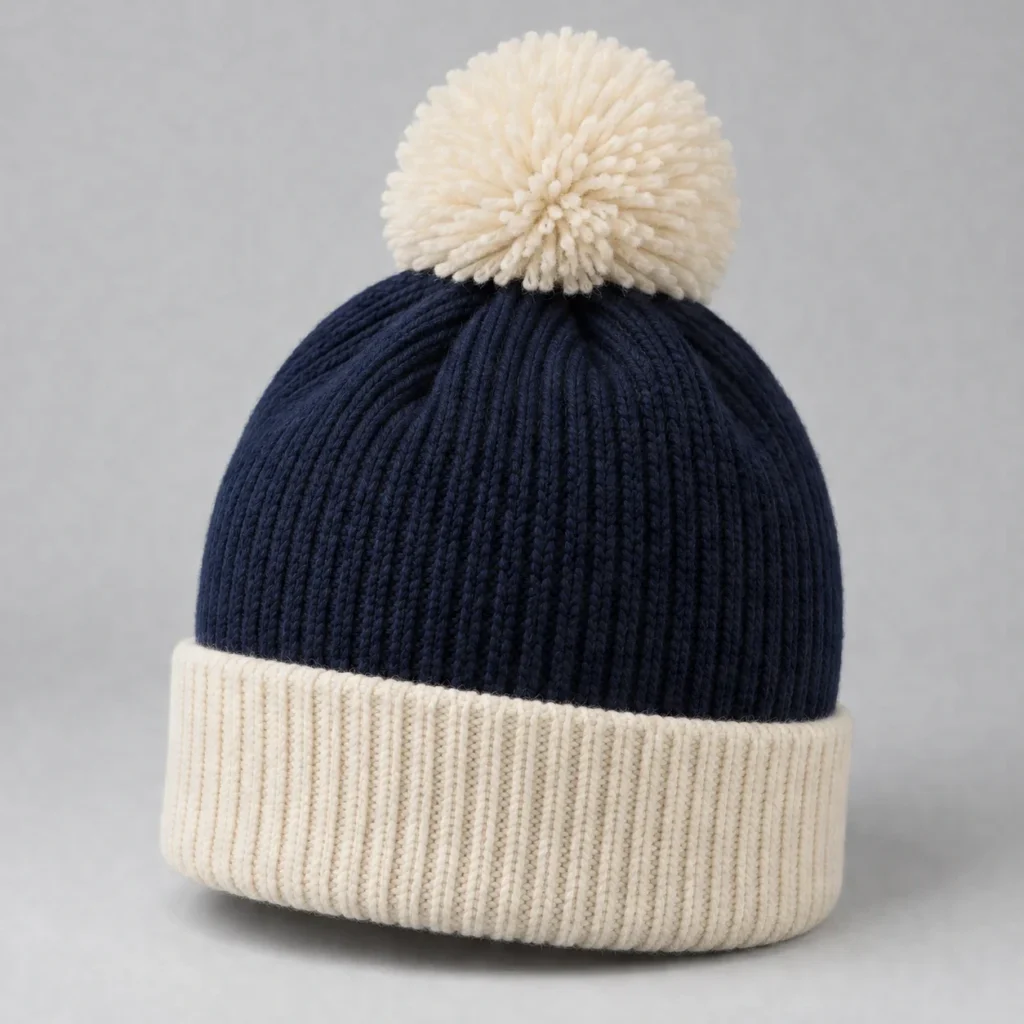
| Pom-pom beanie | Trim | Yarn or faux fur pom-pom on the crown |
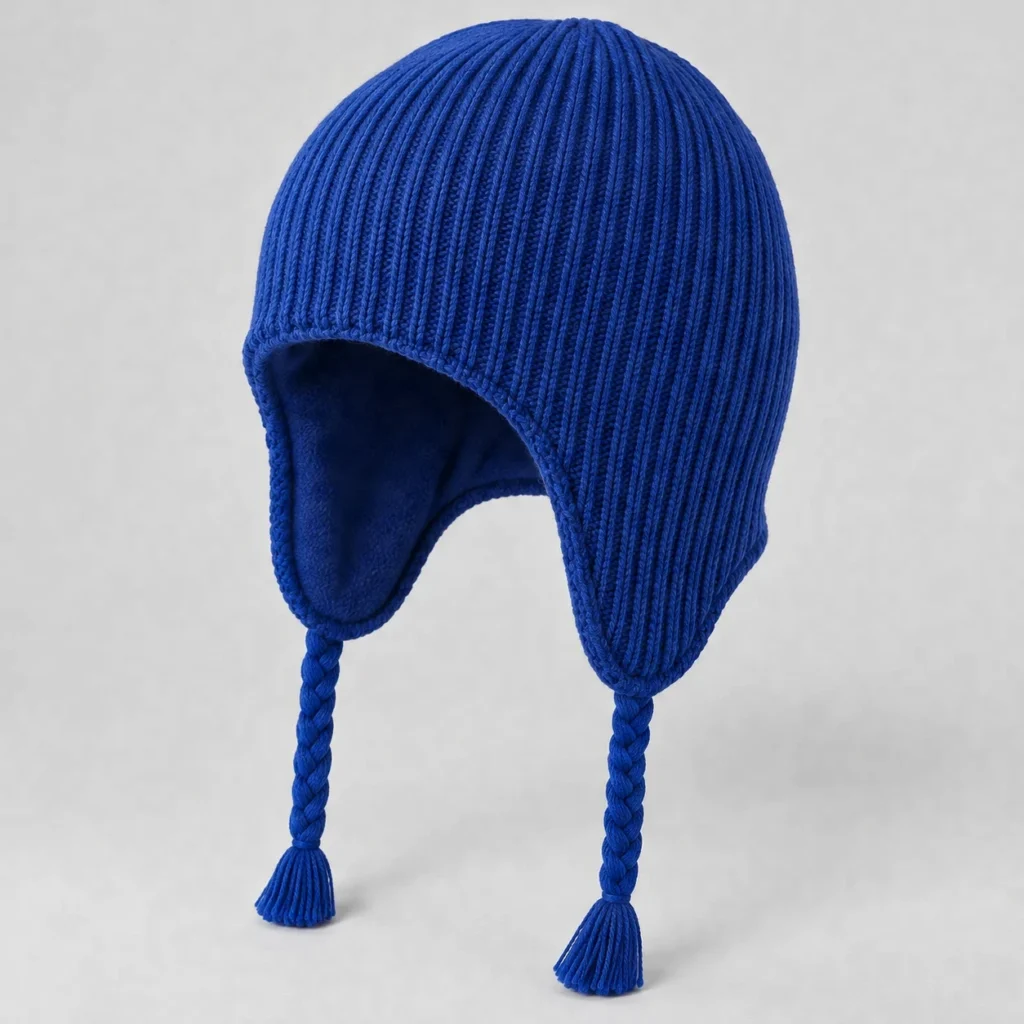
| Earflap beanie | Trim | Knitted flaps over the ears |
| Beanie with visor | Trim | Short stiffened peak at the front |
| Ponytail beanie | Trim | Opening for a ponytail or bun |
| Bluetooth beanie | Trim | Headphone module inside |
| Minimalist beanie | Decoration | One colour, little visible branding |
| Logo beanie | Decoration | Any beanie carrying a brand mark |
| Embroidered beanie | Decoration | Logo stitched in thread, flat or raised |
| Patch beanie | Decoration | Woven, leather-look, rubber or silicone patch |
| Jacquard and Fair Isle beanie | Decoration | Pattern or logo knitted in |
| Striped and team beanie | Decoration | Knitted stripes in club colours |
| Camo beanie | Decoration | Camouflage knitted in as jacquard |
| Colour-block beanie | Decoration | Two or more colours in blocks |
| Tie-dye beanie | Decoration | Dyed, swirling colour |
| Streetwear beanie | Look | Bold shapes, logos and colours |
| Vintage-style beanie | Look | Heritage colours and classic shapes |
| Designer beanie | Look | Fine yarns and discreet branding |
| Turban beanie | Look | Twisted or knotted front |
| Sports and running beanie | Use | Light, close-fitting fine knit |
| Helmet liner beanie | Use | Very thin cap for under a helmet |
| Kids and baby beanie | Use | Own pattern, no small detachable parts |
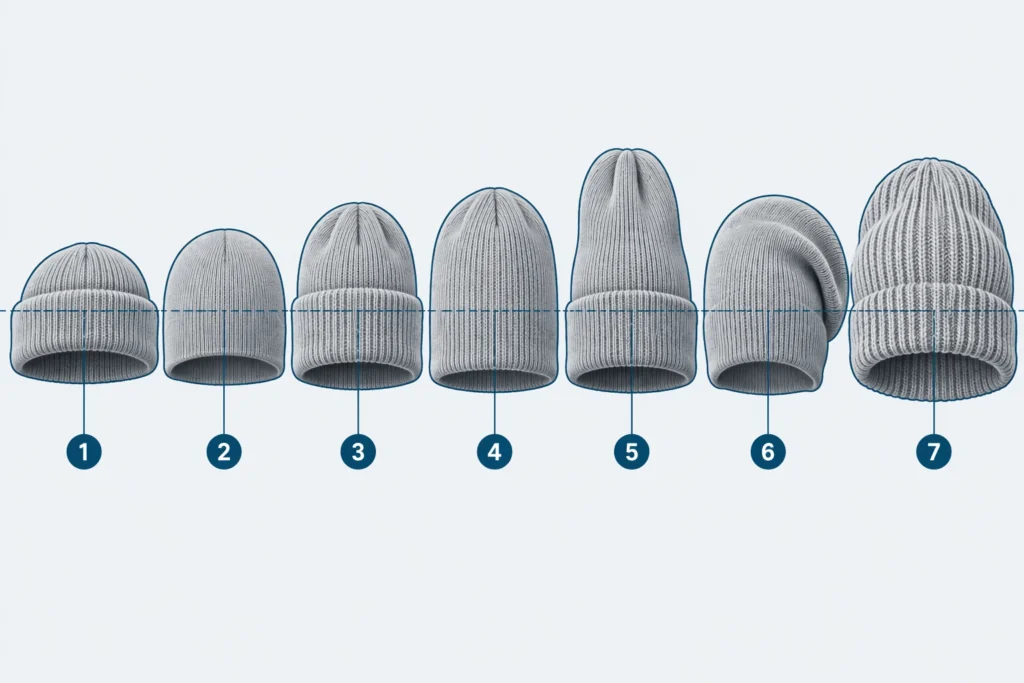
Beanie types by shape and fit
Shape comes from the length of the knit, the depth of the cuff and how close the beanie sits to the head. Where useful, we give the measurements of our own catalogue styles.
Cuffed beanie
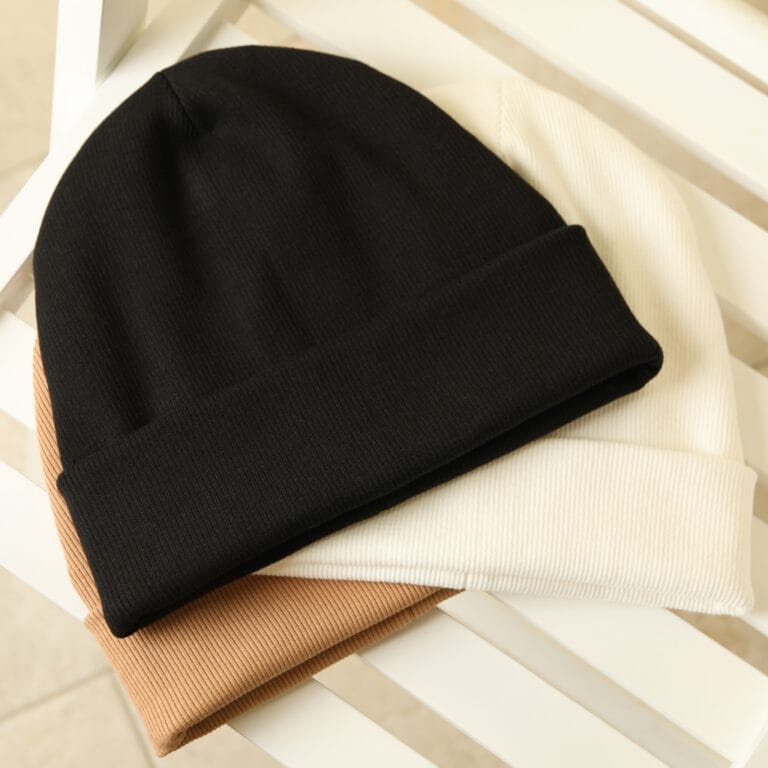
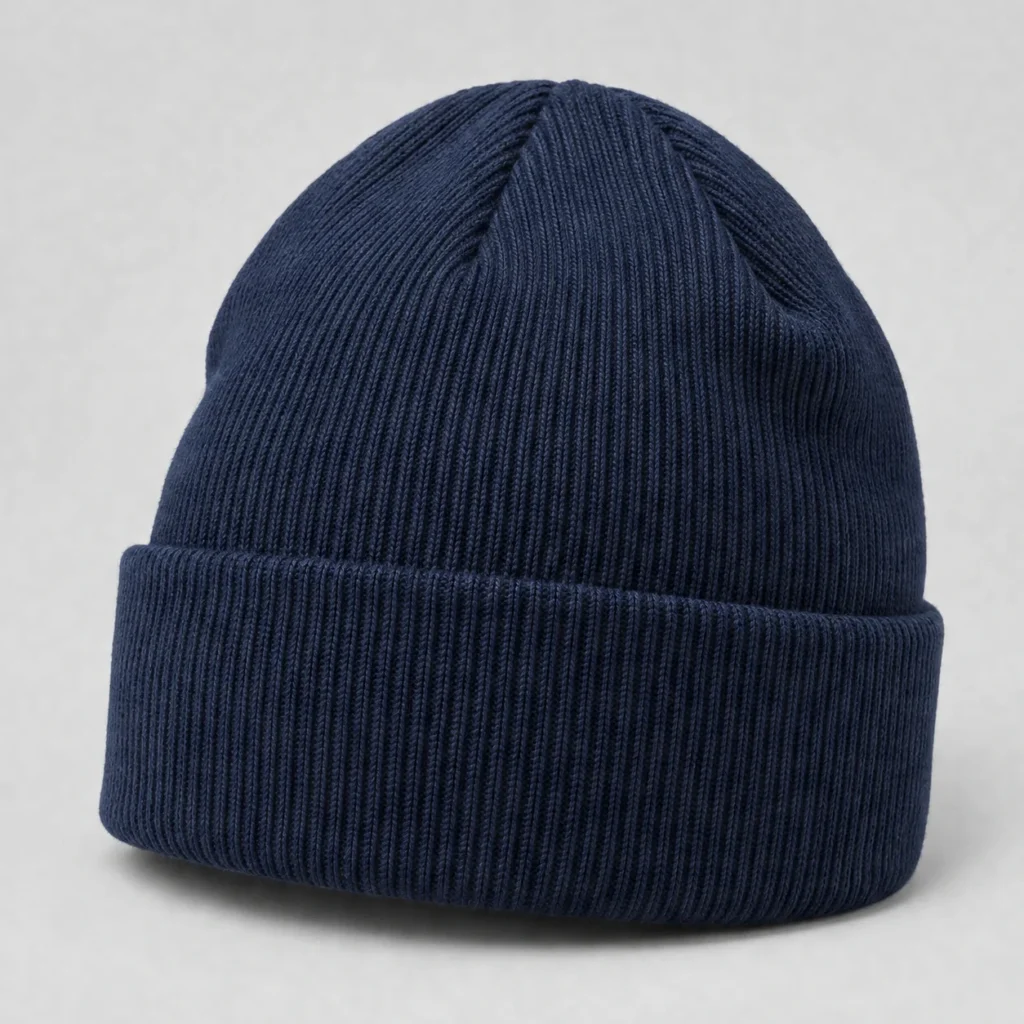
A cuffed beanie has a rib band knitted extra long and folded up at the brim. The fold doubles the knit over the ears and gives a flat, forward-facing place for a logo, which makes it the classic branded beanie. Our stock version is a 1×1 rib in acrylic on 7GG flatbed machines, with a linked crown and a cuff of about 7 cm. It suits almost every use. More in our guide to cuffed beanies.
Uncuffed beanie
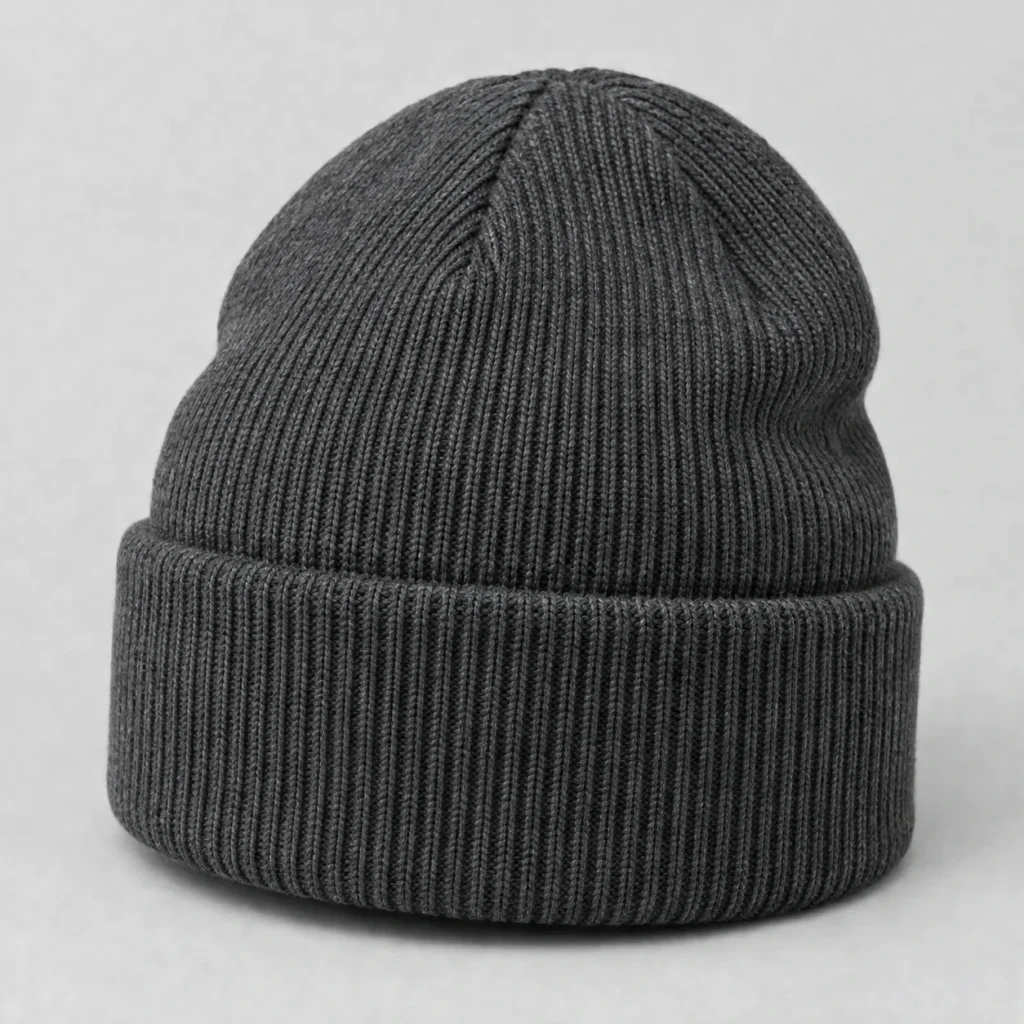
An uncuffed beanie has no fold: the knit ends in a short, finished rib band at the forehead, so it looks cleaner and lighter. It is usually rib or jersey at a medium or fine gauge, with the logo just above the band as a small woven label or flat embroidery. It suits minimal fashion ranges and anyone who finds a cuff too bulky. See uncuffed beanies explained.
Slouchy beanie
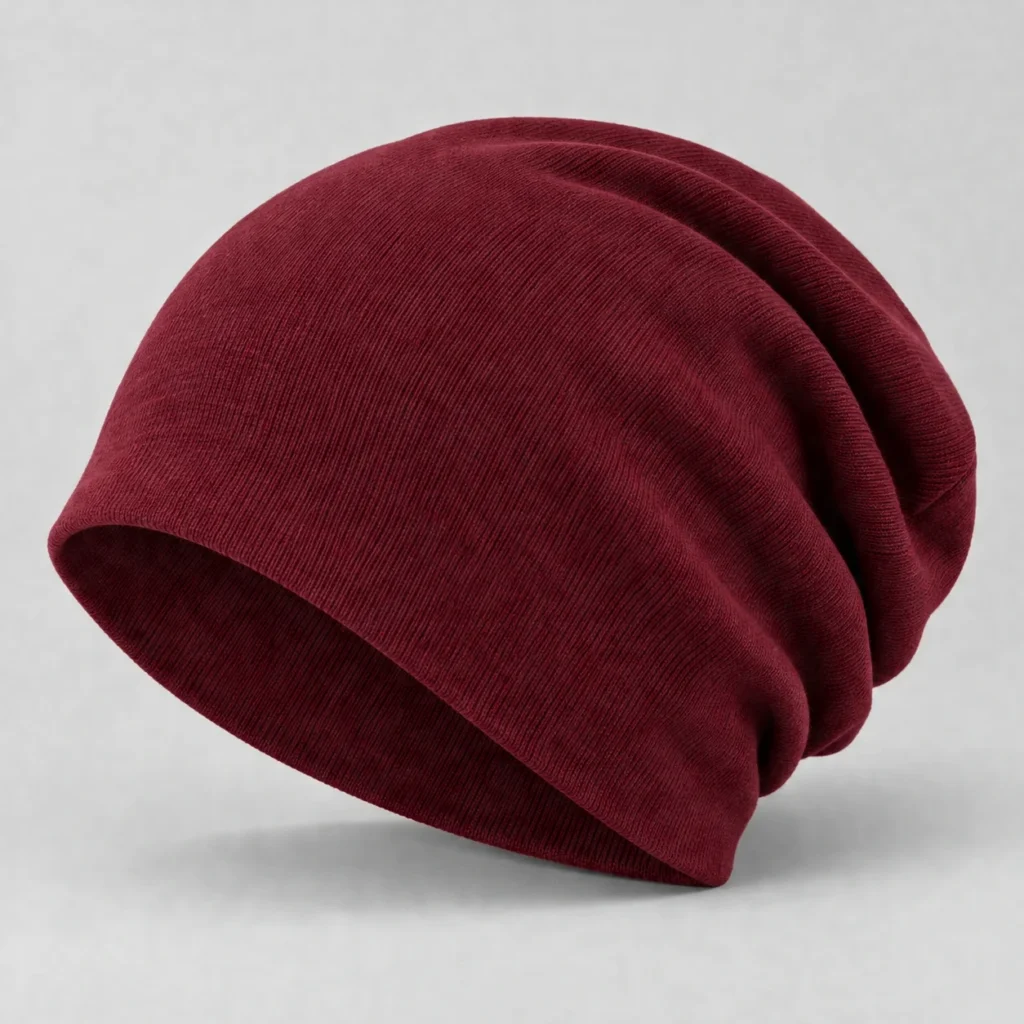
A slouchy beanie has extra length that drapes down at the back. The band fits like a regular beanie; the slouch is all in the body, so a soft, drapey knit works well. Our stock slouchy is single jersey on 9GG, about 28 cm long, worn uncuffed. It suits casual and streetwear ranges and people with longer hair. Read our slouchy beanie guide.
Fisherman beanie
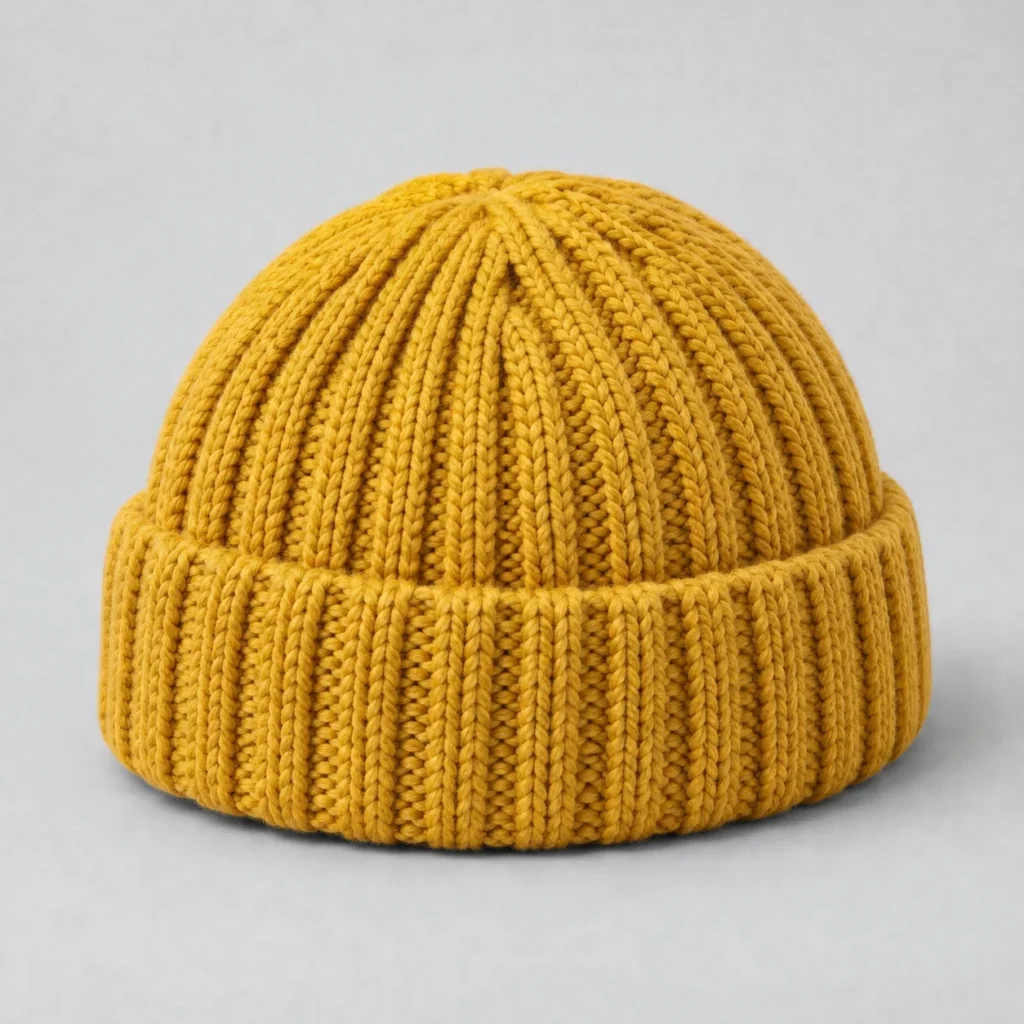
A fisherman beanie is short and shallow, with a turned-up cuff, and sits high on the head above the ears. The style is usually linked to the knit hats of fishermen and dock workers. It is usually a chunky rib: our stock fisherman beanie is a 2×2 rib on 5GG in an acrylic and wool blend, about 13 cm high with a cuff of about 5 cm. Today it is a workwear and streetwear favourite. More in our fisherman beanie guide.
Dock worker beanie and watch cap
A dock worker beanie is a short, close-fitting rib beanie with a turned cuff, worn just above the ears; it is close to the fisherman but usually snugger and a finer rib. A watch cap is its longer cousin: a snug cuffed rib that covers the ears, whose name is usually traced to sailors standing watch, and often knitted double-layer. Our double-layer watch cap is a 1×1 rib on 7GG with a cuff of about 6.5 cm, made for uniforms and workwear.
Oversized beanie
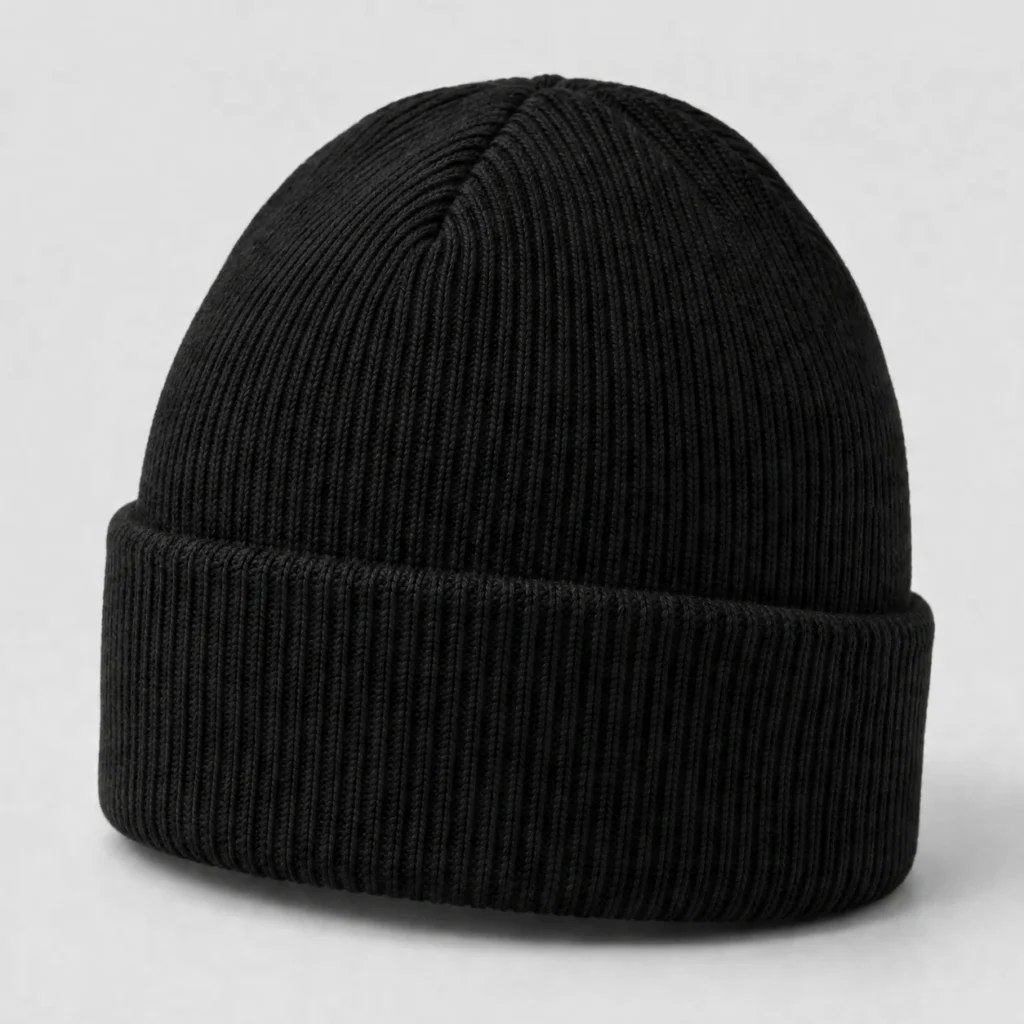
An oversized beanie is larger all over: longer, wider and stretchier, so it sits loosely and leaves room for long or voluminous hair. It is usually knitted chunky so the size keeps its shape. Our stock oversized beanie is a 2×2 rib on 5GG, about 25 cm high, and stretches to about 64 cm, a few centimetres more than our standard styles. It suits streetwear and winter fashion. See oversized beanies.
High top beanie
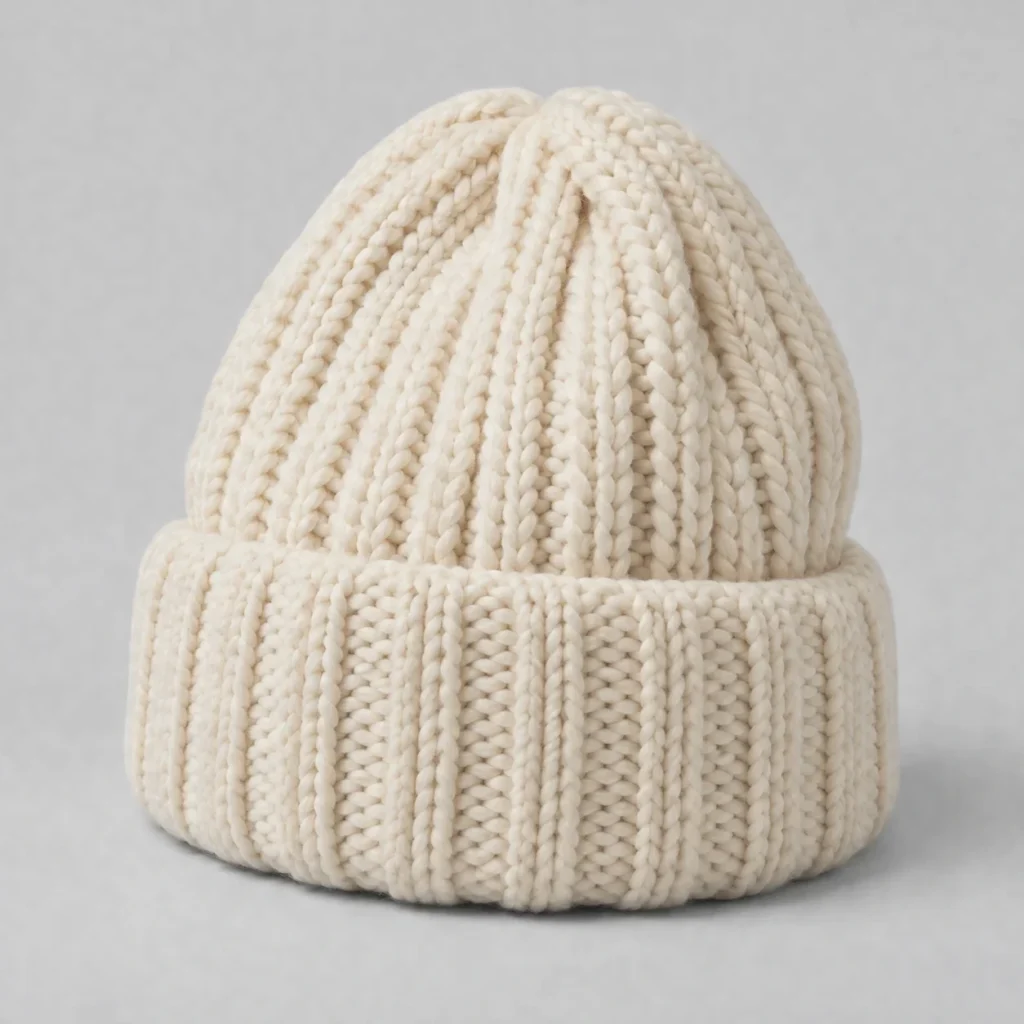
A high top beanie has a tall crown that stands up above the head instead of slouching back. The cuff fits like a regular beanie; the height is set in the knitting pattern, and a firm rib helps it stand. Our stock high top is a 1×1 rib on 7GG with a crown of about 25 cm and a cuff of about 8 cm. It is a streetwear and skate style. Read what makes a high top beanie.
Skull cap beanie
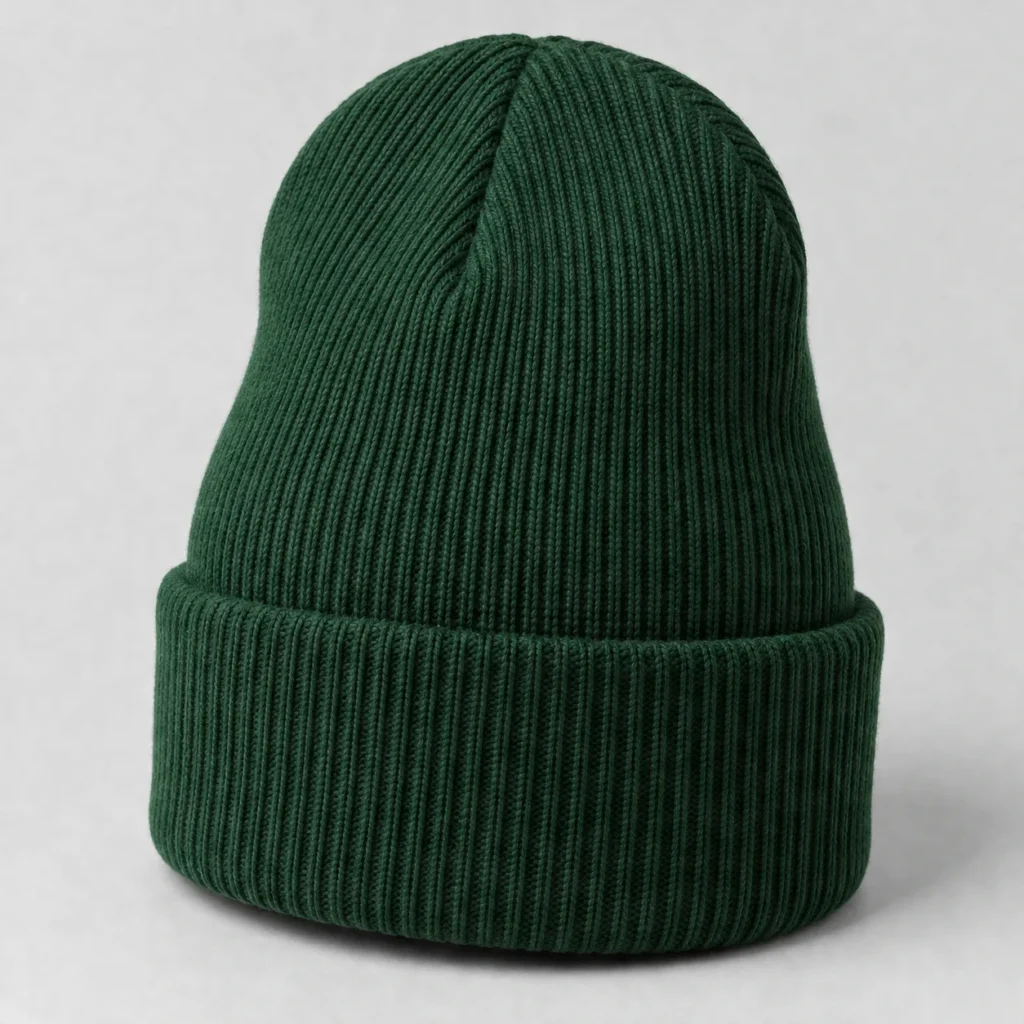
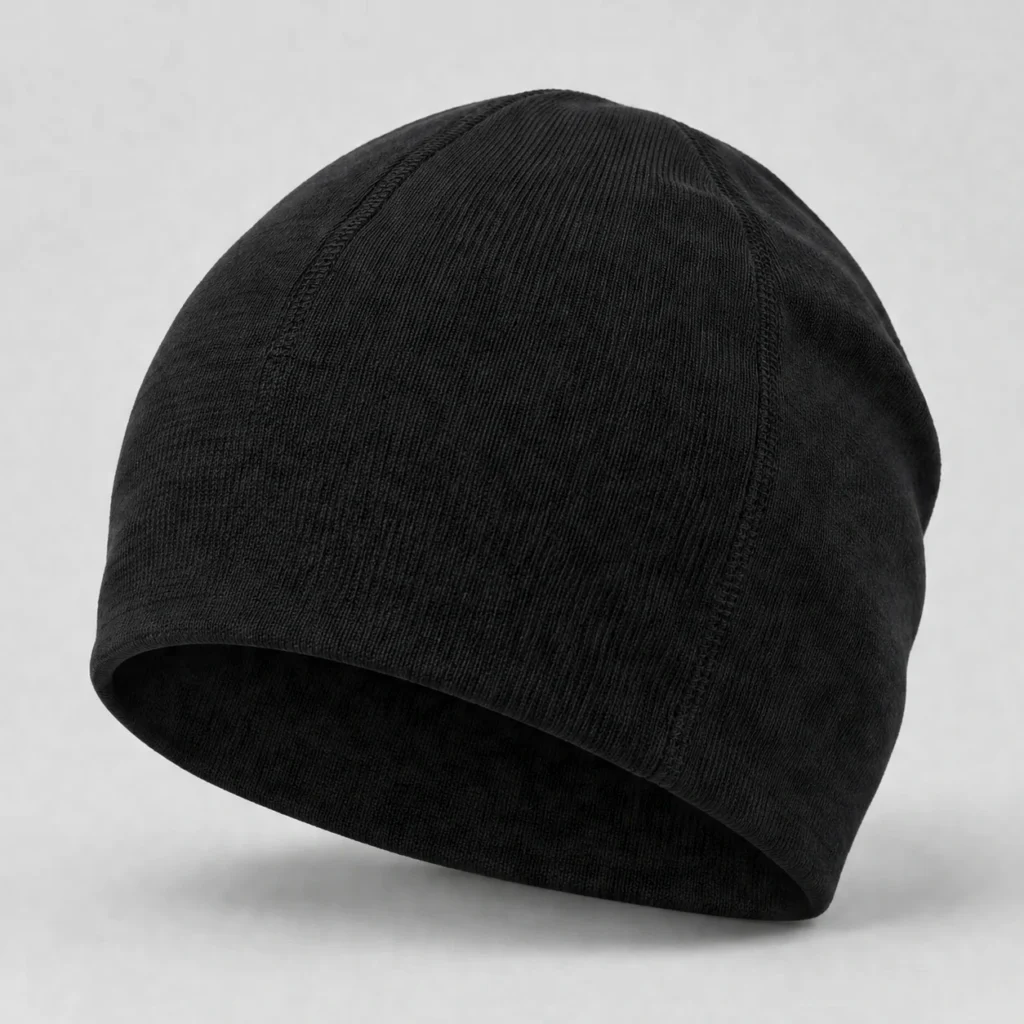
A skull cap is a thin, cuffless beanie that follows the head closely. It is usually knitted on a fine gauge, around 12GG, in jersey or fine rib, so it lies flat under a hood, a cap or a helmet; flat seams keep it comfortable for hours. It suits cyclists, runners and outdoor workers. See skull cap beanies.
Beanie types by knit and texture
The knit decides stretch, thickness and how sharply a knitted-in logo shows. Two things set it: the stitch and the gauge.
Ribbed knit beanie
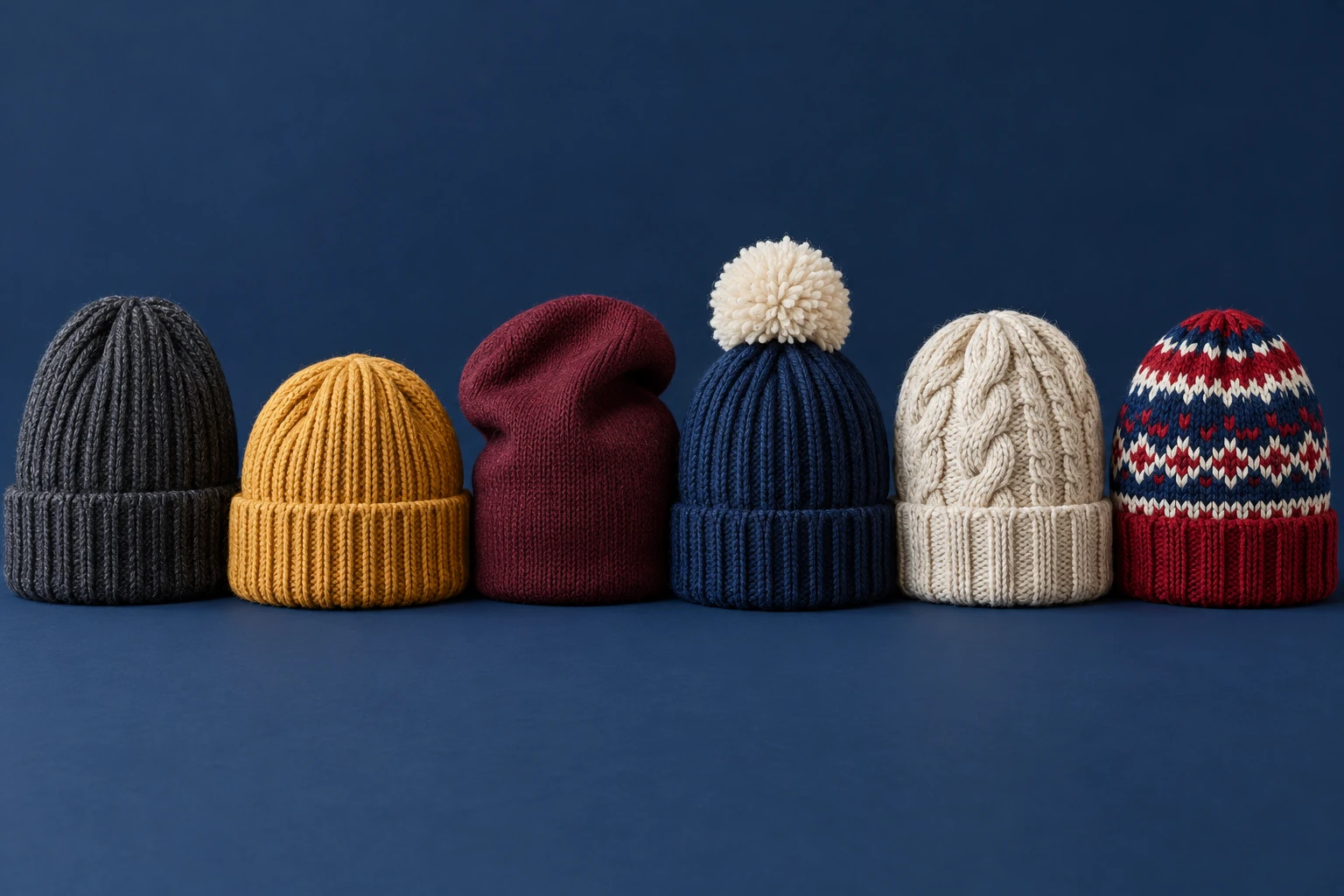
A ribbed beanie has vertical columns of stitches that alternate between the front and back of the fabric, so it stretches and springs back and grips without being tight. A 1×1 rib alternates one by one for a fine, very stretchy rib; a 2×2 rib goes two by two for bolder lines. Rib is the usual beanie knit. Textured cousins such as waffle knits use a grid instead. More in ribbed knit beanies.
Chunky knit beanie
A chunky knit beanie uses thick yarn on a coarse gauge, usually 3GG or 5GG, so each stitch is large and visible. It is heavier, warmer and closer to the look of hand knitting, and is used for cable, fisherman and big pom-pom styles. Small text cannot be knitted in at this gauge, so a woven label or leather-look patch is the usual logo. See chunky knit beanies.
Fine knit beanie
A fine knit beanie is knitted on 12GG or 14GG with a fine yarn such as merino, cotton or fine acrylic. The surface is smooth, the beanie is light and it shows small details sharply, including small knitted-in text. Fine knits suit sports beanies, helmet liners, mild weather and polished fashion styles. Our guide to beanie gauges and yarns maps each gauge to its styles.
Cable knit beanie
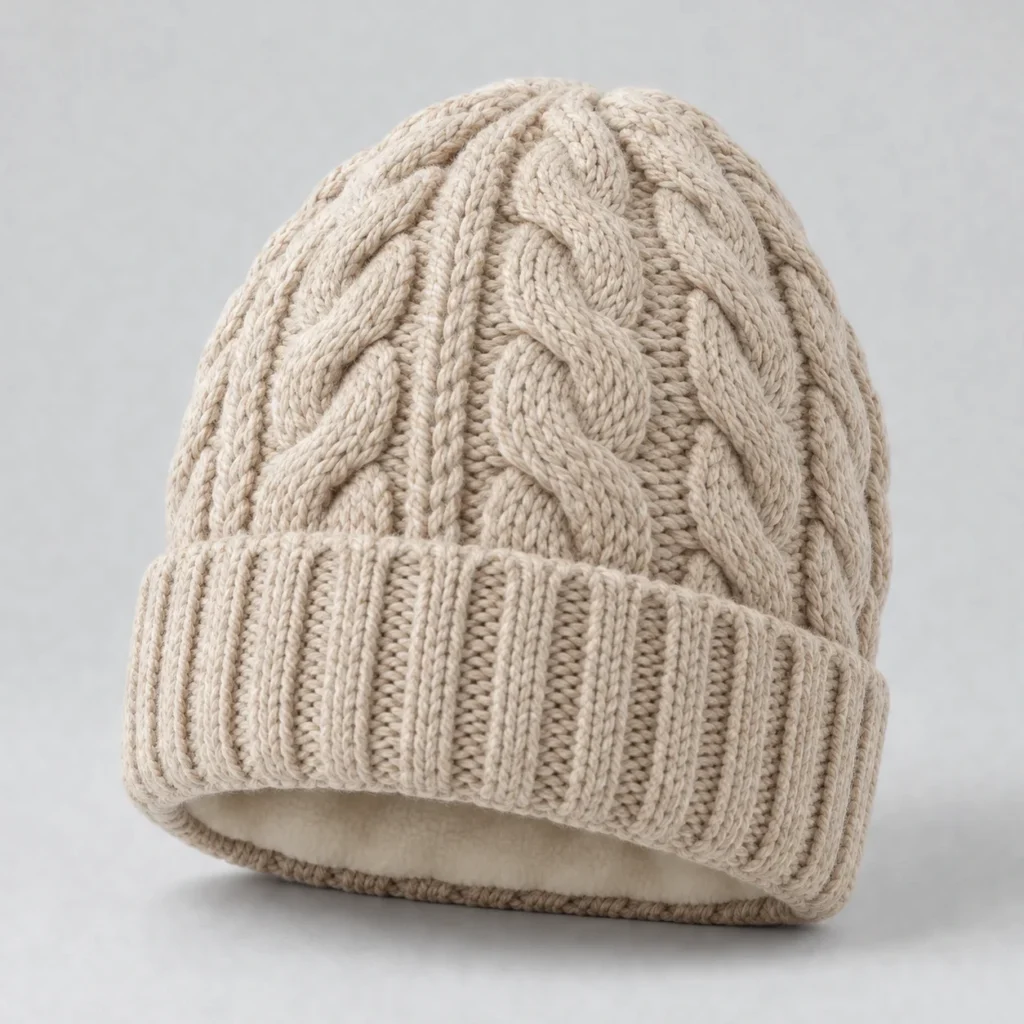
A cable knit beanie has columns of stitches crossed over each other to form raised twists or braids. Crossing makes the fabric thicker and less stretchy, so cables are usually knitted on 5GG with a rib cuff for grip. Our stock cable beanie is a wool blend on 5GG with a polar fleece lining in the crown. It suits winter, gift and heritage ranges. More in cable knit beanies.
Crochet beanie
A crochet beanie is made with a hook instead of knitting needles: each loop is pulled through the last, giving a firmer, more open, visibly handmade texture. Real hand crochet is made stitch by stitch and takes longer than standard production; the time is confirmed with your order. A crochet look made on knitting machines follows the standard lead time. It suits festival, boutique and artisanal ranges. See crochet beanies.
Beanie types by yarn
The yarn decides warmth, softness, care and much of the price. Acrylic is the usual beanie yarn and is used on most of our catalogue styles: light, good with bright colours and good value, though it can pill; see acrylic beanies. We also knit cotton, wool blends, merino, cashmere blends, mohair, alpaca, lambswool, chenille, bamboo viscose and polyester, with recycled and organic yarns on request. Our knitting yarns overview compares them.
Wool beanie
A wool beanie is knitted from wool or a wool blend. Wool holds warmth well and handles moisture, so it suits cold, damp weather. Merino is a fine wool that most people find softer and less prickly. A wool and acrylic blend is lighter, easier to care for and costs less, and it must be labelled as a blend, because fibre names have to match the real content. Wool can shrink and felt with heat, so follow the care label. Read wool beanies.
Cashmere beanie
A cashmere beanie is usually knitted from a cashmere blend, on a fine or medium gauge; pure cashmere is available on request only. It usually feels very soft and warm for its weight, but it is delicate: it needs gentle care, and dense embroidery can distort it, so a woven label or small patch is often the cleaner logo. A blend is labelled as a cashmere blend. It suits luxury and gift ranges. See cashmere beanies.
Organic cotton beanie
An organic cotton beanie is knitted from cotton yarn whose organic share is documented by the spinner; we supply it on request with the mill’s or spinner’s certificate. Cotton is soft and breathable but less warm than wool and has less natural stretch, so it is often knitted in rib. It suits mild weather, everyday wear and people who find wool too warm. More in organic cotton beanies.
Sustainable beanie
“Sustainable beanie” usually means one knitted from recycled or organic yarns, such as recycled polyester, recycled wool or organic cotton, which we supply on request with the supplier’s certificate. What a brand may claim on its label depends on the certificates held along the supply chain, so we describe the yarn exactly and let the documents carry the claim. Yarns from OEKO-TEX® certified mills are available on request; the certificate is the mill’s. See sustainable beanies.
Beanie types by lining and warmth
A lining or a second knit layer adds warmth, especially over the ears. The two are often confused: a lined beanie has a different material sewn inside, while a double-layer beanie is two layers of the same knit.
Fleece-lined beanie
A fleece-lined beanie has fleece sewn inside, either as a band around the brim that covers the ears or as a full lining up to the crown. We use polar fleece and microfleece, and also offer cotton jersey or satin linings. Fleece adds warmth and feels soft on the skin; it blocks some wind but does not stop it. Our stock ski beanie has a sewn-in microfleece band. Our guide to fleece-lined, double-layer and unlined beanies compares the options.
Thermal beanie
“Thermal” is a selling word, not a construction. It usually means a build that keeps more warmth in: a double-layer knit, a lining, or a heavier yarn and gauge. A double-layer beanie is knitted twice the length and folded inside itself, giving two knit layers all round, which is not the same as being lined. Thermal styles suit outdoor work, winter sport and cold commutes.
Beanie types by trims and features
Trims are added parts that change how a beanie works as well as how it looks.
Pom-pom beanie
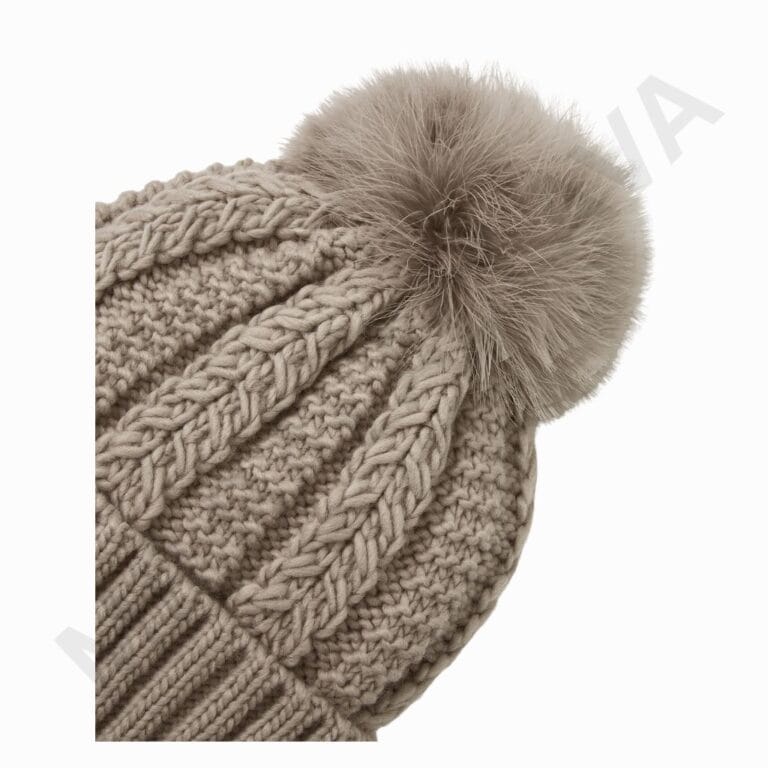
A pom-pom beanie, or bobble hat, has a ball of yarn or faux fur on the crown. A yarn pom-pom is sewn on in a matching or contrast colour. A faux fur pom-pom is fuller and softer; we use faux fur only. A detachable faux fur pom-pom fastens with a press stud so it can come off for washing, and is for adult beanies only. See pom-pom beanies and our guide to pom-pom options.
Earflap beanie
An earflap beanie has knitted flaps over the ears, often with braided ties. It is often linked to the Andean chullo and sometimes called a trapper-style knit, though a true trapper hat is a fur or fleece hat with a brim. Our stock earflap beanie is a 1×1 rib on 7GG with earflaps of about 12 cm, lined with polar fleece in the flaps and band. It suits cold outdoor use and winter fashion. More in earflap beanies.
Beanie with visor
A beanie with a visor, also called a brimmed or peak beanie, has a short stiffened peak sewn into the front. The peak is knitted or covered in fabric over a stiffener, so it keeps its shape while the rest of the beanie stretches, and gives a cap-like look to a knit hat. It suits outdoor, hiking and casual winter ranges and is made to order. See beanies with a visor.
Ponytail beanie
A ponytail or messy bun beanie has an opening at the back or top of the crown for the hair. The opening needs a clean, stretchy edge that does not fray or pull the hair, so it is knitted in, bound or elasticated. Our stock version is a 1×1 rib on 9GG with a back opening of about 7 cm; a top opening for buns is made to order. It suits runners, skiers and womenswear. Read ponytail beanies.
Bluetooth beanie
A Bluetooth beanie has a thin wireless headphone module in pockets inside the lining, with the speakers over the ears; the module comes out before washing. The minimum order is 1,000 pieces when we source and fit the module, or 50 pieces per design when you supply your own. The brand selling the beanie is responsible for the electronics meeting the rules of its market. See Bluetooth beanies.
Beanie types by decoration and pattern
On a knit, the decoration methods that work are embroidery, patches, knitted-in jacquard, labels and reflective logos. Screen printing and sublimation do not suit knits, because flat prints do not sit well on a stretchy knit surface; heat transfers work only on smooth sports beanies in fine single jersey. The decoration methods overview compares them.
Minimalist beanie
A minimalist beanie is one colour with little or no visible branding: a small woven label at the side, a tone-on-tone embroidered logo a shade lighter or darker than the knit, or only an inside label. It is usually a cuffed or uncuffed rib in a neutral colour, and suits fashion labels and uniforms. Our blank wholesale beanies are in stock unbranded and ready for your label.
Logo beanie
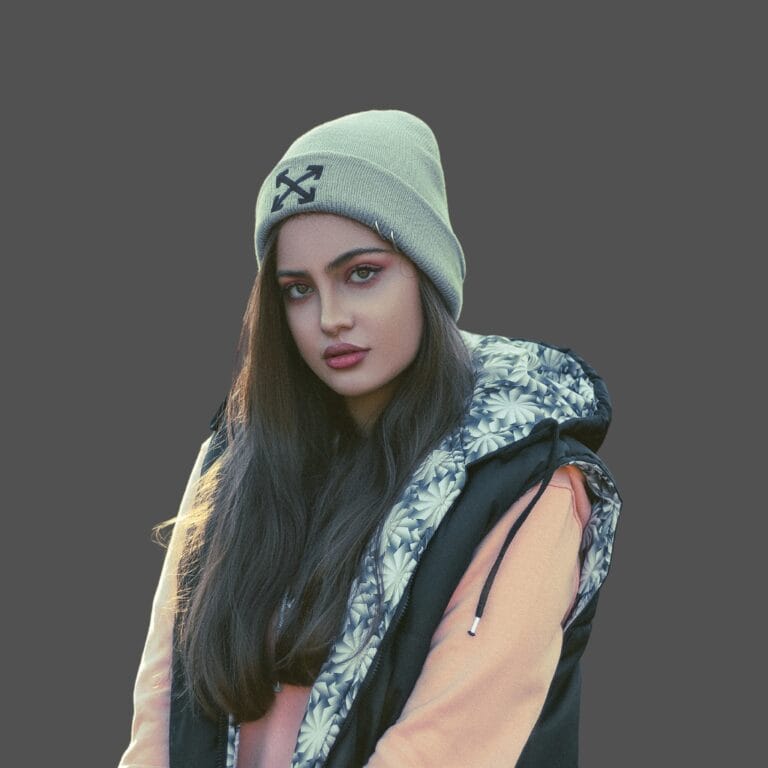
A logo beanie is any beanie that carries a brand mark. The usual place is the front of the cuff, which faces forward and sits flat; others are the side, back or crown, above the band on cuffless styles, on an earflap, or all round for a jacquard. The method follows the knit and yarn: embroidery and patches for most styles, knitted-in jacquard for bold designs. Our guide to custom logo beanies compares every method.
Embroidered beanie
An embroidered beanie has the logo stitched in thread, usually on the front of the cuff. Flat embroidery suits fine detail and small text; 3D embroidery raises the stitches over foam for a bold logo. Because knit stretches, the cuff is backed during stitching so the design stays straight. On fluffy yarns such as mohair, alpaca or chenille, embroidery needs a test first. See our embroidered and leather patch beanies.
Patch beanie
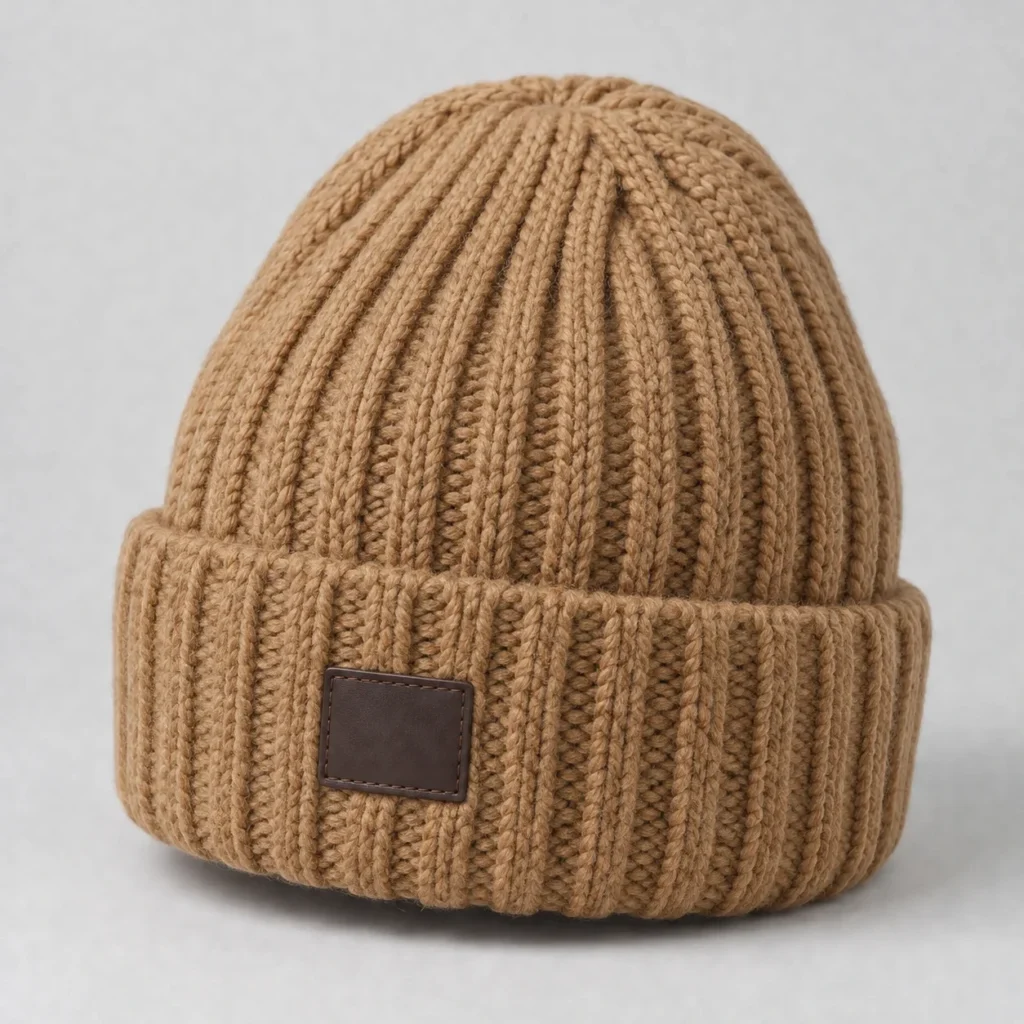
A patch beanie has a badge sewn onto the front, usually on the cuff: a woven patch for fine detail, a leather-look PU patch that can be debossed or engraved, or a rubber (PVC) or silicone patch for a raised logo. Metal logo plates are another option. On our stock patch beanie, a leather-look patch of about 6 × 4 cm is stitched on all sides to a 9 cm cuff. Patches suit chunky knits, where small details cannot be knitted in. More in patch beanies.
Jacquard and Fair Isle beanie
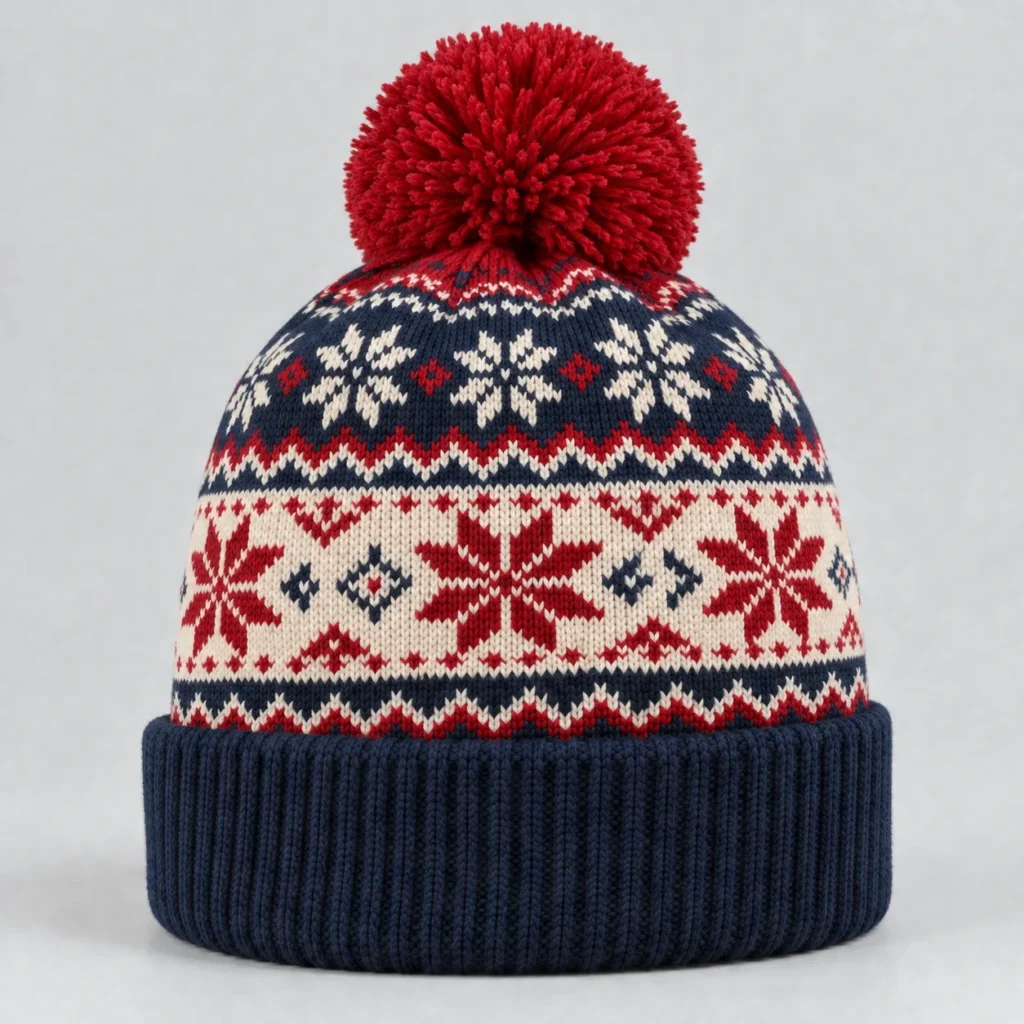
A jacquard beanie has its pattern or logo knitted into the fabric in several yarn colours, usually 2–4, so nothing is printed or sewn on. Fine gauges show more detail: small knitted-in text needs about 12GG. Fair Isle is a traditional jacquard style with bands of small repeating motifs, often in Nordic colours with a pom-pom. Our jacquard beanies are knitted in-house in Sialkot. Read jacquard beanies and Fair Isle beanies.
Striped and team beanie
A striped beanie has horizontal bands knitted in by changing yarn colour as it is knitted. Our stock striped beanie is a cuffed 1×1 rib on 7GG in two colours. Stripes in club colours make the classic team or supporters’ beanie, often with a crest embroidered or patched on the cuff. It suits clubs, schools, fan shops and events. Browse our jacquard and graphic beanies.
Camo beanie
A camo beanie carries a camouflage pattern. On a knit beanie the pattern is knitted in as jacquard rather than printed, so the colours are part of the fabric. Our stock camo beanie is a cuffed woodland pattern on 12GG. It suits outdoor, hunting, streetwear and military-style ranges. We only use patterns and designs you own or are licensed to use. See camo beanies.
Colour-block beanie
A colour-block beanie has two or more colours in clear blocks: a contrast cuff, a two-tone body or a bold band. The blocks are knitted in by switching yarn, so the edges are clean; our two-tone pom-pom beanie is a simple example. Colour blocking suits streetwear, sports and brand colours, and gives a range identity without a large logo. Read colour-block beanies.
Tie-dye beanie
A tie-dye beanie has blurred, swirling or banded colour. The effect usually comes from dyeing the knitted beanie in sections, which works on yarns that take dye well, such as cotton, so each piece looks slightly different. A similar multi-colour look can come from space-dyed or melange yarns. Whether your effect is possible in your yarn is confirmed with your quote. More in tie-dye beanies.
Beanie types by look and use
Some names describe a look or a use rather than one construction.
Streetwear beanie
A streetwear beanie is a look more than a shape: bold silhouettes such as high top, fisherman, slouchy or oversized, strong colours and a visible logo. It is usually rib, from fine to chunky, branded with 3D embroidery, a rubber or silicone patch, a woven label or a knitted-in jacquard. It suits clothing brands, skate shops and merch drops. Read streetwear beanies.
Vintage-style beanie
A vintage-style beanie borrows from older knitwear: watch cap and fisherman shapes, muted heritage colours, melange yarns with a mixed-fibre look, simple stripes and small woven labels. It is usually a medium or chunky rib in wool blend or acrylic, and suits heritage, outdoor and workwear-inspired brands. See vintage beanies.
Designer beanie
A designer beanie is defined by its yarn, finishing and branding rather than its shape. It is usually merino, a cashmere blend, mohair or alpaca, often on a fine gauge, with discreet branding such as a woven label, a small leather-look patch or a metal logo plate. Fluffy yarns blur fine detail, so labels, patches or bold knitted-in designs work better than small embroidery. See building a private label beanie line.
Turban beanie
A turban beanie is a fitted beanie with a twisted, knotted or pleated front, so it looks wrapped without being tied. It is knitted or cut and sewn from jersey and covers the hair fully. Many buyers ask for a satin lining to reduce friction on hair; cotton and fleece linings are options too. It suits fashion, modest-wear and hair-care ranges. See turban beanies.
Sports and running beanie
A sports or running beanie is a light, close-fitting fine knit made for activity. Our stock running beanie is polyester single jersey on 14GG, which tends to dry quickly, with flat seams and a smooth inside. Its smooth surface takes a heat transfer, as well as flat embroidery, a woven label or a silicone patch; reflective logos help on dark runs. It suits running clubs, gyms and sports brands. Read running beanies.
Helmet liner beanie
A helmet liner is a very thin skull cap made to fit under a ski, bike or work helmet without pressing at the temples. Our stock liner is merino single jersey on 14GG with a flat-linked crown and a low shape that covers the ears; branding stays small and flat. Where the face needs cover too, a balaclava is the alternative. More in helmet liner beanies.
Kids and baby beanie
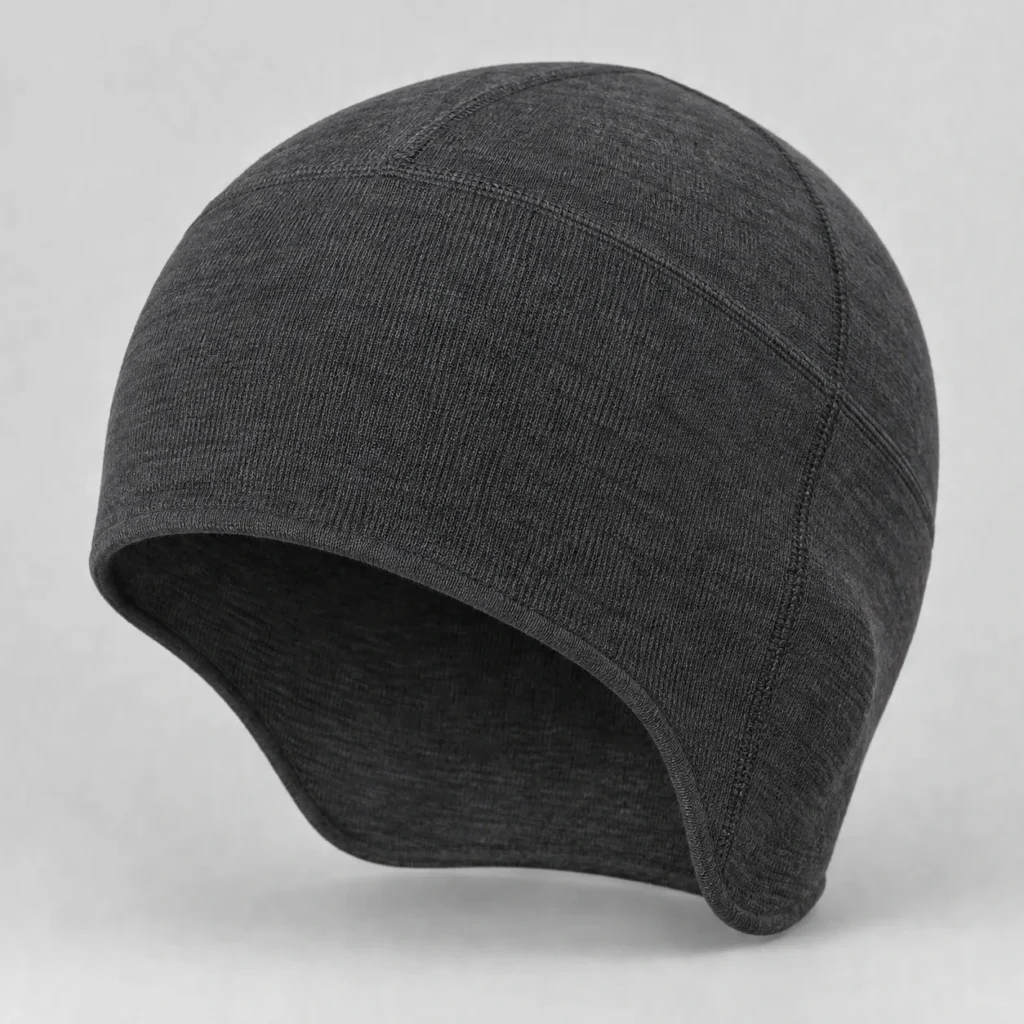
Kids’ and baby beanies have their own pattern and sizes, not a scaled-down adult pattern. They get a sewn-on pom-pom or none, because small detachable parts are not suitable for children, and no cords or ties that could catch. Rules such as the EU standard EN 14682 restrict cords at the hood and neck of children’s clothing, and earflap ties on kids’ styles are a point we discuss with you. See baby beanies and our beanie size guide.
Beanies by season
Beanies are worn all year; what changes with the season is the gauge, the yarn and the lining.
- Cold winter: chunky 3–5GG knits, wool blends, cable knits, fleece-lined or double-layer beanies and earflaps.
- Autumn and spring: medium 7–9GG rib in acrylic, wool blends or cotton; cuffed, uncuffed and slouchy shapes.
- Mild and summer weather: fine 12–14GG knits in cotton, bamboo viscose or light synthetics, unlined, in slouchy, skull cap or open crochet styles. Read more in summer beanies.
Which beanie type should you choose?
Start from who will wear it and where, then choose the shape, the knit and yarn, and the decoration, in that order.
| If the beanie is for… | Usual types | Knit and yarn | Branding |
|---|---|---|---|
| Retail fashion | Cuffed, uncuffed, slouchy, fisherman, cable | Medium or chunky rib; wool blend, merino, cashmere blend | Woven label, leather-look patch, tone-on-tone embroidery |
| Streetwear | High top, oversized, fisherman, slouchy | Rib, 5–9GG; acrylic or wool blend | 3D embroidery, rubber or silicone patch, jacquard |
| Workwear and uniforms | Watch cap, dock worker, cuffed | 7GG rib, often double-layer; acrylic | Embroidery, woven label, reflective logo |
| Outdoor and ski | Fleece-lined, earflap, pom-pom, cable | Chunky, or 12GG with a fleece band | Embroidery, patch, jacquard |
| Running and training | Sports, ponytail | 14GG jersey; polyester or merino | Heat transfer, silicone patch, reflective logo |
| Under a helmet | Helmet liner, skull cap | 12–14GG jersey; merino or polyester | Small flat embroidery or label |
| Promotions and events | Cuffed, pom-pom, striped | 7GG rib; acrylic | Embroidery or woven label on the cuff |
| Kids and babies | Cuffed, uncuffed, sewn-on pom-pom | Soft rib; cotton, merino or acrylic | Flat embroidery or woven label |
In our catalogue, cuffed and logo beanies cover everyday and uniform needs, streetwear beanies the fashion shapes, pom-pom and winter beanies the warmer styles and sports and performance beanies the fine knits. Unsure? Send a reference beanie or a photo and we suggest the gauge and yarn with your quote.
Ordering custom beanies from Mr Balaclava
We make these beanie types to order in Sialkot, Pakistan, from 50 pieces per design, with a capacity of around 100,000 pieces a month. A design is one style in one colourway with one artwork.
What to send with your request
- The style: shape, knit and trims (cuff, pom-pom, lining, earflaps).
- Your preferred yarn, or the season and use, and we suggest one.
- Colours and your logo, with the method you have in mind.
- Sizes: one adult size, S/M and L/XL, kids, baby or your own chart.
- Quantity per design, labels, packaging and your delivery date.
You can approve a pre-paid physical sample, made in about 5–7 days, or a free pre-production sample made after the order and approved by photos, videos or a video call. Standard production takes approximately 14 days after sample approval. Shipping cost is by weight, agreed with you for each order and confirmed before shipment. For prices, see our custom beanie price guide; for specifications, the beanie tech pack guide. Mr Balaclava’s name never appears on your products.
Frequently asked questions
What is the difference between a slouchy and a fisherman beanie?
They are opposites in length. A slouchy beanie has extra length that drapes at the back; a fisherman beanie is short and shallow and sits above the ears. Slouchy styles are usually soft jersey or light rib, fisherman beanies a chunky rib with a turned cuff.
Are pom-pom beanies still in style?
Pom-pom beanies tend to return every winter and remain a common choice for ski, winter and gift ranges. Faux fur pom-poms give a fuller look, and a detachable one lets adults wear the same beanie with or without it.
What type of beanie is warmest?
Warmth depends more on the yarn, knit and lining than on the shape. A chunky wool blend, a double-layer knit or a fleece-lined beanie usually keeps more warmth in than a thin single-layer knit, and earflaps or a deep cuff help over the ears. For cold, windy days, a lined style is the usual choice.
Which beanie type works well for a logo?
A cuffed beanie, because the front of the cuff faces forward and sits flat. On chunky knits, a patch or woven label keeps a detailed logo clean; on fine knits, embroidery or knitted-in jacquard can show small details.
Can I order different beanie types in one 50-piece order?
The minimum is 50 pieces per design, and each style or colourway is its own design, so one style with a pom-pom and one without start at 100 pieces. Fewer than 50 per design is not possible, but a pre-paid sample lets you check a design first.
Browse the beanie catalogue, see our recycled and organic beanies, or send us your brief for a quote.