This guide is for brands, shops, outdoor and workwear suppliers, clubs and promo companies choosing a warmer beanie. It explains what a fleece lined beanie is, how it compares with a double-layer knit and with cotton or satin linings, and what really decides how warm a beanie feels.
For the full range of shapes, knits and trims, see our overview of the different types of beanies. Here we focus on what sits inside the beanie, and on the choices that change warmth, fit and comfort.
What is a fleece lined beanie?
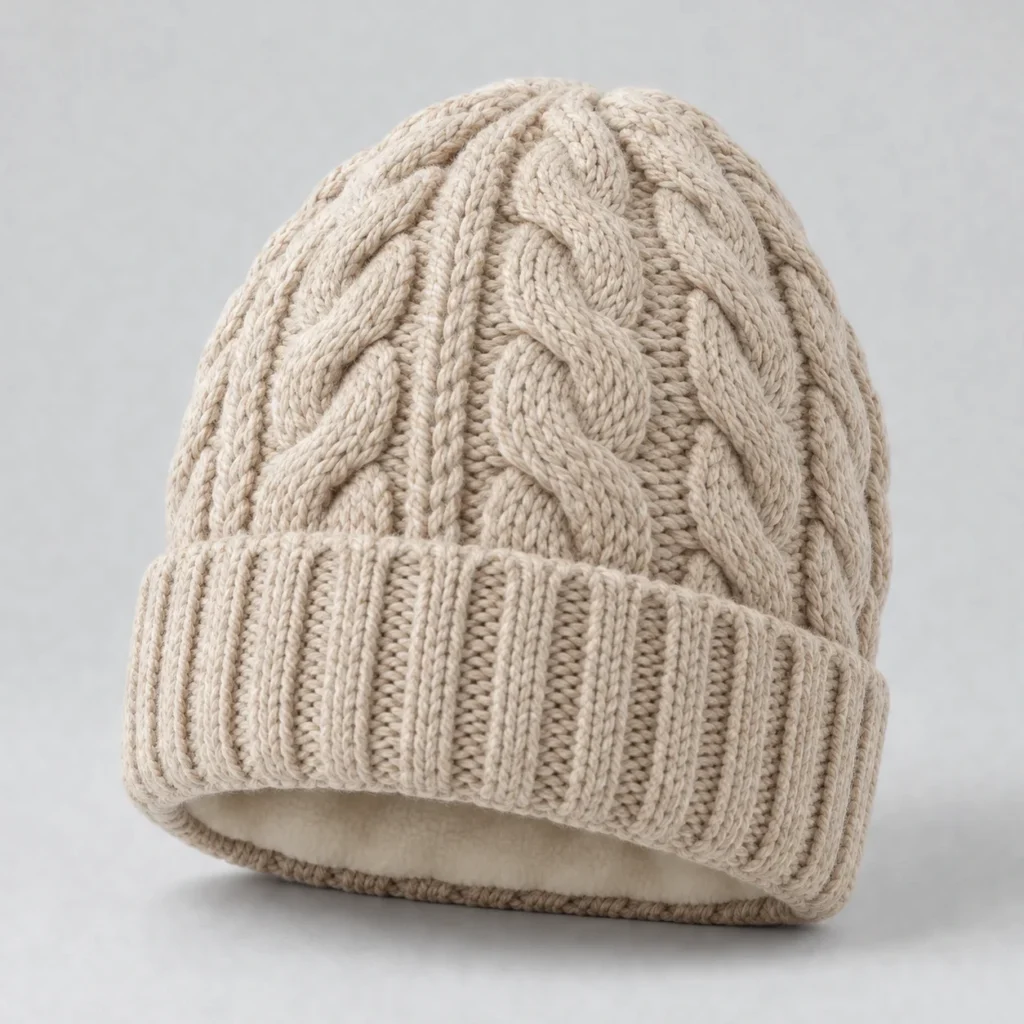
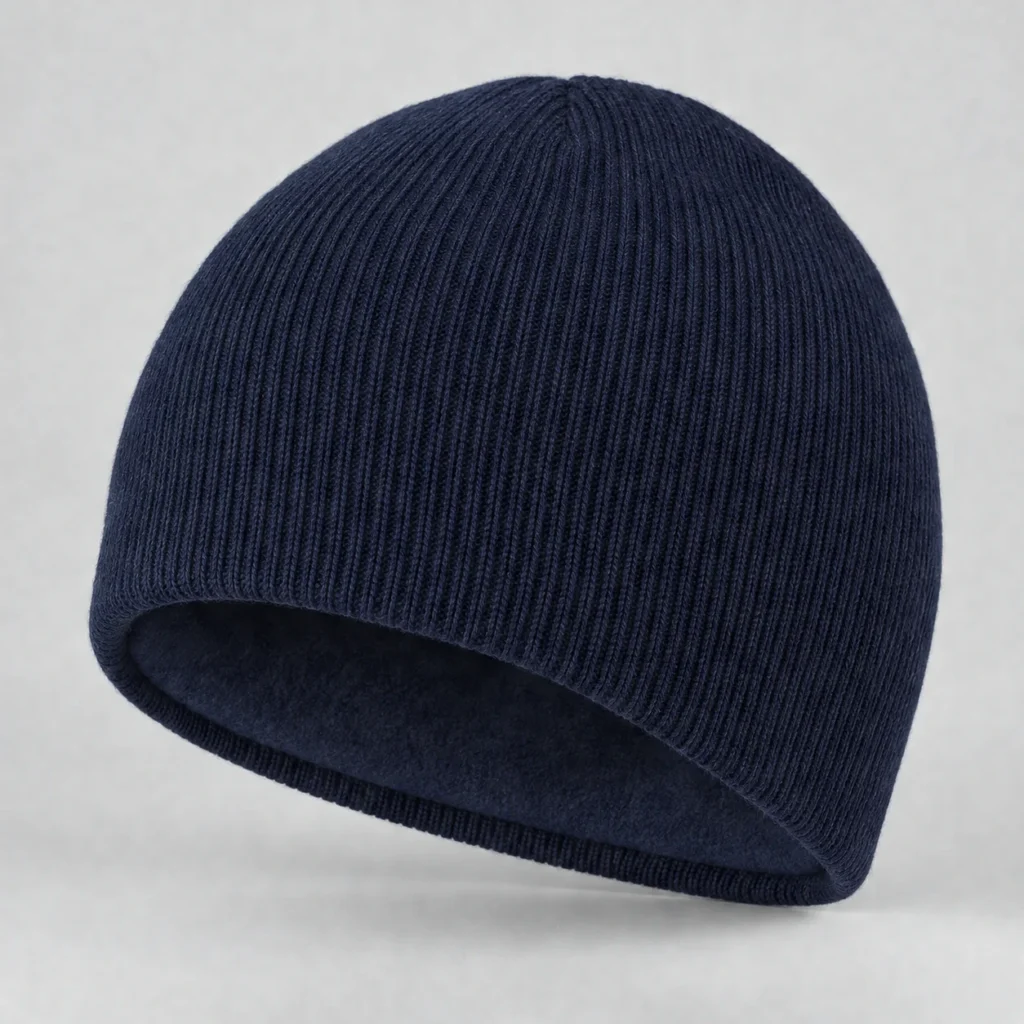
A fleece lined beanie is a knitted beanie with a layer of fleece sewn inside. The fleece can be a band around the forehead and ears, or a full lining that reaches up into the crown.
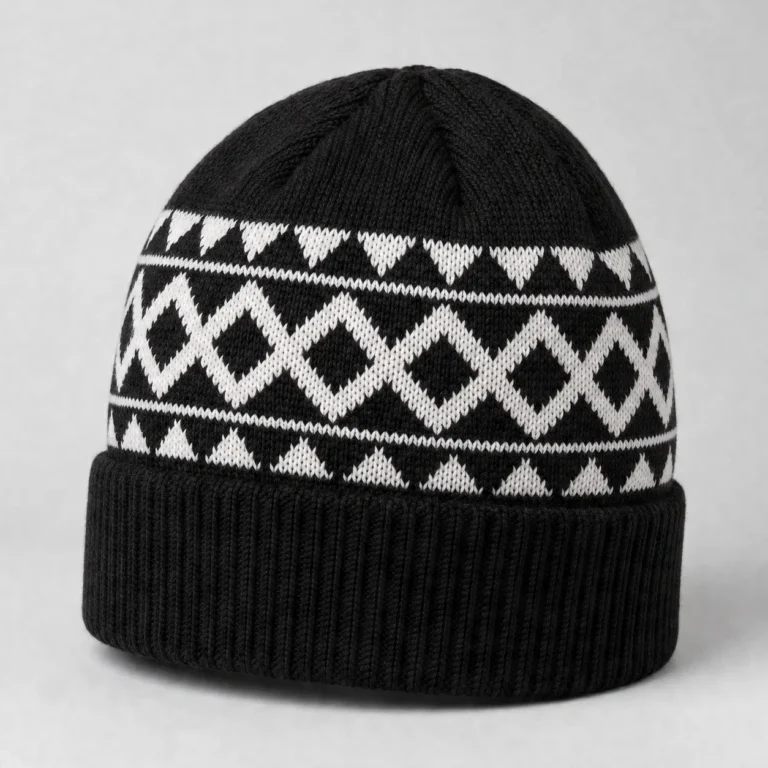
The knit stays on the outside, so the beanie looks like any other rib, cable or jacquard style, and it takes the same logos. The fleece adds a soft, brushed layer against the skin and holds a little more warm air close to the head. Fleece itself is a knitted fabric, usually polyester, brushed to raise a soft pile; it is not the same as a fleece hat made entirely from fleece fabric.
Which lining options are there for beanies?
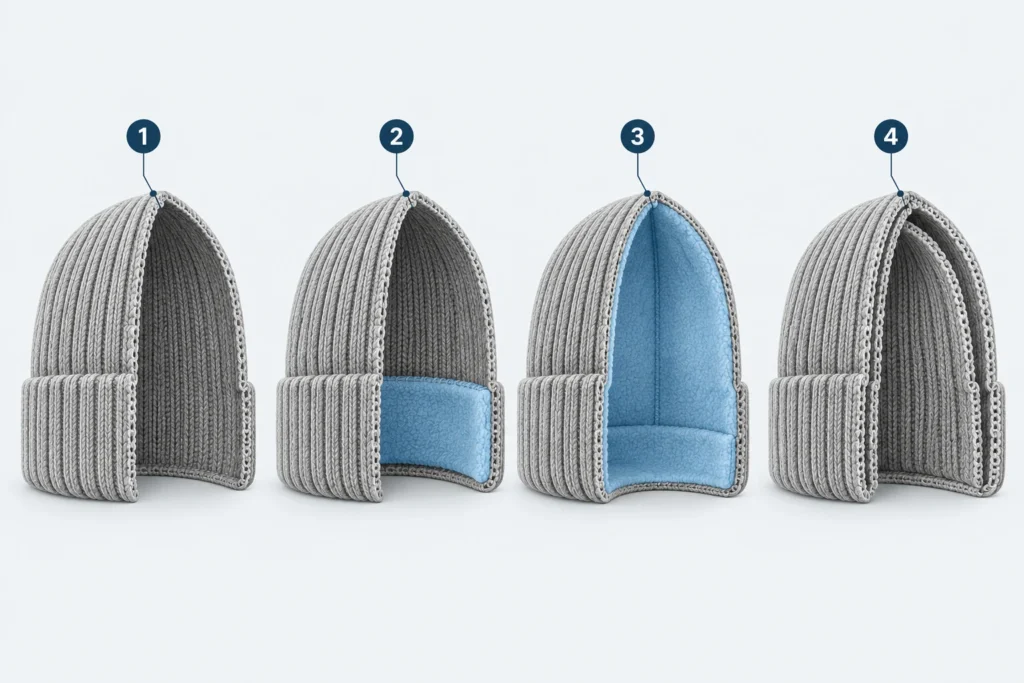
There are four main builds: unlined, a fleece band inside the brim, a full lining, and a double-layer knit. Full linings can be fleece, cotton jersey or satin.
| Build | What it is | How it usually feels | Often chosen for |
|---|---|---|---|
| Unlined | A single knit layer | Light and breathable; the most stretch | Everyday, fashion, mild weather, running |
| Fleece band | A strip of fleece sewn inside the brim, over the forehead and ears | Warmer where it matters, little extra bulk on top | Skiing, workwear, under helmets |
| Full fleece lining | Fleece sewn inside the whole beanie, up to the crown | Noticeably warmer and softer inside; a little snugger | Cold-weather retail, outdoor, gifts |
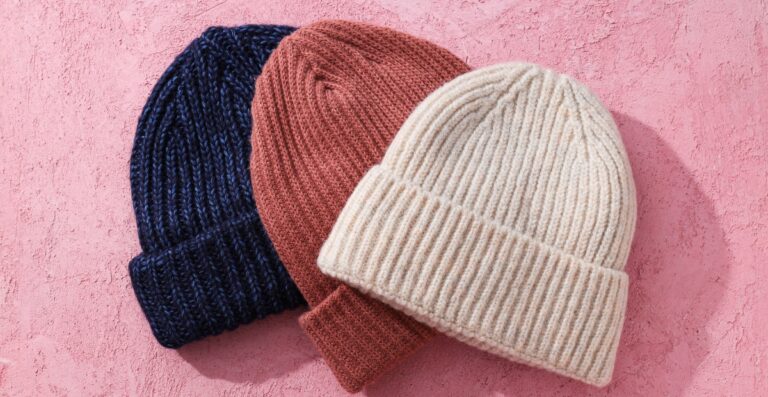
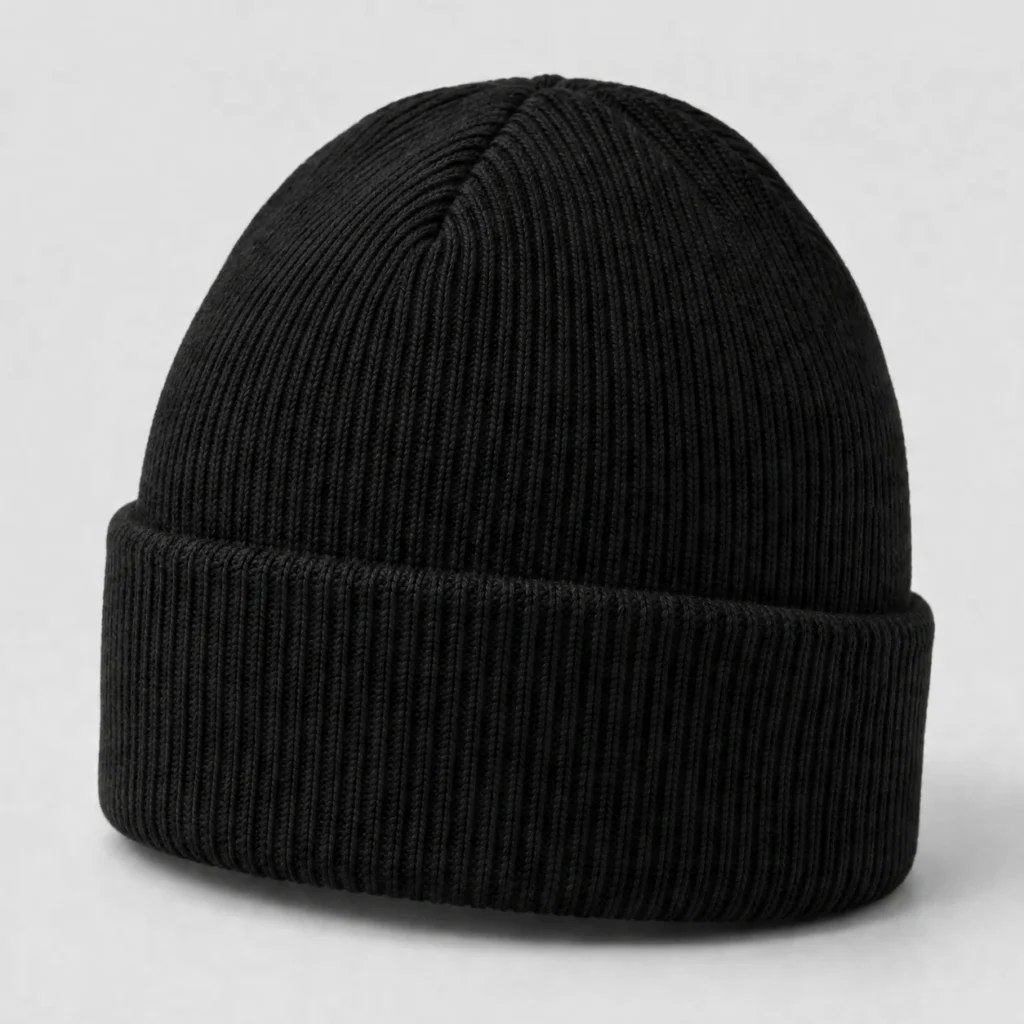
| Double-layer knit | Two layers of knit, no sewn-in fabric | Thicker and firmer; stays knit against the skin | Watch caps, workwear |
| Cotton jersey lining | A thin cotton knit fabric sewn inside | Smooth and cool; adds little warmth | Wool or mohair shells, mild weather |
| Satin lining | A smooth woven polyester satin sewn inside | Slippery and smooth; adds little warmth | Buyers who want less friction on hair |
Is a double-layer beanie the same as a lined beanie?
No. A double-layer beanie has two layers of knit, while a lined beanie has a different fabric, such as fleece, cotton or satin, sewn inside one knit layer.
A double-layer body is usually knitted about twice as long, then one half is turned inside the other, so knit sits against the skin as well as on the outside. It feels thicker and firmer than a single knit and keeps its shape well, but it does not have the brushed softness of fleece. Our double-layer watch cap in 1×1 rib acrylic is a typical example, built for workwear and close fit under a hood.
A double-layer beanie and a fleece-lined one can both feel warm. Which suits you depends on the look and feel you want inside, and on how much stretch you need. Our guide on how a beanie is made shows where each step happens in production.
Fleece band or full fleece lining?
A fleece band adds warmth around the forehead and ears with little extra bulk. A full lining adds warmth over the whole head and feels softer inside, but makes the beanie a little thicker and snugger.
Our helmet-friendly ski beanie has a sewn-in microfleece band of about 6 cm inside a fine 12-gauge rib, so it stays low and fits under most ski helmets. Our fleece-lined earflap beanie has polar fleece in the earflaps and the band, where wind and cold hit first. Our fleece-lined cable knit beanie has polar fleece in the crown under a chunky wool-blend cable.
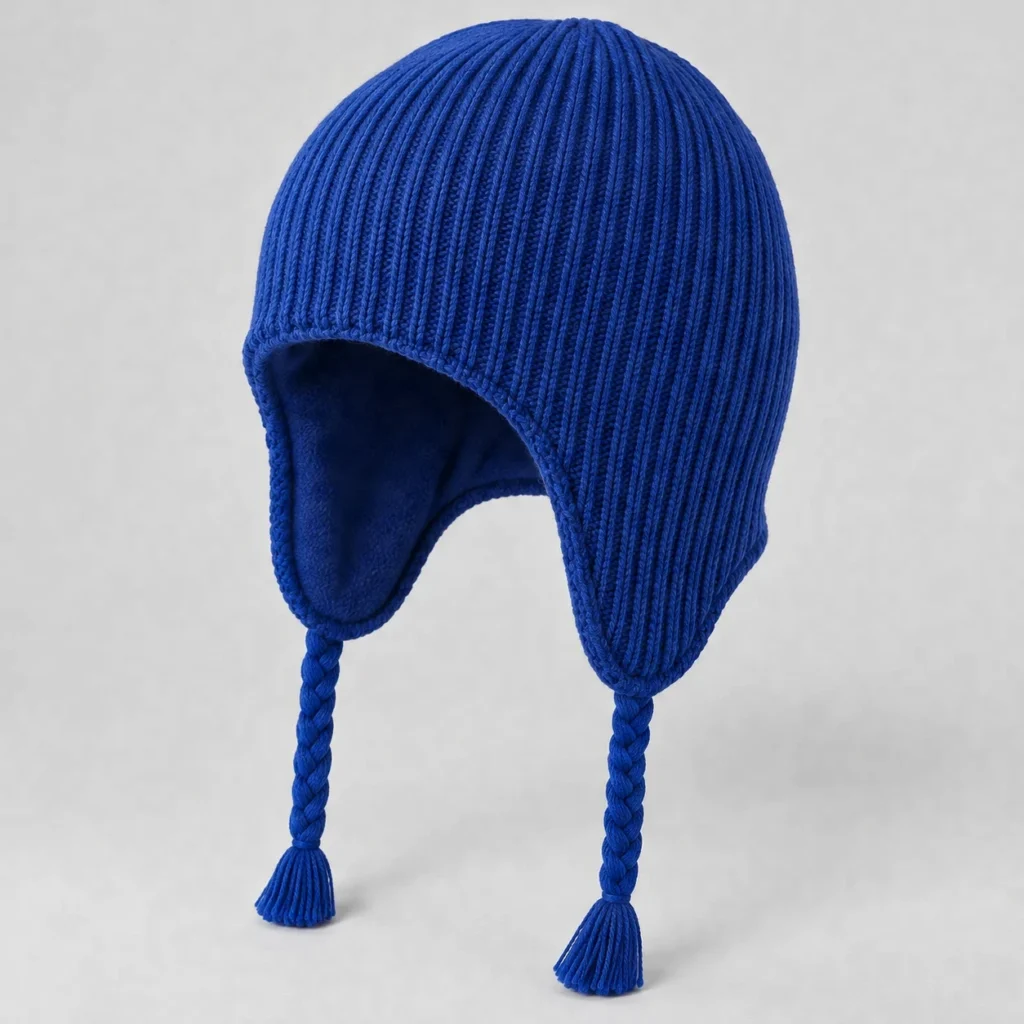
On children’s earflap styles, ties are a point to discuss: for kids we recommend short ties or none, and we adjust the design to your market.
Which fleece is used to line beanies?
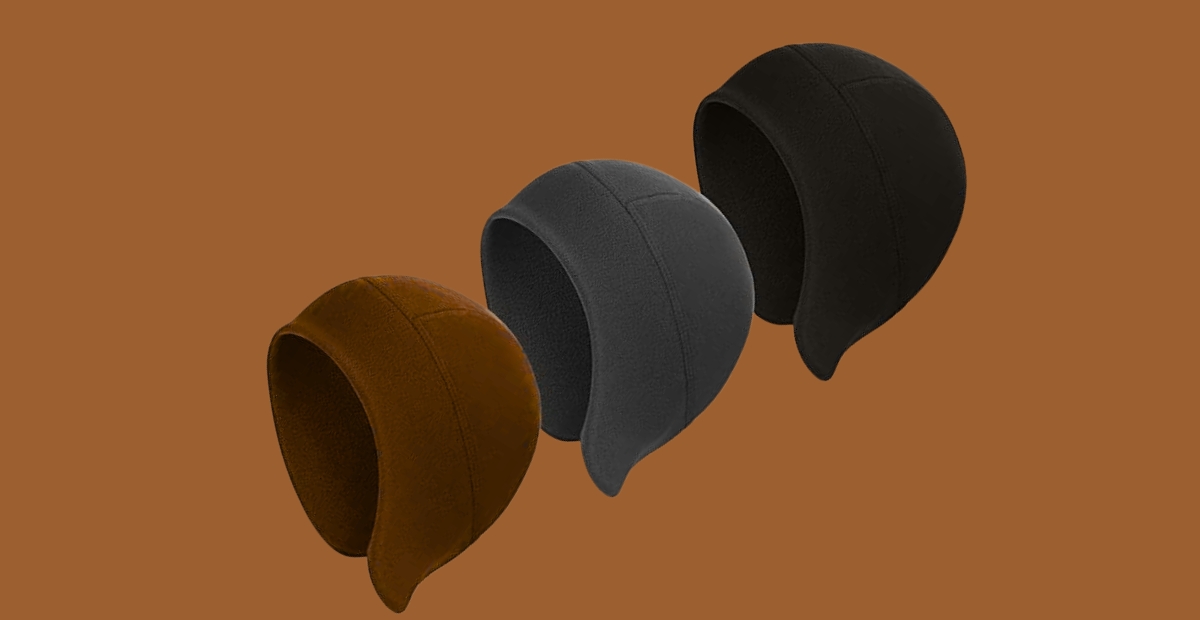
The four fleeces in our Material Library differ mainly in thickness, softness and how quickly they dry. Polar fleece has the highest warmth rating of the four; microfleece is thinner and less bulky.
| Fleece | Feel | Compared with the others | Usually suits |
|---|---|---|---|
| Polar fleece | Thick, lofty, brushed on both sides | Highest warmth rating of the four; bulkier | Full linings, earflaps, cold-weather styles |
| Polyester microfleece | Thin, dense, velvety pile | Warm for its thickness, less bulk, very soft | Bands and linings under helmets |
| Coral fleece | Very soft, plush long pile | Very soft, less breathable | Cosy fashion and gift styles |
| Cotton-rich brushed fleece | Smooth outside, brushed inside | More cotton feel; tends to dry more slowly | Buyers who prefer cotton next to the skin |
Polar fleece and microfleece are usually polyester, and recycled polyester versions exist on request. Polyester fleeces tend to dry quickly, which helps on the slopes and on outdoor jobs where a beanie gets damp.
When does a cotton or satin lining make sense?
Choose cotton jersey or satin when you want a smooth layer inside rather than extra warmth. Both are thin, so they add comfort or a finished feel more than insulation.
Lightweight cotton jersey feels smooth and cool, and can make a wool, mohair or alpaca shell feel softer next to the skin for most people. It adds little warmth and is a good fit for transitional seasons.
Many buyers ask for satin to reduce friction on hair, especially for curly, braided or textured hair and locs. We use polyester satin, which feels smooth and slippery. Satin is a woven fabric with very little stretch, so the lining is usually cut with some ease and the fit is checked on the sample. A satin lining adds very little warmth on its own.
What actually makes a beanie warm?
Warmth comes from five things working together: the yarn, the density of the knit, the number of layers, the lining and how well the beanie covers the ears. No single feature makes a beanie warm on its own.
- Yarn: in our Material Library, wool, lambswool, merino, alpaca and cashmere get the highest warmth ratings; acrylic and wool blends sit in the middle; cotton is lower and bamboo viscose the lowest. Our guide to beanie yarns and gauges compares them all.
- Gauge and density: a chunky low-gauge knit or a dense rib holds more air in its loops than an open or very fine knit.
- Layers: a folded cuff doubles the knit over the ears; a double-layer body doubles it everywhere.
- Lining: fleece adds a soft, insulating layer; cotton and satin add comfort more than warmth.
- Fit: a beanie that covers the ears and sits close without gaps keeps warm air in; a loose or shallow style lets it out.
That is why a chunky wool-blend cable with a fleece crown and a double-layer acrylic watch cap can both feel warm, in different ways. For a look at cold-weather styles overall, see our guide to winter beanies.
Is a fleece lined beanie windproof?
No. A fleece lining adds warmth and helps block some wind, but it is not windproof. Air still passes through the knit and the fleece.
Dense knits, double layers and lined builds tend to be more wind-resistant than a single open knit, which is why they feel better on a breezy day. For strong wind or extreme cold, a hood or a jacket collar over the beanie usually helps more than a thicker lining. Knitted beanies, lined or not, are not designed to keep out rain.
What are the trade-offs of a lined beanie?
A lining adds warmth and softness, but it also adds bulk, reduces breathability and stretch, and costs a little more. Whether that matters depends on how the beanie is worn.
- Bulk under helmets: a full lining can make a beanie too thick for a ski or bike helmet. A thin band or a fine single knit usually works better; see our guide to helmet liner beanies.
- Breathability: for running and hard exercise, a lining can trap too much heat and moisture. A light unlined knit is usually more comfortable, as our guide to running beanies explains.
- Stretch and size: fleece and satin stretch less than rib, so a lined beanie fits a little snugger. We check the fit on the sample and can adjust it; our beanie size guide explains measurements.
- Drying: a lined beanie has more fabric to dry after washing.
- Price: a band, a full lining or satin each add a little to the unit price; our custom beanie price guide shows how options build up.
How to choose a lining for your beanies
Start from where and how the beanie will be worn, then pick the lightest build that keeps the wearer comfortable.
| Use | Build that usually suits | Why |
|---|---|---|
| Everyday and fashion | Unlined, or a fleece band in a chunky knit | Keeps the look and stretch; warmth where it counts |
| Cold-weather retail and gifts | Full polar fleece or microfleece lining | Soft inside, noticeably warmer |
| Skiing and under helmets | Fine rib with a microfleece band | Warm ears, low profile |
| Workwear and outdoor jobs | Double-layer rib, or a fleece band | Firm, hard-wearing, warm over the ears |
| Running and active use | Unlined fine knit | Breathes and dries faster |
| Hair-conscious customers | Satin lining | Smooth inside, less friction |
| Wool, mohair or alpaca shell | Cotton jersey lining | Softer next to the skin for most people |
How should lined beanies be cared for?
Follow the care label, because the shell yarn and the lining can need different care. A gentle wash and drying flat usually keep both in shape.
Wool shells can shrink and felt with heat and rubbing unless the yarn is treated, while polyester fleece tends to dry quickly but can pill a little over time. We sew in the care label you specify, and our product care guide covers the basics for all our products.
Ordering lined beanies from Mr Balaclava
Lined and double-layer beanies start at 50 pieces per design, with standard production of approximately 14 days after sample approval. One lining and one pom-pom can be combined on most styles.
What to send with your brief
- The style, or a reference beanie or photo
- The lining: fleece band, full fleece, cotton jersey, satin or double layer
- Yarn and colours, plus the lining colour
- Your logo, method and placement
- Sizes and quantities per design
- Labels, care label and packaging
Choose a pre-paid physical sample, made in about 5–7 days, or a free pre-production sample made after the order and the 30% advance payment and approved by photos, videos or a video call. Our pom-pom and winter beanies page shows the warmer styles we make.
Frequently asked questions
Are fleece lined beanies warmer than regular beanies?
Usually, yes. A fleece lining adds a soft insulating layer and helps block some wind, so a lined beanie tends to feel warmer than the same knit unlined. The yarn, the knit density and the fit still matter as much as the lining.
Which is warmer, double-layer or fleece-lined?
It depends on the yarn, gauge and fleece, so there is no fixed answer. A full fleece lining often feels warmer and softer inside; a double-layer knit feels firmer and keeps a knit look inside and out.
Is a satin lining good for hair?
Many buyers ask for satin to reduce friction on hair, because it is smooth and slippery compared with knit, and it is often requested for curly, braided and textured hair. It is a comfort choice and adds very little warmth.
Can I add a lining to any beanie style?
Most styles can take a fleece band or a full lining, and many can take cotton jersey or satin. Very fine sports beanies usually get a band rather than a full lining, so they stay thin; we suggest the right build in your quote.
Can I put my logo on a fleece lined beanie?
Yes. The logo goes on the knit outside, usually on the cuff or the front band, by embroidery, a patch, a woven label or a knitted-in design. On lined styles, the lining usually covers the back of the embroidery stitches.
Browse our pom-pom and winter beanie collection for lined styles you can brand, and when your brief is ready, ask for a quote.