
Size questions come up early in almost every balaclava order. A brand wants to know whether one size is enough, a school or club asks about children’s sizes, and a motorcycle shop wants the balaclava to sit flat under a helmet. This guide is for those buyers: brands, shops, clubs, event companies and resellers planning a run of balaclavas.
It explains the two sizes we make from our own size charts, how to measure a head, how the fabric changes the fit, and when it makes sense to grade a pattern to your own chart. For the styles, openings and materials themselves, see our guide to the different types of balaclavas.
What sizes do balaclavas come in?
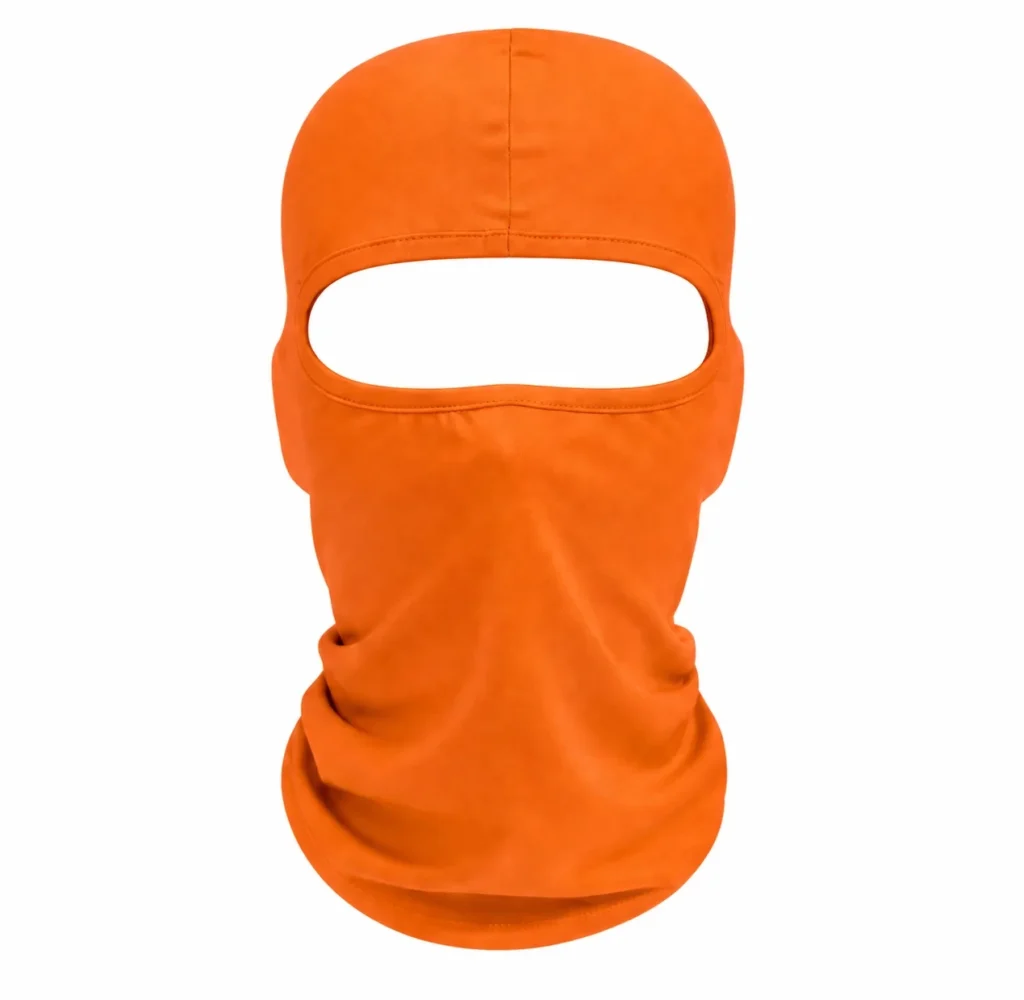
Most balaclavas are made in one adult size with stretch, plus a separate kids’ size. Our size charts have exactly two sizes: Adult, for a head circumference of 54–61 cm, and Kids, for 49–54 cm, which usually suits children of about 4 to 12 years.
A balaclava does not need the wide size runs of a jacket or a T-shirt. The fabric stretches around the head, so one well-cut adult pattern tends to fit most adult wearers. That is why balaclavas are usually sold as “one size”, and why our Help Center answer on sizes and colours describes them as one size, with stretch.
| Size | Head circumference | Usually fits | Pattern |
|---|---|---|---|
| Adult | 54–61 cm | Most adults, men and women | Our adult pattern, one size with stretch |
| Kids | 49–54 cm | Children of about 4 to 12 years | Its own smaller pattern, not a scaled-down adult |
| Your own chart | As you set it | The size range your customers already know | Base size approved first, then graded |
If you prefer a range with more than one adult size, for example a smaller and a larger adult fit, we can grade the pattern to your own size chart. More on that below.
How do you measure your head for a balaclava?
Wrap a soft tape measure around the widest part of the head, just above the eyebrows and the tops of the ears, and around the back where the head sticks out most. The number in centimetres is the head circumference, and it is the one measurement that decides the size.
- Use a soft tailor’s tape. If you only have a string, mark it and measure the string against a ruler.
- Keep the tape level and snug, but do not pull it tight.
- Measure over the hair as it will be worn. Thick or long hair adds to the measurement.
- Measure a few times and use the largest result.
- Compare the result with the table: Adult is 54–61 cm, Kids is 49–54 cm.
For a whole team, club or school, you do not need to measure everyone. A handful of measurements from the smallest and largest wearers usually shows whether one size covers the group or whether you need a kids’ size as well.
What if a head measures about 54 cm?
A head of about 54 cm sits where the Kids size ends and the Adult size begins, so either can fit. Older children and young teenagers are often more comfortable in the Adult size, because they grow quickly and the adult pattern has a longer neck.
If many of your wearers are around this size, for example a youth sports club, tell us the age range when you ask for a quote. We can suggest a split between Adult and Kids, or check the fit on a sample before you decide.
How does the fabric change the fit?
Stretch fabrics and rib knits tend to cover the whole range of a size, while fabrics with less stretch, such as fleece and woven-backed fabrics, usually need a more exact pattern. The fabric choice therefore affects how forgiving one size will be.
Stretch jersey
Cut-and-sew balaclavas in polyester/spandex stretch jersey usually stretch in both directions and sit close to the face. They tend to suit a wide range of head sizes and give a smooth, close fit under helmets and goggles.

Rib knits and other knits
Knitted balaclavas, such as our acrylic rib knit styles, stretch mainly across the width of the head. A rib knit usually recovers well after stretching, which helps one size fit most adults. Chunkier knits tend to stretch less and feel snugger, so the pattern may be adjusted on the sample. Our knitted balaclava page explains how we knit them in-house in Sialkot.
Fleece, merino and mesh
Polar fleece is warm and soft but has less stretch than jersey, so a fleece balaclava is often cut a little roomier or given a stretch panel. Merino jersey usually stretches well and feels soft against the skin. Mesh panels add breathability but tend to add little stretch. Our comparison of balaclava materials covers how each fabric feels to wear, and our guide to knitted and cut-and-sew construction explains why the method also changes the fit.
A note on “seamless”: knitted balaclavas sold as seamless usually still have a small seam at the top, or are knitted to shape. Either way, a flat top seam tends to sit comfortably and has little effect on the size.
How long should the neck part be?
The neck part should be long enough to tuck into a collar or jacket, so no skin shows when the wearer turns their head. A longer neck usually suits riding, skiing and outdoor work; a shorter neck tends to suit streetwear and fashion styles.
Neck length is one of the easiest details to change when we make your pattern. Some buyers ask for an extended back for long hair or locs, as in our extended balaclava project for long hair. Others want a flared or bib-style neck that lies flat under a jacket. Tell us how the balaclava will be worn, and we set the neck on the sample.
How are kids’ balaclavas different from adult ones?
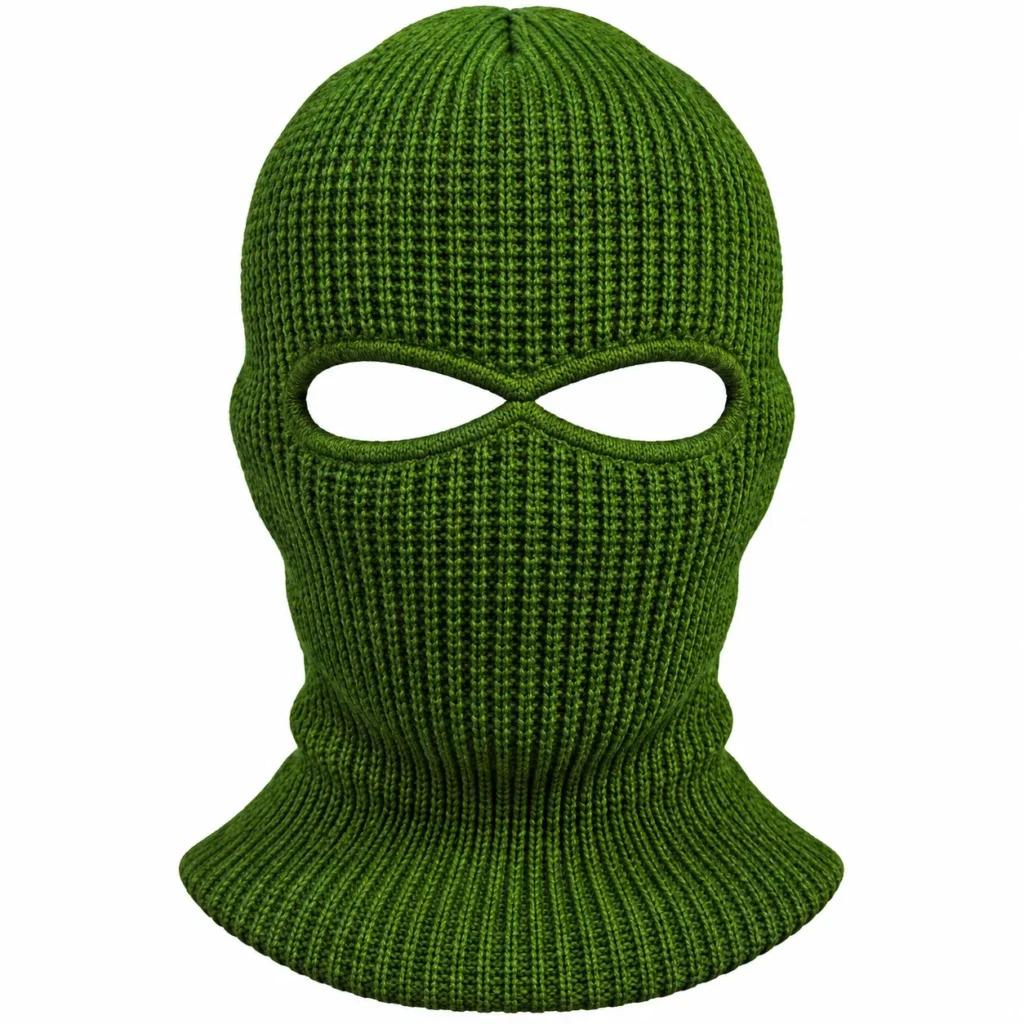
A kids’ balaclava is made on its own smaller pattern, not just shrunk from the adult one. The eye and mouth openings are placed closer together and lower on the face, the neck is shorter, and the overall shape follows a child’s proportions.
Openings matter most here. If the eye opening is simply copied from an adult pattern, it usually sits too high or too wide on a child’s face and can slip over the eyes. That is why we approve the kids’ pattern on a sample, with the openings checked on the face. Our guide to balaclava face openings explains each opening style.
Children’s headwear should also avoid cords and drawstrings at the hood and neck, because EU EN 14682 and US rules restrict them. For kids’ styles we leave out drawstrings and toggles and use stretch or elastic to keep the fit instead.
How should a balaclava fit under a helmet?
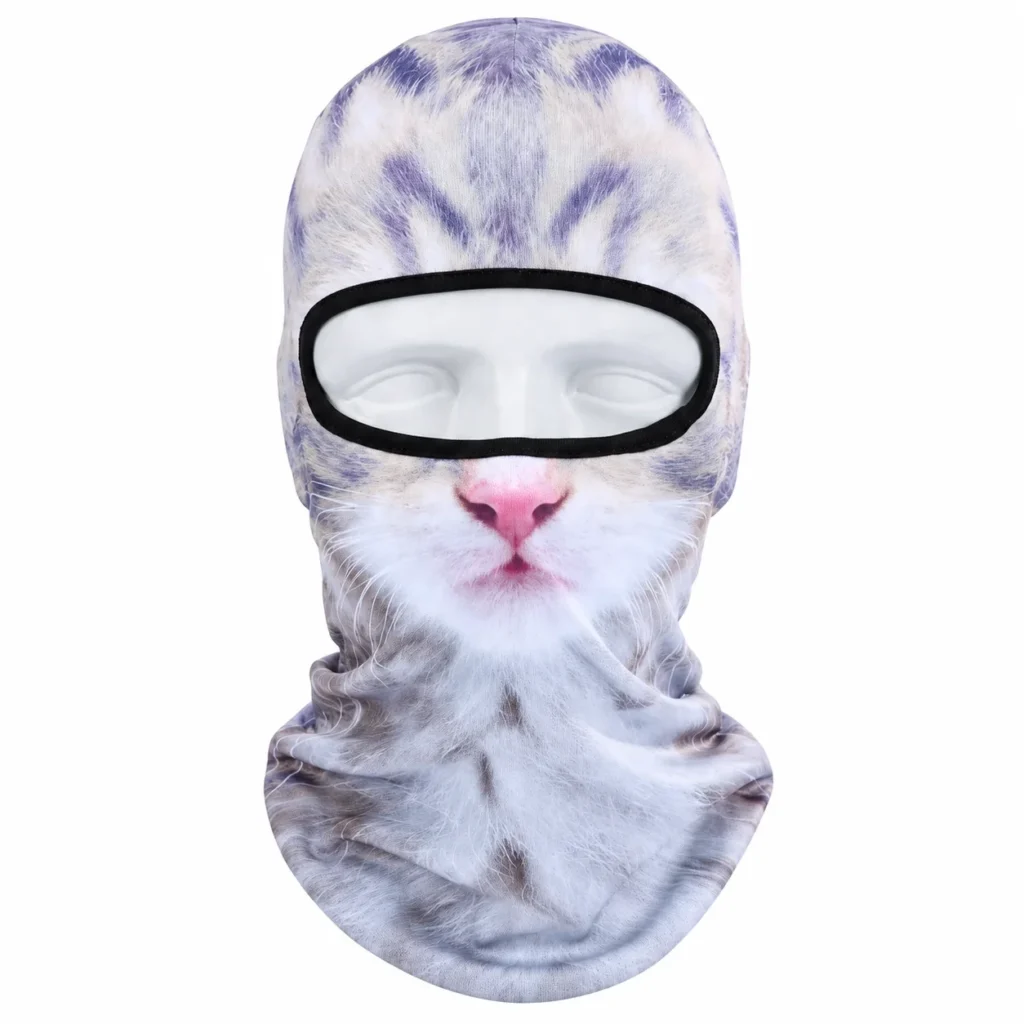
Under a helmet, a balaclava should be close-fitting and thin, with flat seams and no folds, so it does not change how the helmet sits. The balaclava fits the head; the helmet is sized with the balaclava on.
- Choose a thin stretch fabric for motorcycle and ski helmets; thick knits and fleece can push the helmet out of place.
- Keep seams flat, especially at the crown and around the ears.
- Check that the eye opening lines up with the goggle frame or the helmet visor.
- Try the helmet on with the balaclava before choosing a helmet size.
Our guide to wearing a ski balaclava under a helmet and the motorcycle balaclava fit guide go into more detail. For riders, the motorcycle and cycling balaclava page shows the fabrics and constructions we usually suggest, and an open face balaclava is a common helmet-liner choice.

When should you grade to your own size chart?
Grade to your own size chart when your customers expect a size range, when your other products already use one, or when the balaclava has to fit specific equipment. For most other ranges, one adult size plus a kids’ size is usually enough.
Grading works in a fixed order. We approve a base size on the sample first, then grade the other sizes from it, and the size chart travels with the tech pack (the technical file used in production). If you already have a chart for hats, hoods or helmets, send it with your enquiry and we match it as closely as the fabric allows.
How do you choose the right sizes for your order?
Start from who will wear the balaclava, then decide the sizes. The list below shows the choice that usually suits each type of buyer.
- Streetwear and fashion brands: one adult size in stretch jersey or rib knit is usually enough.
- Ski, snowboard and motorcycle ranges: one adult size in a thin stretch fabric; consider your own chart if you also sell helmets.
- Schools, youth clubs and family ranges: Adult plus Kids, with no cords at the neck.
- Teams, staff and events: mostly Adult; add Kids if families take part.
- Workwear and outdoor work: one adult size with a long neck, or your own chart if it must fit hard hats.
- Resellers with an existing size system: graded to your own chart, so the labels match the rest of your range.
Ordering balaclavas in your sizes from Mr Balaclava
We make custom balaclavas to order in Adult and Kids sizes, or graded to your own chart. The minimum order is 50 pieces per design, and that minimum counts per design, not per size, so one design can usually be split across Adult and Kids.
What to send us
- The style and opening, with a photo or sketch.
- Who will wear it (adults, kids or both) and how (helmet, goggles, streetwear, work).
- The sizes you want: Adult (head 54–61 cm), Kids (49–54 cm, about 4–12 years) or your own size chart.
- Any neck length or fit notes, such as an extended back for long hair.
- Quantity per design and per size, colours, logo and labels.
The fit is checked on a sample before production. You can choose a pre-paid physical sample, made in about 5–7 days, or a free pre-production sample made after the order and the 30% advance payment; our guide to sample types explains both. Standard production takes approximately 14 days after sample approval, and Mr Balaclava’s name never appears on your products.
Frequently asked questions
Are balaclavas one size fits all?
Most balaclavas are one adult size with stretch, which usually fits most adults. Our Adult size covers a head of 54–61 cm. Children need their own size, because an adult balaclava tends to be too loose and the openings sit in the wrong place.
Can I order adult and youth sizes of the same design?
Yes. The 50-piece minimum counts per design, not per size, so you can usually split one design between Adult and Kids. Your quote confirms the split, and both sizes can be checked on samples.
Do you offer S/M and L/XL balaclavas?
Our own charts have two sizes, Adult and Kids. If your range needs more adult sizes, such as a smaller and a larger fit, we grade the pattern to your size chart after the base size is approved on the sample.
Will a knitted balaclava stretch or shrink after washing?
Rib knits usually recover well after stretching, but any knit can relax slightly with wear, and wool tends to felt and shrink with heat and agitation. Following the care label helps the balaclava keep its fit.
Should a balaclava be tight?
It should be snug, not tight. A good fit sits close enough that the openings stay in place when the wearer moves, without pressing on the forehead, ears or nose.
Browse every style in our balaclava catalogue, see how to wear a balaclava, or send us your sizes and quantities for a quote.