If you are planning branded knitwear for a fashion label, a company, a club or an event, one of the first decisions is how the logo goes onto the sweater. This guide compares the four methods buyers ask us about most: a knitted-in logo, intarsia, embroidery, and patches or woven labels. It is written for brands and buyers ordering custom knitted sweaters in quantities from 50 pieces per design.
Each section starts with a short answer and then explains what affects the look, the level of detail, the number of colours, the cost and how the decoration behaves in the wash. If you also make headwear, the same thinking applies to knitted beanies and balaclavas; our guide to balaclava logo and decoration methods covers those in detail.
What is the difference between a knitted logo and an embroidered logo?
A knitted logo is made by the knitting machine at the same time as the sweater panel, using yarns of different colours, so the logo is part of the fabric. An embroidered logo is stitched onto the finished knitted panel afterwards with thread, so it sits on top of the fabric.
That one difference explains most of the rest. A knitted logo is limited by the size of the stitches and by how many yarn colours the machine can carry in one row. Embroidery is limited by how well the knit can hold stitches and by the stitch count, which drives the cost. Both are widely used on premium and everyday knitwear, so the choice is about your design, not about one method being “better”.
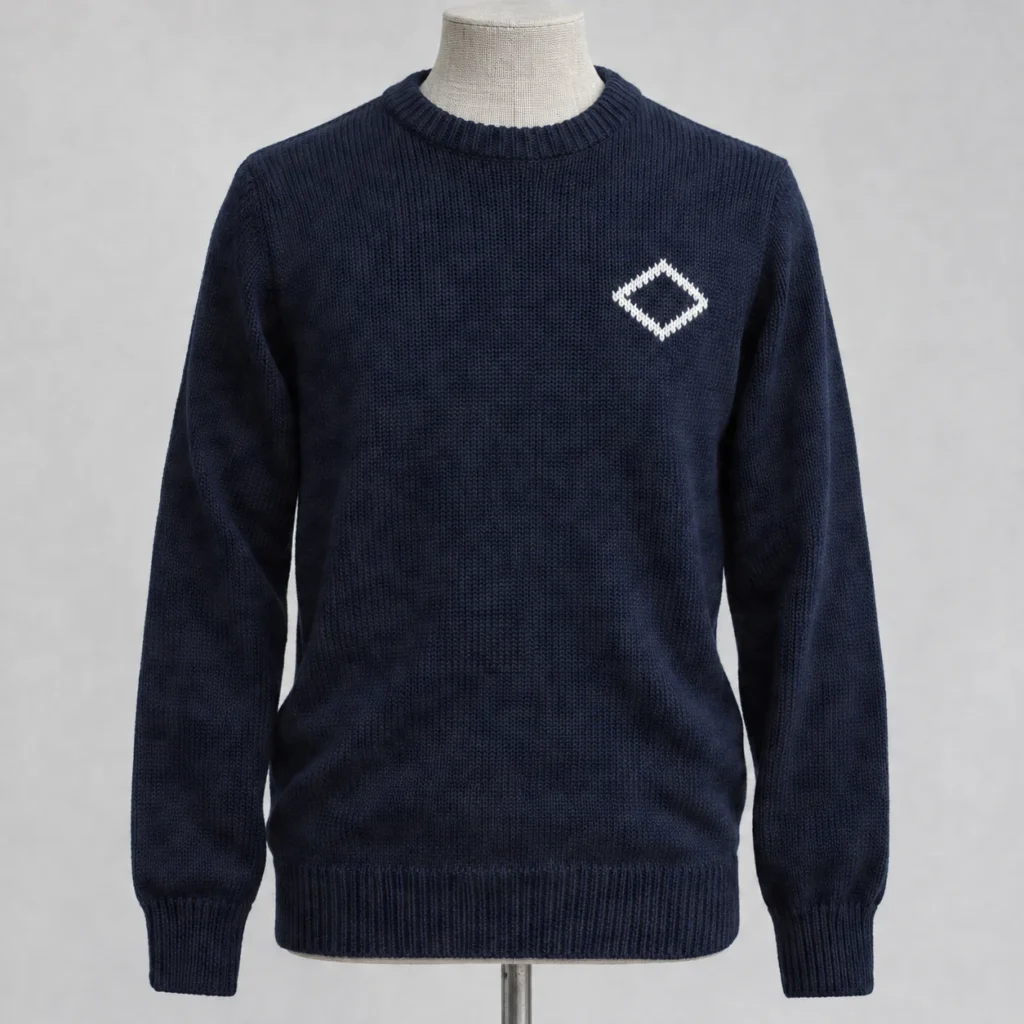
What is a jacquard (knitted-in) logo?
Jacquard is a pattern or logo knitted into the fabric with two or more yarn colours, the machine selecting which colour shows on the face of each stitch. A jacquard logo usually looks flat, soft and integrated, and it moves and stretches with the sweater.
Think of a knitted logo as a picture made of pixels, where every stitch is one pixel. On a finer 12 gauge knit (more stitches per inch) curves and lettering look smoother; on a chunkier 7 gauge knit each stitch is bigger, so the logo looks bolder and slightly stepped at the edges. Our team turns your artwork into a knit-ready stitch chart and shows it on a mockup before sampling, so you can see that effect in advance.
Behind a jacquard design, the colours that are not showing on the face are carried along the back of the fabric. Depending on the construction, this can leave short loose strands (called floats) or a fully knitted back. Either way, a jacquard area usually feels a little thicker and slightly less stretchy than the plain knit around it.
How many colours can a knitted logo have?
A knitted-in logo or pattern usually works with about 2–4 colours in one row, including the background colour. Fair Isle and Christmas designs can show more colours in total across the sweater, because different rows can use different colour combinations; the exact limit for your design is confirmed with your quote.
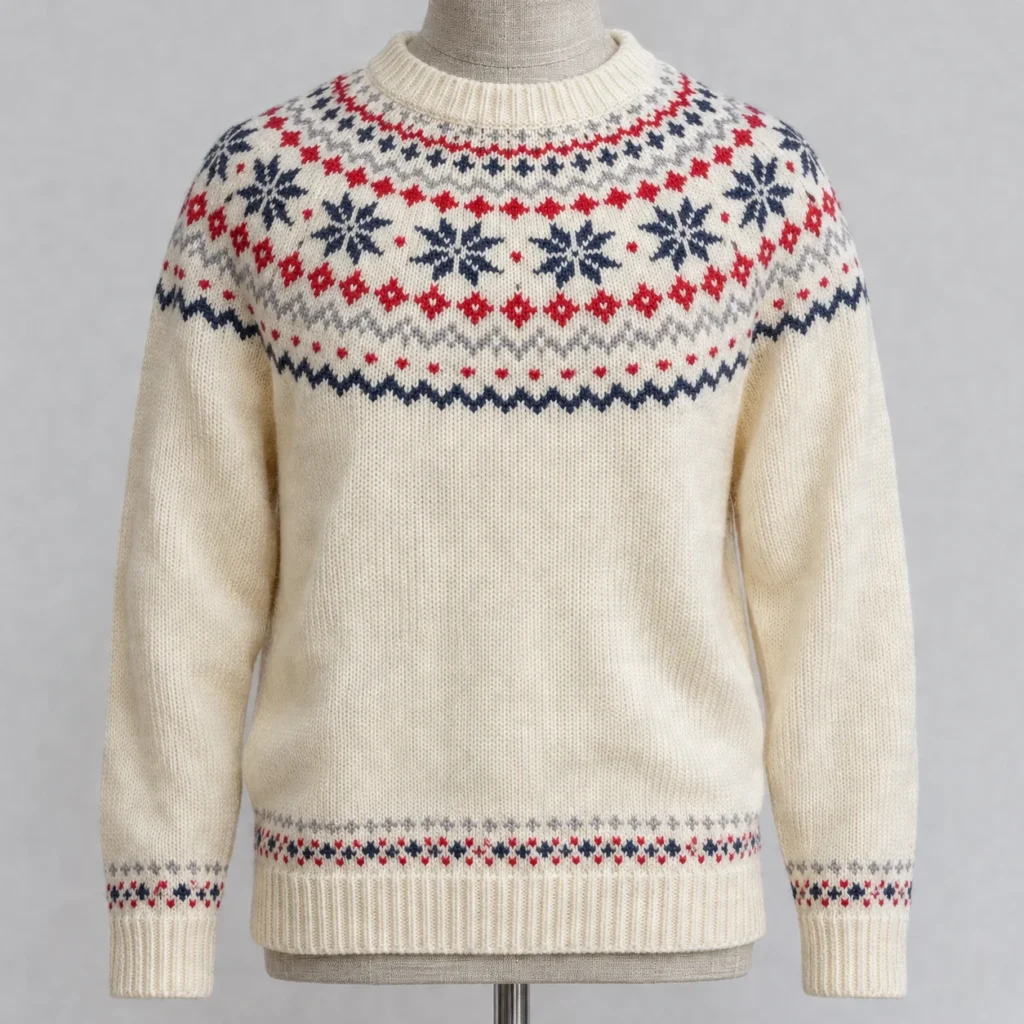
What is intarsia and when is it used?
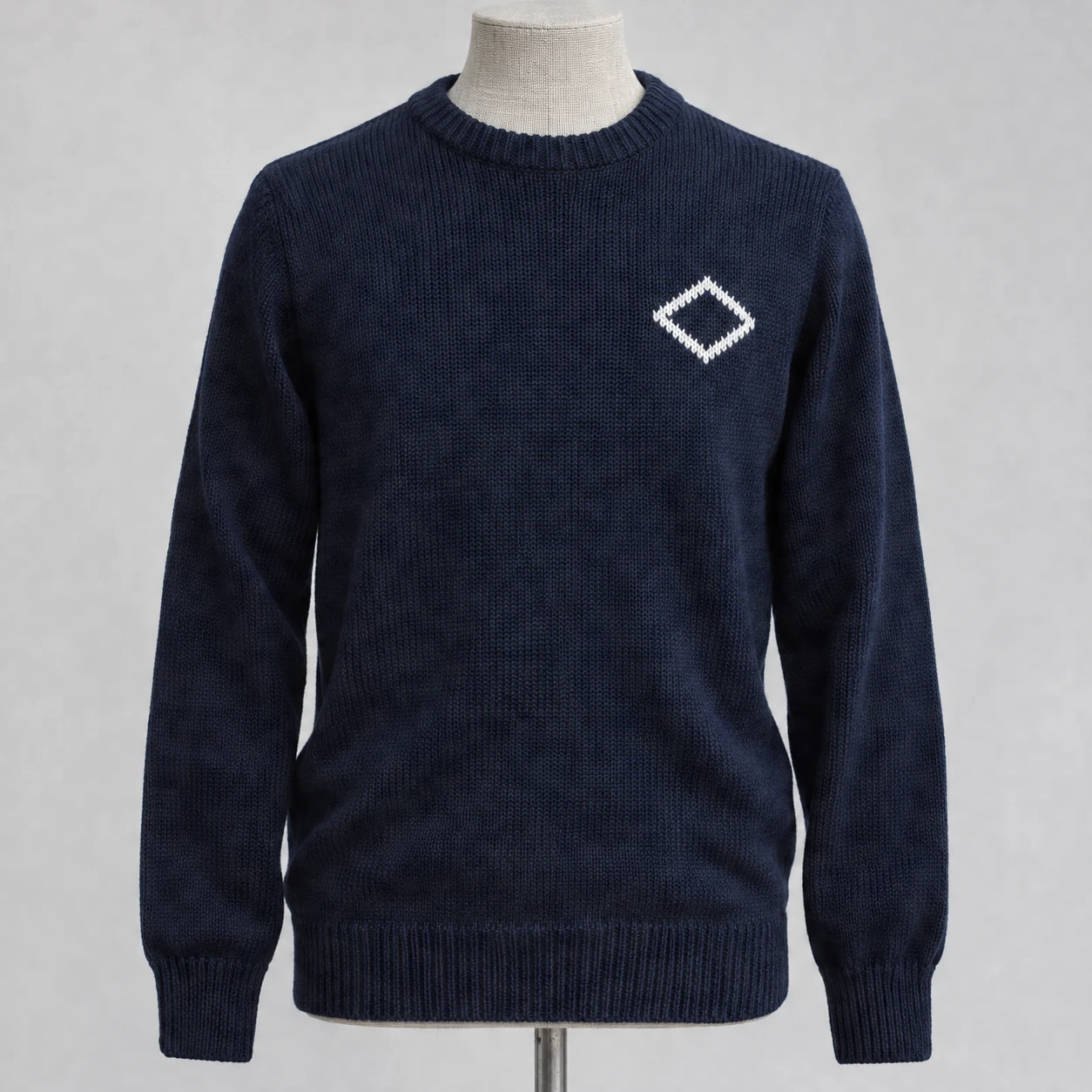
Intarsia is a knitting method where each colour area is knitted with its own yarn, joined to the next area at the edge, with no colour carried across the back. It is typically used for large, clean blocks of colour, such as a big chest motif, a diamond pattern or a two-tone colour-block body.
Because there are no carried yarns, intarsia areas tend to stay as light and stretchy as the rest of the sweater, and the back looks neat. It can also show more colours across the garment than jacquard, since each area has its own yarn. The trade-off is that intarsia is usually slower to knit and set up, so it tends to cost more per piece than a standard jacquard logo, and it is less suited to small, detailed artwork.
What is embroidery on a sweater?
Embroidery stitches your logo onto the knitted panel with an embroidery machine, using thread in your chosen colours. It usually handles finer detail, smaller text and more colours than a knitted logo, which is why it is popular for small chest logos, crests and wording.
Knitwear is softer and stretchier than woven fabric, so embroidery on a sweater is usually done with a stabilising backing and a stitch type suited to knits. On a fine 12 gauge knit, a small embroidered logo typically sits flat and crisp. On a chunky 7 gauge knit, very fine lines can sink between the stitches, so bolder designs or a patch usually work better there. Embroidery adds a little stiffness where it sits, and a dense logo can feel noticeably firmer than the knit around it. You can read more about the technique in our embroidery glossary entry.
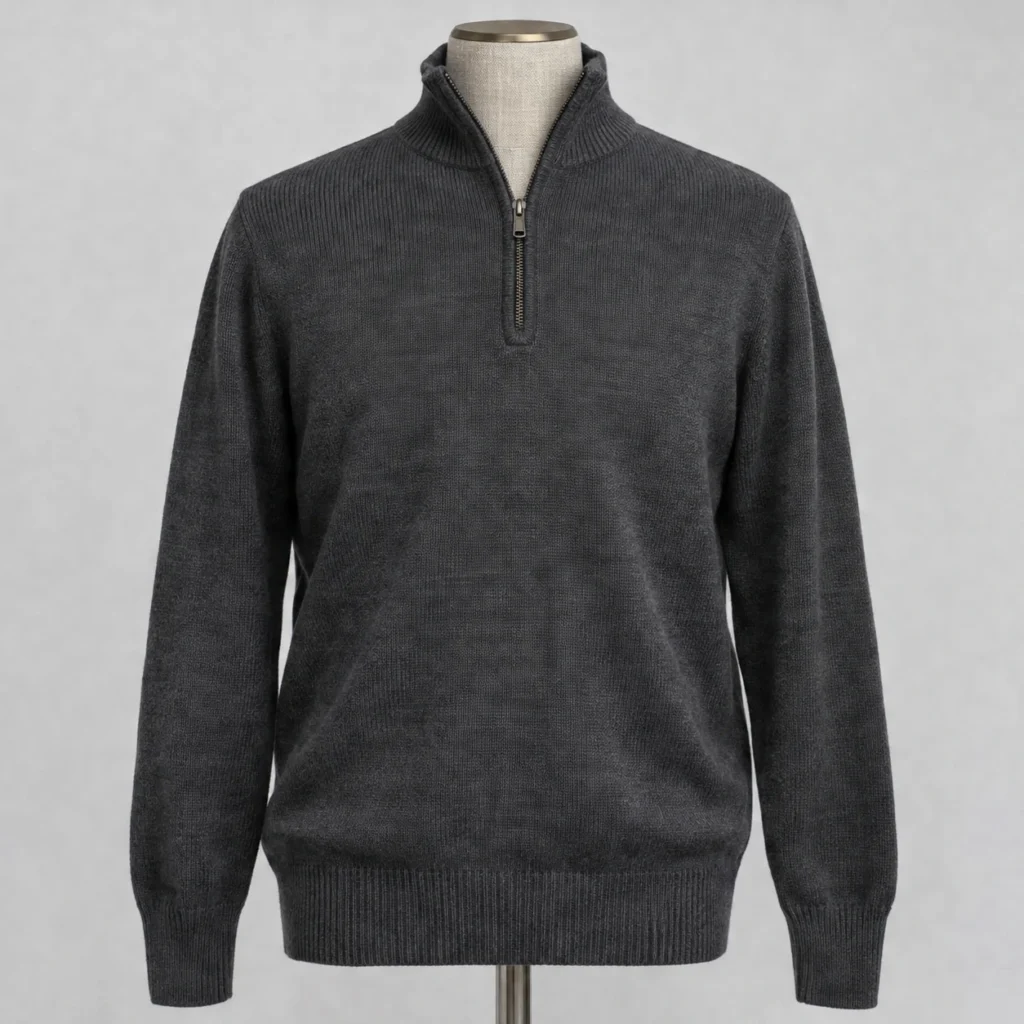
When do patches and woven labels make sense?
Patches and woven labels are made separately and sewn onto the sweater, so they suit small brand marks, very fine detail and designs that would be hard to knit or embroider directly. They are also a simple way to add a brand detail to a sweater whose main design is knitted.
- Chenille and felt patches: the classic look for varsity letters and club crests, with a raised, textured surface.
- Woven patches: fine detail and small text in a flat, tightly woven badge, useful for sleeves or hems.
- Leather or faux-leather patches: a heritage look, usually at the hem or on the sleeve.
- Woven labels: a neck label, a small hem or side-seam “flag” label, plus care labels. See our woven label glossary entry for the terms.
A patch adds a sewing step and the cost of the patch itself, but it can often be the most practical way to show a complex logo on a chunky knit.
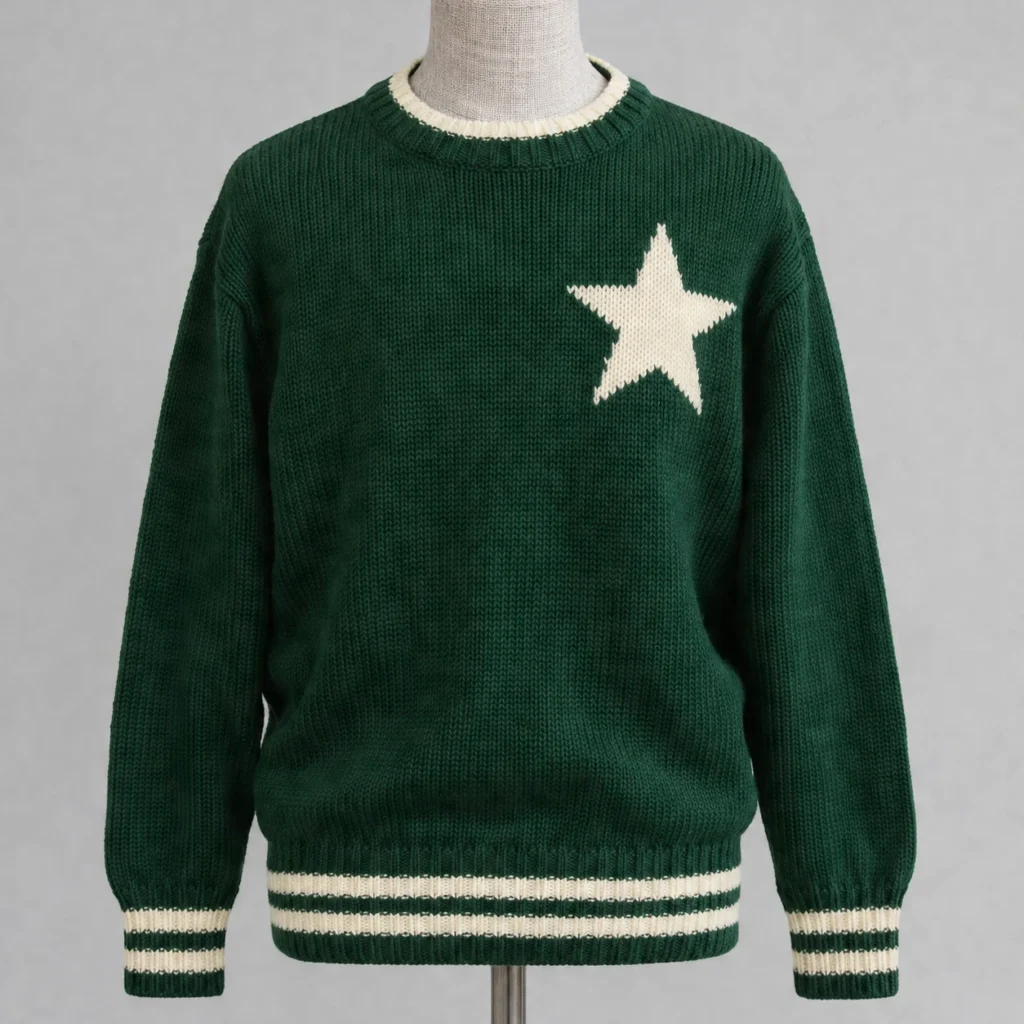
How do the methods compare side by side?
In short: a knitted logo is the most integrated, embroidery handles the most detail, intarsia suits big colour areas and patches or labels add a neat brand detail. The table summarises how each method usually compares.
| Method | Look and feel | Detail | Colours | Cost | Washing |
|---|---|---|---|---|---|
| Knitted-in logo (jacquard) | Flat, soft, part of the fabric | Bold shapes and larger lettering; fine lines tend to blur | Usually 2–4 per row | Included in our base price | Wears with the fabric itself; no edges to lift |
| Intarsia | Clean, large colour areas; neat back | Large shapes; not for small detail | Several areas, each with its own yarn | Usually higher than jacquard | Wears with the fabric itself |
| Embroidery | Raised, crisp, slightly firmer area | Fine detail and small text, especially on finer gauges | Many thread colours | Extra per piece, depends mainly on stitch count | Usually holds well; washing inside out helps |
| Patch (chenille, woven, leather) | Textured or badge-like, sits on top | Very fine detail possible on woven patches | Depends on the patch type | Patch cost plus a sewing step | Depends on the patch and how it is attached |
| Woven label | Small, discreet brand mark | Fine text and small logos | Several thread colours | Low per piece | Usually holds well |
Which method lasts longer in the wash?
A knitted-in logo usually lasts as long as the sweater, because it is made of the same yarns as the fabric and has no edges to lift. Embroidery and well-attached patches also tend to hold well, as long as the sweater is washed as the care label says.
How a sweater washes depends more on the yarn than on the logo. Acrylic and cotton knits are usually easier to care for, while wool and merino yarns typically need a gentle cycle or hand washing. Turning the sweater inside out and drying it flat helps every decoration method. Our comparison of sweater yarns explains care by yarn type.
How much does each method cost?
A knitted-in logo is included in our base sweater price, while embroidery, intarsia and patches usually add to the cost per piece. The exact amount depends on the size of the design, the number of colours, the stitch count and the quantity.
As a guide, catalogue sweaters start at about $14–20 per piece at 50 pieces: a logo crewneck at about $14 and a jacquard or Fair Isle sweater at about $17. Unit prices fall as quantities rise, and your quote confirms the price. With embroidery, the stitch count is the main cost driver, so a compact logo usually costs less than a large back design.
Can you combine a knitted design with embroidery?
Yes. Many brands use a knitted pattern for the body and add a small embroidered logo, a patch or a woven label for the brand mark. This gives the sweater its character from the knit and keeps the logo sharp.
Common combinations include a Fair Isle yoke with an embroidered chest logo, a striped body with a woven hem flag, or a Christmas sweater with a knitted-in pattern and an embroidered company name. If you are building a full knit range, the same logo can carry across a matching sweater, beanie and scarf set.
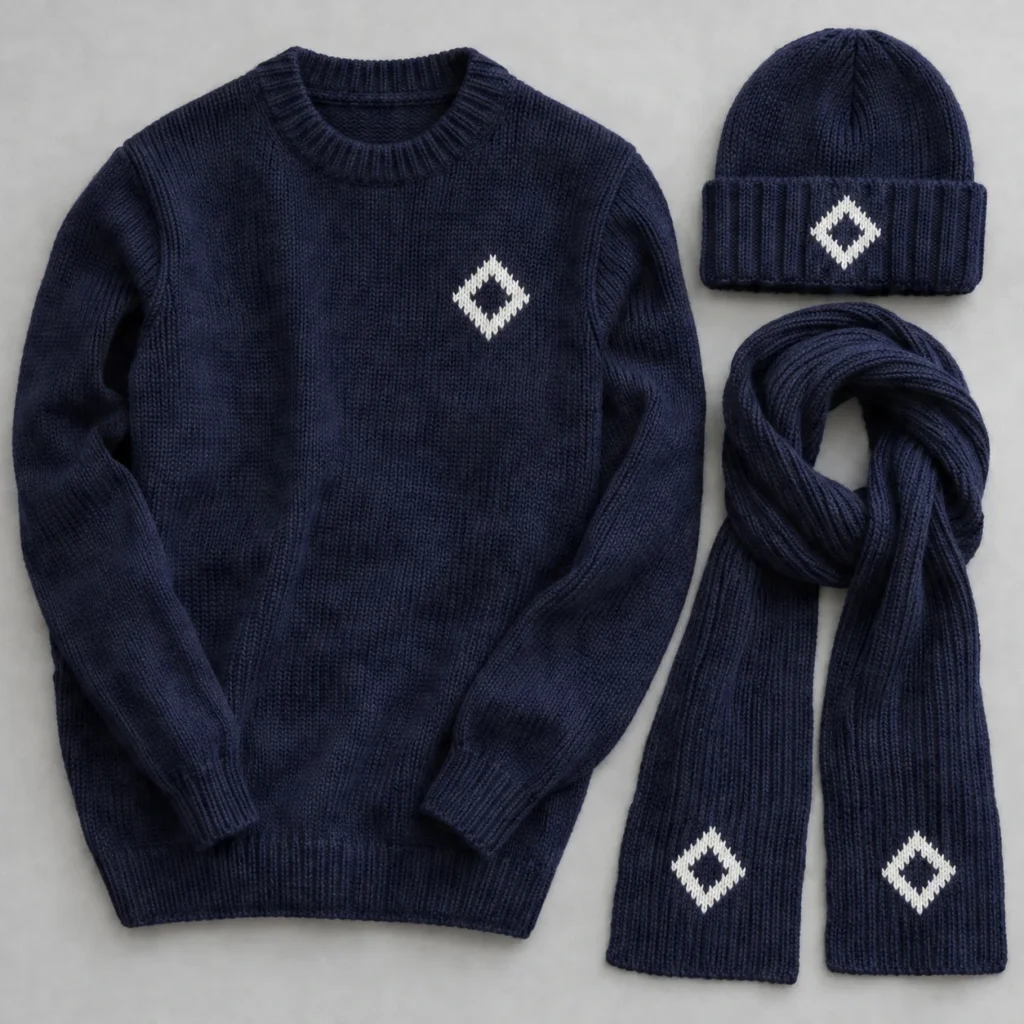
How to choose the right logo method for your sweater
Start from your artwork and your audience: bold, simple logos suit knitting; detailed logos suit embroidery or a patch. Then check the gauge, the colours and your budget.
| If your design is… | Usually choose |
|---|---|
| A bold logo or wordmark in 2–4 colours | Knitted-in logo (jacquard), on 12 gauge for sharper edges |
| An all-over pattern, Fair Isle yoke or stripes | Jacquard; see our logo and jacquard sweater page |
| A large motif or colour block with clean edges | Intarsia |
| A small chest logo, crest or fine text | Embroidery, or a woven patch on a chunky knit |
| Varsity letters or a club crest | Chenille or felt patch |
| A discreet brand mark on a patterned sweater | Woven label or a small embroidered logo |
- Gauge: chunky 7 gauge knits favour bold designs; fine 12 gauge knits allow sharper knitted and embroidered logos.
- Yarn: smooth yarns such as acrylic, cotton and merino show a knitted logo more clearly than hairy or textured yarns such as some wool blends.
- Placement: chest, full front, back, sleeve or hem; a knitted logo is planned into the panel, embroidery is placed after knitting.
- Comfort: large embroidered areas feel firmer, so knitting or intarsia usually suits big designs.
Ordering logo sweaters from Mr Balaclava
You send your logo and a short brief; we suggest a method, turn the artwork into a knit-ready design or embroidery file, and show it on a mockup before sampling. Our sweaters are knitted in-house or with partner factories, depending on the project. Mr Balaclava’s name never appears on your products.
What to send for a quote
- Your logo as a vector file (AI, EPS, PDF or SVG) or a high-resolution image; our artwork file guide lists the formats.
- The colours you need (Pantone references help), and where the logo should go.
- Style, yarn and gauge preference, or a reference photo from our logo and jacquard sweater catalogue.
- Sizes and quantities: XS–3XL adult and kids 4–14 as standard, or graded to your own chart; minimum 50 pieces per design.
- Labels and packaging, and your target delivery date.
For samples, you can choose a pre-paid physical sample (about 5–7 days) or a free pre-production sample made after the order and the 30 % advance payment. Production takes about 14 days after sample approval, payment is 30/30/40, and shipping is agreed with you for each order. The full route from yarn to finished sweater is explained in how custom knitted sweaters are made.
Frequently asked questions
Does a knitted logo crack or peel?
A knitted-in logo is made of yarn, not ink or film, so there is no print layer to crack or peel. Like the rest of the sweater, it can pill or fade gradually with wear depending on the yarn and the care.
Can small text be knitted into a sweater?
Small text is difficult to knit cleanly, because each letter needs enough stitches to stay readable. Lettering usually needs to be fairly large, especially on 7 gauge. For small text, embroidery or a woven label is usually the clearer choice, and the mockup shows how it will look.
Why does the back of a jacquard sweater look different?
In jacquard knitting the colours that are not on the face are carried at the back, either as short floats or knitted into a backing. This is normal and part of how the pattern is made. Intarsia avoids carried yarns, which is one reason it is chosen for large motifs.
Is the minimum order different for embroidered sweaters?
No, the minimum is 50 pieces per design for knitted-in and embroidered sweaters, and the sizes can be split within one design. Using several logo methods or colourways on one order is possible; how they count towards the minimum is confirmed with your quote.
Can you match our brand colours exactly?
We match yarn and thread colours to your Pantone references as closely as the available yarns allow. Knitting yarn comes in set shades, so a knitted colour is usually a close match rather than an exact one; the sample lets you approve it before bulk production.
Compare styles in our custom sweater catalogue, check sizing in the sweater size guide, or send us your logo for a quote.