Sizing is one of the first things a buyer has to settle when ordering knitted sweaters. A clothing brand wants its sweaters to match the rest of its range, a company ordering for staff needs a spread of sizes for different people, and a shop selling Christmas sweaters to families needs adult and children’s sizes that look like a set.
This guide is for those buyers. It explains the sizes we make as standard, how to measure a sweater, how fit types change the look, and when it makes sense to grade a sweater to your own size chart. For the styles, yarns and decoration options themselves, see our custom knitted sweaters page.
What sizes do custom sweaters come in?
We make custom sweaters in adult sizes XS–3XL and kids’ sizes 4–14 as standard. If your brand already has its own size chart, we can grade the sweater to that chart instead.
Unlike a balaclava, which usually comes in one stretchy size, a sweater needs a proper size run. Knitwear stretches a little, but chest width, body length and sleeve length still have to suit the wearer, so a range of sizes is normal. Our Help Center answer on sizes and colours gives the short version for every product family.
| Size option | Sizes | Usually suits | How the fit is set |
|---|---|---|---|
| Adult standard | XS, S, M, L, XL, 2XL, 3XL | Brands, staff and team orders, retail ranges | Our standard adult pattern, checked on your sample |
| Kids standard | 4–14 | Children’s ranges, family Christmas sweaters, school and club orders | Its own kids’ pattern, not just a shrunken adult one |
| Your own chart | As your chart sets them | Brands with an existing range and size labels | Your base size approved on a sample, then graded |
Kids’ sizes 4–14 usually refer to the child’s age in years. Children of the same age can differ a lot in height and build, so many brands also show a height or chest measurement next to each kids’ size on their own labels and website.
Why is there no fixed measurement chart in this guide?
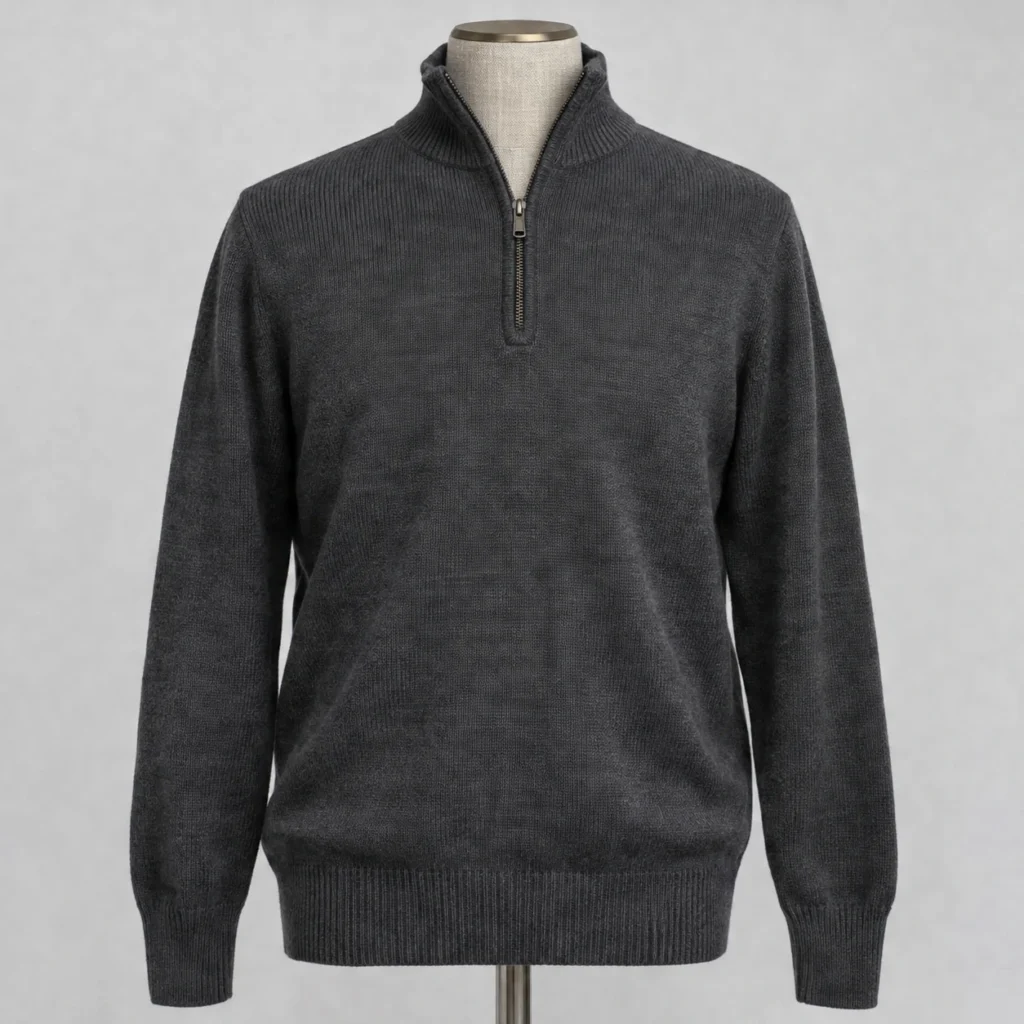
Because the right measurements depend on the style, the yarn and the fit you choose. A chunky cable crewneck and a fine logo quarter-zip in the same size can have quite different chest and length measurements, and both can be correct for their style.
Instead of a generic table, we agree the measurements for your sweater with your quote, or we work from your size chart or a sample sweater you send. The finished numbers are then checked on your sample before production starts, so the bulk order is made to the approved sample.
How do you measure a sweater?
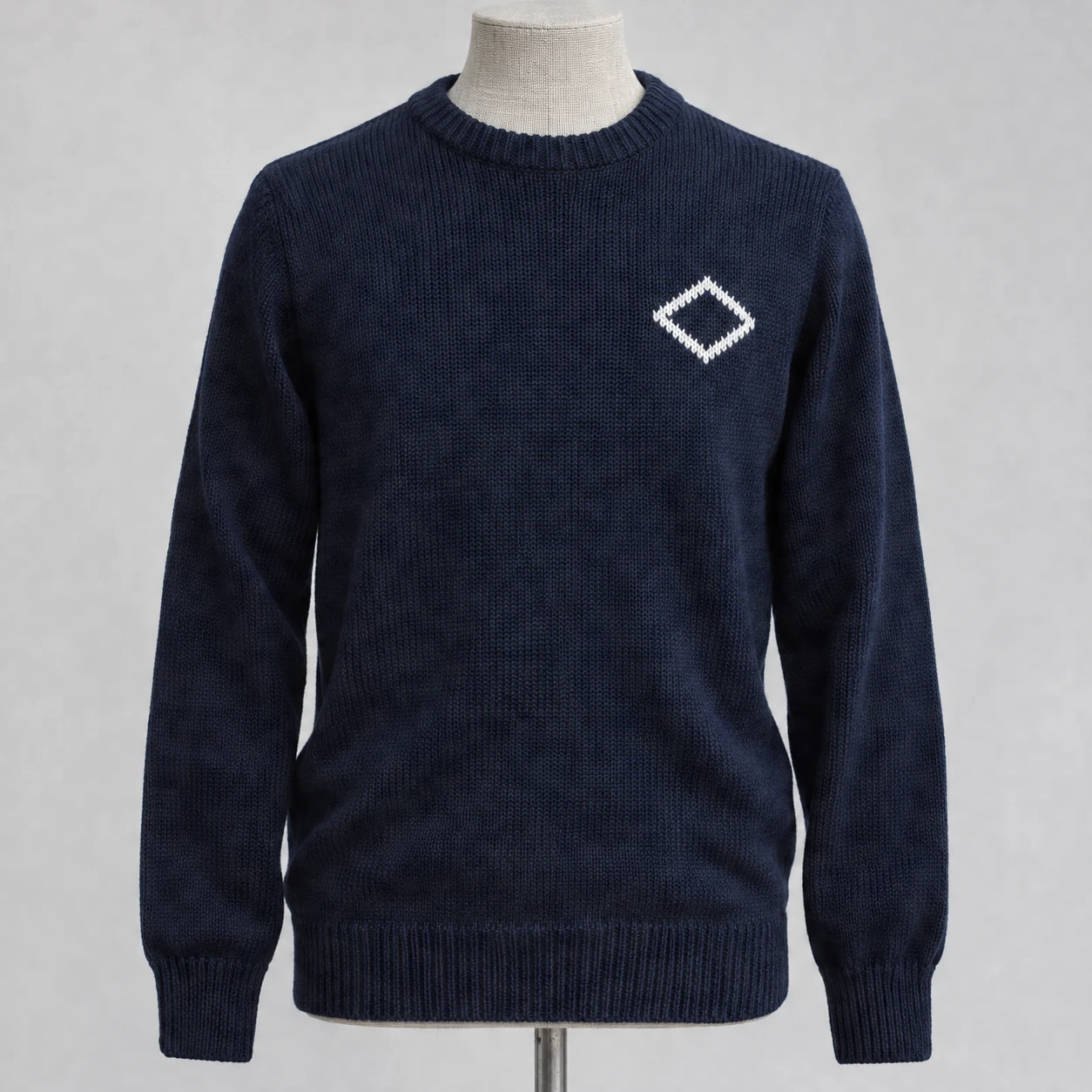
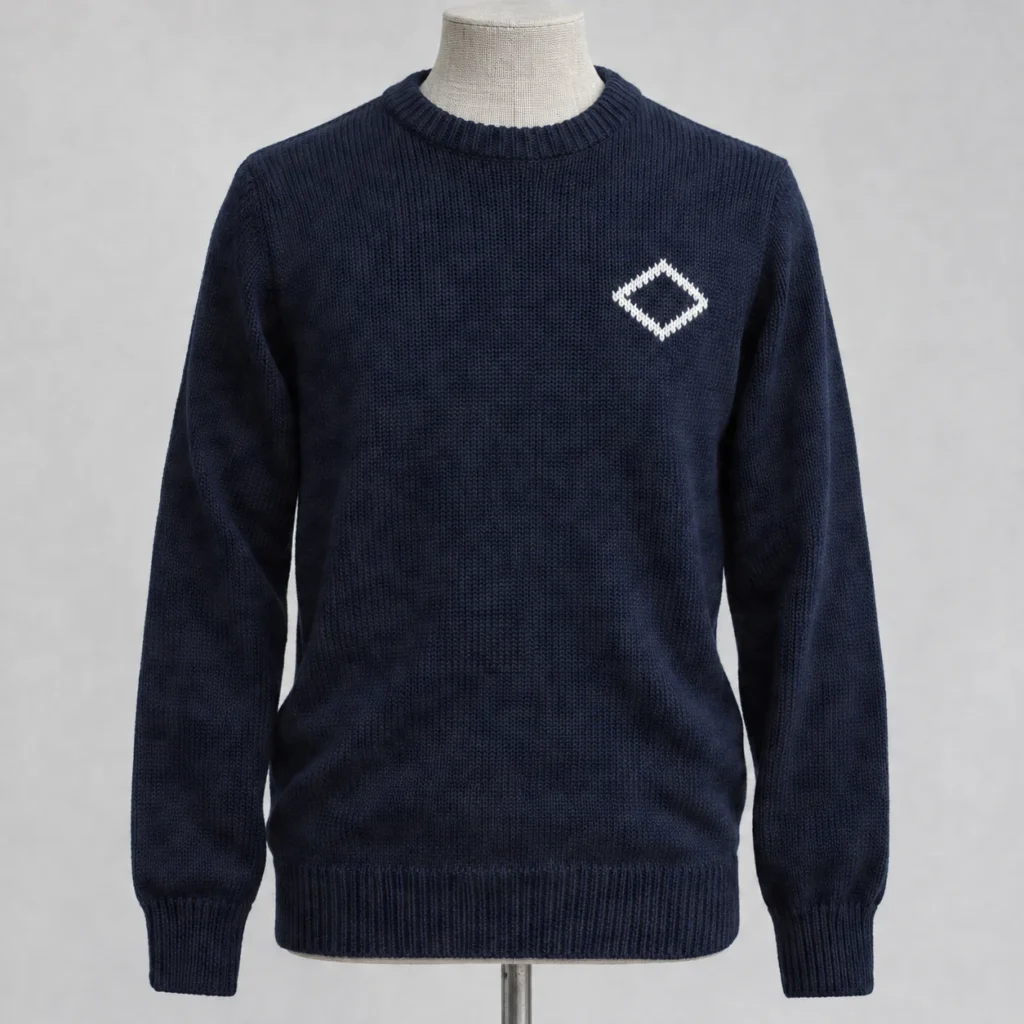
Lay a sweater that fits well flat on a table, smooth it out without stretching it, and measure chest width, body length and sleeve length with a soft tape. These three measurements usually tell a factory most of what it needs to know about the fit.
Measuring a finished sweater is usually easier and more reliable than measuring a person, because it already shows the ease (the extra room) that you like. Here is how each measurement is typically taken.
Chest width
Measure straight across the front, from one side seam to the other, just below the armholes. This is often called “pit to pit”. On a flat garment it is half the full chest, so say clearly whether your numbers are half or full measurements.
Body length
Measure from the highest point of the shoulder, next to the collar, straight down to the bottom of the hem rib. If your sweater has a longer back or a split hem, measure the front and the back separately.
Sleeve length
Measure from the shoulder seam down the outside of the sleeve to the end of the cuff. For raglan sweaters, which have no shoulder seam, measure from the centre back of the neck, over the shoulder and down to the cuff, and tell us which method you used.
Tips for measuring
- Use a soft tailor’s tape and measure on a flat, smooth surface.
- Do not stretch the knit while measuring; let it lie naturally.
- Measure two or three times and note the same point each time.
- Write down whether chest and hem numbers are half (flat) or full (all round).
- If you have a sweater you like, sending it to us as a reference sample often saves a round of questions.
Other measurements, such as shoulder width, armhole depth, cuff and hem rib height and neck opening, are usually set by us from the style. If your brand has firm numbers for these, add them to your size chart or tech pack.
What fit types can a sweater have?
Sweaters are usually made in a regular, relaxed or oversized fit. The size label stays the same, but the chest width, shoulder and length change to give a closer or a looser look.
- Regular fit: follows the body without being tight. It tends to suit staff wear, classic crewnecks and quarter-zips.
- Relaxed fit: a little more room in the chest and body. It is often chosen for casual brands and for sweaters worn over a shirt.
- Oversized fit: clearly wider, often with dropped shoulders and longer sleeves. It is usually a fashion choice and works well for streetwear ranges.
Fit type also affects how sizes are read. In an oversized style, many wearers choose their usual size and enjoy the loose look, while others size down. A short note on your product page, such as “relaxed fit, take your usual size”, typically helps your customers choose.
Does the yarn or knit change the fit?
Yes, a little. Different yarns and gauges drape and stretch differently, so the same measurements can feel different in wear. Your sample shows this before production.
A chunkier 7-gauge knit usually feels thicker and holds its shape, so it can feel slightly smaller than a fine 12-gauge knit with the same measurements. Cotton yarn tends to feel firmer, while wool blends and merino blends often have a softer, more elastic hand. Our guide to sweater yarns compared explains the differences in more detail, and you can see how panels are knitted, linked and finished in how custom knitted sweaters are made.
Washing also matters. Knitted sweaters are usually washed or steamed during finishing, which helps settle the size before measuring. Follow the care label on the finished product, because hot washes and tumble drying can change the shape of many knits.
What does grading to your own size chart mean?
Grading means taking one approved base size and working out every other size from it, step by step, using your size chart. It keeps the proportions consistent across the run, so an XS and a 3XL look like the same sweater.
The usual way to work is simple. You send your size chart with the base size marked, we knit a sample in that base size, you check the fit and approve it, and the other sizes are then graded from the approved sample. If you sell other garments under your label, grading to your own chart helps your sweaters fit like the rest of your range.
- Send the size chart as a table with the size names and each measurement.
- Mark the base size, usually M for adults, and say which measurements are flat or all round.
- Add any tolerance you work with, or ask us to suggest one with the quote.
- If you have no chart, our standard XS–3XL and 4–14 sizes are a good starting point.
How are kids’ sweaters sized and made?
Kids’ sweaters are made on their own pattern in sizes 4–14, not as a smaller copy of an adult sweater. Children’s proportions are different, with shorter bodies and sleeves in relation to the chest.
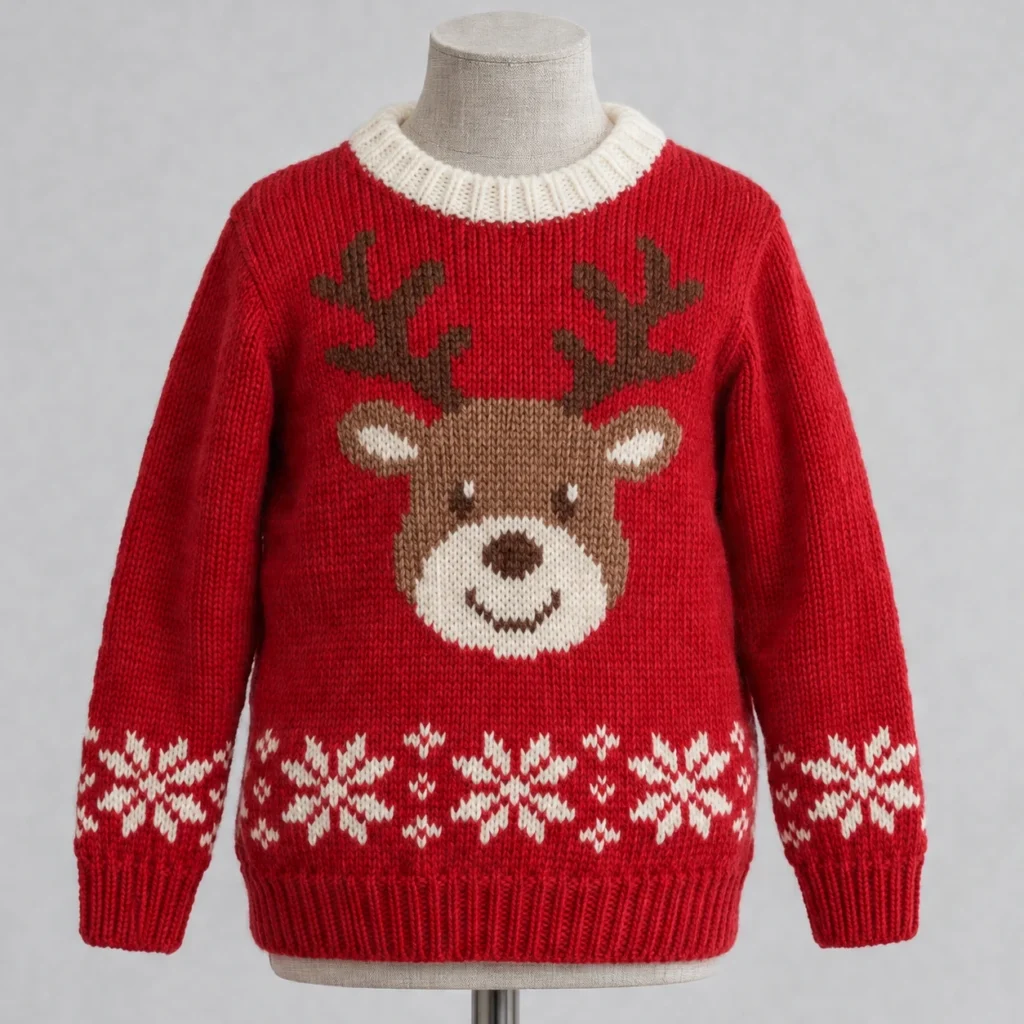
Children’s clothing should avoid cords and drawstrings at the hood and neck; rules in the EU (EN 14682) and in the US restrict them. We follow this on kids’ sweaters, so a hood or neck detail that uses a cord on the adult version is changed on the kids’ version. Family and matching ranges, such as adult and kids’ Christmas sweaters in the same design, are a common way to use both size runs; see our guide to custom Christmas sweaters for brands.
How to choose sizes for your order
Choose the size option by who will wear the sweaters and whether you already have a size chart. Then split your quantity across sizes by the people you know will wear them, or by the size mix you usually sell.
| Your situation | Usually a good choice |
|---|---|
| Brand with an existing range and size chart | Grade to your own chart, base size sampled first |
| New brand or retail range without a chart | Our standard adult XS–3XL, plus kids 4–14 if needed |
| Company or team order for named people | Collect each person’s size and split the order to match |
| Family or Christmas range | Adult and kids’ sizes in one design |
| Fashion or streetwear look | Oversized or relaxed fit, with a fit note for buyers |
For staff and team orders, a short size form where each person writes their size usually works better than guessing. For retail, many brands start with more of the middle sizes and fewer of the very small and very large sizes, then adjust on the next order once they see what sells.
Ordering sized sweaters from Mr Balaclava
The minimum is 50 pieces per design, and the sizes can be split within one design. Standard production takes about 14 days after sample approval.
What to send with your request
- The style (crewneck, V-neck, cardigan, quarter-zip) and fit (regular, relaxed, oversized).
- Your size range, or your own size chart with the base size marked.
- The quantity per size, or the total if you are not sure yet.
- Yarn, colours and your logo or design.
- A reference sweater or photos, if you have one that fits the way you want.
For samples you can choose a pre-paid physical sample, which usually takes about 5–7 days, or a free pre-production sample made after the order and the 30 % advance payment. The sample is where the fit is checked and adjusted until you approve it. Mr Balaclava’s name never appears on your products.
Frequently asked questions
Can I mix sizes within the 50-piece minimum?
Yes. The minimum of 50 pieces is per design, and you can split those pieces across sizes, for example across S, M, L and XL. Adding kids’ sizes in the same design is discussed with your quote.
Do sweaters shrink after washing?
Knitted sweaters are usually washed or steamed during finishing, which helps settle them before they are measured and packed. How much a sweater changes later depends on the yarn and on how it is washed, so following the care label is the easiest way to keep the size. Wool and wool-blend knits tend to be more sensitive to hot water and tumble drying.
Can you copy the fit of a sweater I already have?
Often, yes. Send us the sweater or its flat measurements and photos, and we use it as the reference for your sample. The fit is then confirmed on the sample before production.
Should I order the same quantity in every size?
Usually not. Most orders need more of the middle sizes and fewer at each end. For named staff or team orders, collect each person’s size; for retail, use your own sales data if you have it.
Can I put my own size labels in the sweaters?
Yes. Size labels, woven brand labels and care labels can be made to your design, so the sizes match the names you use across your range. Your quote lists the labels included.
If you also make knitted headwear, the balaclava size guide covers sizing for balaclavas. Browse our custom sweaters catalogue, see matching knit sets with beanies and scarves, or send us your size chart for a quote.