This guide is for brands, shops, companies and event organisers planning a range of custom knitted sweaters. It compares the yarns we usually knit sweaters from, explains how each one tends to feel, wear and wash, and shows how the choice affects the price. For the styles, decoration and ordering steps, see our custom sweater manufacturer page.
The short version: the yarn sets the feel, the warmth, the care label and a large part of the unit price. The knit and the gauge (how fine or chunky the knit is) then shape the look. The sections below cover each yarn in turn, followed by a comparison table and a simple way to choose.
Which yarns are used for custom sweaters?
We usually knit sweaters in acrylic, cotton, wool blends and merino blends. Lambswool and cashmere blends and recycled yarn are available on request.
Each yarn has its own page in our Material Library, with composition, feel and the decoration it suits. The same yarns are used across our knitwear, so a sweater can be matched with a beanie or scarf in the same yarn and colour. Our guide to how custom knitted sweaters are made explains what happens to the yarn after you choose it.
Is acrylic a good yarn for sweaters?
Acrylic is usually the easy-care, lower-cost choice. It feels soft and light, takes bright and even colours well, and suits logo sweaters, jacquard patterns, Christmas designs and kids’ ranges.
Acrylic is a synthetic fibre spun to feel like wool. It is often machine washable, dries fairly quickly and keeps its colour well, which is why it is common for promotional and seasonal sweaters. The trade-off is pilling: small balls of fibre can form where the sweater rubs, such as under the arms and on the sides. An anti-pilling acrylic is a common upgrade and is confirmed with your quote. See our acrylic yarn page for details.
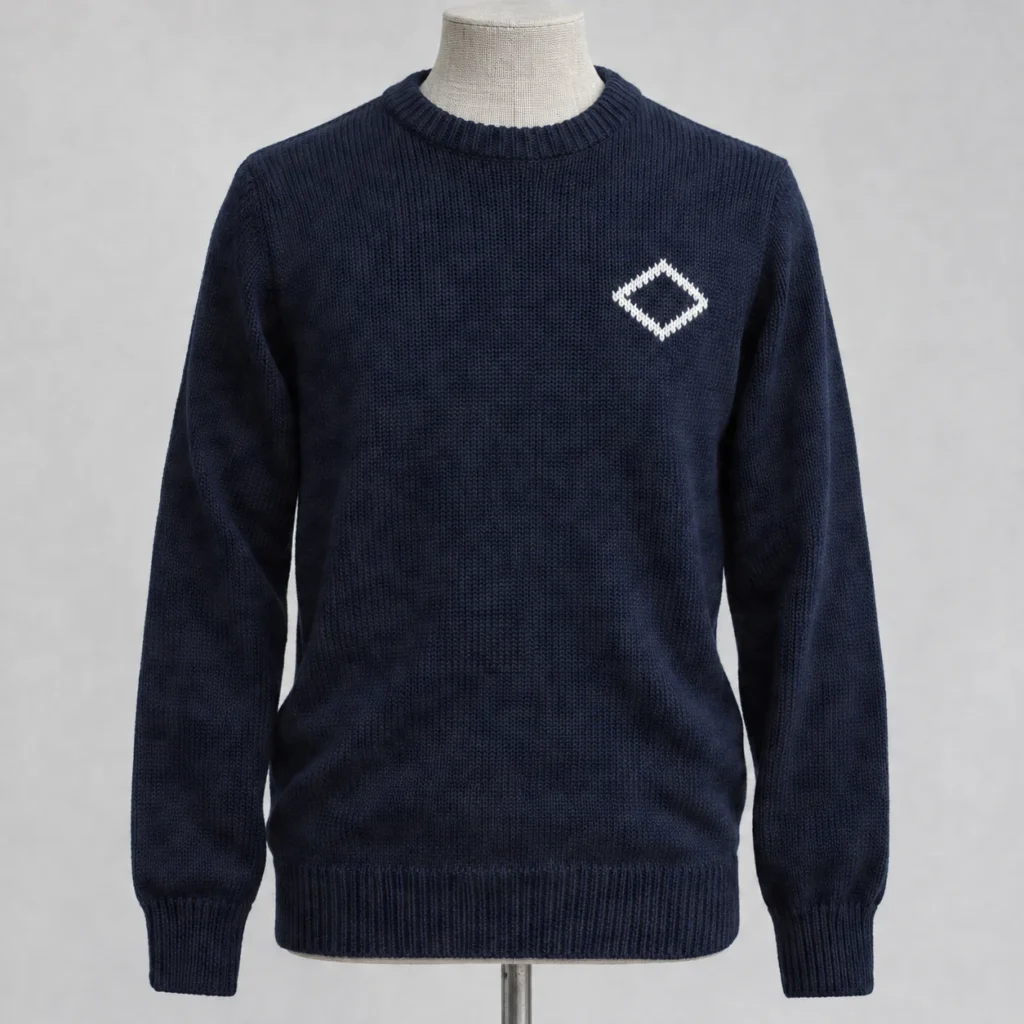
When does cotton suit a sweater?
Cotton suits lighter sweaters for spring, autumn and milder climates. It feels smooth, matte and cool, and it is a common choice for buyers who want a natural fibre at a moderate price.
Cotton has little natural stretch, so cuffs and hems are usually knitted in rib to hold their shape. It tends to be less warm than wool and can take longer to dry. Stitch detail such as cable and texture usually shows clearly in cotton, and knitted-in logos look crisp in a fine gauge. Cotton sweaters usually need gentle washing and drying flat to keep their shape. Our cotton yarn page covers blends and colours.
What do wool blends add?
A wool blend mixes wool with acrylic or nylon. It usually feels warmer and more natural than pure acrylic, and it is easier to care for than pure wool.
The wool share in a blend often sits between about 20% and 50%, and it sets both the warmth and the price: more wool usually means a warmer, more premium feel and a higher unit price. The synthetic part helps the sweater keep its shape and makes it less likely to felt or shrink. Wool blends suit winter collections, outdoor and lifestyle brands, and corporate gifts that need to feel a step up. See our wool blend yarn for typical compositions.
Is merino worth the higher price?
Merino suits premium ranges. It is a fine wool that usually feels softer and less itchy than ordinary wool, and it tends to look smooth and sharp in a fine gauge.
Merino is usually the highest-priced of the four main yarns, so many buyers choose a merino blend, which mixes merino with acrylic or nylon to balance feel and cost. Merino and wool usually need a gentle wash at a low temperature, or hand washing, and drying flat. Hot water and a hot dryer can shrink or felt the knit, so a clear care label matters. Our merino and wool yarn knit page describes the feel from fine to chunky.
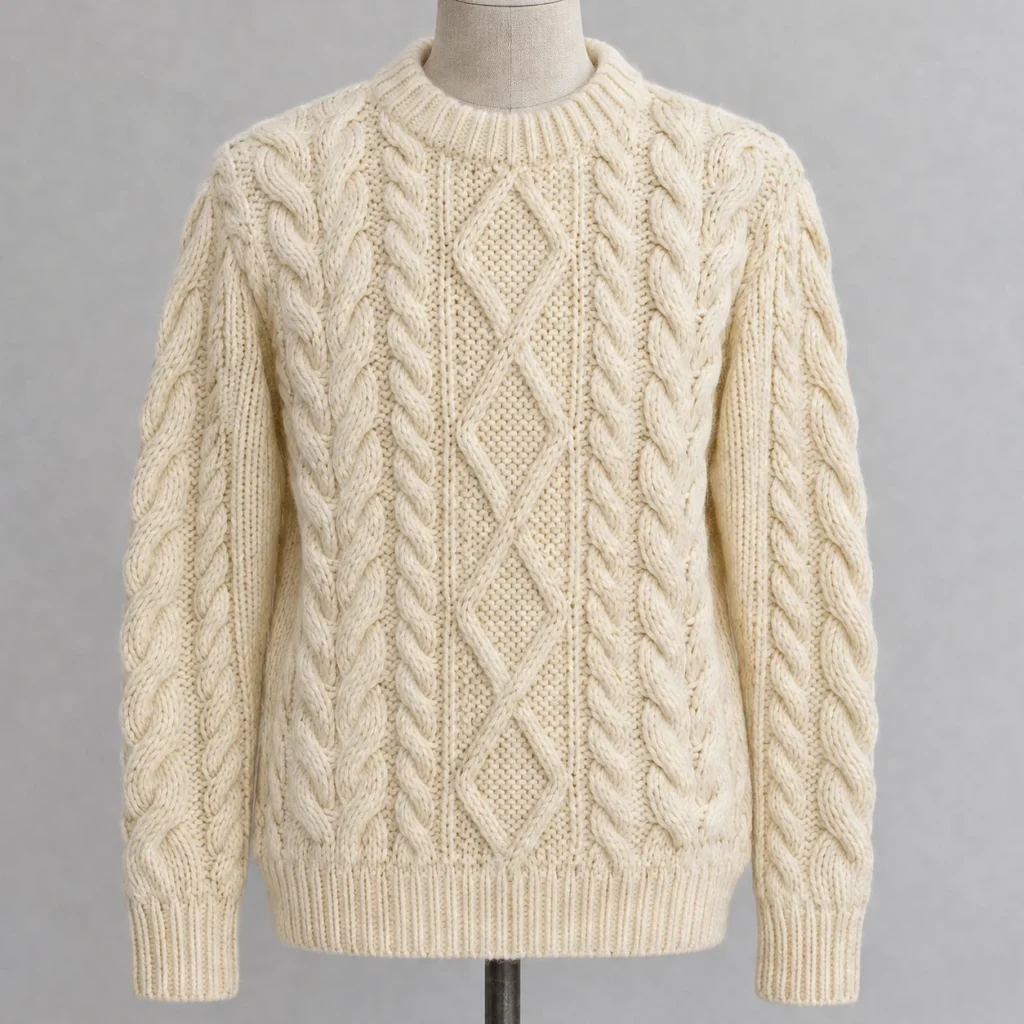
What about lambswool, cashmere and recycled yarn?
Lambswool and cashmere blends are available on request for premium ranges, and recycled yarn is available on request for buyers who want it in their collection.
- Lambswool: wool from a young sheep’s first shearing. It usually feels soft, springy and warm, and may feel slightly prickly on sensitive skin. See lambswool yarn.
- Cashmere blends: cashmere mixed with wool or other fibres. Cashmere feels very soft and light but is delicate, so a blend is often chosen to make it easier to wear and to bring the price down. See cashmere yarn.
- Recycled yarn: for example recycled polyester yarn, which usually feels like the equivalent new yarn. The recycled share varies by spinner and is confirmed with your quote.
Availability, colours and minimums for these yarns depend on the yarn supplier, so tell us early if you want one of them.
Sweater yarns compared
The table gives a typical picture for each yarn. Feel, warmth and care depend on the exact blend, the knit and the gauge, and your quote confirms the yarn for your sweater.
| Yarn | Feel | Warmth | Care (typical) | Pilling | Typical use | Price level |
|---|---|---|---|---|---|---|
| Acrylic | Soft and light, wool-like | Warm for its weight | Often machine washable; dries fairly quickly | Can pill; anti-pilling acrylic on request | Logo, jacquard, Christmas and kids’ sweaters | Lower |
| Cotton | Smooth, matte and cool | Lighter | Gentle wash; dry flat | Usually low to moderate | Spring and autumn ranges, cable and texture | Lower to mid |
| Wool blend | Warm and soft, more natural feel | Warmer | Gentle, cool wash; dry flat | Moderate | Winter collections, outdoor and lifestyle brands | Mid |
| Merino blend | Fine, smooth and soft | Warm | Low-temperature or hand wash; dry flat | Low to moderate | Premium and retail ranges | Mid to higher |
| Lambswool (on request) | Soft and springy; may feel slightly prickly | Warm | Hand wash or wool cycle; dry flat | Moderate | Classic and heritage looks | Higher |
| Cashmere blend (on request) | Very soft and light; delicate | Warm | Hand wash; dry flat | Can pill with friction | Luxury and gift ranges | Higher (premium) |
| Recycled yarn (on request) | Similar to the equivalent new yarn | Depends on the fibre | As the equivalent new yarn | As the equivalent new yarn | Collections that want a recycled option | Usually a little above the new yarn |
Which yarns pill, and can pilling be reduced?
Most knitted yarns can pill where the sweater rubs. Short, soft fibres such as acrylic, cashmere and some wool blends tend to pill more; tightly spun yarns and firmer knits tend to pill less.
Pilling is usually reduced by choosing an anti-pilling yarn, a slightly tighter knit, and a care label that asks for a gentle wash inside out. It cannot be removed entirely, so we suggest checking the feel and surface on the sample before production.
Which yarns are easiest to wash?
Acrylic and acrylic-rich blends are usually the easiest to care for and are often machine washable. Cotton, wool, merino, lambswool and cashmere usually need a gentler wash and drying flat.
The care label is printed from the yarn and finish you choose, so your buyers know how to wash the sweater. For a range sold to the public, or a corporate gift that will be washed often, an easy-care yarn usually causes fewer returns. Our help page on product care covers washing knitwear in more detail.
Does the gauge change how a yarn looks?
Yes. Gauge is how fine or chunky the knit is: in our builder we use 12 gauge for a finer, smoother sweater and 7 gauge for a chunkier, cosier one.
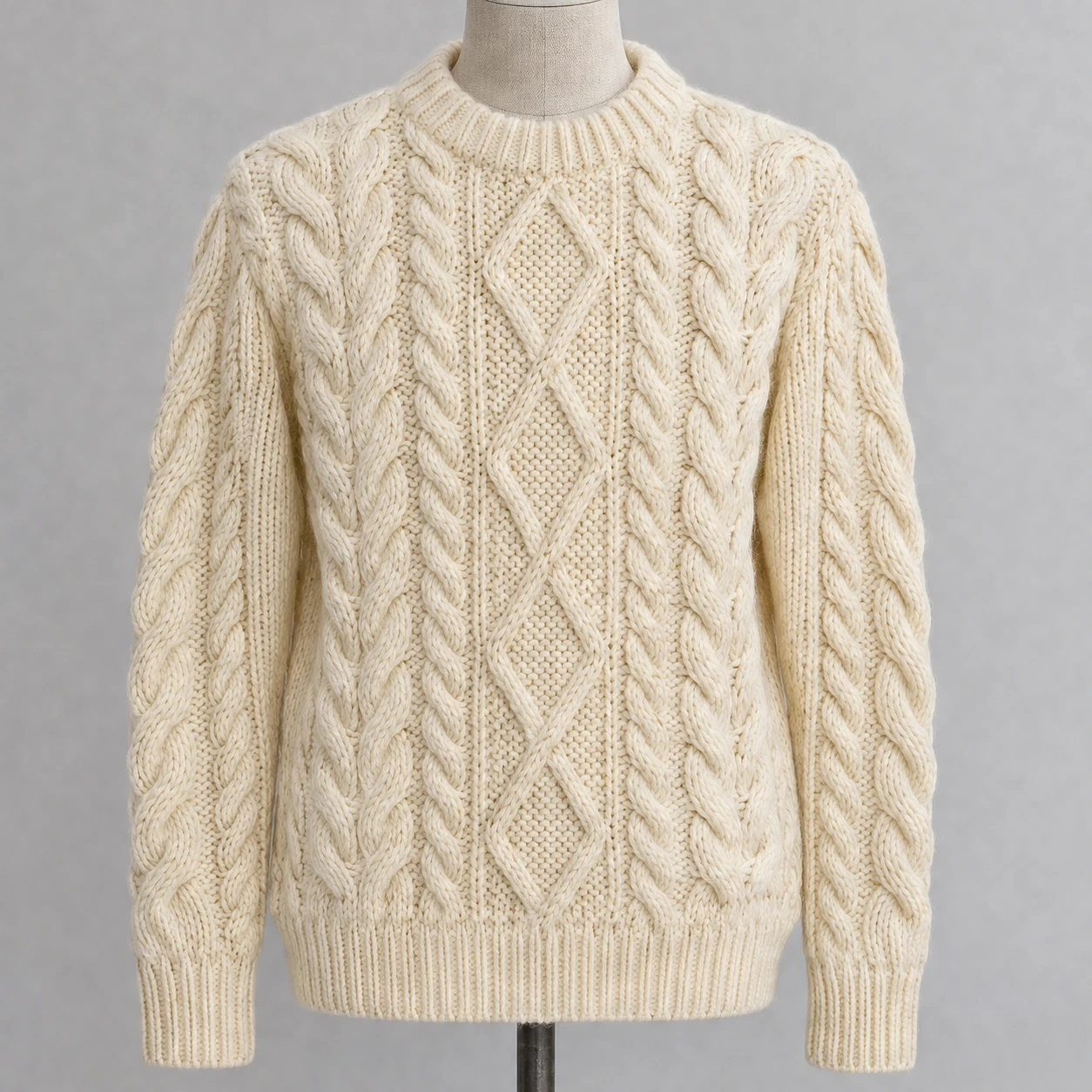
A fine gauge usually shows a knitted-in logo or a Fair Isle pattern more sharply, while a chunky gauge suits cable knits and relaxed winter styles. The same yarn can feel quite different in each gauge, so it helps to choose the yarn and the gauge together. If your logo has small text, our guide to knitted logos versus embroidery on sweaters helps you pick a method that suits the knit.
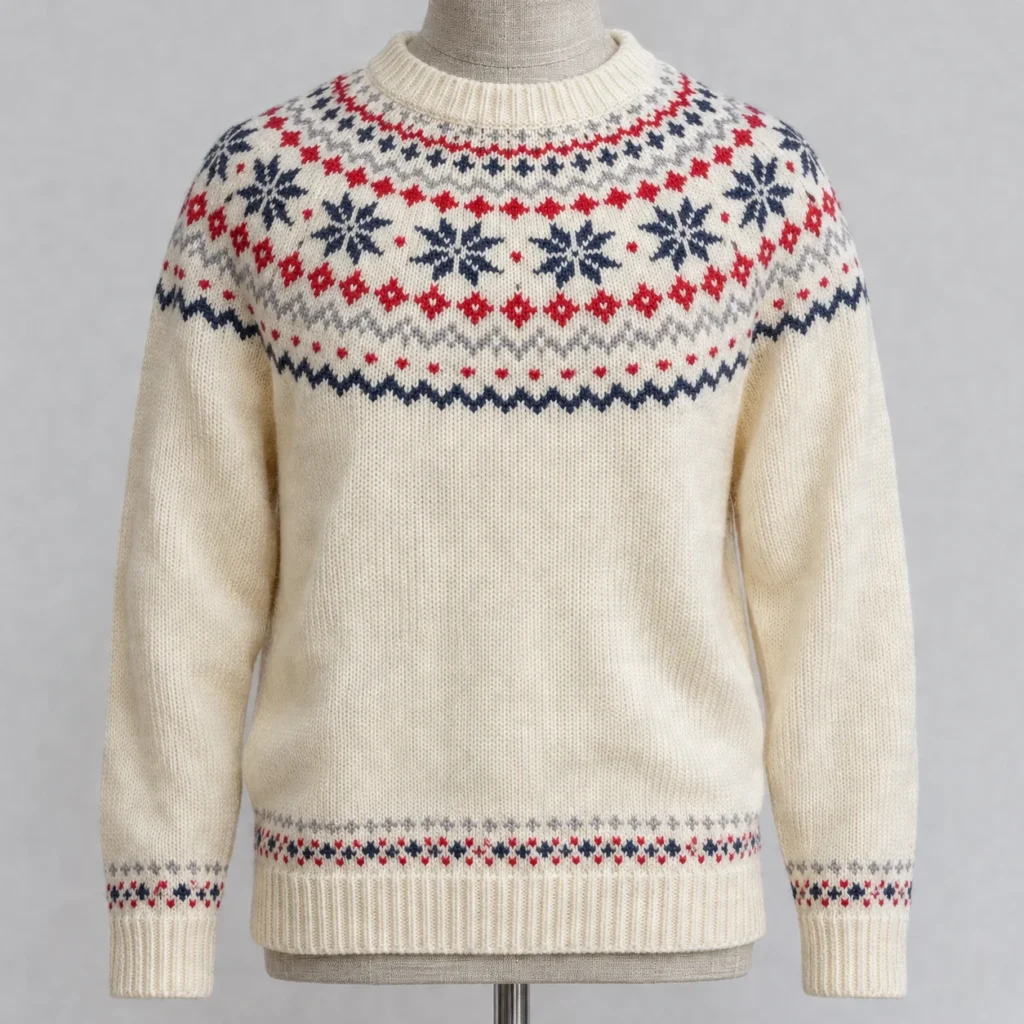
Which yarn suits kids’ sweaters?
For kids’ sweaters, buyers usually choose a soft, easy-care yarn such as acrylic, cotton or a soft blend. Easy washing tends to matter more to parents than a premium fibre.
Kids’ sweaters are made in sizes 4–14 as standard, usually with their own pattern rather than a scaled-down adult one. Children’s garments should have no cords or drawstrings at the hood or neck, and we make them without. Our sweater size guide explains adult and kids’ sizes and how to measure.
How to choose a sweater yarn
Start from the price point and the season, then check the feel on a sample. The table below links common goals to the usual yarn.
| Your goal | Usual yarn | Usual gauge |
|---|---|---|
| Promotional or event sweaters at a lower unit price | Acrylic | 12 gauge |
| Christmas sweaters with bright knitted-in designs | Acrylic | 12 gauge |
| Kids’ sweaters that are easy to wash | Acrylic or cotton | 12 gauge |
| Lighter sweaters for spring and autumn | Cotton | 12 gauge |
| Warm winter collection with a natural feel | Wool blend | 7 or 12 gauge |
| Premium retail range | Merino blend, lambswool or cashmere blend (on request) | 12 gauge |
| Chunky cable or cosy lifestyle look | Acrylic or wool blend | 7 gauge |
| A recycled option in the collection | Recycled yarn (on request) | As the design needs |
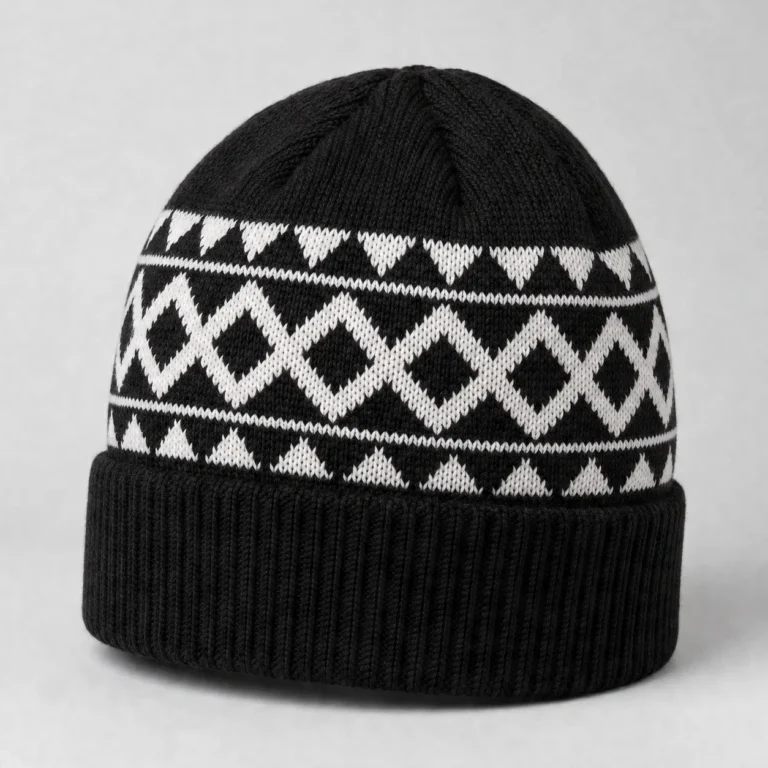
If you are planning seasonal designs, our guide to custom Christmas sweaters for brands covers designs and timing. For gifts and retail bundles, a sweater can be paired with a beanie and scarf in the same yarn as matching knit sets, and our custom beanies use the same yarn families.

Ordering sweaters in your yarn from Mr Balaclava
The minimum is 50 pieces per design. Production takes about 14 days after sample approval, and sweaters are knitted in-house or with partner factories, depending on the project.
What to send with your brief
- The sweater style, or a catalogue sweater to start from
- The yarn you have in mind, or your price point and season
- Colours (Pantone references help) and the gauge or look you want
- Your logo or design and how it should be applied
- Sizes: XS–3XL adult and kids 4–14, or your own size chart
- Quantity per design, labels, packaging and delivery country
Catalogue sweaters start at about $14–20 per piece at 50 pieces; unit prices fall with quantity, and yarn upgrades such as merino or cashmere blends are priced in your quote. You can choose a pre-paid physical sample, made in about 5–7 days, or a free pre-production sample made after the order and the 30% advance payment. Mr Balaclava’s name never appears on your products. Browse our custom sweaters to find a starting design.
Frequently asked questions
Which sweater yarns feel warm enough for winter?
Wool blends, merino blends, lambswool and cashmere blends usually feel warm, and a chunky 7 gauge knit adds to that. Acrylic is also warm for its weight. Warmth depends on the knit and fit as well as the yarn, so we make no warmth ratings.
Will an acrylic sweater feel cheap?
Not usually. Good acrylic feels soft and wool-like and takes colour evenly. It is the usual choice for jacquard, Christmas and promotional sweaters; if you want a more natural feel, a wool blend is a common step up.
Can you match my brand colours in the yarn?
Usually, yes. We match colours to your Pantone references where the yarn allows, and you check them on the sample. Some colours depend on what the yarn supplier stocks, which we confirm with your quote.
Can I use different yarns for different designs in one order?
Yes. Each design is quoted with its own yarn, and the minimum is 50 pieces per design. A common mix is acrylic for an event or Christmas design and a wool or merino blend for a retail design.
Do wool sweaters shrink?
Wool, merino and lambswool can shrink or felt if washed hot or tumble dried. A blend with acrylic or nylon helps the sweater keep its shape, and a clear care label tells your buyers how to wash it. Our guide to choosing a fabric gives more background.
Ready to choose? See our logo and jacquard sweaters, read matching custom scarves or ask for a sweater quote.