A sublimated balaclava is only as good as the fabric under the print. In sublimation the ink turns into a gas and is taken up by the fibres themselves, so the fabric decides how bright the colours look, how sharp the edges stay and how the balaclava feels on the face after a full day.
This guide explains why sublimation needs polyester, compares the five polyester fabrics most often used for sublimated balaclavas, and shows where heavier or textured knits fit. Every fabric links to its page in our Fabric & Material Library, where you can compare typical weight, stretch and breathability.
Why does sublimation need polyester fabric?
Sublimation inks turn into a gas under heat and pressure and bond with polyester fibres, so the print becomes part of the fabric instead of sitting on top of it. Cotton and other natural fibres do not take the dye in the same way. The higher the polyester share, the brighter and more durable the print: most printers want at least two-thirds polyester, and 100% polyester gives the strongest colour.
Two more things matter. Sublimation inks are transparent and there is no white ink, so the fabric should be white or very light, because the base colour shows through the design. And the face of the fabric should be smooth and closed: fine lines and small text break up on a coarse or very open surface.
Five polyester fabrics for sublimated balaclavas
These five fabrics cover most printed balaclava projects, from fashion and event styles to cycling and motorcycle liners.
Polyester microfiber knit
Microfiber is knitted from very fine polyester filaments. The surface is smooth and dense, which is exactly what sublimation needs: edges stay crisp, gradients stay smooth and photographic artwork keeps its detail. It feels soft against the skin and drapes well around the face, so it is a common choice for printed fashion balaclavas, neck gaiters and tube scarves. Because it is thin, dense embroidery can pucker it; a small logo or a woven label works better. See Polyester Microfiber Knit.
Polyester jersey
Single jersey is the everyday sports knit: light, smooth on the face and usually finished to move sweat to the surface. It prints well, dries quickly and stretches a little across the width, which suits running, cycling and training balaclavas. See Polyester Jersey.
Polyester/spandex stretch jersey (SHY series)
When a balaclava has to sit close under a helmet, stretch matters most. Our SHY series stretch jersey is 88% polyester and 12% spandex, so it recovers its shape after every wear while keeping a polyester share high enough for sublimation. Spandex does not take the dye, so colours look slightly less intense than on 100% polyester; for most designs the difference is small, and we check it on your sample. See Polyester/Spandex Stretch Jersey (SHY Series). It is the jersey we use for the 3D Animal Sublimated Balaclava, an all-over animal print that has to stretch over the face without cracking.
Polyester interlock
Interlock is a double knit with a smooth face on both sides. It is a little heavier and more stable than jersey, so printed panels keep their shape and the edges do not curl. It is a good all-round choice for printed balaclavas that should look neat and feel substantial without being warm. See Polyester Interlock.
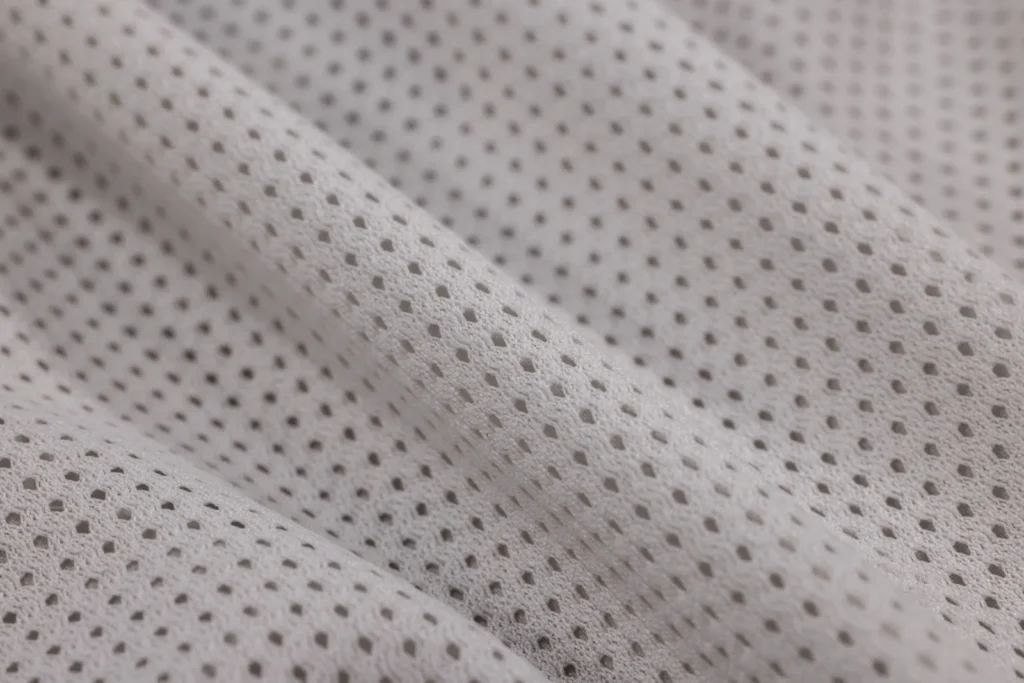
Bird’s-eye mesh
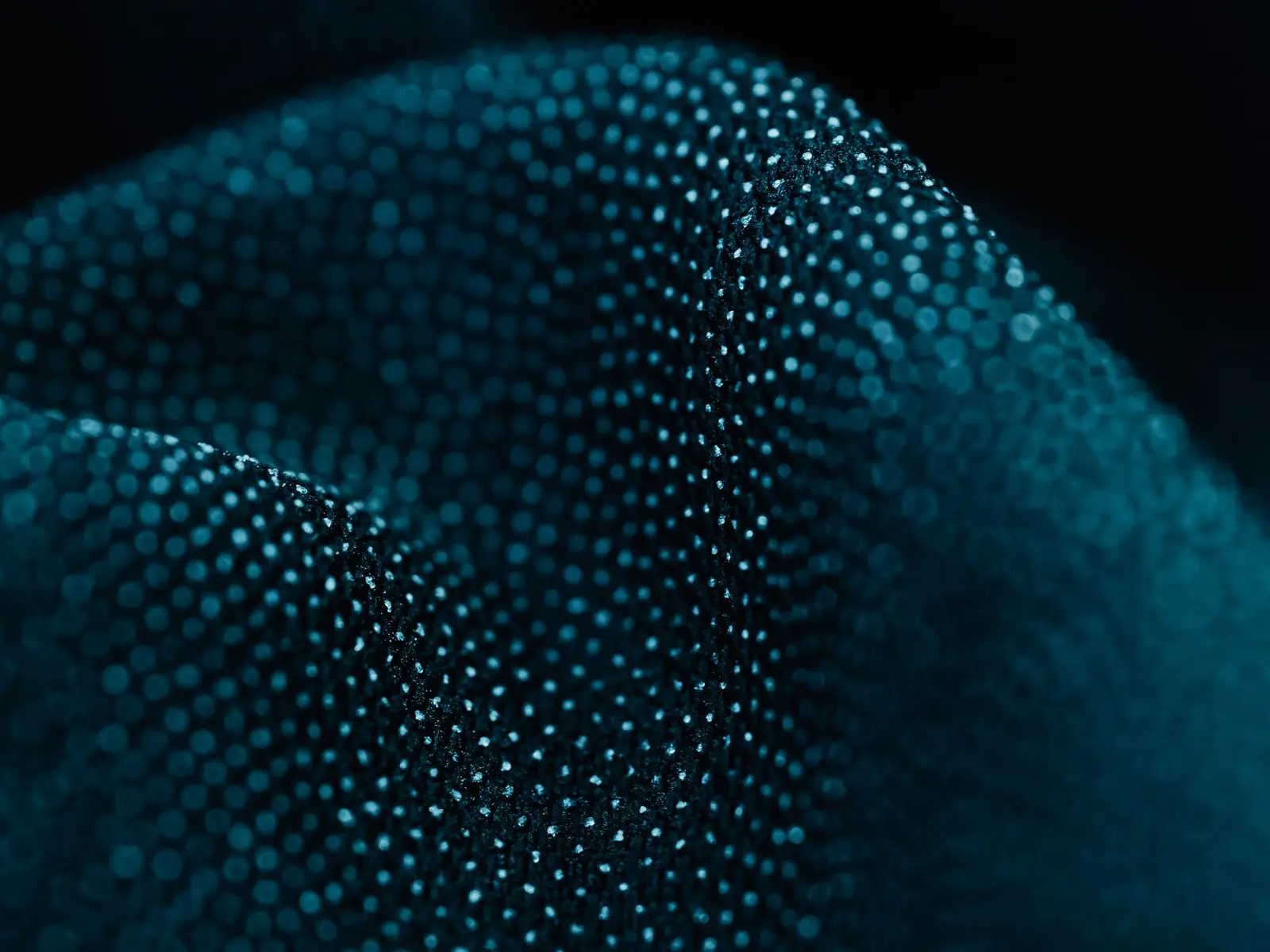
Bird’s-eye mesh has a pattern of tiny holes that lets air pass and sweat dry fast. Sublimation keeps those holes open, while screen prints and transfers sit on the surface and close them where they print. That makes it the natural fabric for summer, cycling and team balaclavas printed in club colours. Very fine text prints a little softer on the dotted surface. See Bird’s-Eye Mesh.
How do these fabrics compare?
| Fabric | Feel | Stretch | Airflow | Print detail | Best for |
|---|---|---|---|---|---|
| Polyester microfiber knit | Smooth, soft, fluid | Low to moderate | Moderate | Very high | Fashion and event balaclavas, neck gaiters |
| Polyester jersey | Light, cool, dry | Moderate | High | High | Running, cycling and training balaclavas |
| SHY stretch jersey (88/12) | Smooth, close-fitting | High (four-way) | High | High | Helmet liners, motorcycle and cycling styles |
| Polyester interlock | Smooth, stable, slightly firm | Low to moderate | Moderate | High | Printed balaclavas that keep their shape |
| Bird’s-eye mesh | Light, dry, dotted | Moderate | Very high | Good (softer on fine text) | Summer, cycling and team kit |
The exact weight (GSM), blend and colour of the fabric for your order are confirmed with your quotation.
Where do heavier or textured polyester fabrics fit?
Not every sublimated design needs the thinnest fabric. Heavy double-knit polyester gives colder-weather balaclavas more body, and polyester French terry has a soft looped back for casual pieces; both print well on their smooth face. Textured knits such as polyester piqué and waffle or honeycomb knits can be printed, but the raised surface breaks up fine detail, so they suit bold graphics or plain colours better.
If warmth is the main goal, polyester microfleece also takes sublimation on its brushed face, with a softer, slightly less sharp print.
What we confirm with your quotation
- The exact fabric weight (GSM) and blend for your order.
- A white or light base colour suited to your artwork.
- The sublimation result on a sample before bulk production.
- Finishes such as brushed or peached, and a recycled version where it is available.
How should you choose fabric for your sublimated balaclavas?
Start with how the balaclava will be used, then check the print. For helmet and cycling use, choose a stretch fabric such as the SHY series. For fashion and events, microfiber gives the best print. For airflow, choose bird’s-eye mesh, and for a neat, stable shape, interlock. Then test your artwork on a sample.
- Close fit under a helmet: SHY stretch jersey.
- Sharpest artwork and softest feel: polyester microfiber knit.
- Hot weather or hard training: bird’s-eye mesh or polyester jersey.
- A structured, neat look: polyester interlock.
- Cold weather: heavy double-knit polyester or microfleece.
Frequently asked questions
Can you sublimate cotton balaclavas?
Not well. Sublimation dye needs polyester fibres to bond with; on cotton the print fades quickly in the wash. For cotton balaclavas, screen printing, embroidery or heat transfer are the usual methods.
Why does sublimation need a white or light fabric?
Sublimation inks are transparent and there is no white ink, so the base colour shows through the design. On dark fabric the colours look dull or disappear.
Does a stretch fabric change the print?
Slightly. Spandex does not take the dye, so a fabric with 12% spandex prints a little less intensely than 100% polyester, and a print stretched over the face lightens a little. We check the result on your sample.
What is the minimum order for custom sublimated balaclavas?
Orders start at 50 pieces per design. The standard production lead time is approximately 14 days after sample approval, and the confirmed schedule is agreed for each order.
Ready to compare the fabrics side by side? Open the polyester fabrics in the Material Library, browse our sublimated balaclavas, or send us your design and we suggest a fabric with your quotation.