If you are planning your own sweater range, it helps to know what happens between a cone of yarn and a finished, folded sweater. This guide is for brands, shops, teams and companies ordering custom knitwear, and for anyone who wants to understand why a knitted sweater costs what it does, takes the time it does and looks the way it does.
We walk through each step in the order it usually happens: choosing the yarn and gauge, knitting the panels, joining them, washing and finishing, labelling and the final checks. For the sweater styles we make and the options you can choose, see our custom sweater manufacturing page.
How is a knitted sweater made, step by step?
Most knitted sweaters are made in six steps: yarn and gauge are chosen, panels are knitted on a flat knitting machine, the panels are linked together, the sweater is washed and steamed to size, labels and trims are added, and every piece is checked before packing. The exact route depends on the style, the yarn and the decoration.
The table below gives a quick overview. Each step is explained in more detail further down.
| Step | What happens | What it decides |
|---|---|---|
| 1. Yarn and gauge | The yarn, colours and knitting gauge are chosen and matched to the design | Feel, warmth, look of the logo, price level |
| 2. Programming | The design, logo and sizes are turned into a knitting program | How the pattern and shaping come out |
| 3. Knitting | Front, back and sleeves are knitted as separate panels, often with rib cuffs and hem knitted on | Pattern, texture and panel size |
| 4. Linking | Panels are joined loop by loop on a linking machine; the collar is attached | Neat, stretchy seams |
| 5. Washing and finishing | The sweater is washed, softened, steamed and pressed to its measurements | Handfeel, final size and shape |
| 6. Labels, checks, packing | Neck and care labels, tags and trims are added; each piece is checked and packed | Brand presentation and consistency |
Which yarns are used for custom sweaters?
Custom sweaters are usually knitted in acrylic, cotton, wool blends or merino blends, with lambswool or cashmere blends and recycled yarn available on request. The yarn sets the feel, the care and much of the price.
Acrylic is light, soft and holds bright colours well, which is why it is often chosen for Christmas and team sweaters. Cotton usually feels smooth and suits lighter, year-round knits. Wool and merino blends tend to feel warmer and more natural, and are typical for brand and retail ranges. You can see the yarns in our Material Library, for example acrylic yarn and merino wool yarn.
Yarn choice also affects how a sweater behaves over time. Some fibres tend to pill more than others, and some need gentler washing. Our guide to sweater yarns compared goes through each yarn in detail, including care and typical uses.
What does gauge mean, and should I choose 7 or 12 gauge?
Gauge is the number of knitting needles per inch on the machine bed: the higher the number, the finer the knit. A 12 gauge sweater looks smooth and fine; a 7 gauge sweater looks chunkier and more textured.
These are the two gauges used in our Order Builder for sweaters. The choice changes more than the look:
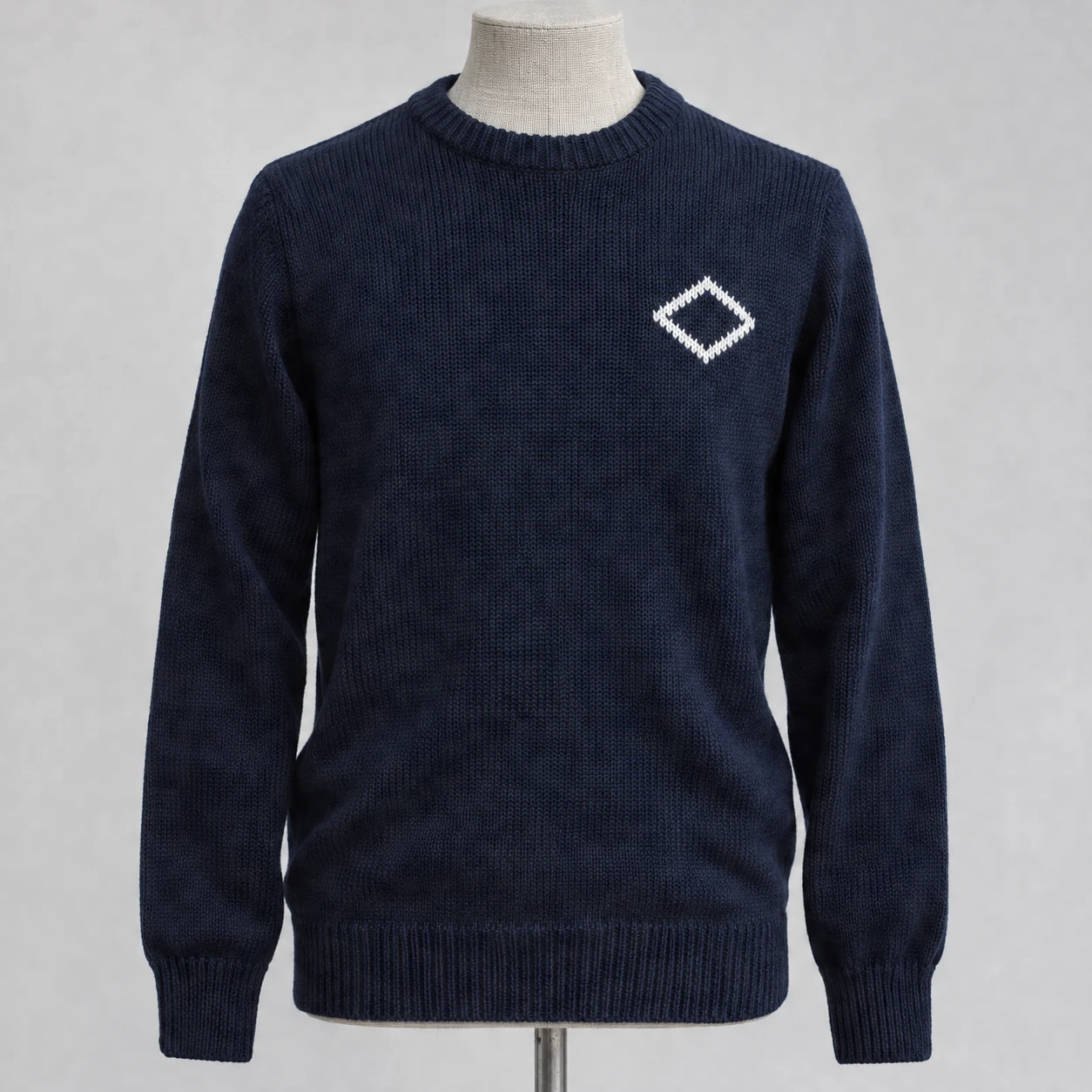
- 12 gauge (finer): smaller stitches, a smoother surface and a lighter sweater. Knitted-in logos and small lettering usually come out sharper, so it suits logo crewnecks, quarter-zips and corporate sweaters.
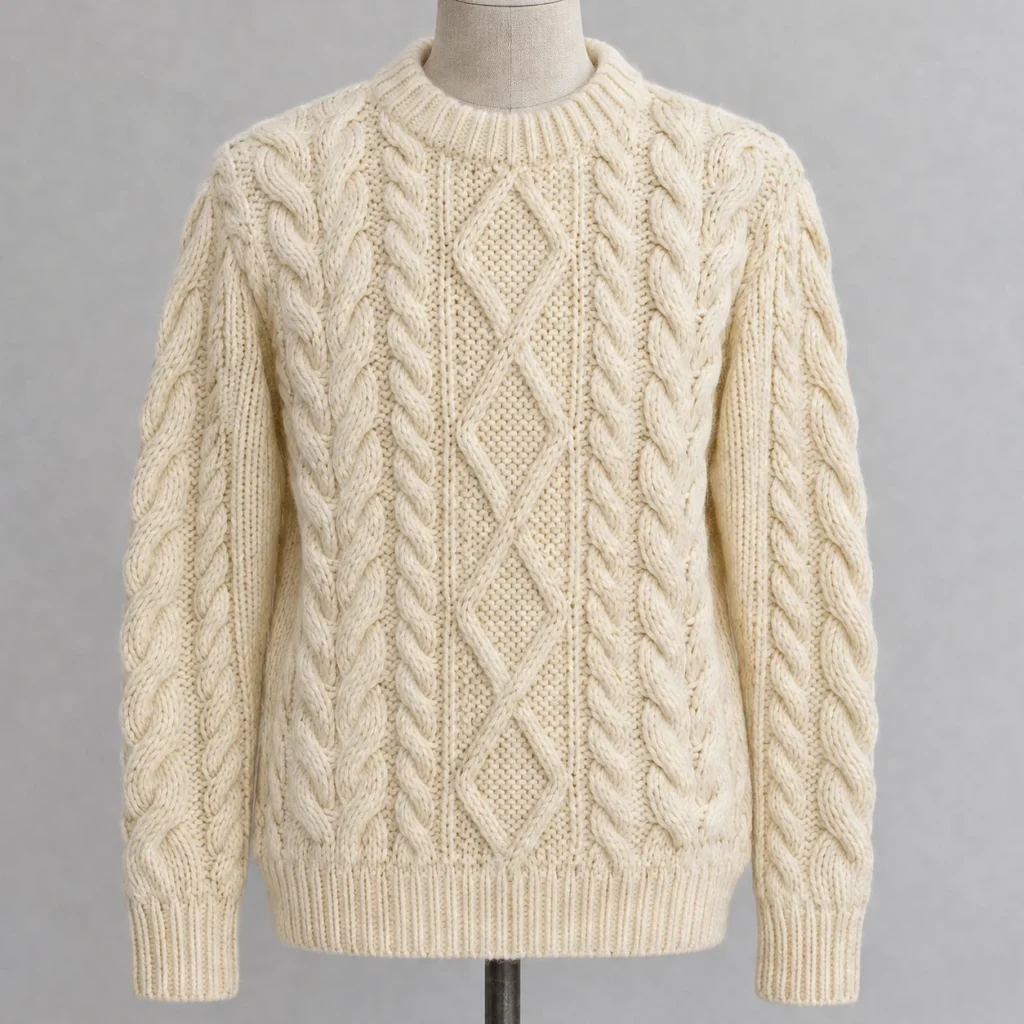
- 7 gauge (chunkier): bigger stitches, a thicker and cosier fabric and a more relaxed look. It typically suits cable knits, Christmas sweaters and heritage styles, but very small details in a logo may need to be simplified.
A finer gauge uses thinner yarn and more stitches, so knitting time per sweater is usually longer. The same logo can look quite different at 7 and 12 gauge, which is one reason we show your design on a mockup before sampling. If you also make beanies, our beanie gauge and yarn guide explains the same idea for hats.
How are the sweater panels knitted?
Most custom sweaters are knitted on computerised flat knitting machines, which knit the front, back and sleeves as separate flat panels. Rib cuffs and the hem rib are usually knitted on as part of each panel.
Before knitting starts, the design is turned into a knitting program. The program tells the machine which needles knit which colour, where the rib changes to the body knit, and how wide and long each panel should be for each size. Any knitted-in logo, stripe or Fair Isle pattern is built into this program, so it becomes part of the fabric rather than something added later.
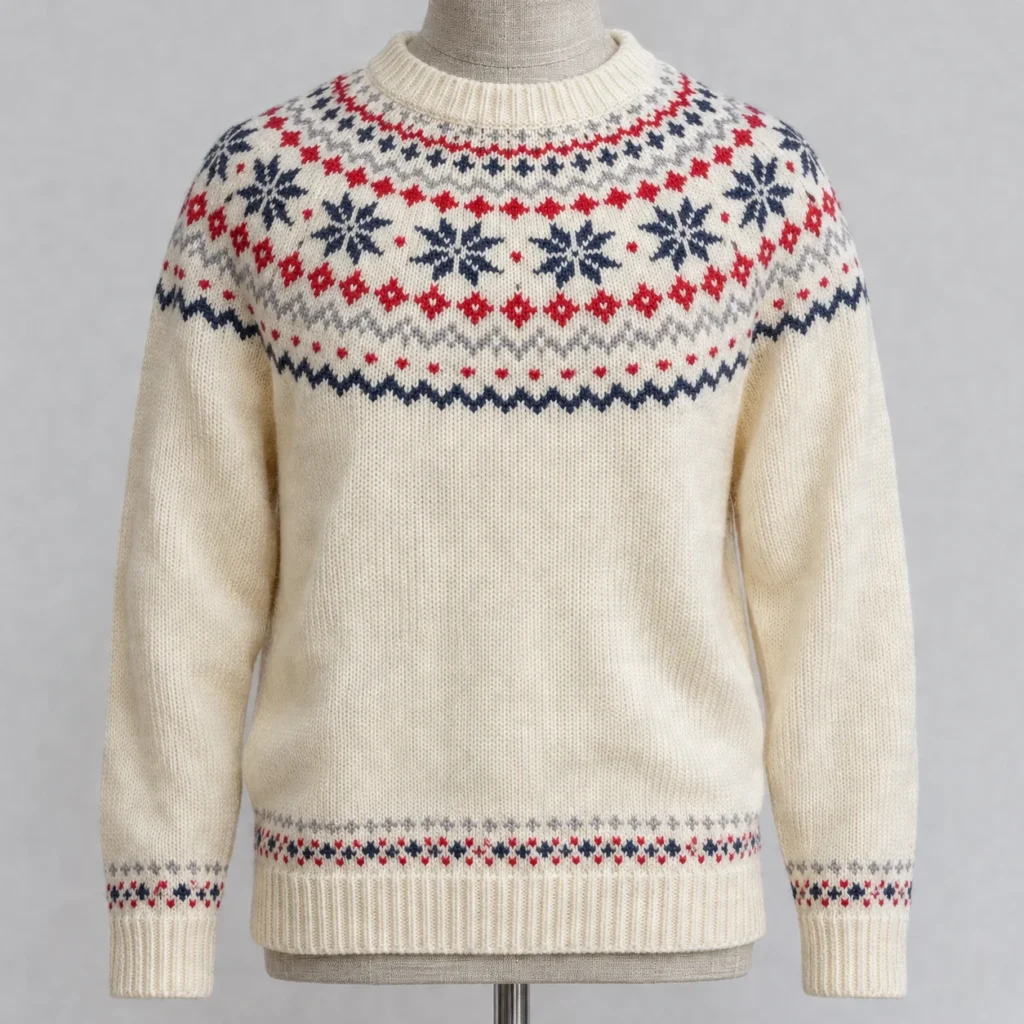
The knitting stitch also shapes the look. Jersey (a plain, smooth knit) is common for logo sweaters, rib knits are used for cuffs, hems and collars, and cable knits twist groups of stitches into raised cords. Jacquard (a pattern knitted into the fabric in two or more colours) is used for logos, Christmas motifs and Fair Isle designs.
What is the difference between fully fashioned and cut-and-sew sweaters?
A fully fashioned sweater has panels knitted to their final shape, with stitches added or dropped to form the armholes and neckline. A cut-and-sew sweater is cut from larger knitted pieces and then sewn together, a little like a T-shirt.
Fully fashioned shaping usually wastes less yarn and gives clean edges that can be linked loop by loop, so it is common for better-quality knitwear. Shaping marks, small visible points where stitches were decreased, are often seen near the armholes and are a typical sign of this method.
Cut-and-sew is often used for some styles and finer details, or where a panel shape is easier to cut than to knit. Many sweaters combine both: the body and sleeves are knitted to shape, and a small part such as a neckline is cut and finished. Which route suits your sweater depends on the style, the yarn and the order, and it is confirmed with your quote.
How are the panels joined together?
Knitted panels are usually joined on a linking machine, which connects the edge loops of two panels stitch by stitch. This gives a flat, stretchy seam that moves with the knit.
Linking is careful, skilled work. The operator places each loop of the panel edge on the points of the linking machine, so the shoulders, side seams and sleeves line up exactly. The collar or neck rib is linked on in the same way, which helps a crewneck keep its shape after washing.
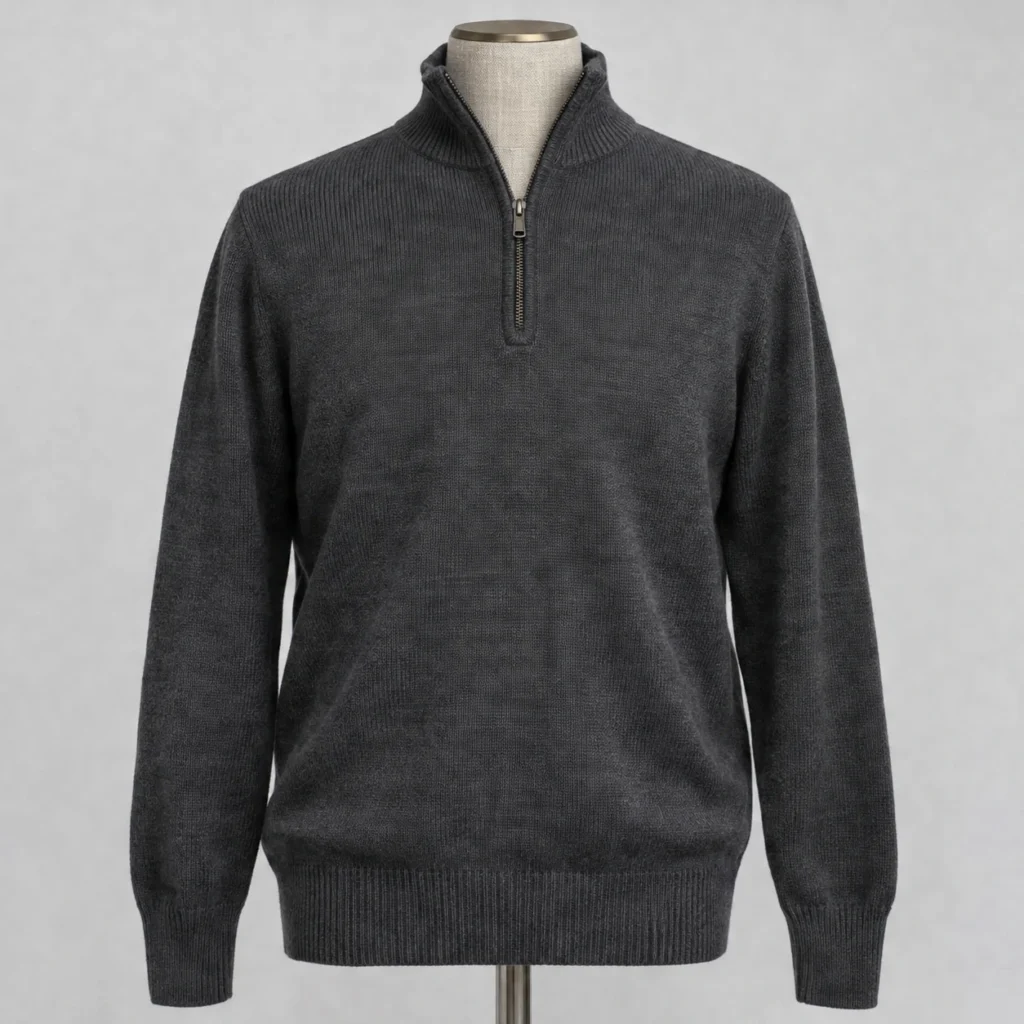
Some seams are overlocked or sewn instead, especially on cut-and-sew parts, zips and plackets. On a quarter-zip, for example, the zip is sewn in after the body is linked. Loose yarn ends are then hand-finished so they do not show on the outside.
Why are knitted sweaters washed and steamed?
Washing relaxes the yarn and settles the stitches, and steaming then sets the sweater to its final measurements. Without this finishing, a sweater can feel stiff and change shape after the first wash at home.
Straight off the machine, knitted panels are under tension and can feel hard. A wash, often with a softener, tends to open up the fibres and gives the handfeel buyers expect. The sweater is then steamed or pressed on a size board, a flat frame cut to the size chart, so the chest width, body length and sleeve length match the specification.
The finishing recipe depends on the yarn. Acrylic, cotton and wool blends react differently to heat and washing, and the wash is chosen to suit each one. This is also why we recommend that a physical sample goes through the same finishing as the bulk order.
When are logos, labels and trims added?
A knitted-in logo is made during knitting, while embroidery, woven labels and trims are usually added after linking and finishing. Neck labels, care labels and hang tags come last, before the final check.
A knitted-in jacquard logo is included in the base price of our sweaters, which is one reason it is a common choice. Intarsia is another knitted-in method, used for larger blocks of colour. Embroidery is stitched onto the finished knit and suits small chest logos and names. Our guide to knitted logos versus embroidery on sweaters compares the methods, and our logo and jacquard sweaters page shows the styles.
For private label ranges, we add your woven neck label, care label, size label and hang tags, and pack each sweater in polybags or boxes with your barcodes. Our Help Center explains the options for labels and packaging. Mr Balaclava’s name never appears on your products.
How is a finished sweater checked?
Finished sweaters are usually checked for size, colour and finish before they are packed. The checks usually cover measurements against the size chart, the logo or pattern, seams and linking, loose ends and visible faults in the knit.
Measurements are typically taken on the chest, body length and sleeve, the same points used when the sample was approved. The colours are compared with the approved sample, and the pattern is checked for missing or misplaced stitches. Our Help Center page on quality control explains how checks work across our products.
Where are Mr Balaclava sweaters made?
Our sweaters are knitted in-house or with partner factories, depending on the project. We confirm the production route with your quote.
Both routes follow the same sample approval, size chart and checks, and the order is managed by our team from brief to shipping. Our manufacturing overview explains how we work across our product categories.
How to choose the right construction for your sweater
The right gauge, yarn and decoration depend on what the sweater is for and how it will be sold. These pointers are a good starting point:
- Corporate or logo sweaters: 12 gauge in acrylic, cotton or a wool blend, with a knitted-in logo or a small embroidered chest logo.
- Christmas and novelty sweaters: usually 7 gauge acrylic with the design knitted in, in bright colours. See our guide to custom Christmas sweaters for brands.
- Premium brand ranges: merino or wool blends, often 12 gauge, with fully fashioned shaping, linked seams and woven labels.
- Cable and heritage styles: 7 gauge in a wool blend or lambswool blend for a textured, classic look.
- Kids’ sweaters: soft, easy-care yarns and no cords or drawstrings at the hood or neck. Kids’ sizes have their own pattern; our sweater size guide covers adult and kids sizes.
- Matching sets: the same yarn and colours across a sweater, beanie and scarf. See our matching knit sets.
If you are unsure, send us a reference sweater or a photo and tell us the price point. We usually suggest a yarn and gauge with your quote.
Ordering custom knitted sweaters from Mr Balaclava
We make custom sweaters from 50 pieces per design, in adult XS–3XL and kids 4–14 as standard, or graded to your own size chart. Production takes about 14 days after sample approval, plus shipping, which is agreed with you for each order and confirmed before shipment.
You can choose a pre-paid physical sample, made in about 5–7 days, or a free pre-production sample made after the order and the 30 % advance payment. Payment is 30/30/40. Catalogue sweaters start at about $14–20 per piece at 50 pieces, unit prices fall as quantities rise, and your quote confirms the price.
What to send for a sweater quote
- Style: crewneck, quarter-zip, cardigan or another neckline, plus any reference photos.
- Yarn and gauge preference, or the feel and price point you are aiming for.
- Your logo or pattern as a vector file, and the colours you need.
- Sizes and quantities per size, or your own size chart.
- Labels, tags and packaging you need, and your delivery country.
- Not sure about the details? A tech pack helps, but a clear brief and a photo are enough to start.
Frequently asked questions
How long does it take to make a custom knitted sweater?
Bulk production takes about 14 days after sample approval. Before that, a pre-paid physical sample takes about 5–7 days, and shipping time is added after production. The full schedule is confirmed with your quote.
Is a knitted-in logo better than embroidery?
Neither is better in every case. A knitted-in logo becomes part of the fabric and suits bold logos and patterns, usually in a few colours. Embroidery tends to suit small chest logos, names and finer detail on a plain knit.
Can you copy the fit of a sweater we already sell?
Yes, we can usually work from a reference sweater or your size chart. We grade the pattern to your measurements and you check the fit on the sample before bulk production starts.
Why does my sweater have small marks near the armholes?
These are often shaping marks, where stitches were decreased to shape a fully fashioned panel. They are a normal part of this knitting method and are usually a sign that the panel was knitted to shape rather than cut.
Can you make sweaters in recycled yarn?
Recycled yarn is available on request. The colours and options depend on what the yarn supplier has available at the time of your order.
Ready to start? Browse our custom sweaters in the catalogue, see how an order runs on our manufacturing process page, or request a sweater quote.