This guide is for brands, shops, clubs, event companies and resellers who are about to choose a balaclava manufacturer, perhaps for the first time. It gives you a neutral checklist you can use with any supplier: the questions worth asking, why each one matters, and what a clear answer usually looks like.
If you are still deciding which style to make, start with our overview of balaclava types, materials and uses. Here we focus on the supplier. After the checklist, we show how Mr Balaclava answers each point, using only facts we can stand behind, so you can compare like with like.
What should you check before choosing a balaclava manufacturer?
Check ten things: minimum order, samples, where production happens, fabrics, decoration, communication, payment terms, shipping, certificates and how your designs are protected. Get each answer in writing before you pay a deposit.
Most problems in a first order come from questions nobody asked. Sending the same short list to every supplier makes the answers easy to compare and shows quickly who answers clearly.
| Checklist point | Question to ask | Why it matters |
|---|---|---|
| 1. Minimum order (MOQ) | Is the minimum per design, per colour or per size? | Decides how many designs you can test in a first order. |
| 2. Samples | Which sample types exist, what do they cost and how long do they take? | The sample is where fit, colour and logo are checked before bulk. |
| 3. Production | Which steps are done in your own factory? | Fewer hand-offs usually mean fewer surprises and a single point of contact. |
| 4. Fabrics | Which fabrics and yarns can you offer, and how is the composition confirmed? | The fabric decides warmth, stretch, feel and which decoration works. |
| 5. Decoration | Which logo methods do you offer on which fabric? | Not every method works on every material. |
| 6. Communication | Who answers, how fast, and in which channels? | Changes and approvals depend on quick, written answers. |
| 7. Payment terms | What is paid when, and against which milestone? | Clear stages protect both sides. |
| 8. Shipping | How are method and cost agreed? | Shipping can change the landed cost of a small order a lot. |
| 9. Certificates | Who holds each certificate, and what does it cover? | A factory certificate is not a product certificate. |
| 10. Designs and branding | Whose name goes on the product, and how is artwork handled? | Your brand, labels and designs should stay yours. |
How do minimum order quantities differ between manufacturers?
MOQs differ in size and in how they are counted. Always ask whether the minimum applies per design, per colour or per size, because the same number can mean very different first orders.
A minimum “per design” lets you split it across sizes, while a minimum “per colour and per size” multiplies quickly. Also ask whether custom-dyed colours or special yarns carry their own minimum, since dyeing a colour to order often needs a larger batch than a standard shade.
Very small runs, such as 5 or 10 custom pieces, are rarely possible with a factory, because each design needs its own setup: a knitting programme, a pattern, screens or an embroidery file. If you only need to test a design, a paid sample is usually the better route than a tiny order.
Why do samples matter so much?
The sample is the moment you check fit, colour, fabric and logo before the bulk order is made. A good manufacturer explains which sample types exist, what each costs, how long it takes and how it is approved.
- Ask what the sample is: a stock piece in a similar fabric, or a real sample of your design with your logo.
- Ask about cost and timing: what you pay, whether any part is deducted from the order, and who pays the sample shipping.
- Ask how approval works: by a physical piece in your hands, or by photos, videos or a video call.
- Ask what happens after approval: the bulk order should match the approved sample, and repeat orders should not need a new one.
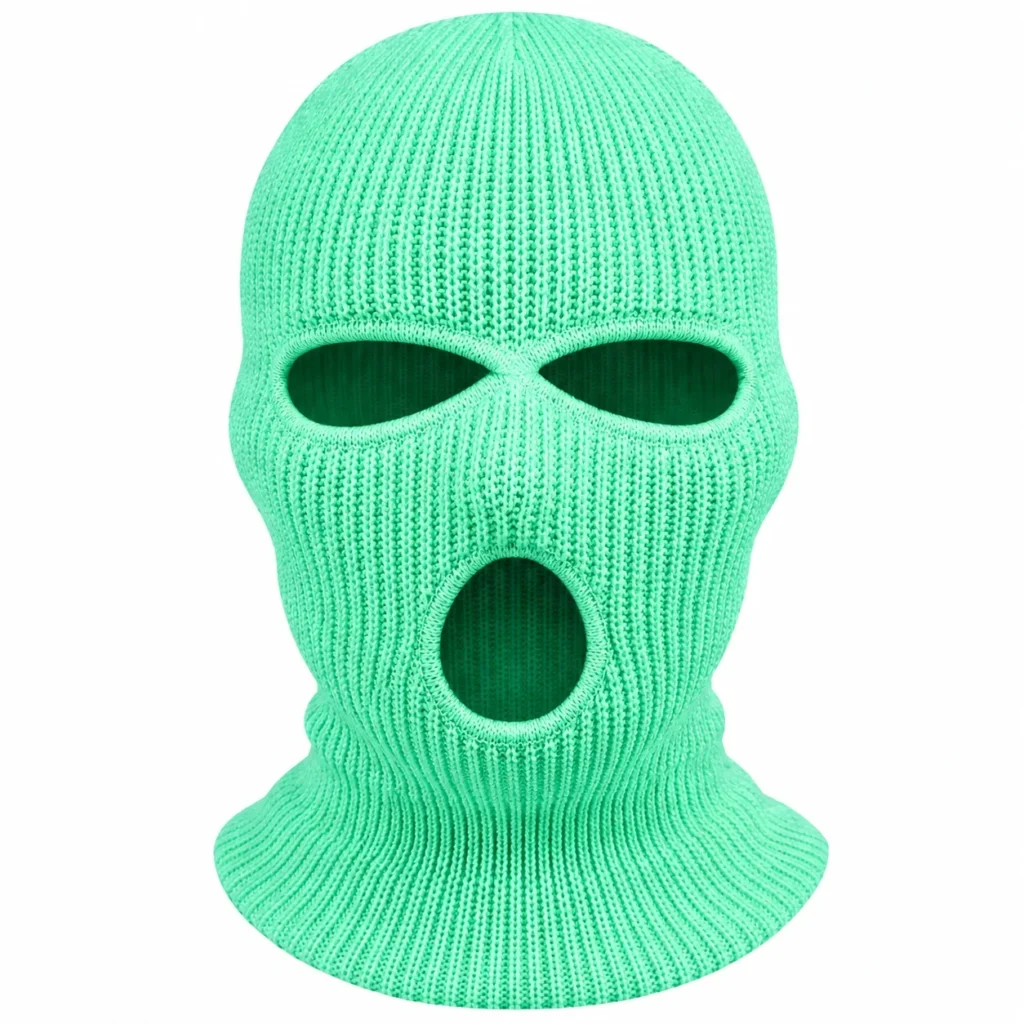
Does it matter where the balaclavas are actually made?
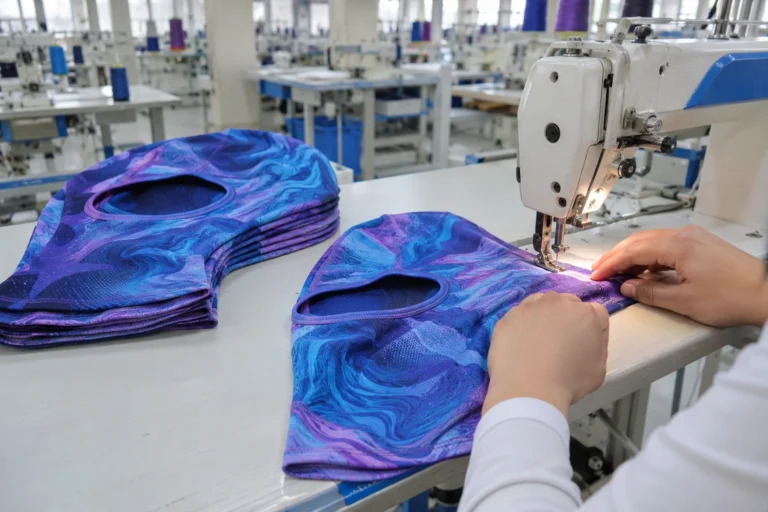
Yes. Ask which steps happen in the manufacturer’s own factory and which go to other workshops. Knitting, cutting, sewing, printing and embroidery done in one place usually makes timing and quality easier to control.
Balaclavas are made in two main ways: knitted from yarn, usually knitted to shape on a flatbed machine, or cut from finished fabric and sewn together from panels. A supplier who does both can usually advise which route suits your use. Our guide on how knitted and cut-and-sew balaclavas are made explains the difference step by step.
Also ask for capacity and lead times in numbers, including what changes for very large or complex orders.
Which fabric and decoration questions should you ask?
Ask which fabrics and yarns the manufacturer works with, how the composition is confirmed, and which logo methods suit each one. A good supplier tells you plainly when a method does not suit your fabric.
Fabric decides most of what the buyer feels: warmth, stretch, breathability and how the piece sits under a helmet. Knits such as acrylic rib, wool blends and merino suit winter retail and streetwear; stretch jersey, fleece and mesh suit sport and helmet use. Our comparison of balaclava materials goes through each option.
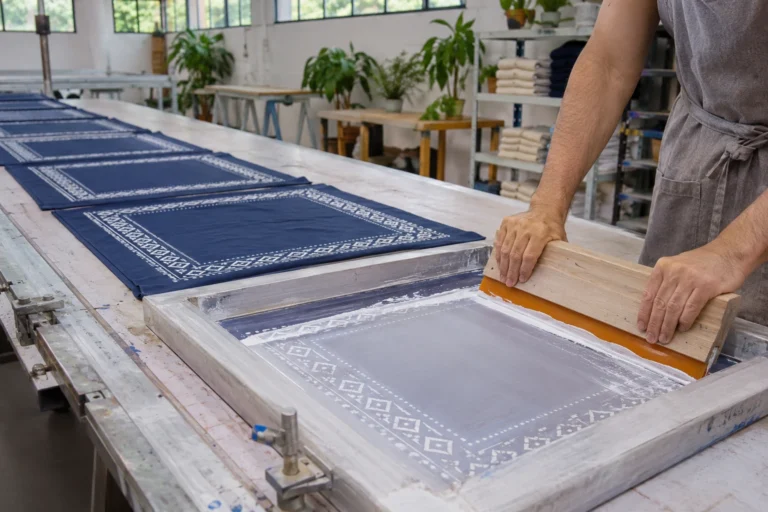
Decoration has limits a good supplier states up front. Sublimation, for example, needs a light, polyester-rich fabric and does not work on cotton, wool or acrylic knits; screen printing tends not to suit very stretchy fabric; a knitted-in logo is limited by the stitch size. Our guide to balaclava logo and decoration methods shows which method fits which fabric.
How should communication and payment work?
You should get written answers in a reasonable time, one named contact, and payment stages linked to clear milestones. If terms change from message to message, ask for them in one document before you pay.
- Communication: who answers, in which channels (email, chat, video call), and whether you see a mockup before the sample.
- Quotation: a written quote that names the style, fabric, decoration, quantity, unit price and lead time.
- Payment: how many stages, what each stage pays for, and when the balance is due.
- Defects: what happens if goods are defective or not as ordered, and how long you have to report it.
What should you ask about shipping?
Ask which shipping methods are offered, how the cost is calculated and when it is confirmed. For a first order, also ask who handles import duties and taxes in your country.
Express courier suits most small and medium orders; larger orders may go by air or sea cargo. An online per-piece shipping estimate is a guide, not the final cost: the real cost depends on the final weight, carton size, destination and delivery terms.
Which certificates matter, and who holds them?
Ask exactly who holds each certificate and what it covers. A management or social-audit certificate covers a company, a fabric certificate covers the mill’s material, and a protective-gear certificate covers a finished product sold under a brand.
If you sell protective products such as flame-resistant balaclavas, the finished product usually has to be tested and certified for your market, and that certificate is issued in the selling brand’s name, not the factory’s. Ask the supplier to show you the documents that apply to your order.
How are your designs and brand handled?
Ask whose name appears on the product, labels and packaging, how your artwork is used, and whether the supplier checks that you have the right to use a design. Your brand and your designs should stay yours.
A careful manufacturer asks about rights before printing logos or characters, because printing a design you do not own or licence can cause problems for both sides. If you need a confidentiality agreement for an unreleased design, raise it at the start, before you send detailed artwork.
How does Mr Balaclava answer the checklist?
Here are our answers to the same ten points, using our standard terms. We make custom balaclavas to order in Sialkot, Pakistan, for brands, shops, clubs and companies, business to business only.
| Checklist point | Mr Balaclava’s answer |
|---|---|
| Minimum order | 50 pieces per design. A design is one style in one colourway with one artwork. |
| Samples | Two types: a pre-paid physical sample (paid 100% in advance, about 5–7 days, deducted from the order only at 1,000+ pieces, shipping extra and non-refundable) or a free pre-production sample, made after the order and the 30% advance payment and approved by photos, videos or video call. |
| Production | Knitting, including jacquard and circular knitting, cut-and-sew, embroidery and patches are done in-house in Sialkot. For very large runs our team may also use our other units or partner mills, depending on the product. |
| Lead time and capacity | Approximately 14 days after sample approval (7 days possible on request; complex or very large orders of 100,000–200,000 pieces can take up to one month). Capacity is around 100,000 pieces a month. |
| Fabrics | Acrylic knits, merino and wool blends, cotton, fleece, polyester/spandex stretch jersey, polyester microfibre, meshes and more on request. The exact composition is confirmed with your quote. |
| Decoration | Sublimation, screen printing, flat and 3D embroidery, patches, DTF and heat transfer, jacquard knit-in, woven and printed labels, hang tags and packaging. |
| Communication | By the quote form, chat, email and video call. You see a mockup before sampling. |
| Payment | 30/30/40. |
| Shipping | Agreed with you for each order and confirmed before shipment. Express DHL, FedEx or UPS usually takes 3–6 working days. |
| Certificates | Eco Jersey Limited, which powers Mr Balaclava, is ISO 9001 certified and a Sedex member. Fabrics from OEKO-TEX® certified mills are available on request; the certificate is the mill’s. |
| Designs and branding | Mr Balaclava’s name never appears on your products. We only print designs you own or are licensed to use. |

Whether you send your own tech pack or ask us to develop the style from a brief, our OEM and ODM balaclava page explains both routes. For a fuller picture of our steps from brief to delivery, read how Mr Balaclava works.
Quality is checked on the sample before production and again before dispatch; our quality control page describes the checks. Because every order is custom, we do not accept returns, but if goods are defective or not as ordered, report it within 20 days and we replace them.
How do you choose between shortlisted manufacturers?
Send every shortlisted supplier the same brief, compare the written answers point by point, then order a sample from the one or two that answer most clearly. Choose on the sample and the terms, not on the unit price alone.
- Same brief to all: style, fabric, decoration, colours, quantity and delivery country, so the quotes are comparable.
- Compare the whole cost: unit price, sample, setup, shipping and duties together.
- Score the clarity: a supplier who states limits plainly (“this method does not suit that fabric”) is usually easier to work with.
- Check a real sample: fit, openings, seams, colour and logo, ideally on the people who will wear it.
- Start with a modest first run: a first order at the minimum lets you test the product and the working relationship before you scale.

Ordering from Mr Balaclava
Send us your brief, and we reply with a quote and a mockup. The minimum is 50 pieces per design, you choose your sample type, and standard production takes approximately 14 days after sample approval.
What to send with your request
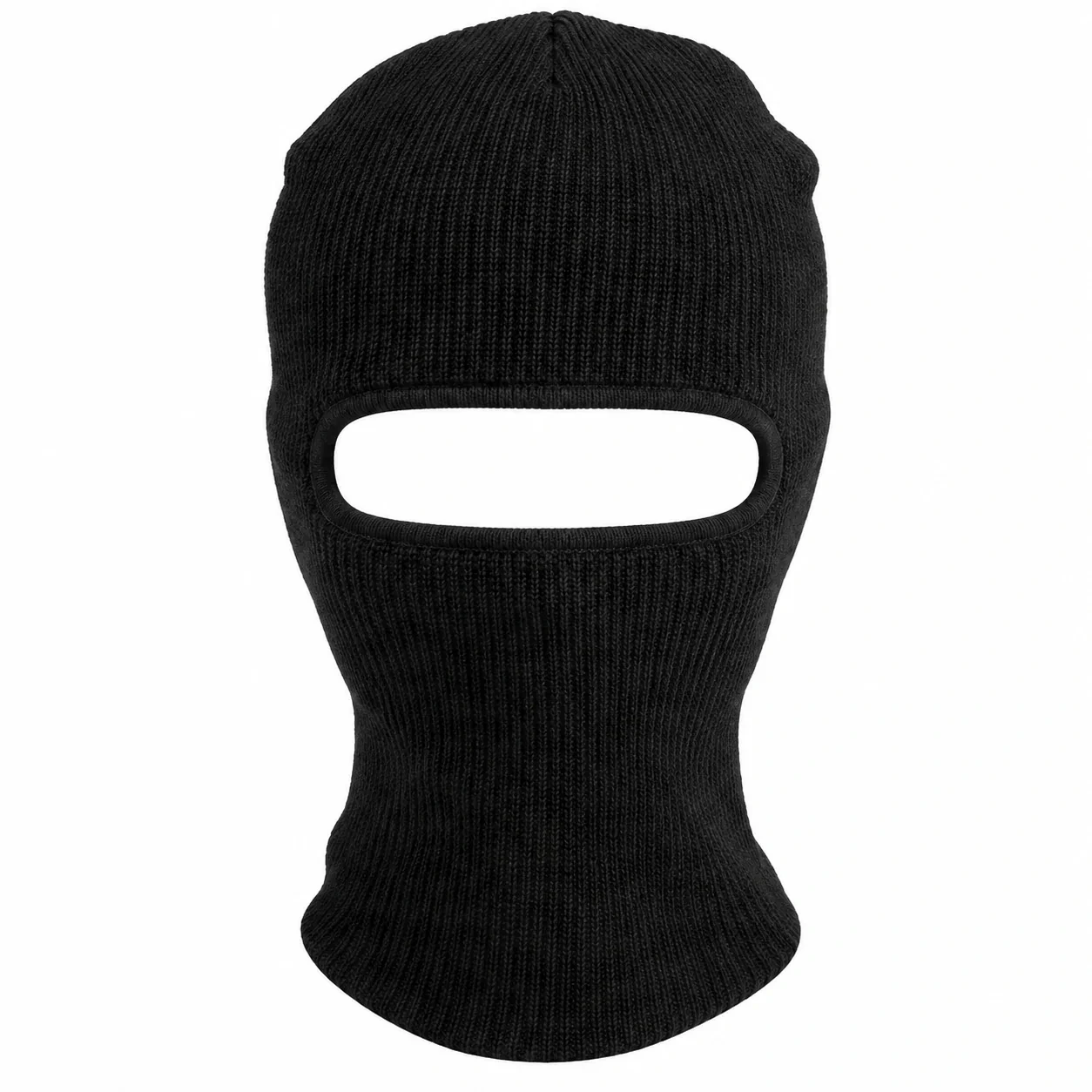
- The style or opening (one-hole, two-hole, three-hole, open face or other) and the use
- Fabric or yarn preference, or the use, so we can suggest one
- Your logo or artwork (vector files help) and where it should go
- Colours (standard shades or Pantone references)
- Quantity per design and the sizes needed (Adult, Kids or your own size chart)
- Labels, hang tags and packaging, and your delivery country
Catalogue styles start at about $4–9 per piece at 50 pieces; unit prices fall as quantities rise, and your quote confirms the price. If you want to start from one of our developed styles under your own brand, see our private label balaclava service.
Frequently asked questions
Can a manufacturer make fewer than 50 custom balaclavas?
Some workshops may, but factories usually need a minimum because each design has its own setup. Our minimum is 50 pieces per design. To check a design before ordering, a pre-paid physical sample is the usual route; see which sample you need.
Is the lowest quote the right choice?
Not necessarily. Compare what each quote includes: fabric, decoration, sample, labels, packaging and shipping. A slightly higher unit price with clear terms and a good sample is often cheaper overall than a reorder or a fix.
Does an ISO 9001 certificate mean the balaclava itself is certified?
No. ISO 9001 is a quality management certificate for a company, not a product certificate. For us: Eco Jersey Limited, which powers Mr Balaclava, is ISO 9001 certified and a Sedex member. Our certificates and materials page explains what each document covers.
Will the manufacturer’s name appear on my balaclavas?
It should not, if you are ordering under your own brand; ask this in writing. Mr Balaclava’s name never appears on your products: your brand goes on the product, labels, hang tags and packaging.
How long does a first order usually take?
With us, plan for the sample (a pre-paid physical sample takes about 5–7 days), then approximately 14 days of production after sample approval, then shipping. Express DHL, FedEx or UPS usually takes 3–6 working days. Our minimum order guide explains how quantities are counted.
Browse our balaclava catalogue, explore the Material Library, or send us your brief for a quote.