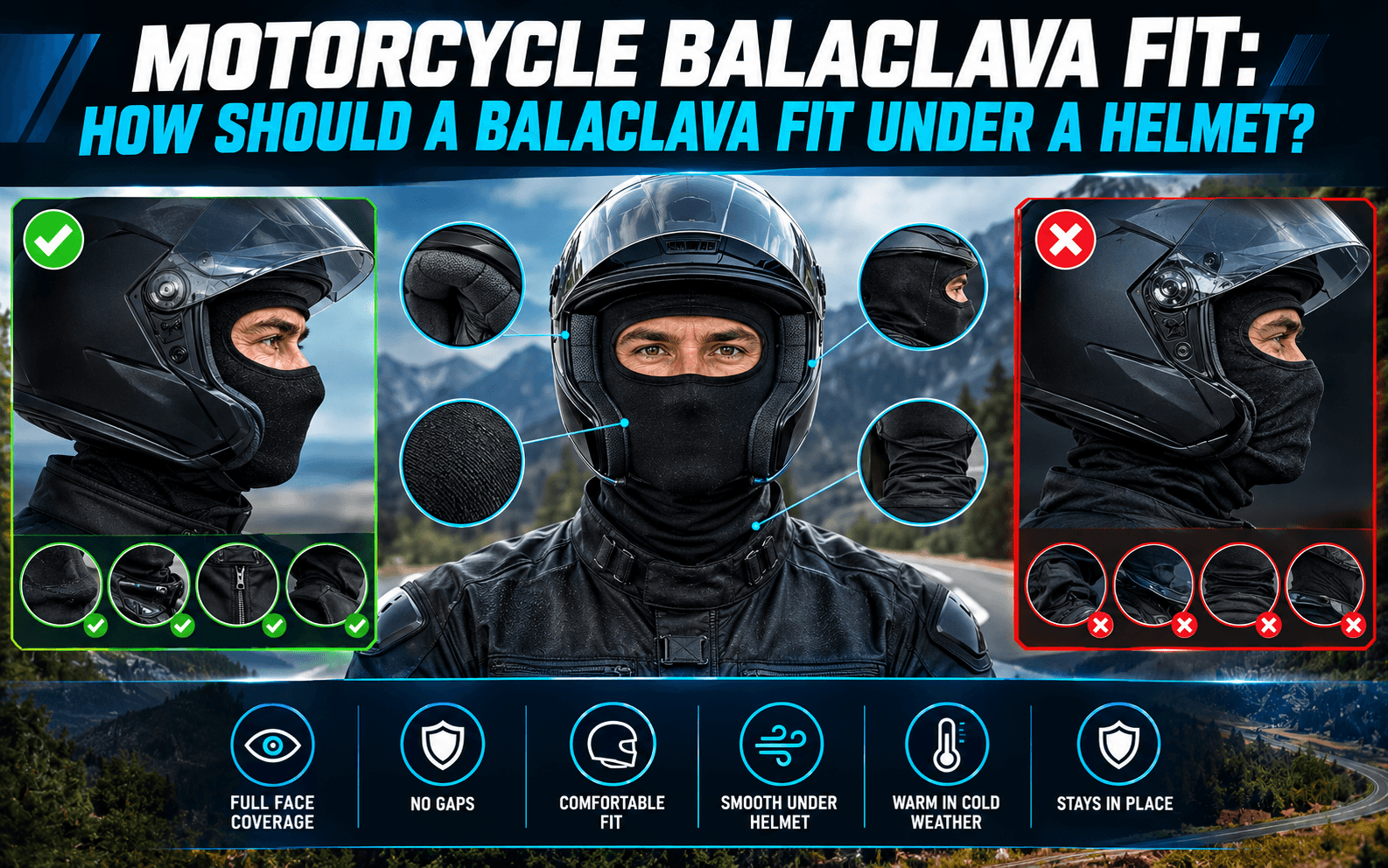
The right fit for a motorcycle balaclava is to make sure that it is close, smooth, and tight, but does not put pressure under the helmet. The fabric must conform to the head and face shape, not be within the eyes, and be flat around ears, forehead and neck. Most significantly, it shouldn’t tighten the properly-fitted motorcycle helmet any further.
Fit under a helmet also depends on how the balaclava is made; see knitted vs cut-and-sew balaclavas for seams, stretch and thickness.
Fit is important as too loose can bunch underneath the helmet padding and too tight or thick a balaclava can be uncomfortable on longer rides. Thickness, stretch, seam placement, face opening, neck coverage and helmet compatibility should all be taken into account. When the helmet is fitted correctly, a good balaclava should be barely visible.
Why Does Motorcycle Balaclava Fit Matter?
Motorcycle helmets are intended to fit snugly over the rider’s head. Things placed below it can impact comfort.
If not properly designed, a balaclava can fold over the ears, press on the forehead, or move towards the eyes. These little issues can be distracting after long hours on the throttle.
A properly fitting motorcycle helmet snugly covers the rider’s forehead and fits snugly over the helmet without being noteworthy.
How Tight Should a Motorcycle Balaclava Be?
A balaclava should fit tight, but not be tight. It must provide sufficient tension when the helmet is worn but not be constricting on the head, jaw, nose or neck.
Head and mouth movement should be normal. The cloth must be brought back to its normal position and not be loose after stretching it.
If deep marks, headaches, numbness or any uncomfortable pressure occurs, the balaclava might be the wrong size or too bulky.
Avoid Excess Fabric
Loose fabric is another issue. If the size of the balaclava is too big, the excess will form around the ears, neck, forehead and around the back of the head.
These folds can become pressure points after being compressed between helmet padding.
A correctly sized balaclava should lie flat against the head before the helmet is put on. Designs such as a European balaclava can illustrate the close-fitting construction commonly used for full head and facial coverage.
Check the Fit Around the Forehead
The forehead experiences direct contact with helmet padding, so even a small fabric fold can become uncomfortable.
The balaclava should sit smoothly across this area without thick seams or gathered material. If the garment has seams near the forehead, flatter construction is generally preferable.
After putting on your helmet, wait several minutes and check whether any unusual pressure develops.
Fit Around the Ears
Ears can easily fold when pulling on a close-fitting helmet. A balaclava can sometimes help hold them flatter, but only when the fabric itself sits correctly.
Before putting on the helmet, make sure both ears are comfortably positioned. Then slide the helmet on carefully rather than allowing the balaclava to pull or twist.
If you repeatedly need to reposition your ears, check the balaclava size, seam placement, and helmet compatibility.
Face Opening Position
The face or eye opening needs to remain stable throughout the ride.
Fabric should never creep into the rider’s vision. Peripheral vision is especially important because riders need to observe surrounding traffic and road conditions.
One-hole, two-hole, and open-face configurations can fit differently. Whatever design you choose, the edges should stay securely positioned without pulling tightly around the eyes.
Nose and Mouth Fit
Balaclavas that cover the nose and mouth require additional attention to fit.
The fabric should not press so tightly against the nose that breathing becomes uncomfortable. At the same time, excessively loose material may move around while riding.
Breathable construction around the mouth can help manage moisture from exhaled air. This is particularly useful during long rides and colder conditions.
Neck Coverage
The lower part of a balaclava should lie smoothly around the neck and preferably underneath the motorcycle jacket collar when additional weather coverage is needed.
A longer bike mask style can provide extended coverage around the head, face, and neck. However, extra fabric should not gather into thick folds underneath the jacket or helmet.
Longer coverage is particularly useful during cold and windy rides.
Fabric Thickness Changes Fit
Fabric thickness is one of the most important considerations when wearing a balaclava underneath a motorcycle helmet.
A thick winter balaclava may feel comfortable when worn alone but become restrictive once the helmet is added. Lightweight fabrics generally have less effect on helmet fit.
Winter riders should look for efficient insulation without unnecessary bulk. Summer riders usually benefit from thin, breathable, moisture-managing fabrics.
Stretch and Shape Recovery
Stretch allows a balaclava to follow different head and facial shapes. Polyester-elastane, nylon-stretch, and other performance blends can provide a close fit without requiring excessive material.
However, stretch alone is not enough. The fabric should also recover after use.
Poor shape recovery can cause the eye opening or neck section to become loose after repeated wear and washing.
Seam Placement Matters
Even when the size is correct, bulky seams can make a balaclava uncomfortable underneath a helmet.
Flatlock or low-profile seams are particularly useful around areas receiving direct helmet pressure. These include the forehead, scalp, temples, and ears.
Run your fingers over the inside of the balaclava before buying. Large ridges or rough stitching may become more noticeable once compressed by helmet padding.
How to Test Balaclava Fit With Your Helmet
Do not judge fit by wearing the balaclava alone.
Put it on and smooth out all wrinkles. Make sure the face opening, ears, and neck are correctly positioned. Then put on your motorcycle helmet as you normally would.
Keep both on for several minutes and move your head from side to side. Look upward, downward, and toward both shoulders.
There should be no new painful pressure points, blocked vision, or restricted head movement.
Signs Your Balaclava Is Too Tight
A balaclava may be too tight if you experience:
- Strong pressure around the forehead
- Jaw or facial discomfort
- Difficulty breathing normally
- Excessive pulling around the eye opening
- Neck restriction
- Headaches during longer use
- Deep pressure marks after removal
Remember that the helmet will add additional compression.
Signs Your Balaclava Is Too Loose
Loose fit creates different problems. Warning signs include fabric sliding toward the eyes, folds forming under the helmet, the neck section moving upward, or the face opening constantly changing position.
Loose material can also make putting the helmet on more difficult because the helmet lining may drag the fabric backward.
The ideal motorcycle balaclava fit should remain stable without constant adjustment.
Does Balaclava Style Affect Fit?
Yes. Different balaclava configurations provide different levels of facial coverage.
One-hole styles generally create continuous coverage around most of the face. Open-face designs expose a larger area, while convertible versions may provide greater adjustment.
Regional terminology can also differ. Terms such as ski mask and other informal names may describe similar garments. This guide to balaclava nicknames explains some of the different names used for balaclava-style headwear.
Regardless of the name, motorcycle use requires a helmet-friendly fit.
Summer vs Winter Fit
Summer balaclavas should normally be lightweight and breathable. Their thin construction makes them easier to wear underneath close-fitting helmets.
Winter versions require insulation, but riders should avoid excessive thickness. A thin thermal material may work better underneath a helmet than a bulky traditional fleece mask.
Seasonal fabric changes can therefore affect sizing. Do not assume that a thick winter balaclava will fit exactly like your lightweight summer version.
Common Fit Mistakes
A common mistake is buying a balaclava based only on head circumference. Head shape, fabric stretch, face-opening design, seam placement, and neck construction also affect comfort.
Another mistake is assuming tighter means better. The garment needs to remain secure, but excessive compression provides no meaningful advantage.
Riders should also avoid adjusting a balaclava while actively riding. If something moves into your vision or becomes seriously uncomfortable, stop safely before correcting it.
Motorcycle Balaclava Fit Checklist
Before riding, check:
- Fabric lies flat against the head
- No wrinkles underneath helmet padding
- Ears remain comfortable
- Face opening stays securely positioned
- Peripheral vision remains clear
- Breathing feels normal
- Seams do not create pressure
- Neck fabric lies smoothly
- Helmet still fits as intended
- Head movement remains unrestricted
- Fabric does not slide during normal movement
Conclusion
The correct motorcycle balaclava fit should be snug, smooth, and stable without feeling restrictive. Fabric should lie flat around the forehead, ears, face, and neck, while the eye opening should remain safely away from the rider’s vision.
Thickness, stretch, seams, and fabric choice are just as important as size. Most importantly, always evaluate the balaclava while wearing your actual motorcycle helmet.
A good motorcycle balaclava fit should add comfort without noticeably changing helmet positioning, restricting breathing, blocking vision, or creating pressure points during the ride.
FAQs
Should a motorcycle balaclava be tight?
It should be snug enough to stay in place but not so tight that it creates pressure, restricts breathing, or becomes uncomfortable.
Should a balaclava cover the nose?
It depends on the design and weather. Some cover the nose and mouth, while others provide a larger facial opening. Neither configuration should interfere with breathing or vision.
Can a balaclava make my helmet too tight?
Yes. A thick balaclava can add material underneath helmet padding. If the helmet becomes painfully tight or sits differently, the combination may be unsuitable.