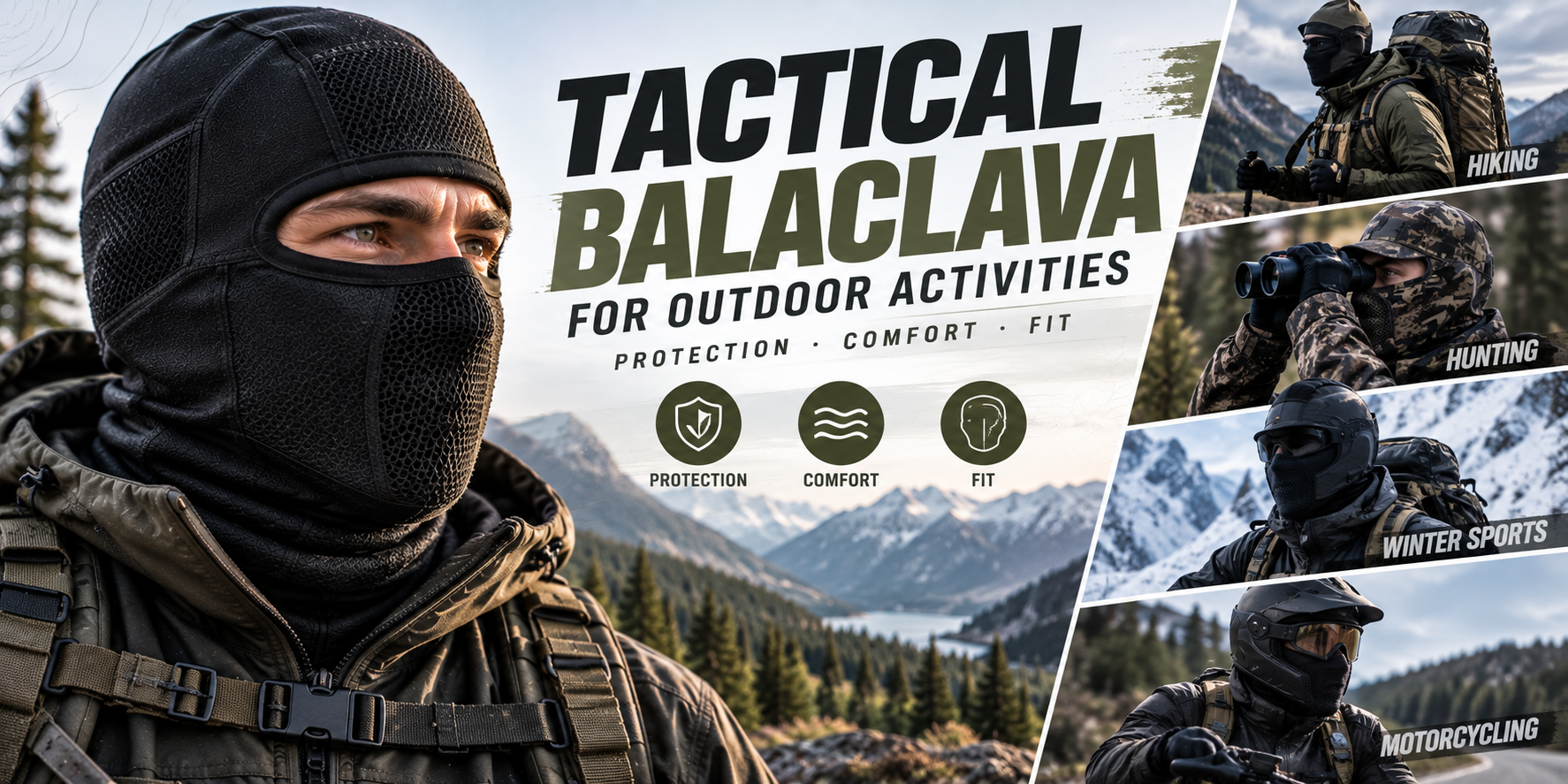
A tactical balaclava for outdoor activities for outdoor use should cover the face, head, ears and neck and be comfortable to wear in varying weather conditions. Performance cannot be judged by one feature alone, as outdoor use can involve hiking, cycling, camping, climbing, winter sports, trail activities and outdoor work. Rather, seek breathable fabric, moisture management, a snug fit, appropriate weather protection, and helmet or headwear compatibility. Furthermore, the weight of the fabric should correspond to the activity and the climate.
The first step is to choose the right fabric
Fabric is the key to warmth, air flow, drying time, stretch and comfort. Lightweight polyester-spandex blends are suitable for active wear as they tend to dry rapidly and move with the head. In cooler weather, merino wool can regulate temperature, and in winter, fleece can be used for greater insulation. So, a tactical balaclava for outdoor use should be made of fabric that is appropriate to the environment, not just the thickest fabric that is available. Furthermore, soft inner surfaces can minimize irritation over extended wear times.
Breathability is important when moving.
Tactical balaclava for outdoor activities quickly increases body temperature. Even in cool weather, hiking up hill, cycling, carrying equipment, or climbing can generate a lot of heat. Thus, breathable construction allows warm air and moisture to escape before the face covering becomes uncomfortable. Ventilation around the mouth and nose can also enhance airflow without revealing the entire face. Our outdoor guide tells you how face and neck protection can help you hike, bike, camp and more.
Moisture control ensures the fabric remains comfortable to wear
During active movement, sweat accumulates around the forehead, scalp, nose and neck. Therefore, moisture-wicking materials are crucial if you are going to wear a balaclava for a long period of time. Technical synthetics are able to transport moisture from the skin and typically dry more quickly than regular cotton. Furthermore, quicker drying can enhance comfort during transitions from high-intensity activity to rest. A tactical balaclava for outdoor use should therefore be sweat management without being heavy or damp.
Ensure that the weather protection is balanced with airflow.
A balaclava should be sufficiently protective of the environment without retaining too much heat. Wind-resistant fabric can be used to shield the cheeks, ears and neck during outdoor activities where there is exposure, and lighter panels can enhance ventilation around the lower face. But for those who are constantly on the go, maximum insulation might not be the best option. So, select weather protection based on anticipated weather. In colder climates, an extreme balaclava demonstrates the synergy of full-face coverage, moisture management, ventilation, and thermal protection.
Pick a secure, yet flexible fit
A loose face covering can move around when you turn your head, run, cycle, or climb. However, too tight can lead to pressure around the jaw, ears and forehead. A tactical balaclava for outdoor use should be close fitting and yet allow for natural movement. Elastane or spandex fibers can enhance flexibility and shape recovery. Furthermore, a secure fit prevents cold air from entering through gaps and prevents the material from shifting under other equipment.
Ensure that helmets and headwear are compatible.
A balaclava may be worn under a helmet by cyclists, climbers, winter-sports participants and some outdoor workers. So, thickness and seam placement are important. Heavy material around the temples or crown can cause pressure and discomfort, and high stitching can rub against the skin. Low profile construction and flat seams tend to be more comfortable under helmets. Furthermore, the fabric should not be folded around the ears or forehead when the helmet is put on.
Consider face and neck coverage
The coverage should be appropriate to the activity and weather. Full-face designs provide more protection from wind, cold, dust and outdoor exposure, and convertible designs can allow more airflow when it gets warmer. So, a tactical balaclava for outdoor use should provide adequate coverage without obstructing your view or breathing. Long neck panels can also be tucked under the collars of jackets to minimize exposed gaps. In the meantime, a well-designed eye opening can fit comfortably with glasses or protective eyewear.
If possible, adapt to changing outdoor conditions
Weather conditions outdoors can change rapidly, especially in mountainous and open areas. A cool morning can turn warm during activity, and stronger wind can come later in the day. Thus, flexibility in construction is useful. Lightweight materials tend to conform more easily to varying activity levels, and convertible coverage offers extra versatility. Our balaclava uses article explains how to use a balaclava for outdoor sports like cycling, running, skiing, and mountain activities, as well as the advantages of moisture-wicking and breathable designs.
Look for Durable Construction
Fabric is subjected to sweat, repeated stretching, washing, friction and jacket or equipment contact when used outdoors. So, good seams and durable materials keep performance high. The edges around the face opening can also be reinforced to prevent stretching over time. But the fabric should not be too stiff or heavy due to durability. When it comes to outdoor use, the perfect tactical balaclava is one that is tough yet flexible, particularly if you’re going to wear it often in various settings.
Choose the thickness that suits your level of activity
Lightweight balaclavas are generally more effective for running, cycling, hiking, and other high-intensity outdoor activities, as they allow for better heat dissipation. Medium weight options are useful in cooler weather, and knitted or fleece styles are more insulating in colder weather. So, take into account weather and movement when choosing thickness. Someone standing outside for a long time will require more insulation than a person climbing a steep trail in the same temperature.
Consider an Outdoor-Specific Product
Knitted construction may be preferred by users who require more warmth for winter recreation or outdoor work. The outdoor balaclava is designed for outdoor, tactical and winter use, offering full coverage with breathable, stretchable construction. But heavier knitted fabric can be warmer than lightweight technical material. So, select this type of construction when heat and wind protection are more important than maximum ventilation.
Comfort Matters During Long Wear
Small fit problems become more noticeable after several hours outdoors. Rough seams, tight openings, excessive neck fabric, or poor ventilation can quickly reduce comfort. Therefore, the tactical balaclava for outdoor activities you choose should feel smooth against the skin and allow easy breathing. Moreover, the material should remain secure without constant adjustment. Testing the balaclava with your normal jacket, eyewear, and helmet can help reveal fit problems before a longer outdoor trip.
Final Thoughts
The best tactical balaclava for outdoor activities balances protection, comfort, fit, breathability, moisture management, and durability. Instead of choosing only by appearance or fabric thickness, consider the weather, activity level, headwear, and amount of face coverage you need. Lightweight technical fabrics can support active movement, while warmer knitted or fleece designs suit colder conditions. Moreover, smooth seams, flexible stretch, and extended neck coverage can improve long-term comfort. When these features work together, the balaclava can become a practical part of your outdoor clothing system.
FAQs
What material works best for outdoor tactical use?
Polyester-spandex blends work well for active use because they provide stretch, breathability, and quick drying. Meanwhile, fleece and merino wool can provide additional warmth in colder weather.
Can I wear a tactical balaclava while hiking?
Yes. A lightweight, breathable design can protect your face and neck from wind, dust, and changing weather while allowing moisture to escape during movement.
Should an outdoor balaclava fit tightly?
It should fit snugly without creating uncomfortable pressure. Therefore, flexible fabric with good stretch recovery usually provides the most practical fit.