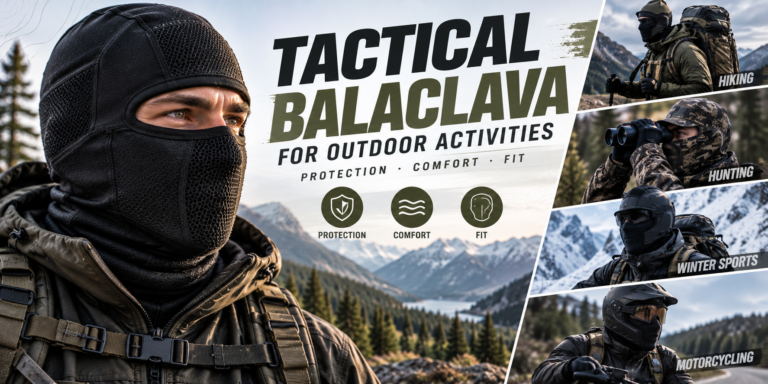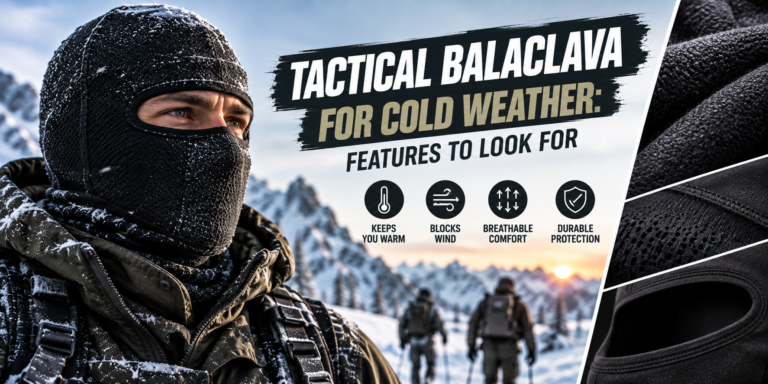

A military tactical balaclava should offer secure coverage of the face and neck, while ensuring comfort, mobility, and compatibility with protective gear. Breathable fabric, moisture management, low-profile seams, secure fit, durable construction, and environmental protection are the most critical features. Furthermore, the type of material should be appropriate for the environment, as cold climates, warm environments, and specific work environments have different needs. So, buyers should not only consider the looks but also the functionality of the product.
Select materials that are suitable for the environment.
The performance of a balaclava is influenced by the material in nearly every aspect. Lightweight polyester and nylon blends can provide quick drying, durability, and good moisture management during active use. Meanwhile, merino wool provides natural temperature regulation in changing weather. Fleece offers more insulation in colder weather, but may be too hot when working hard. So, the ideal military tactical hat should be suitable for the climate and activity level rather than a single fabric for all situations.
When using the product, focus on breathability.
Even in relatively cool conditions, physical activity generates heat. Therefore, a balaclava should allow sufficient ventilation to avoid the accumulation of heat around the head and face. Breathable panels around the mouth and nose can enhance comfort, and more durable fabric can shield the forehead, ears and neck. Also, moisture should be able to drain away without leaving large areas of skin unnecessarily exposed. Our military guide covers the various fabrics and constructions used for different military applications.
Pay attention to effective moisture management.
A face covering can become uncomfortable very quickly during prolonged activity. So moisture wicking fabric is a crucial feature of a tactical balaclava for military use. Technical synthetic fibers can wick sweat away from the skin and dry more quickly than many absorbent materials. Furthermore, proper moisture control keeps the fabric comfortable as activity levels fluctuate often. While cotton is soft, it can hold moisture longer, making performance blends more appropriate for challenging outdoor environments.
Ensure that helmets are compatible.
Balaclavas are frequently worn under helmets, headsets, goggles, or other protective gear. So, large stitching and heavy material on the forehead or around the ears can cause pressure points. A low profile with flat seams typically offers a more seamless layer under hats. Furthermore, stretch allows the fabric to conform to the shape of the head without creating loose folds. There is a lot of information available on the helmet guide about why thinner, moisture managing designs can work better under helmets.
Ensure the fit and stability of the device.
A military tactical balaclava should stay in place when the wearer turns his head, communicates, or adjusts equipment. Loose fabric may fall over the eyes or mouth, and a too tight fit can cause discomfort. So, manufacturers tend to incorporate stretch fibers to achieve a snug but comfortable fit. Also, the neck section should remain stationary rather than pulling up during movement. A well-fitted balaclava should allow for natural head, neck and jaw movement without constant adjustment.
Think about face and neck coverage.
The amount of coverage needed varies from environment to environment. Full-face styles offer more protection from wind, dust and cold, while open or convertible designs can offer more ventilation. So, the tactical military headgear you select should be suitable for the conditions you are likely to encounter. Longer neck coverage can also be tucked under outer garments and minimize exposed gaps. Furthermore, a shaped eye opening should allow for good visibility without leaving too much loose fabric around goggles or other eyewear.
Choose a tactical-specific design.
While the materials used in general winter hats and tactical hats may be similar, tactical hats tend to be more durable, compatible with other gear, ventilated, and offer more options for coverage. The dedicated tactical range offers choices based on fabric, ventilation, coverage, and outdoor use. So, when looking at construction details, buyers can make an educated guess about whether a design is suitable for active outdoor use, colder climates, or specific equipment configurations.
When it comes to repeated use, durability is a key consideration.
Fabric and stitching can be stressed by frequent movement, washing, sweat, friction and contact with other equipment. So, when choosing a tactical balaclava for military use, it is important to consider its durability. Reinforced openings may help to keep the shape, and good stretch fabric should bounce back after use. Moreover, seams should remain smooth and secure instead of becoming rough against the skin. However, durability does not need to be achieved by making the fabric too thick, as lightweight technical fabrics can be just as effective when manufactured correctly.
Consider thermal protection.
In cold environments, sufficient insulation is needed to keep the ears, cheeks, forehead and neck warm. But if it is too thick, it can cause overheating during heavy exercise. Thus, thermal protection should be proportional to both temperature and movement. Lightweight layers are good for active conditions, heavier knitted or fleece layers for lower temperatures or slower activity. Also, layering offers greater versatility than a single very heavy balaclava.
Consider a Full-Coverage Tactical Product
For some, a traditional one-hole design might be preferable as it offers wide coverage of the face and head with an open eye area. A tactical mask is an example of a full coverage knitted mask designed for tactical use and outdoor activities. Buyers should still take into account temperature and activity, though, as knitted construction can offer more warmth than a lightweight technical fabric. So, the choice of product should always be based on the anticipated environment.
Specialized protection requires specific materials.
Some workplaces might need flame resistant or other special fabrics. In these instances, buyers should review the product specifications and standards for the product in question, and not assume that ordinary synthetic fabric will offer adequate protection. Thus, a tactical balaclava for military use designed for a particular hazard should be designed to address the needs of that hazard. For general outdoor users, however, breathability, moisture management, durability, comfort and weather protection are more important.
Final Thoughts
The right tactical balaclava for military use should balance fabric performance, breathability, moisture control, durability, coverage, and compatibility with helmets or other equipment. Therefore, avoid choosing a design based only on thickness or appearance. Instead, consider the climate, activity level, equipment setup, and required protection. Moreover, look for smooth seams, secure stretch, effective ventilation, and enough neck coverage for the conditions. A carefully selected design can provide practical comfort and protection without creating unnecessary bulk.
FAQs
What fabric works best for military-style balaclavas?
Technical polyester and nylon blends can provide quick drying and durability, while merino wool offers temperature control. Fleece can provide additional warmth during colder conditions.
Should a tactical balaclava fit tightly?
It should fit snugly without restricting movement or breathing. Moreover, enough stretch should keep the fabric secure without creating uncomfortable pressure.
Can a tactical balaclava fit under a helmet?
Yes. However, low-profile fabric and flat seams generally work better because they reduce bulk and pressure beneath protective headgear.