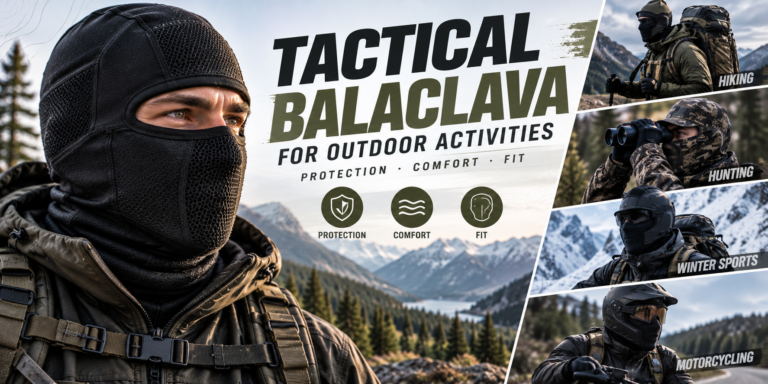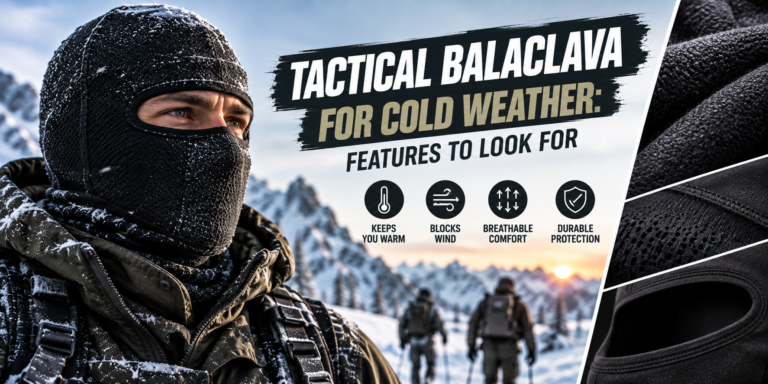
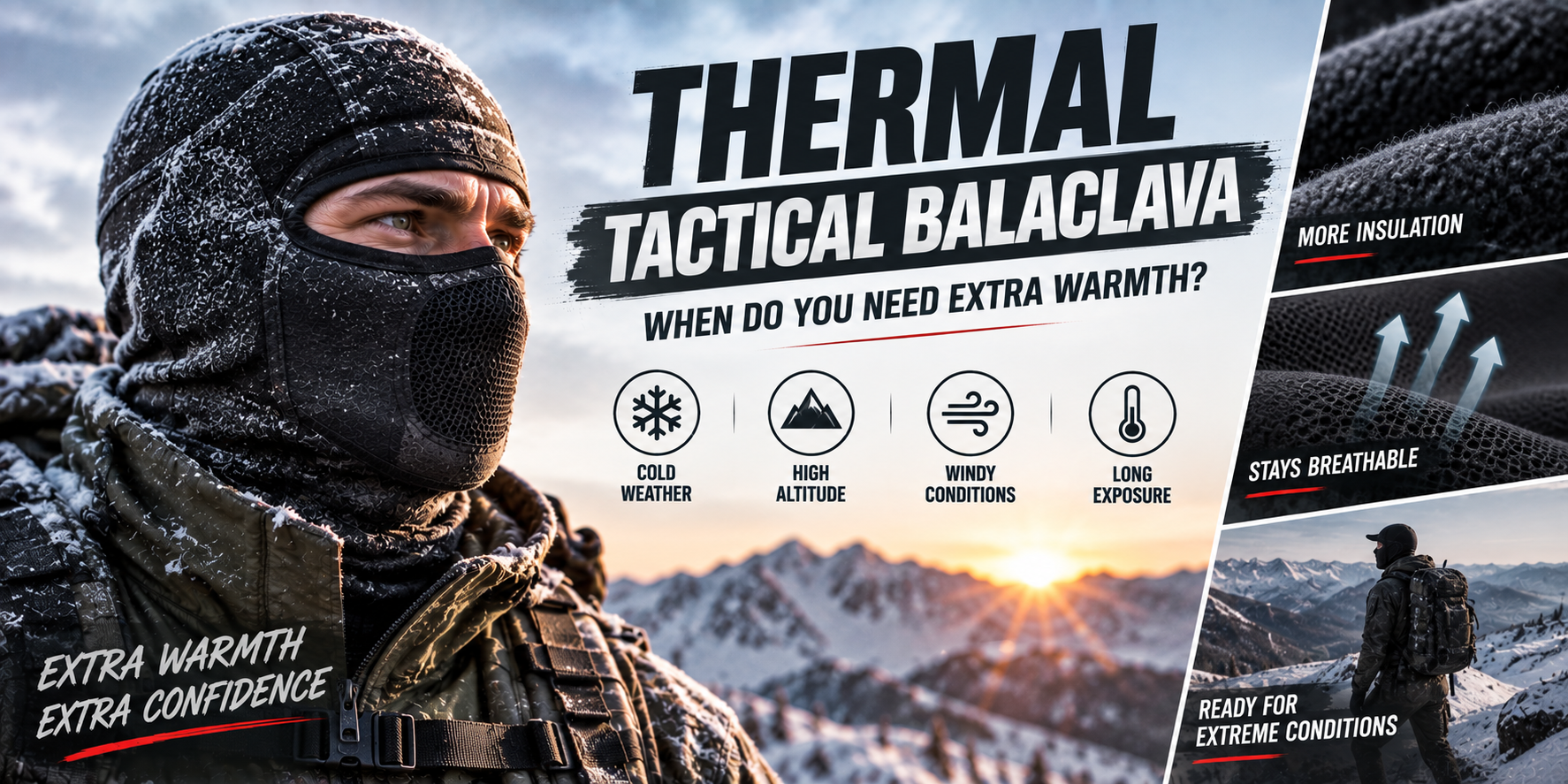
A thermal tactical balaclava is an additional layer of insulation when normal lightweight face coverings are not sufficient for low temperatures, strong wind, or extended outdoor exposure. It should cover the head, ears, cheeks, neck and lower face, but not interfere with breathing or movement. But sometimes, more heat does not necessarily mean the thickest fabric. Insulation should be matched to the temperature, wind exposure, activity level, and equipment to be worn. So, the best thermal protection is achieved when there is a balance between warmth, breathability, moisture control and fit.
In some cases, additional thermal protection is required
A thermal tactical balaclava may be required when temperatures are below freezing, wind exposure is high, or when you are outside for long periods of time with little movement. Heat loss can be increased by cold weather patrols, winter hiking, outdoor work, mountain activities, and extended periods of inactivity. Furthermore, wind can cause exposed skin to feel much colder than the temperature actually is. Thus, extra insulation is helpful when a light mask is not sufficient around the ears, cheeks, forehead and neck.
Understand how thermal insulation works
Thermal fabrics hold small pockets of warm air near the body. This can be achieved with fleece, wool, brushed synthetics, and insulated technical fabrics. Each material, however, has a different insulation, weight and breathability. For more information on how fleece, wool and insulated synthetic materials offer additional warmth in low temperatures and high wind, read our thermal guide. So, don’t just look at the thickness of the fabric to determine how warm it will be.
Consider Wind Exposure
In open areas, mountains, winter roads, and exposed work areas, wind can quickly diminish comfort. Thus, a thermal tactical balaclava should be tight enough to prevent cold air from seeping in around the cheeks and neck. Some thermal designs feature an inner layer of insulation and an outer layer of denser fabric to provide extra wind resistance. Furthermore, longer neck coverage can fit under a jacket collar and seal gaps where cold air typically enters. This can offer more comprehensive protection without the need for multiple accessories.
Match the warmth to the activity level
When selecting thermal gear, activity level is a significant factor. Running, climbing, hiking, or intensive training generates much more body heat than standing, observing, or working at a slower pace. So, if the insulation is heavy, it can overheat during prolonged travel. However, lower intensity outdoor use may need more warmth as your body generates less heat. A thermal tactical balaclava should be warm enough when you are not moving, but not too hot when you begin to move.
Balance Warmth With Breathability
Even when the fabric is warm, it must still give off heat and moisture. Otherwise, the sweat will build up against the skin and cause the mask to become wet. So breathable fleece, merino wool or technical synthetic fabrics are usually more effective than dense fabrics that hold all moisture. Furthermore, breathing may be easier around the mouth and nose. A helpful winter guide explains how balaclavas protect the face and neck during skiing, snowstorms, commuting and other winter conditions.
Pay attention to effective moisture control
When temperatures are low, sweat can make for an uncomfortable experience. Thus, a thermal tactical balaclava should wick sweat away from the skin and dry effectively. Technical polyester blends can dry quickly, and merino wool can absorb moisture and still offer beneficial insulation. Additionally, moisture control is especially crucial if your activity level changes during the day. Sweating during walking and then cooling down when you stop can make walking more uncomfortable, so it can be more comfortable to keep the inner surface drier.
Choose the Right Fabric Weight
Light thermal fabrics are suitable for moderate insulation with minimal bulk. Medium weight materials can be used for general outdoor use in the winter, while heavier fleece or wool constructions can offer greater warmth in harsh weather. Thick fabric can, however, interfere with helmets, hoods or eyewear. So, select fabric weight based on temperature and equipment. The right thermal tactical balaclava should not put pressure on the temples, forehead or ears when worn, but should keep the head warm.
Consider Extreme Cold Conditions
Severe winter exposure may require more than a standard lightweight tactical mask. As the temperature drops, full-face coverage, insulating layers, wind resistance and controlled ventilation become more important. For extremely cold conditions, an extreme balaclava is an example of a design that incorporates thermal fleece, wind resistance, moisture management, and ventilation. Thus, this type of construction can be appropriate for users who are exposed to severe winter weather for long periods of time.
Ensure it fits under other equipment.
Balaclavas can be worn with helmets, winter hats, goggles, hearing protection, or jacket hoods for tactical and outdoor use. So, smooth seams and low bulk construction are important. A thermal tactical balaclava should not fold under headgear. Stretch also helps the fabric conform to the shape of the head and provides ease of movement. Furthermore, the face opening must be consistent and not obstruct the view or glasses while in use.
Determine when a heavier design is appropriate
Heavier thermal construction is suitable for very low temperature, strong wind, long outdoor session or activity with frequent stationary time. It can be too much in mild weather or heavy exercise, though. So, think about the amount of time you spend moving versus standing. A warm knitted balaclava offers fleece and wool choices for winter sports and outdoor work where insulation is a key factor.
Do not overlook the importance of face and neck fit.
If there are large gaps between the fabric and the skin, the warm fabric will not work well if cold wind can blow through. So, look for fit around the cheeks, ears, jaw and neck. Stretch should be tight but not tight enough to cause discomfort. Furthermore, long neck coverage can provide better protection by being placed under outer garments. The eye and mouth openings should also retain their form when moving. A secure design will enhance warmth and comfort and minimize the need for constant adjustments.
Do Not Ignore Face and Neck Fit
A warm fabric cannot perform effectively if large gaps allow cold wind to reach the skin. Therefore, check the fit around the cheeks, ears, jaw, and neck. Stretch should keep the fabric close without creating uncomfortable pressure. Moreover, extended neck coverage can improve protection by sitting underneath outer clothing. The eye and mouth openings should also maintain their shape during movement. A secure design improves both warmth and comfort while reducing the need for constant adjustment.
Final Thoughts
A thermal tactical balaclava becomes useful when cold temperatures, wind, reduced activity, or extended outdoor exposure demand more insulation than a lightweight tactical mask can provide. However, extra warmth should not come at the expense of breathability, moisture control, movement, or equipment compatibility. Therefore, compare fabric type, weight, wind resistance, coverage, and fit before choosing. Fleece and wool can provide strong insulation, while technical fabrics may offer better moisture management and lower bulk. The right thermal tactical balaclava should keep you warm while still allowing comfortable movement throughout changing winter conditions.
FAQs
When should I use a thermal tactical balaclava?
Use one during freezing temperatures, strong wind, extended winter exposure, or lower-intensity outdoor activities where a lightweight face covering does not provide enough warmth.
Is fleece good for thermal balaclavas?
Yes. Fleece traps warm air efficiently while remaining relatively lightweight. However, very thick fleece may feel too warm during intense physical activity.
Is wool warmer than synthetic fabric?
Wool can provide strong natural insulation and moisture management. However, technical synthetic fabrics may dry faster and can offer lower bulk for helmet use.