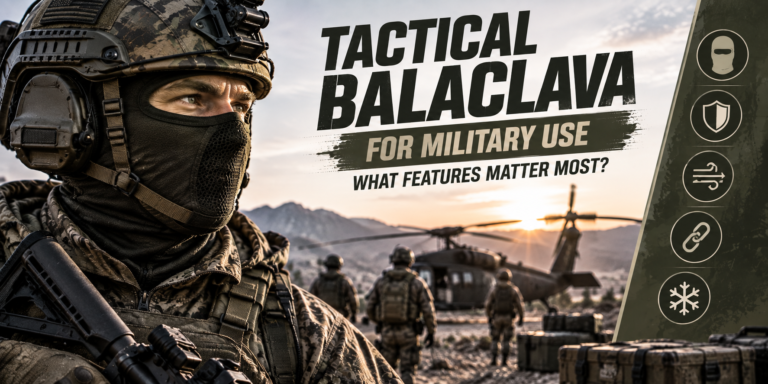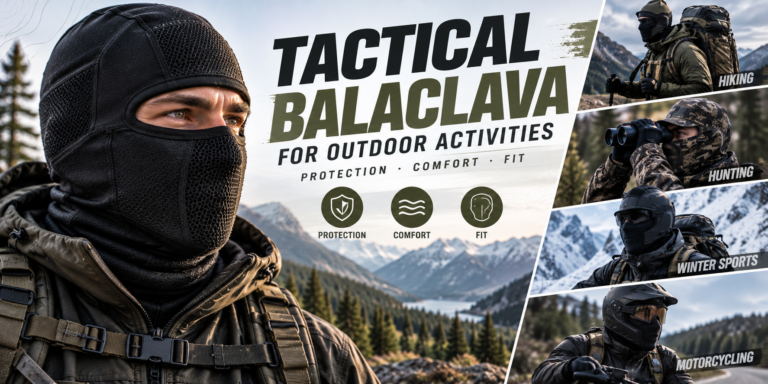

A tactical balaclava for cold weather should cover the head, ears, face and neck and allow for easy movement outside. The right design is a combination of thermal insulation, wind protection, moisture control, breathability and a secure fit. Furthermore, it should fit easily with helmets, hoods or other outdoor gear. Cold weather activities can involve a lot of movement and a lot of time in the cold, so you need a balaclava that will keep you warm without trapping too much heat and sweat.
Select the appropriate level of thermal insulation.
When the temperature drops, insulation is a big factor. But don’t always go for the thickest fabric you can find. A heavy material can be warm when not in use, but can overheat when hiking, climbing, cycling or training outdoors. So, select insulation based on temperature and activity. Fleece, merino wool and brushed synthetic fabrics can all offer helpful warmth. Also, our thermal guide covers when extra insulation is helpful in the winter when it gets tough.
Seek effective wind protection
Exposed areas, particularly around the cheeks, ears, jaw and neck, can lose heat rapidly in cold wind. So a tactical balaclava for cold weather should be close to the skin and minimise gaps for air to move through. Exposed areas can be protected with dense fabric, and lighter panels around the mouth can facilitate breathing. Furthermore, long neck coverage can fit under a jacket collar and minimize cold gaps between layers of clothing.
Breathability is important when it comes to outdoor activity
Even in freezing temperatures, your body generates heat when you are active. So breathability is as important as insulation. A tactical balaclava that is breathable lets warm air and moisture vapor out rather than building up against your head and face. But over-ventilation can decrease protection in high winds. Therefore, search for a balanced design that allows air to flow around the nose and mouth, but still covers the forehead, cheeks and ears.
Moisture-wicking fabric helps keep you drier.
Cold weather equipment can be uncomfortable if it retains moisture against the skin. So, the tactical balaclava for cold weather you select should be made of moisture managing material if possible. Polyester blends and merino wool are good at moving or managing moisture, and many technical synthetics dry quickly. Cotton, on the other hand, will hold moisture longer. Therefore, performance fabrics tend to perform better in strenuous outdoor exercise when your body temperature fluctuates often.
Ensure it fits under a helmet.
Tactical balaclava hats are worn under helmets, protective headgear, or winter hats. So, large seams and thick layers can put pressure on the forehead, temples and ears. A low profile construction typically offers a more seamless fit. Furthermore, flat seams can minimize rubbing during long-term use. Our helmet guide explains how a close-fitting balaclava should sit under protective headgear without bunching or causing unnecessary pressure.
Check face and neck coverage
The coverage should be similar to the weather and the activity you plan to do. For instance, a full face design can shield the forehead, ears, cheeks, chin and neck from freezing or windy weather. In the meantime, convertible designs enable you to lower part of the face covering when more ventilation is required. So, a tactical balaclava for cold weather should offer sufficient coverage without compromising breathing, vision, or mobility. Furthermore, a longer neck section will remain inside your jacket when you turn your head.
Consider an Extreme-Cold Design
Protection is more needed in very cold weather than in mild winter weather. So, people who spend extended time outdoors might require more insulation, more coverage, and more wind resistance. For features that are geared towards extreme cold weather exposure, such as thermal coverage and moisture management, an extreme balaclava can serve as a helpful guide. But heavier models can be too hot for high-intensity exercise, so always match the design to the environment.
Look for Stretch and a Secure Fit
A tactical balaclava should stay in place when you turn your head, move quickly, or adjust other equipment. So, stretch fabric can enhance comfort and security. The material should conform to the shape of your head and face, but not be too tight. Furthermore, a secure fit will minimize loose fabric that may bunch under a helmet or let cold air in. The ideal tactical balaclava for cold weather should be close and supportive, yet still allow for natural jaw, neck and facial movement.
Select fabric according to the weather
Different materials provide different benefits. Fleece is warm and soft, and synthetic fabrics can be moisture control, stretch and dry quickly. Merino wool, on the other hand, offers insulation and natural temperature regulation. So, the selection should be based on weather, activity level and anticipated wear time. For those who prefer full coverage, warmth, moisture management, and comfort in cold outdoor conditions, a merino mask may be the right choice.
Pay attention to the mouth and nose area.
Covered face area can generate heat and moisture during breathing. Thus, the mouth and nose parts must have sufficient air flow to avoid excessive moisture. Some designs feature thinner panels or ventilation areas that are shaped to control exhaled air. Furthermore, improved air flow can help to minimize moisture to glasses or goggles. Very open designs, however, may leave more skin exposed to the freezing wind, so the tactical balaclava for cold weather should be a compromise between ventilation and protection.
Durability is important for outdoor use
Outdoor equipment is stretched, sweated, dusted, rubbed and washed often. So, good stitching and resilient fabric can extend useful life. Reinforced openings can also help the balaclava retain its shape. Furthermore, quality stretch material should not loosen after repeated use. But a durable design doesn’t have to be cumbersome. Rather, search for construction that is strong, flexible, and comfortable.
Final Thoughts
When selecting a tactical balaclava for cold weather, it’s not just about the thickness or the look. Insulation, wind resistance, breathability, moisture control, helmet compatibility, coverage, stretch, and durability should be compared. Also, take into account the amount of physical activity you anticipate, as active users tend to require more ventilation than those who are not moving outside.
FAQs