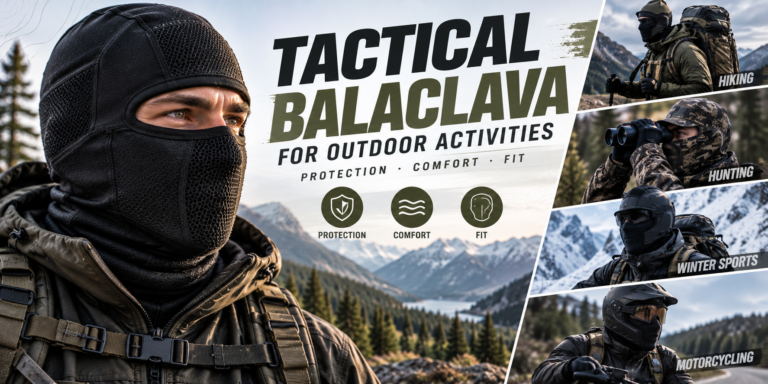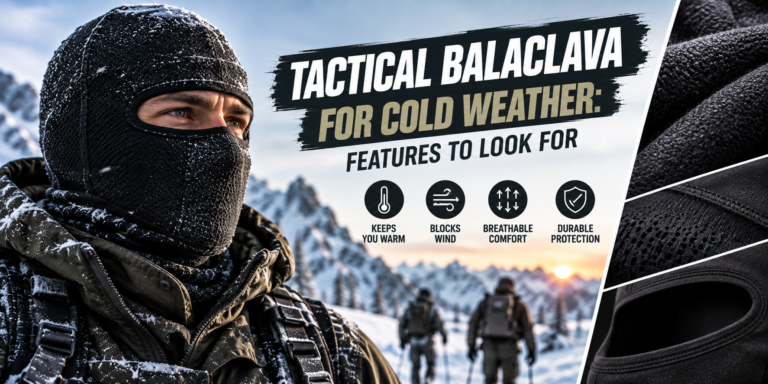
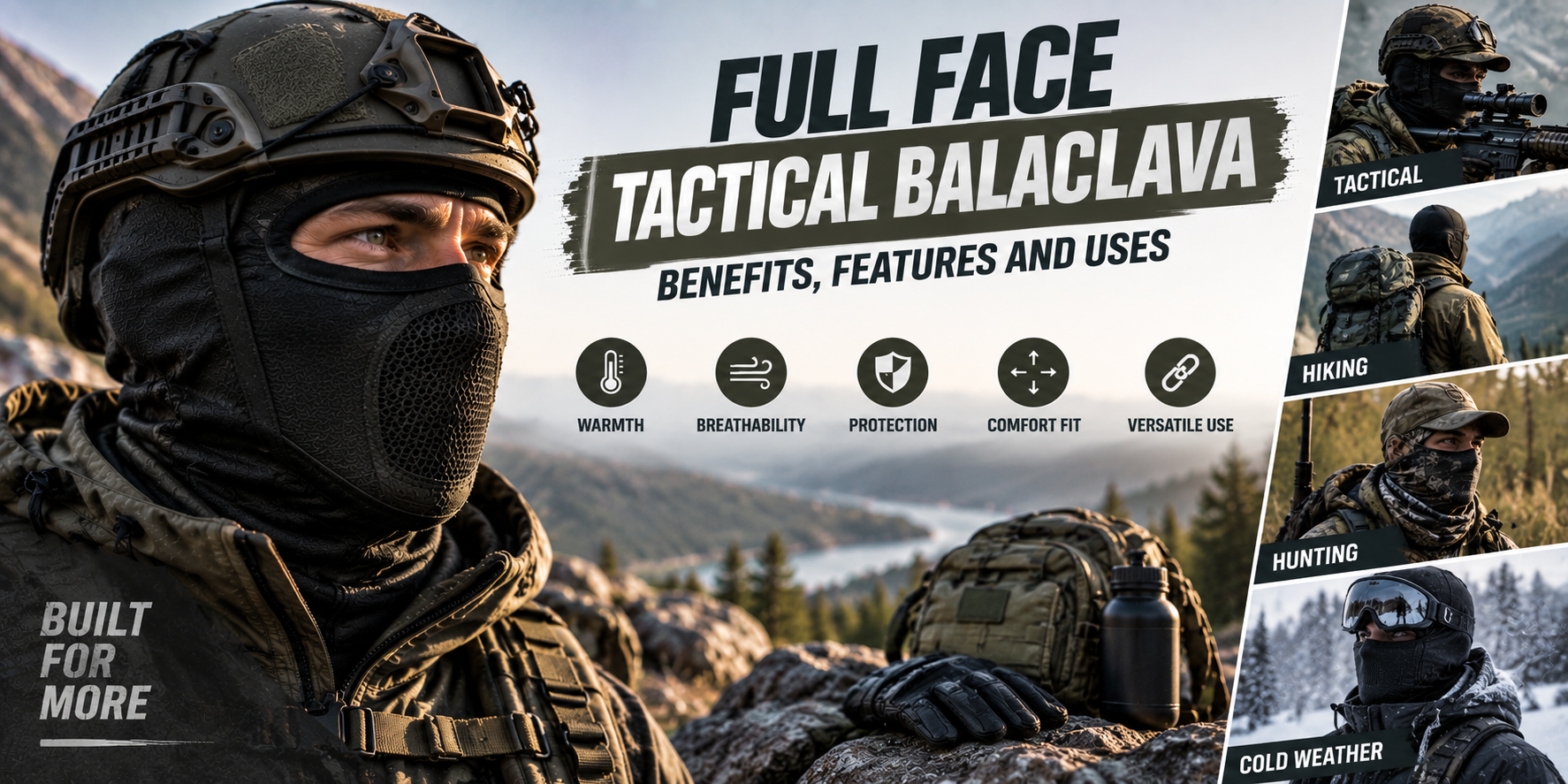
A full face tactical balaclava offers wide coverage for the head, face, ears and neck and is suitable for outdoor, tactical, winter and active use. It does not expose as much skin to wind, dust, cold air and changing weather as open face designs do. But comfort is not just about coverage. Breathability, moisture management, stretch, fabric thickness, helmet compatibility and fit are also important factors to take into account. So, selecting the right design involves a compromise between protection and sufficient ventilation and mobility for your activity.
If you are choosing between styles, our comparison of one-hole, two-hole, three-hole and open-face balaclavas covers breathing, goggles and helmet fit.
Full Face Coverage offers greater protection.
One of the main benefits of a full face tactical balaclava is the amount of skin it covers. Most designs cover the forehead, cheeks, chin, ears, scalp and neck, but leave an opening around the eyes. So they can offer valuable protection in cold weather, outdoor work, cycling, hiking, and tactical applications. Also, long neck coverage can be tucked under a jacket collar and minimize openings for wind or dust to enter. This ongoing coverage may be more useful than multiple accessories.
Select the correct face opening
There are various types of openings for full-face balaclavas. One-hole designs typically expose the eye area, whereas two-hole and three-hole designs provide separate eye or mouth openings. So, it is dependent on visibility, breathing requirements, weather and equipment. A single opening generally provides more coverage, while larger openings can improve airflow. We have a wearing guide that explains how to wear full cover, face mask and hood style balaclavas depending on conditions and activity.
Breathability is important when it comes to active use.
The more coverage, the more heat will be trapped, particularly when running, climbing, cycling, hiking or engaging in heavy outdoor activity. So a full face tactical balaclava should be breathable and let warm air and moisture out. Ventilation can be enhanced with lightweight polyester blends, technical synthetics and strategically placed mesh panels. Moreover, breathable areas around the mouth and nose can make extended wear more comfortable. Manufacturers should not, however, design too open spaces that will decrease the protection from wind, dust or cold.
Moisture control enhances comfort
During exercise, sweat tends to accumulate around the forehead, scalp, neck and mouth. For longer wear, moisture-wicking fabric becomes a key attribute. Technical polyester and other synthetic fabrics will wick sweat away from the body and tend to dry more quickly than regular cotton. Also, fast-drying fabric can be useful when you are moving to a resting phase. A full face tactical balaclava should be able to wick away moisture and keep the fabric from being heavy or damp on the skin.
Check the fit around the face and neck.
The balaclava should be snug but not tight. Loose fabric can move around the eye opening or gather around the neck, and a too tight fit can put pressure on the jaw and forehead. So, in many cases, the best balance is provided by stretch material. Elastic blends such as polyester-spandex can conform to the shape of the head and still provide natural movement. Furthermore, the sublimated mask will retain its original shape after repeated use and washing if it is in good shape recovery.
Understand how to wear the balaclava properly.
A well-designed balaclava can be uncomfortable if worn incorrectly. The eye opening should be natural and not pull up, and the neck area should be smooth under clothing. The material around the mouth and nose should also be breathable. We have a wrap guide that covers full face, half face, hood and layered wraps. Thus, the correct fit of the balaclava can enhance coverage and comfort.
Helmet compatibility is important.
A lot of users wear a full face tactical balaclava with helmets, goggles, caps, hearing protection or other gear. So, bulky fabric or thick seams around the forehead, crown or ears can cause pressure points. Low level construction typically works better under protective headgear. Furthermore, flat seams minimize rubbing against the skin during extended wear. Test the balaclava with your regular gear as a comfortable standalone fit can be different when wearing a helmet.
Match Material to Weather Conditions
Each fabric has its own strengths and weaknesses in various settings. Lightweight synthetic blends provide breathability and quick drying during warmer or more active conditions. In winter, fleece, wool and thermal knits offer better insulation. So, the right full face tactical balaclava should be suitable for the climate and activity level. Someone who doesn’t move around much outside may require more insulation than a person who is constantly moving. Similarly, a heavy winter design can be uncomfortable in warm weather training.
Consider Tactical-Specific Construction
Tactical designs often focus on durability, secure fit, equipment compatibility, and configurable coverage. A dedicated tactical range can feature breathable mesh, thermal fleece, Lycra, polyester blends, fire-resistant fabrics, and various face openings. Thus, users and brands can choose construction based on the intended conditions, not on one universal construction. Other customizations can include camouflage patterns, ventilation areas, patches, and varying weights of materials.
When it comes to repeated use, durability is a key consideration.
Fabric is subjected to sweat, dirt, stretching, friction, and washing often when used outdoors or in a tactical setting. So, if you want to make your balaclava last longer, you should use strong seams and resilient materials. Reinforced openings may also be used to help keep the face section in shape. Furthermore, good quality stretch fabric should be able to be stretched back to its original shape after use rather than becoming loose. A full face tactical balaclava should be durable, but not overly stiff or heavy.
Full-Face Designs can be used for multiple activities.
Full coverage is suitable for multiple outdoor scenarios. It can be used by cyclists for wind protection, hikers for dust and weather protection, and winter users for extra face and neck coverage. Furthermore, outdoor workers might benefit from cold and environmental protection. But users should always match fabric weight and ventilation to the activity. A heavy winter hat can be uncomfortable when you are moving quickly in warm weather.
Consider a Lightweight Full-Face Product
A lightweight full-face product can provide coverage without the bulk of heavy knitted construction. For example, a sublimated mask uses lightweight polyester, moisture control, stretch, and a one-hole full-head design for outdoor and tactical-style applications. Therefore, this type of construction may suit users who want face coverage while maintaining flexibility and airflow. Printed designs can also support custom patterns without requiring heavy surface decoration.
Final Thoughts
A full face tactical balaclava can provide reliable protection, secure coverage, and versatile performance across tactical-style, outdoor, winter, and active applications. However, buyers should look beyond coverage alone. Breathability, moisture management, fabric weight, stretch, durability, and helmet compatibility all affect comfort. Therefore, choose material according to your climate and expected activity. A lightweight design may work better during active use, while warmer fabrics suit colder conditions. The right full face tactical balaclava should remain secure, comfortable, and practical throughout extended wear.
FAQs
What is the main benefit of a full-face tactical balaclava?
It provides broad coverage around the head, face, ears, and neck while reducing exposure to wind, dust, cold air, and outdoor conditions.
Can I wear a full-face balaclava under a helmet?
Yes. However, choose a low-profile design with smooth seams so the fabric does not create excessive pressure underneath the helmet.
What material works best for active use?
Lightweight polyester-spandex and similar technical blends work well because they provide stretch, breathability, moisture control, and quick drying.