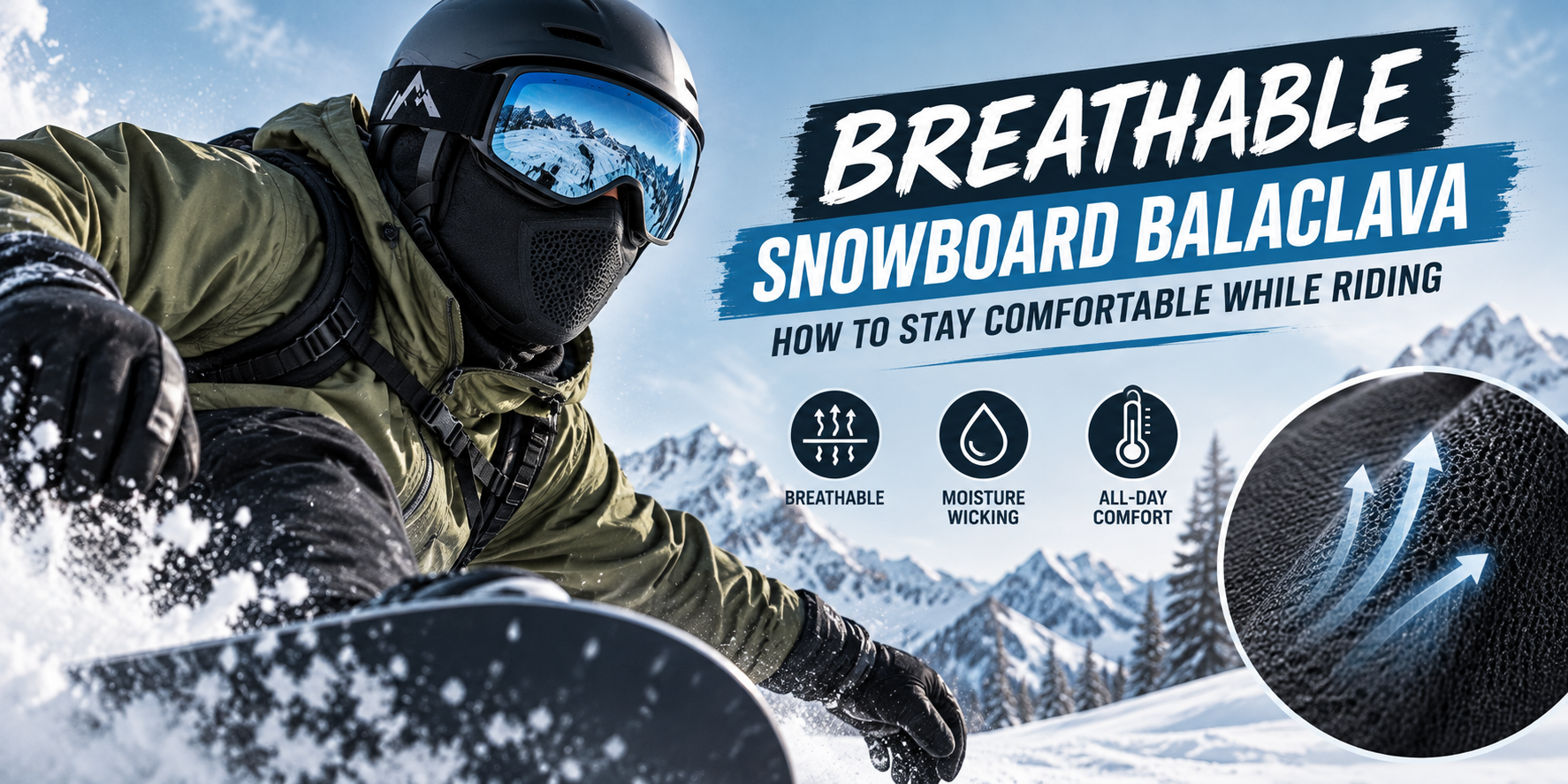
Snowboarding is a physically demanding sport, with periods of intense effort followed by periods of rest: hiking to a jump, carving hard through powder, coasting or waiting in a lift line. The constant change between exertion and rest makes breathability as crucial as warmth when selecting a balaclava. Unlike heavier, non-breathable snowboard balaclavas, a breathable snowboard balaclava will keep you warm and dry even when you slow down, which is a frequent problem with heavier, non-breathable snowboard balaclavas.
Why Riders Overheat More Than Skiers
Snowboarding can be more explosive and full-body than skiing, especially when performing tricks, hiking to features in a terrain park or deep powder. This increased activity creates more body heat and sweat, particularly around the face and neck area where a balaclava fits. If there is no ventilation, that heat and moisture will be trapped against the skin, causing discomfort, chafing and a cold sensation when you stop moving and the sweat starts to cool.
Key Features of a Breathable Snowboard Balaclava
Mesh Ventilation Panels
Mesh panels sit strategically around the mouth, nose, and sometimes the temples, allowing trapped heat and moisture to escape while keeping the wearer warm. These panels are particularly helpful when you are exerting more effort, such as when you are hiking a park feature or pushing through deep snow, and your breathing increases in rate and depth.
Moisture-Wicking Fabric
Fabrics such as polyester-spandex blends or merino wool actively draw sweat away from the skin and disperse it over the surface of the fabric, which helps it evaporate more quickly. This is especially useful for snowboarders, who sweat more when they are riding aggressively than when they are skiing.
Lightweight, Stretchy Construction
A breathable balaclava should move with your face and neck, not inhibit movement during dynamic riding. Fabrics that fit snugly but are still flexible provide the head-turning, jaw movement and overall freedom of movement that snowboarding requires, without bunching or shifting.
Quick-Drying Material
A balaclava that dries quickly between runs will keep the rider comfortable during the day. Synthetic blends tend to be better in this area than natural fibers such as cotton, which can become clammy when wet for too long.
The challenge is to balance breathability with warmth
The problem with any breathable hat is that it’s hard to keep warm enough for really cold days. If the rider faces extreme cold or high wind chill, they may need a slightly heavier fabric with specific ventilation zones. This fabric keeps key areas, such as the forehead and ears, warm while allowing ventilation around the mouth and jaw.
Fit Considerations for Riding
Fit is a big factor in comfort, as snowboarders tend to wear a balaclava under a helmet and goggles for long periods of time. The low profile, seamless design around the temples avoids pressure points on long days on the mountain, and the full-length balaclava under the jacket collar avoids cold gaps at the neck, which is a frequent problem when riding aggressively with jackets that shift.
Everyday Versatility Beyond the Slopes
A good snowboarder’s balaclava is not only useful for snowboarding, but many riders also use the same type of balaclava for other cold weather pursuits such as commuting, hiking, or winter running. Sport-specific balaclavas designed with sports balaclavas in mind often have the moisture-wicking and breathability that are essential for a variety of outdoor pursuits, making them a worthwhile investment for more than just riding season.
Choosing the Right Balaclava Style
Not all balaclavas are designed to be breathable and to allow for movement while riding. General use styles tend to focus on maximum warmth, whereas styles for adult riders and active winter sports tend to strike a better balance between warmth and airflow. A dedicated collection of adult balaclavas can help narrow down choices that are specifically suited to the higher exertion levels and movement demands of snowboarding.
A Breathable Option Built for Riders
A sublimated ski mask is a great choice for snowboarders who want a product that is both warm and breathable, featuring lightweight and moisture-wicking fabric with a stretchy fit for both warmth and freedom of movement. This kind of building is designed to be warm enough for cold lift rides and breathable enough for high-energy runs.
Final Thoughts
Comfort on the bike is all about picking a balaclava that wicks sweat, keeps you warm, and shields you from the cold and wind. Focus on mesh ventilation, moisture-wicking fabric and a low-profile, flexible fit to keep you warm on lift rides and cool on the most intense terrain park sessions or powder runs. If you’re a snowboarder who spends a full day on the mountain at different intensities, breathability is not a luxury, it’s a necessity for true comfort.
FAQs
Why do snowboarders need more breathability than skiers?
Snowboarding often involves more intense, full-body exertion, generating more heat and sweat that needs to escape to avoid discomfort once you slow down or stop moving.
What fabric works best for a breathable snowboard balaclava?
Polyester-spandex blends and merino wool are popular choices, both offering strong moisture-wicking properties along with enough insulation for cold-weather riding.
Will a breathable balaclava keep me warm enough on cold lift rides?
Yes, as long as it includes targeted insulation in key areas like the forehead and ears, paired with ventilation around the mouth for airflow during active riding.