Most people shopping for a tactical balaclava compare photos and fabric names, then find out on the first long day that the eye opening rides up, the helmet feels tight or the mouth area is damp after an hour. Nearly all of that can be avoided by starting with one question: what will you actually be doing in it?
This guide gives a checklist by use, then works through openings (including full face), fabric, fit and details. It is written for outdoor users, hunters and airsoft players, and for the shops and brands that stock tactical ranges. For the background on why soldiers wear balaclavas and which kinds exist, start with our military balaclava guide.
What makes a balaclava “tactical”?
A tactical balaclava is a close-fitting, low-profile balaclava in field colours or camouflage, made to work with other kit: helmets, headsets, eyewear and jacket collars. It is judged by how well it fits with that kit, not by how thick it is.
In practice that means a thin crown, flat seams, ears that lie flat, an opening that suits eyewear and a neck long enough to tuck in. Colours are usually black, olive, coyote, grey, navy or a camouflage print.
Which tactical balaclava suits which use?
Match the build to the activity and the weather. The table gives typical starting points; your own conditions decide the final choice.
| Use | Opening | Fabric | Points to check |
|---|---|---|---|
| Hiking, camping, outdoor days | Three-hole, open face or hinged | Stretch jersey or merino | Breathes on climbs, packs small |
| Hunting and wildlife watching | One-hole or three-hole | Soft knit or brushed fabric | Camouflage or muted colour, soft surface |
| Airsoft | Open face or three-hole | Thin stretch jersey or mesh panels | Fits under the goggles and face mask the site requires |
| Cold days with little movement | One-hole (full face) | Knit, fleece or fleece-lined | Long neck, covers nose and cheeks |
| Under a helmet | Open face or three-hole | Thin stretch jersey | Thin crown, flat seams, flat ears |
| Security and outdoor work in the cold | Three-hole or open face | Knit or microfleece | Durable openings, plain colours |
For airsoft, always wear the goggles and face mask your site asks for. A thin balaclava simply leaves room for them and keeps the rest of the head covered.
Full face, three-hole or open face: which opening should you pick?
Pick full face (one-hole) for cold and wind, three-hole for easier talking and breathing, and open face for helmets and mild days. Hinged styles let you switch during the day.
Full face (one-hole)
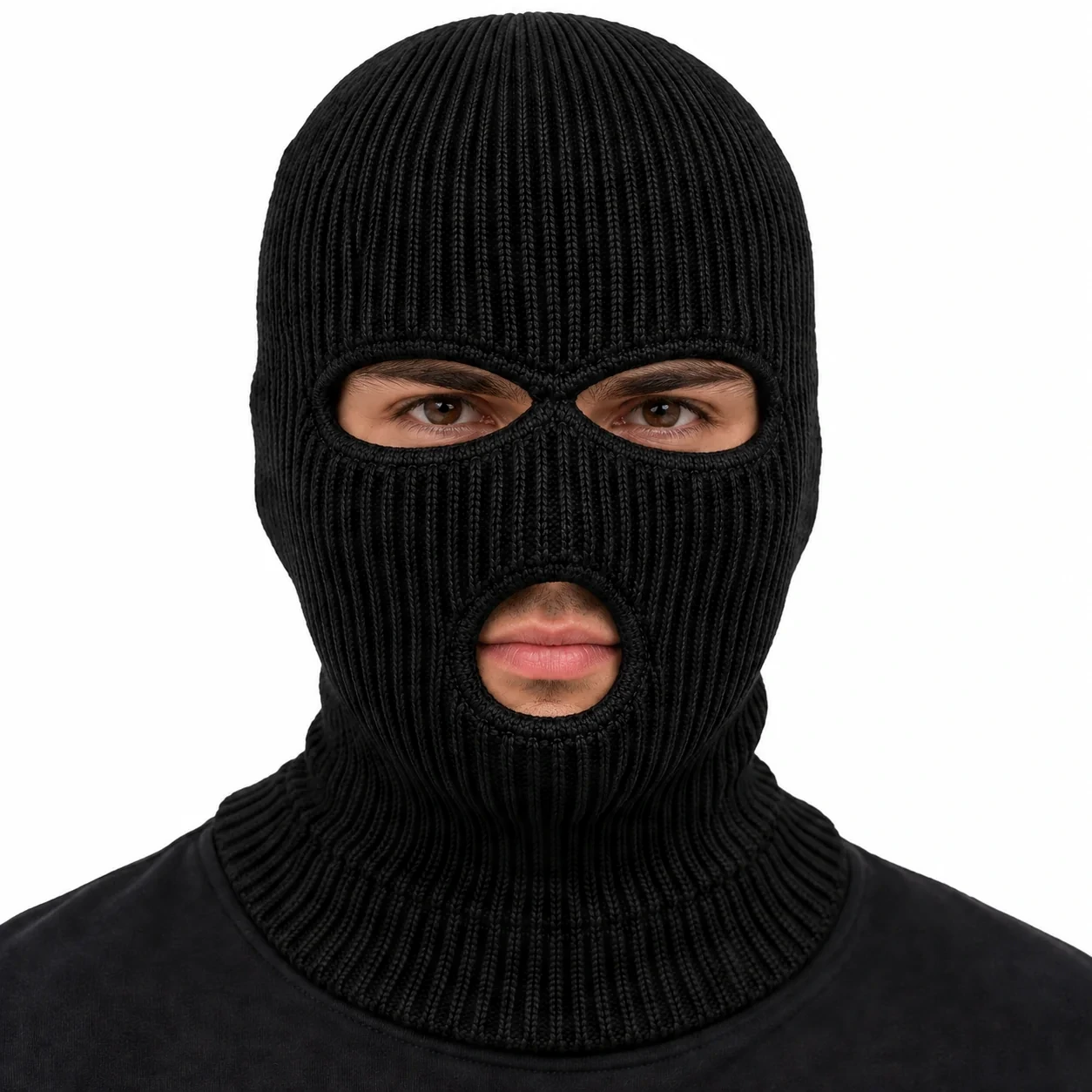
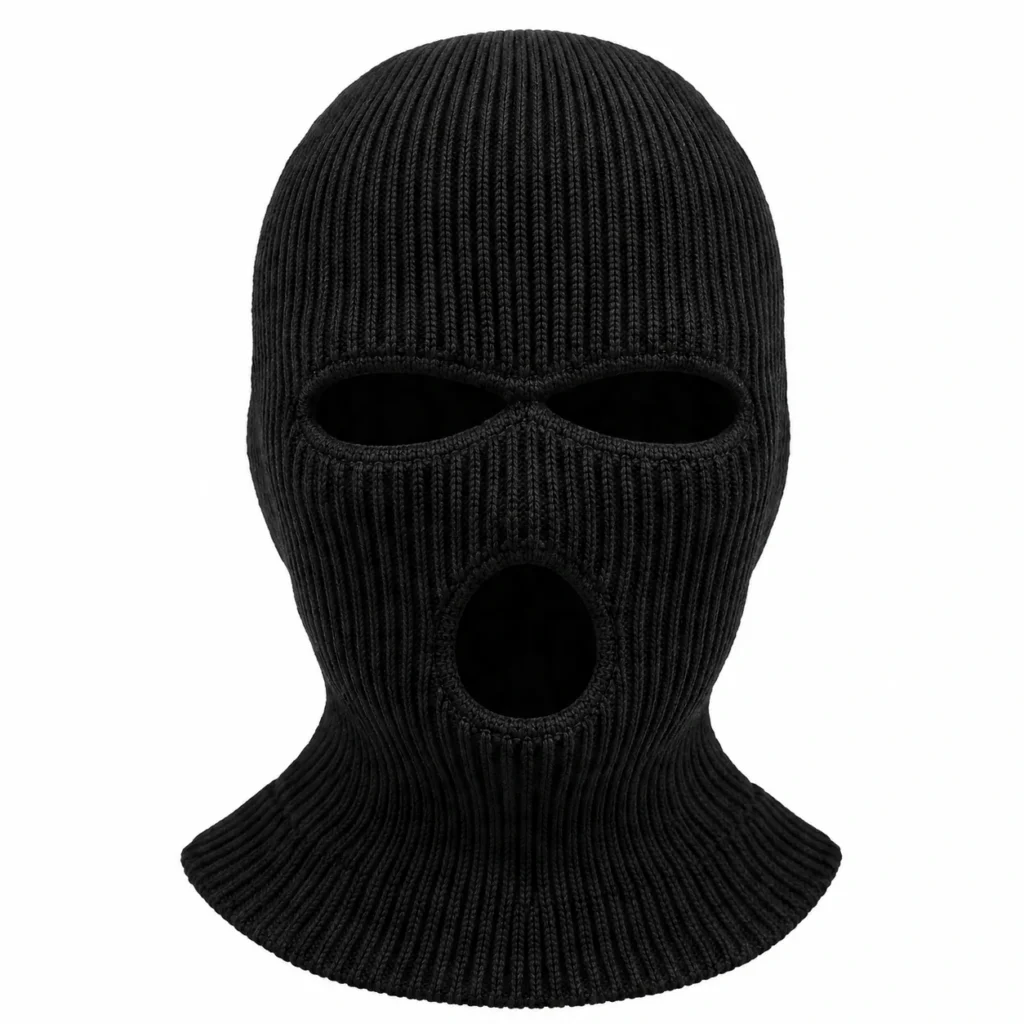
A full face tactical balaclava covers the forehead, cheeks, nose, chin, ears and neck, leaving one opening for the eyes. It tends to feel warmer for its weight than other openings because there are fewer gaps for wind. The trade-off is breathing: on hard climbs warm, moist air builds up behind the fabric. A lightweight stretch jersey version, or one with a breathable panel at the mouth, usually makes full coverage easier to live with on active days.
Three-hole
Separate openings for the eyes and the mouth make it easier to talk, breathe and drink. Reinforced edges help the openings keep their shape after many wears. Three-hole knits are a common all-round tactical choice for cool weather.
Open face and hinged
An open face balaclava covers the head, ears and neck and leaves the face free, which suits helmets, goggles and warmer days. A hinged or convertible style has a face panel that folds down when you want air and back up when the wind picks up. Our guide to balaclava face openings compares every opening side by side.
Which fabric should a tactical balaclava be made of?
Lightweight stretch jersey for active days and helmets, knits or fleece for cold and still days, merino for changing weather. The fabric should suit your effort level, not just the temperature.
- Polyester/elastane stretch jersey: thin, close-fitting, dries fast and takes printed camouflage.
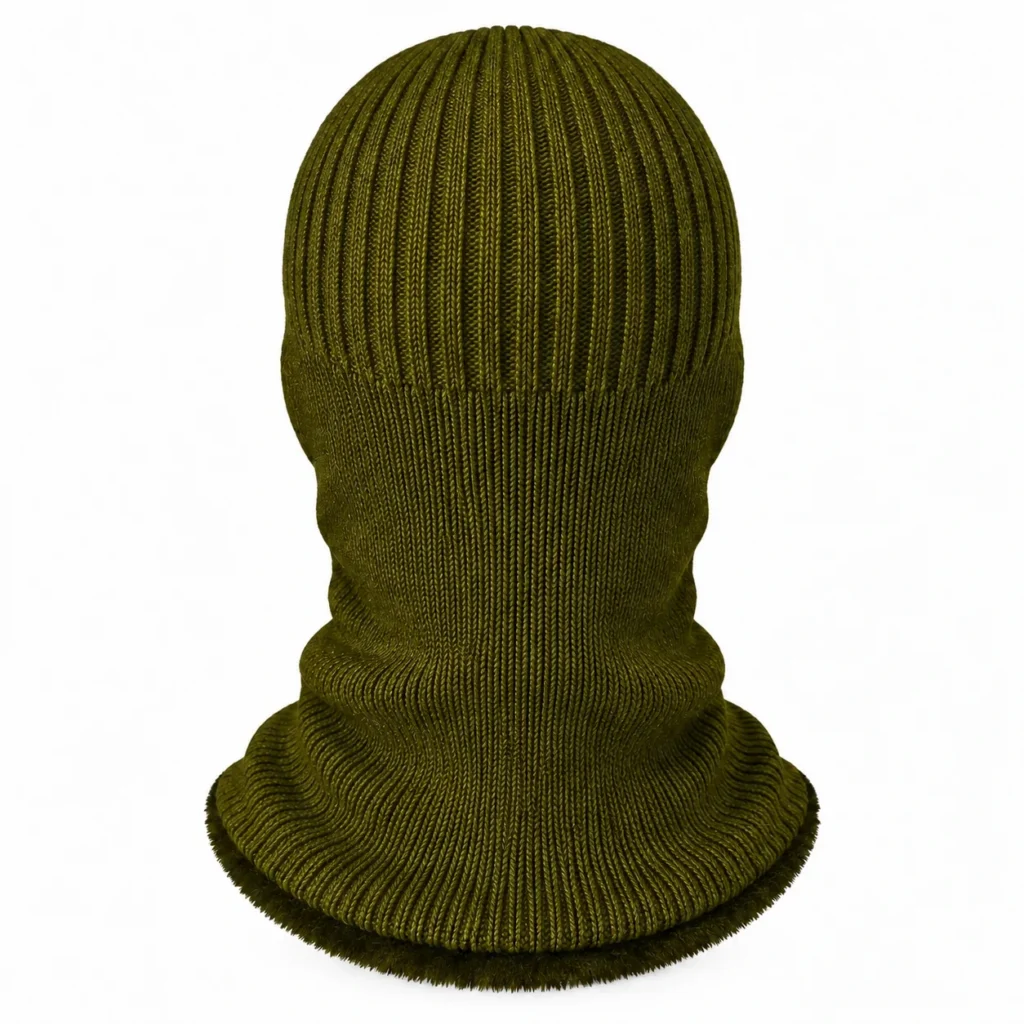
- Acrylic rib knit: soft and stretchy with the classic knitted look; warmer and a little bulkier.
- Microfleece: soft inside and warmer than jersey while still fairly thin.
- Merino jersey: light and soft, tends to stay comfortable when slightly damp.
- Mesh panels: placed at the mouth or sides to let breath and heat out.
Someone standing still outdoors usually needs more warmth than someone climbing a steep trail at the same temperature. Our tactical balaclava material guide compares each fabric by conditions.
How should a tactical balaclava fit?
Snug but not tight. It should follow the head, jaw and neck without loose folds, and stay in place when you turn your head.
- The eye opening sits level and does not slide down over the eyes or up onto the forehead.
- The fabric is not pulled tight against the nose and mouth, so breathing stays easy.
- The neck is long enough to tuck under the collar without riding up.
- Seams around the forehead, ears and cheeks are smooth.
Measure around the head just above the eyebrows and ears, then compare with the chart in our balaclava size guide. Many tactical balaclavas are one adult size with good stretch; kids and larger fits exist too.
Will it work with a helmet and eyewear?
Usually, if the crown is thin and the seams are flat. Thick fabric or bulky seams between head and helmet create pressure points and can change how the helmet sits.
Try the balaclava with the helmet, headset and glasses or goggles you actually use, and follow the helmet maker’s fitting advice. A snug fit over the nose and below the eyewear frame tends to send breath down rather than up, which helps with fogging. Our guide to the tactical balaclava under a helmet goes into thickness, seams and ear areas.
Which colour suits your surroundings?
Choose colour for the place you will be, not only for looks. Olive and coyote suit woodland and dry ground, grey suits rock and towns, black suits night and a plain tactical look.
Camouflage prints come in generic families such as woodland, desert, multi-terrain, digital and topographic. Our camouflage tactical balaclava guide explains how to match a pattern to the terrain and how printed camouflage differs from knitted colours.
How do you choose one for changing outdoor conditions?
Plan for the coldest and the mildest part of the day, not the average. Mornings, ridges and evening wind often feel very different from a sunny climb at midday.
A thin balaclava that you can wear as a hat, neck warmer or full cover gives more options than one thick piece. Pair it with a hood or a neck gaiter when the wind picks up; the tactical balaclava vs neck gaiter comparison shows when each suits. On long days, a light spare in a pocket helps when the first one gets damp. For deep cold, the cold-weather tactical balaclava guide covers fleece-lined and double-layer builds.
Which details show good construction?
Openings that keep their shape, seams that stay flat and fabric that springs back after washing. These details usually decide how long a balaclava stays comfortable.
Look for reinforced or bound edges at the eyes and mouth, flatlock seams on cut-and-sew styles, a smooth top seam on knits and a soft label that does not sit at the crown. Our article on knitted vs cut-and-sew balaclavas explains how each method affects seams and stretch.
Quick checklist before you buy
- Name the main use: outdoor days, hunting, airsoft, cold and still, or under a helmet.
- Pick the opening: full face for cold, three-hole for talking, open face for helmets.
- Match the fabric to your effort level and the coldest part of the day.
- Check the fit with your own helmet, headset and eyewear.
- Choose a colour or camouflage for the surroundings.
- Check openings, seams and labels for comfort over a long day.
For brands and shops
We make tactical balaclavas to order for outdoor, hunting, airsoft, security and military-surplus style ranges, from 50 pieces per design, in Sialkot, Pakistan. You choose the opening, fabric, colour, size and branding; colours are confirmed on a mockup and a sample before bulk, and production usually takes about 14 days after sample approval. Mr Balaclava’s name never appears on your products.
Our tactical balaclava manufacturer page shows the styles and branding options, the knitted balaclava catalogue has developed styles to start from, and the guide on how to order custom balaclavas explains samples, payment and timing.
Frequently asked questions
What should I look for in a tactical balaclava?
An opening and fabric that suit your use, a snug fit without folds, a thin crown and flat seams if you wear a helmet, and a colour that suits your surroundings. Reinforced openings help it keep its shape.
Is a full face tactical balaclava better than a three-hole one?
Neither is better in general. A full face style usually feels warmer in cold, windy weather, while a three-hole style makes talking and breathing easier on active days.
Should a tactical balaclava fit tightly?
It should fit snugly without pressing. Good stretch keeps it in place when you move your head, while the fabric over the nose and mouth should stay loose enough for easy breathing.
Can I wear a tactical balaclava under a helmet?
Yes, a thin one with flat seams usually works well. Try it with your own helmet and follow the helmet maker’s fitting advice.
Can you make tactical balaclavas with our logo?
Yes, from 50 pieces per design, with embroidery, patches, printing or woven labels depending on the fabric. Your quote confirms the fabric, decoration and price.
Ready to plan a tactical range? Compare fabrics in balaclava materials compared or ask for a quote with your styles and quantities.