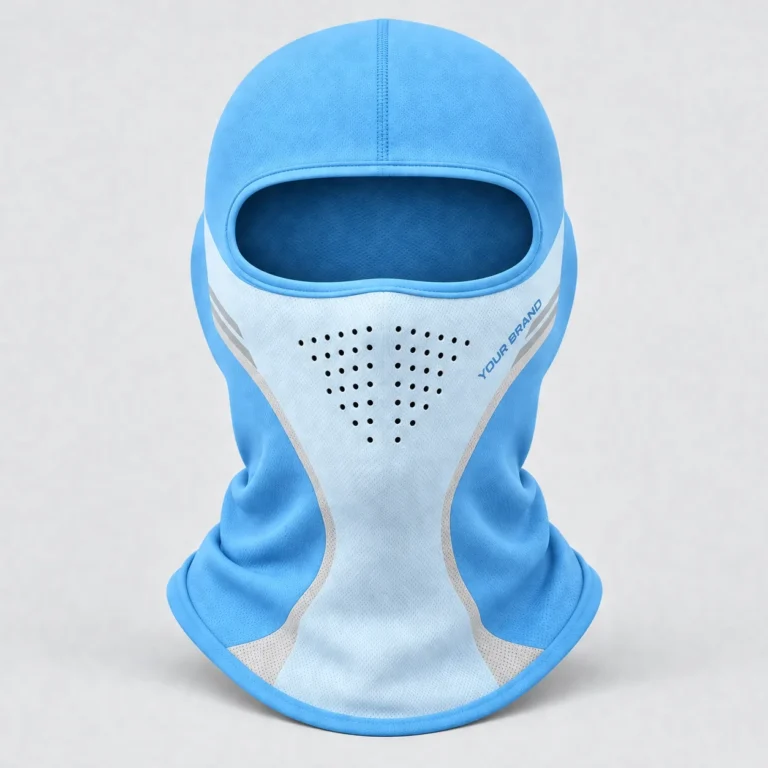
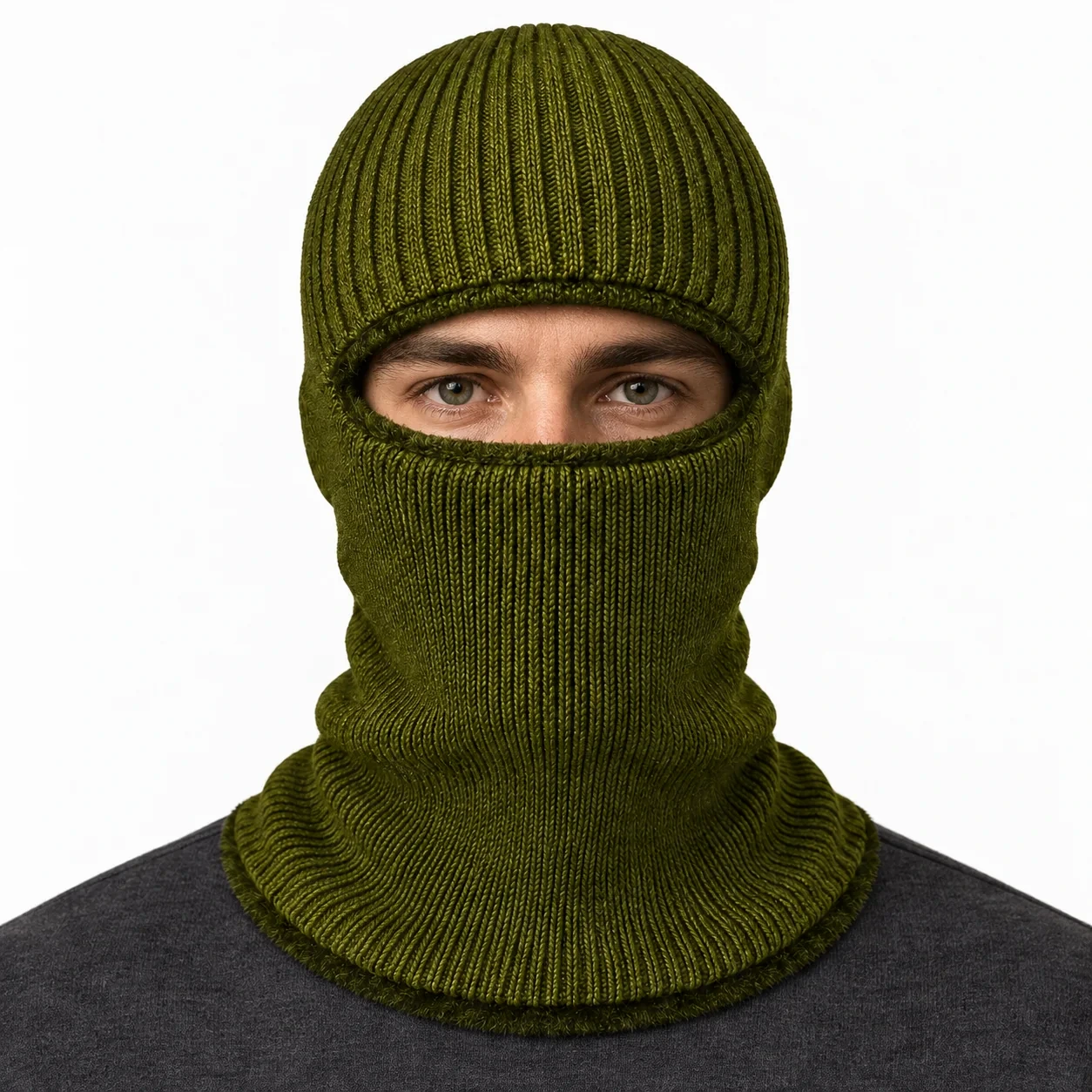
Search for “military balaclava” and you will find two quite different things: the plain knitted hood that armies have handed out for cold weather for well over a century, and the thin, close-fitting layer worn under a modern helmet today. Both answer the same simple need. They keep the head, ears, face and neck comfortable in cold, wind and dust while the rest of the kit stays in place.
This guide explains why soldiers wear balaclavas, where the idea came from, which styles and fabrics are common and how they work with helmets and layers. It ends with practical advice for brands and shops building an outdoor, hunting, airsoft, security or military-surplus style range. For every balaclava style in one place, see our overview of the different types of balaclavas.
Why do soldiers wear balaclavas?
Mainly for warmth and comfort. A balaclava covers the head, ears, face and neck in one piece, it fits under a helmet, and in field colours it matches the rest of the uniform.
The reasons are practical and have changed little over time:
- Cold and wind: long hours outdoors, often with little movement, make the ears, cheeks and neck feel the cold first. A balaclava covers all of them at once.
- Dust and sand: in dry, windy places a light balaclava pulled over the nose and mouth keeps grit off the face and out of the collar.
- Under a helmet: a thin balaclava fills the gap between helmet and collar and keeps the ears warm without pushing the helmet out of place.
- Camouflage: an olive, coyote, grey or camouflage balaclava lowers the contrast of bare skin against the surroundings, in the same way as the rest of the uniform.
- One flexible layer: a balaclava can be worn as a hat, a neck warmer or full head cover, so it replaces several separate items.
Whether a soldier wears one on a given day usually depends on the climate and on the unit’s own dress rules. In mild weather many do not wear one at all.
A brief history of the balaclava
The balaclava takes its name from the town of Balaklava in Crimea. During the hard winter of 1854–55 in the Crimean War, knitted woollen head coverings were sent out to British troops camped near the town.
The name “balaclava helmet” seems to have come into wide use some decades later. In the First and Second World Wars, knitted “helmets” and “comforters” were widely made by volunteers at home and sent to troops, usually in khaki or grey wool. From the second half of the twentieth century, synthetic yarns, fleece and stretch jerseys joined wool, and the balaclava became thinner and closer-fitting to sit under helmets. Our article on when the balaclava was invented tells the story in more detail.
What is a military balaclava?
A military balaclava is a close-fitting head and neck covering with one or more openings for the face, made in field colours or camouflage and shaped to work with helmets and other kit. “Military” describes the use and the look rather than a separate type of garment.
The same item is often called a military mask, an army balaclava, a tactical balaclava or, in American English, a ski mask. Our guide on the tactical balaclava vs ski mask explains the naming overlap. Some people also use “military mask” for a tube neck gaiter pulled over the nose; the tactical balaclava vs neck gaiter comparison shows how the two differ.
Which kinds of military-style balaclava are common?
Most military-style balaclavas are one-hole, three-hole, open-face or hinged. The choice usually depends on how cold it is and how much the wearer needs to talk, breathe freely or wear eyewear.
| Style | What stays open | Usually chosen for |
|---|---|---|
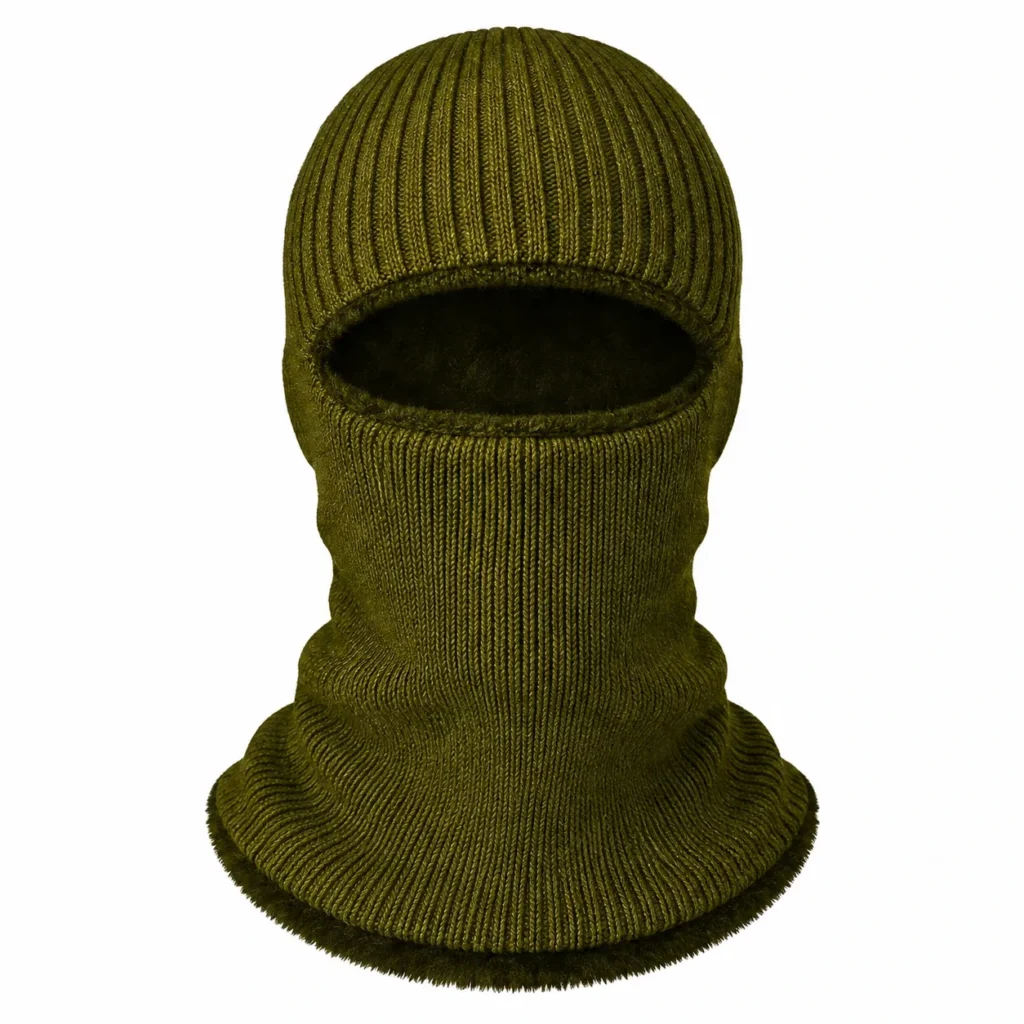
| One-hole (full face) | The eyes, or the eyes and upper nose | Deep cold and strong wind; the classic knitted look |
| Three-hole | The eyes and the mouth | Talking and breathing more freely, drinking without pulling it down |
| Open face | The whole face | Thin helmet liners, mild days, wearing with goggles |
| Hinged or convertible | Face panel folds down or opens | Changing conditions during a long day outdoors |
| Two-hole | The eyes only, through two openings | Less common in field ranges; mostly knitted styles |
Beyond the opening, a few details tend to matter most in military-style use: flat seams and a thin crown so a helmet sits evenly, a smooth area over the ears for headsets, a neck long enough to tuck into the collar, reinforced edges around the openings so they keep their shape, and a breathable zone in front of the mouth. Our guide to balaclava face openings compares every opening in detail.
Where are military balaclavas worn?
Wherever cold, wind or dust meet long hours outdoors. The climate decides the fabric and thickness far more than the role does.
- Cold and mountain regions: heavier knits or fleece, often one-hole, with a long neck under the jacket.
- Temperate, wet climates: midweight fabrics that dry reasonably fast, since rain and sweat both make a balaclava feel cold.
- Hot, dusty regions: thin stretch jersey or a mesh panel in front of the mouth, worn mainly against sand and dust.
- Open vehicles and long journeys: wind on the face adds up over hours, so a light, full-coverage layer is common.
- Under helmets: a thin, low-profile balaclava as the layer between head and helmet in cool weather.
What are military balaclavas made of?
Classic military balaclavas are knitted from wool or acrylic. Modern ones also use merino, stretch jersey, fleece and mesh, chosen for the climate and for how well the fabric sits under a helmet.
| Fabric | What it tends to do well | Typical climate |
|---|---|---|
| Acrylic rib knit and wool blends | Soft, stretchy, the familiar knitted look, easy care | Cool to cold |
| Merino jersey | Light and soft, tends to feel comfortable when slightly damp | Cool, changing weather |
| Polyester/elastane stretch jersey | Thin, close fit, dries fast, takes printed camouflage | Mild, active, under helmets |
| Polar fleece and microfleece | Holds warm air, soft inside | Cold, little movement |
| Polyester mesh panels | Lets breath and heat out at the mouth | Warm and dusty |
Some armed forces specify specialist fabrics tested to their own standards. Those are outside this guide: we make civilian products for outdoor and work ranges. For a closer look at each fabric, read our tactical balaclava material guide.
How are military-style balaclavas made?
Either knitted to shape on knitting machines, or cut from fabric and sewn. Knitted balaclavas give the classic look and plenty of stretch; cut-and-sew balaclavas allow thin, flat-seamed builds and printed patterns.
Knitted styles usually have very few seams, often just a small one at the top, and the openings can be knitted with a reinforced edge. Cut-and-sew styles are made from stretch jersey, fleece or mesh, often with flatlock seams that lie flat under a helmet, and can combine fabrics in zones, such as fleece at the neck and mesh at the mouth. Our article on knitted vs cut-and-sew balaclavas explains both methods step by step.
How should it fit with a helmet and layers?
Snug but not tight, with no folds at the crown or ears. A balaclava is the layer closest to the skin, so everything else sits on top of it.
- The eye opening should line up with eyewear and not ride up when you turn your head.
- The crown should be thin and smooth so the helmet sits as its maker intends; follow the helmet maker’s fitting advice.
- The ears should lie flat under the fabric, especially with a headset or ear pads.
- The neck should tuck under the collar so it stays in place and closes the gap.
- In the cold, a thin balaclava plus a neck gaiter or hood often works better than one very thick piece.
Our guide to the tactical balaclava under a helmet covers thickness, seams and ear areas. For winter builds, see the cold-weather tactical balaclava guide, and for warm climates the breathable tactical balaclava guide.
How do you care for a balaclava?
Follow the care label. As a rule, wool and merino like a gentle, cool wash and drying flat, while synthetic jerseys and fleece wash easily and dry quickly.
Avoid high heat in the dryer, which can shrink knits and flatten fleece. Wash more often when it is worn close to the mouth for long periods, and check seams and openings now and then; a stretched-out eye opening is the usual sign that a balaclava has had its day. Our guide on when to wash a balaclava gives simple routines.
How to choose a military-style balaclava for a range
Start with the climate and the kit your customers wear, then pick the opening, fabric, colour and size. A small, clear range often works better than many similar styles.
A simple starting range
- A thin open-face or three-hole balaclava in stretch jersey for helmets and mild days.
- A knitted one-hole or three-hole balaclava in olive, coyote, black or grey for cool to cold weather.
- A fleece or fleece-lined balaclava for cold days with little movement.
- A printed camouflage version; our camouflage tactical balaclava guide covers generic patterns and terrain.
- Adult and kids sizes or your own size chart; see the balaclava size guide.
For a full buying checklist by use, read how to choose a tactical balaclava.
For brands and shops
We are a civilian manufacturer in Sialkot, Pakistan, and make military-style balaclavas to order for outdoor, hunting, airsoft, security and military-surplus style ranges, from 50 pieces per design. Knitted styles come in solid field colours or knitted-in patterns; see how we make knitted balaclavas. Camouflage is usually printed by sublimation on light, polyester-rich fabric, and we print only designs you own or are licensed to use, as our custom printed balaclava page explains.
Colours are confirmed on a mockup and on a sample before bulk production, which usually takes about 14 days after sample approval. Mr Balaclava’s name never appears on your products. Our tactical balaclava manufacturing page lists the styles, fabrics and branding options, and the guide on ordering custom balaclavas explains samples, payment and timing.
Frequently asked questions
What balaclava does the military use?
It varies by country, climate and unit. Common types are knitted wool or acrylic balaclavas for cold weather, thin stretch-jersey or merino balaclavas under helmets, and fleece balaclavas for deep cold, usually in olive, coyote, black, grey or camouflage.
Do soldiers wear balaclavas?
Yes, many do in cold, windy or dusty conditions, often as a thin layer under a helmet. Knitted balaclavas have been a cold-weather item for troops since the nineteenth century; in mild weather they are often not worn.
Why do special forces wear balaclavas?
Mostly for the same practical reasons as other troops: a thin layer under a helmet, cover from cold, wind and dust, and a colour that matches the rest of the kit. Each unit chooses its own equipment, and we do not describe it here.
What is a military mask?
In most searches, “military mask” means a balaclava in field colours or camouflage. Some people also use it for a tube neck gaiter pulled over the nose and mouth.
Can you make military-style balaclavas with our brand?
Yes, from 50 pieces per design, in field colours or your own camouflage artwork, with embroidery, patches or woven labels. We make civilian products only, and your quote confirms the fabric, decoration and price.
Planning a range? Compare fabrics in balaclava materials compared or ask for a quote with your styles, colours and quantities.