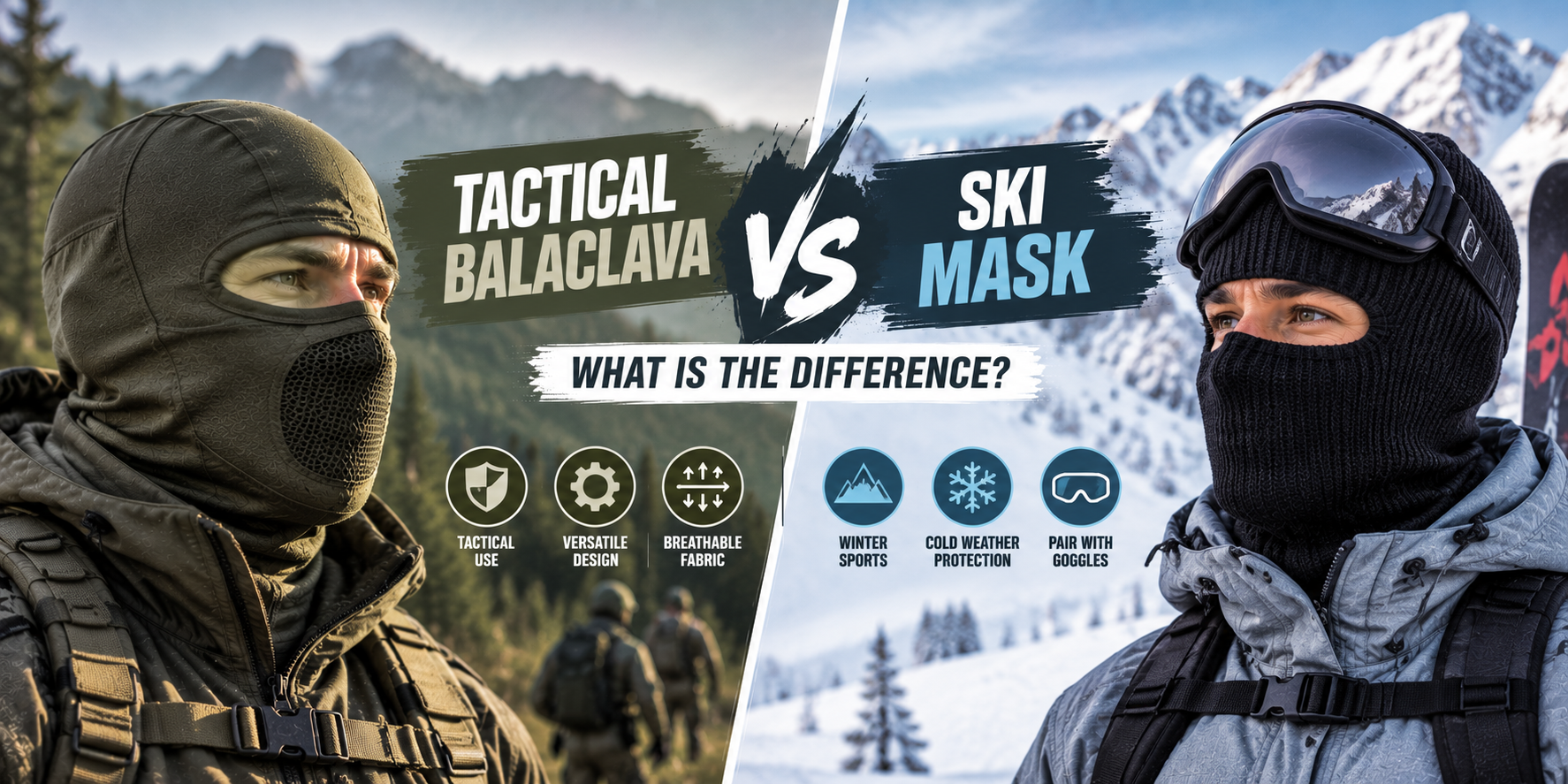
The main contrast between tactical balaclava hat and ski mask is that they serve different purposes, are made from different materials, and are worn in different ways. Typically, a tactical balaclava prioritizes secure coverage, mobility, compatibility with equipment, and durability. A ski mask emphasizes more on warmth, wind resistance and comfort in colder weather. The terms do overlap, however, since many, particularly in the United States, refer to “ski mask” as a generic term for the type of hat which is a balaclava. So, the only way to compare them is by their functions.
If you are choosing between styles, our comparison of one-hole, two-hole, three-hole and open-face balaclavas covers breathing, goggles and helmet fit.
A tactical balaclava should be multi-purpose.
A tactical balaclava is generally used for more than one particular sport in winter. It can be worn outdoors for training, hunting, cycling, airsoft, work or cold weather. Manufacturers tend to make stretch, breathable fabrics, moisture control and helmet compatibility their top priorities. Furthermore, there are one-hole, two-hole, three-hole, open-face and convertible designs available in tactical designs. A tactical balaclava should stay in place while the wearer is moving, communicating or wearing other headgear.
Ski masks are typically designed with a focus on keeping wearers warm.
A ski mask typically is more focused on insulation and protection from winter weather. Skiers and snowboarders require protection from freezing air, snow and wind, particularly at high speeds. Many ski masks are therefore made out of fleece, wool, knitted yarn or thermal synthetic materials. Today, however, ski masks are available that are technical and used to make the masks more breathable. One of the most obvious differences between tactical balaclava vs ski mask is this emphasis on cold weather.
Names can often overlap.
The jargon can be confusing as skiers tend to use the term “balaclava” and “ski mask” synonymously. “Ski mask” is a more common term used in the United States for many face masks that cover the entire head, whereas “balaclava” is a more traditional term. Our American names guide explains that a ski mask can be considered a type of balaclava, although not every balaclava serves a skiing purpose. When it comes to comparing products, then, context is more important than terminology.
The choice of fabric makes an important difference.
Technical blends such as lightweight polyester, nylon, spandex, breathable mesh or other blends are used in tactical products. These fabrics can be used to promote rapid drying, stretch and slow down long-term movement. When cold protection is critical, ski masks may employ fleece, merino wool, acrylic yarn or heavier thermal fabrics. So when comparing balaclava hats for tactical purposes with ski masks, fabric weight and construction are always factors to take into consideration. A light, tactical mask could be much cooler than a heavy knitted ski mask, even if they offer the same face cover.
Tactical Designs are often better suited to fit equipment than Tactical Designs.
Helmets, goggles, ear protection, communication devices or caps may be required for tactical users. So, on-site construction and seamless transitions become paramount. Bulky items around the forehead, ears or temples may cause a pressure when equipment is worn over the mask. Stretch also makes the balaclava more comfortable to move around in. Ski masks may also be worn underneath helmets, although there are thicker ski masks for the winter in which the insulation may take precedence.
Ski masks offer greater insulation than the standard mask.
One of the biggest advantages of ski masks is their ability to excel in cold conditions. Many designs have the ability of keeping the warmth around the cheeks, ears, neck and scalp and shield the uncovered skin from wind. Thus, a ski mask will work better in freezing temperatures than a thin (tactical) face covering. But ski masks must also be breathable as body heat is also generated by the heavier the skiing. In our article, winter names, ski masks and balaclavas have similar origins and use in winter, outdoor and modern lifestyle.
Face Opening may vary.
Several types of opening styles can be used in both types. Single eye openings, separate eye holes, mouth openings or eye panels that can be opened and closed are examples of tactical designs. The traditional knitted ski-mask has one-hole or three-hole designs. So, it is not always about the number of openings when it comes to tactical vs ski mask. Rather, users should take into account the visibility, flow of air, coverage of the face and eyewear compatibility. Larger openings will probably provide better ventilation, and smaller openings will offer greater protection from cold wind.
When it comes to tactical use, breathability becomes even more important.
Tactical activities may include: running, hiking, climbing, cycling, or extended periods of activity. This means that it can easily accumulate heat and sweat. As such, many tactical balaclavas feature ventilation areas and moisture-wicking materials. Moisture control is also a requirement for ski masks, but the heavier winter versions may be less breathable to keep heat in. Therefore, when choosing an active full-face mask, users should be aware of breathability and make careful choices rather than taking it for granted that all full-face masks have the same breathability.
Coverage and Fit are also comparable.
Either style can be worn to cover the head, ears, cheeks, chin and neck. The final fit, however, may vary depending on design priorities. The goal of tactical masks is typically a secure profile that moves with the head whereas ski masks can have thicker materials for insulation. A wholesale range demonstrates the range of possibilities open to manufacturers in the production of tactical, ski, breathable, convertible and knitted styles, and how these styles are created using different fabrics and openings. Thus, product structure is more important than what is written on the label.
Tactical Balaclavas can be used for more general outdoor situations than traditional ones.
If the fabric is a lightweight product, it can be used in a tactical design and function between seasons. It’s comfortable to wear when hiking, cycling, hunting, training outdoors or when it’s cooler outside. Winter is the best time for heavily insulated ski masks, while they generally aren’t the most effective during the summer. As a result, tactical balaclava vs ski mask is also different in terms of seasonality. A thin ski mask will be more versatile, and a thick ski mask will offer greater protection in situations where it is more important to keep warm than to keep cold.
Ski masks can also be thicker and knitted with heavier yarns.
Traditional ski masks will use thick knitted yarn for warmth, stretch and wide coverage of the face. With 3 openings for the eyes and mouth, this knitted mask is used for winter sports, outdoor work and tactical applications, thanks to a warm construction. So, as much as ski-mask styling has to do with cold-weather insulation, it also illustrates how ski-mask style can also cross over other areas of functionality like tactical.
Which One Should You Choose?
Choose according to activity rather than terminology. A lightweight tactical balaclava often works better if you need breathability, helmet compatibility, quick drying, and movement. However, a warmer ski mask may make more sense if you face freezing temperatures, snow, and strong winter wind. Therefore, the tactical balaclava vs ski mask decision depends on climate, activity level, fabric, and equipment. Users who need both warmth and mobility should look for a balanced technical design instead of choosing solely by product name.
Final Thoughts
Understanding tactical balaclava vs ski mask becomes easier when you compare purpose instead of appearance. Tactical balaclavas usually emphasize flexibility, low bulk, moisture management, and equipment compatibility, while ski masks generally emphasize insulation and winter protection. However, many modern products combine features from both categories. Therefore, check the fabric, weight, coverage, breathability, fit, and intended use before buying. The right choice should match your environment and activity rather than relying on whether the label says tactical balaclava or ski mask.
FAQs
Are tactical balaclavas and ski masks the same thing?
They can look very similar, and people often use the terms interchangeably. However, tactical designs usually emphasize mobility and versatility, while ski masks often focus more on winter warmth.
Which option works better under a helmet?
A lightweight tactical balaclava often creates less bulk. However, thin technical ski masks can also fit comfortably beneath winter sports helmets.
Are ski masks always thicker?
No. Traditional ski masks may use thicker fleece or knitted yarn, but modern ski masks can also use lightweight performance fabrics.