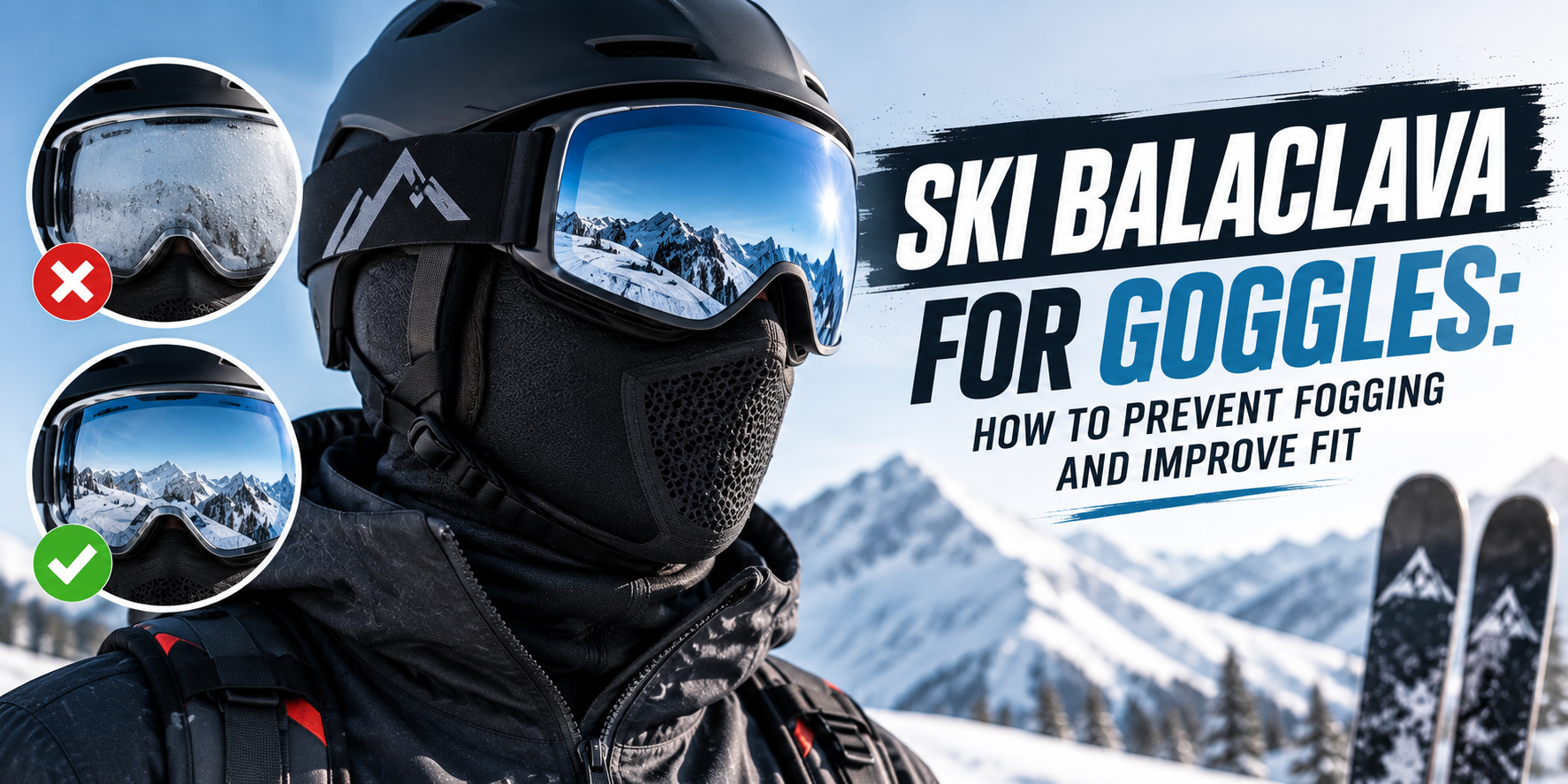
There’s nothing more distracting than hazy goggles. As you get less visible mid-slope, you have to stop, wipe down your glasses, and waste valuable time on the mountain—or maybe you continue to ski with reduced sightability in low-light conditions and on ice. Much of it is caused by the interaction of your goggles with your balaclava and not necessarily by the balaclava. Correctly selecting and adjusting a ski balaclava will stop goggles fogging up almost completely and make the hat more comfortable under the helmet.
If you are choosing between styles, our comparison of one-hole, two-hole, three-hole and open-face balaclavas covers breathing, goggles and helmet fit.
Why Balaclavas Cause Goggle Fogging
Fogging occurs when warm, moist air from your breath rises and condenses on the cold inside surface of your goggle lenses. A balaclava with a high nose bridge, no ventilation or that fits too big around the face will blow directly into the goggle vents, rather than away from them. A well-fitted pair of anti-fog goggles can’t make up for a hat that lets warm air rise into them with each exhalation.
Key Features That Prevent Fogging
1. A Nose Bridge that is low profile.
The most important fit point of the goggles is the point at which they connect with the bottom of the balaclava. A slightly contoured or lowered nose bridge prevents fabric from bunching up on the goggle seal, thus decreasing the likelihood of breath rising up into the lens.
2. Made from a mesh or ventilated mouth piece
Mesh panels around the mouth and nose are sometimes found on specially-designed balaclavas for skiing. These panels guide warm breath to the outside and down rather than up, protecting goggle vents from warm breath. This is one important difference when it comes to fog prevention, particularly when you’re exerting yourself and breathing more heavily.
3. A seamless or flatlock construction is a type of construction that takes place in close contact with the face of the excavation.
Large seams around the nose and cheeks can form spaces between the balaclava and goggles that allow warm air to leak in at random. In this area seamless or flatlock stitching maintains a uniform fit and eliminates the pockets of trapped air that can cause fogging.
4. Moisture-Wicking Fabric
Fabric that is moisture-wicking will draw sweat and the dampness created by breathing away from the skin and not into the skin around the nose and mouth. Fabric in this area is likely to drip more warm vapor directly onto the goggles, and a balaclava constructed with moisture-wicking synthetic fibers or merino wool helps to keep this area drier and cooler.
Getting the Fit Right
Snug, Not Tight
If the hood is too close, it will press against the face and allow fabric to be pushed into the goggle seal, allowing warm air to pass through the fabric into the lens. Snug but flexible fit is usually created with stretch fabric – will offer a full fit without compromising the goggle seal.
Layering Order Matters
Wear your balaclava before goggles and adjust goggle strap over rather than under the balaclava. It helps the goggle seal to lie flat on the fabric of the balaclava and not against the skin, which helps to form a perfect seal against air escaping. Just lift up the balaclava a little above the nose bridge and then lock the goggles in place to close any gaps.
Helmet Compatibility
A low-bulk fit around the temples and forehead helps distribute the pressure evenly with most skiers wearing a balaclava, goggles and helmet all at once, to prevent pressure points from shifting your goggles during the day. A good fit under the helmet with a balaclava will minimise the need for constant readjust and will also help maintain the goggles seal.
Test fit before you’re on the slopes
It’s a good idea to try your entire outfit – balaclava, goggles, and helmet – before a big ski day, at home or in the parking lot. Take 1 minute or 2 to breathe normally and see if your lenses fog. If they do, move the balaclava higher on the nose, or relax the fabric slightly around the mouth to steer the air flow. Sometimes it’s the little changes that make a huge difference, rather than the complete change of style with a fresh new hat.
When selecting a balaclava to wear while skiing, consider the following factors:
Not every balaclava has been designed to be goggled. Generally speaking, winter sports styles will usually be more ventilated, seamed and use stretch fabric for better fit when wearing goggles and helmets, and sports-specific balaclavas may focus on warmth over fit precision. When you’re getting ready for a season on the mountain, reading through a ski slope balaclava guide may help you understand what really matters for the conditions that you’re likely to encounter, and what you’re likely to do.
If a skier prefers to design their skiwear around this specific issue, a full-face balaclava for winter sports will likely have a low profile nose bridge, mesh ventilation and stretch fit to pair with goggles. Brands who specialize in making custom balaclava can also create fit and ventilation placement for teams or individuals with specific goggle and helmet combinations.
Final Thoughts
Fogging is more than just a goggle problem, it can be a fit and design problem in the balaclava as well. Features such as mesh ventilation, low profile nose bridge, moisture absorbing material, and a comfortable yet adjustable fit are just a few of the ways you can dramatically lessen fogging and maintain a clear field of vision throughout the day. A little extra time spent before hitting the slopes testing and adjusting your setup can mean more comfortable, safe and uninterrupted runs.
FAQs
Why do my goggles fog up even when wearing anti-fog lenses?
Anti-fog coatings reduce fogging but can’t fully offset warm breath being funneled directly into the goggle vents by a poorly fitted balaclava. Fixing the balaclava’s fit and ventilation usually solves the problem.
Should my balaclava go over or under my goggle strap?
The balaclava should go on first, with the goggle strap worn over it. This keeps the goggle seal against the balaclava fabric rather than bare skin, reducing gaps where warm air can escape.
What balaclava feature helps the most with fogging?
Mesh or ventilated panels around the mouth and nose make the biggest difference, as they redirect warm breath away from the goggle seal instead of letting it rise into the lens.