Riding in summer heat tests your gear as much as your endurance. A breathable motorcycle balaclava helps you handle both. It shields your face from sun and wind while letting heat escape instead of building up. In this guide, we cover the features that matter most, how to pick the right fit, and simple tips to stay cool all season.
Why Breathability Matters in Summer Gear
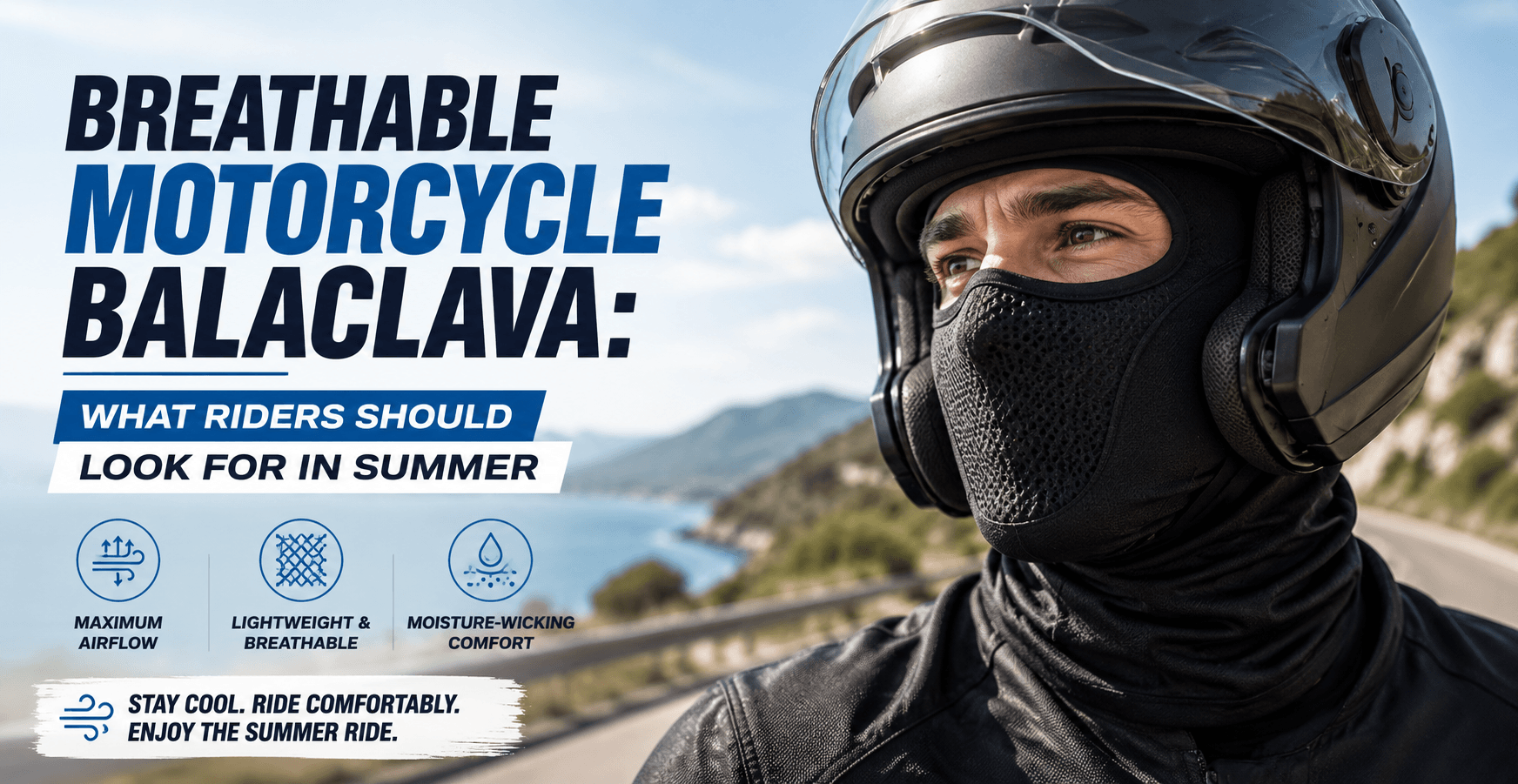
Standard balaclavas often trap heat against your skin. However, a breathable design changes that completely. It uses open-weave fabric that allows air to flow freely, so sweat evaporates instead of soaking into the material.
As a result, your face stays drier and cooler even during long highway stretches. Additionally, better airflow reduces fogging near your visor, which keeps your vision clear. Therefore, breathability isn’t just a comfort feature; it directly affects how safely and confidently you ride.
Key Features of a Breathable Motorcycle Balaclava
When shopping for summer gear, focus on these details:
- Mesh or micro-perforated fabric – this promotes constant airflow.
- Quick-dry material – this pulls moisture away and dries fast between rides.
- Lightweight seams – these prevent chafing during long trips.
- Full sun coverage – this keeps direct sun off your skin without adding bulk.
For a full comparison of top-performing options, see this detailed guide to the best motorcycle balaclavas. It highlights fabric quality, fit, and airflow performance side by side.
Materials That Improve Airflow
Fabric choice determines how well a balaclava performs in heat. Polyester blends with open-weave construction allow air to pass through easily, while cotton tends to hold moisture and feels heavier once it’s damp. Therefore, most performance balaclavas favor synthetic blends over natural fibers.
Some brands also add mesh panels around the mouth and nose area specifically. This targets the zones where heat and moisture build up fastest. As a result, riders notice a clear difference in comfort during long stretches on the highway.
Stitching and Seam Placement
Seam placement affects comfort just as much as fabric. Flat-lock seams sit close to the skin and reduce friction, which matters over hours of riding. In contrast, bulky seams rub against the skin and cause irritation, especially near the ears and jawline.
Additionally, well-placed seams help the balaclava sit smoothly under a helmet. This prevents pressure points and keeps the fit consistent throughout the ride.
How to Choose the Right Balaclava for Hot Weather
Not every “summer” balaclava performs equally well. Some brands simply use thinner fabric without improving airflow. Consequently, it helps to check reviews and product details closely before buying.
Look specifically for gear designed around heat management, not just reduced thickness. For example, this dedicated summer motorcycle balaclava explains what separates true warm-weather designs from repurposed winter gear.
Fit also plays a major role. A balaclava that sits too tight restricts circulation and traps heat near your skin. Meanwhile, one that’s too loose bunches under your helmet and creates uncomfortable pressure points. Take accurate measurements and follow the brand’s size chart for the best results.
Common Mistakes Riders Make
Many riders pick a balaclava based on price alone and skip the fabric details entirely. This often leads to disappointment once the summer heat sets in. Instead, prioritize breathability and moisture control over cost, since cheaper fabric rarely performs well in high temperatures.
Another common mistake involves ignoring color choice. Dark fabrics absorb more heat and warm up quickly in direct sun. Light colors, on the other hand, reflect sunlight and help keep your face cooler throughout the ride.
Matching Gear to Your Riding Style
Short commuters and long-distance tourers have different needs. Commuters often prioritize quick breathability for short bursts of heat, while tourers need consistent performance across several hours. Consequently, it helps to think about your typical ride length before choosing a specific design.
Balaclava vs Full-Coverage Ski Mask Style
Some riders prefer maximum coverage, even in summer, especially for long-distance touring. In that case, a bike ski mask style balaclava offers full protection for the face and neck while still using breathable summer fabric.
This style works well for riders who face intense sun exposure or ride through dusty conditions. On the other hand, riders who prioritize maximum airflow may prefer a lighter, more minimal design. Either way, breathability should remain the top priority.
Tips for Staying Cool on Long Rides
Beyond gear choice, a few habits make a noticeable difference:
- Dampen your balaclava with cool water before riding to boost the cooling effect.
- Schedule shaded breaks during peak afternoon heat.
- Drink water consistently, since wind speeds up dehydration.
- Choose light-colored gear, as it reflects sunlight instead of absorbing it.
Caring for Your Breathable Balaclava
Proper care extends the life of your gear and keeps it performing well. Rinse your balaclava after every ride if possible, since sweat and road dust build up quickly on the fabric.
Washing and Drying
Use a mild detergent and cool water to protect the fibers. Harsh chemicals or hot water can break down moisture-wicking properties over time. Afterward, air dry the balaclava instead of using a dryer, as high heat can damage the fabric’s structure.
Storage Tips
Store your balaclava in a cool, dry place away from direct sunlight. This prevents fabric degradation and keeps the elastic sections from losing their shape. As a result, your gear stays fresh and ready for your next ride.
Final Thoughts
A breathable motorcycle balaclava keeps you cool, protected, and focused on the road ahead. It manages heat, keeps direct sun off your skin, and improves comfort during long rides. In short, choosing the right fabric and fit makes all the difference this summer. Explore the options above and find the balaclava that matches your riding style.
FAQs
What makes a motorcycle balaclava “breathable”?
Breathable balaclavas use mesh or micro-perforated fabric that lets air pass through easily, which helps sweat evaporate instead of building up against your skin.
Can I wear a breathable balaclava in both summer and mild weather?
Yes, lightweight breathable balaclavas work well in warm and mild conditions. For colder rides, though, a thicker, insulated design offers better warmth.
Does a breathable balaclava still cover my skin from the sun?
Yes. It keeps direct sun off your face and neck while still allowing airflow. How much sun a fabric blocks depends on the fabric itself, so check the product details or ask the manufacturer.