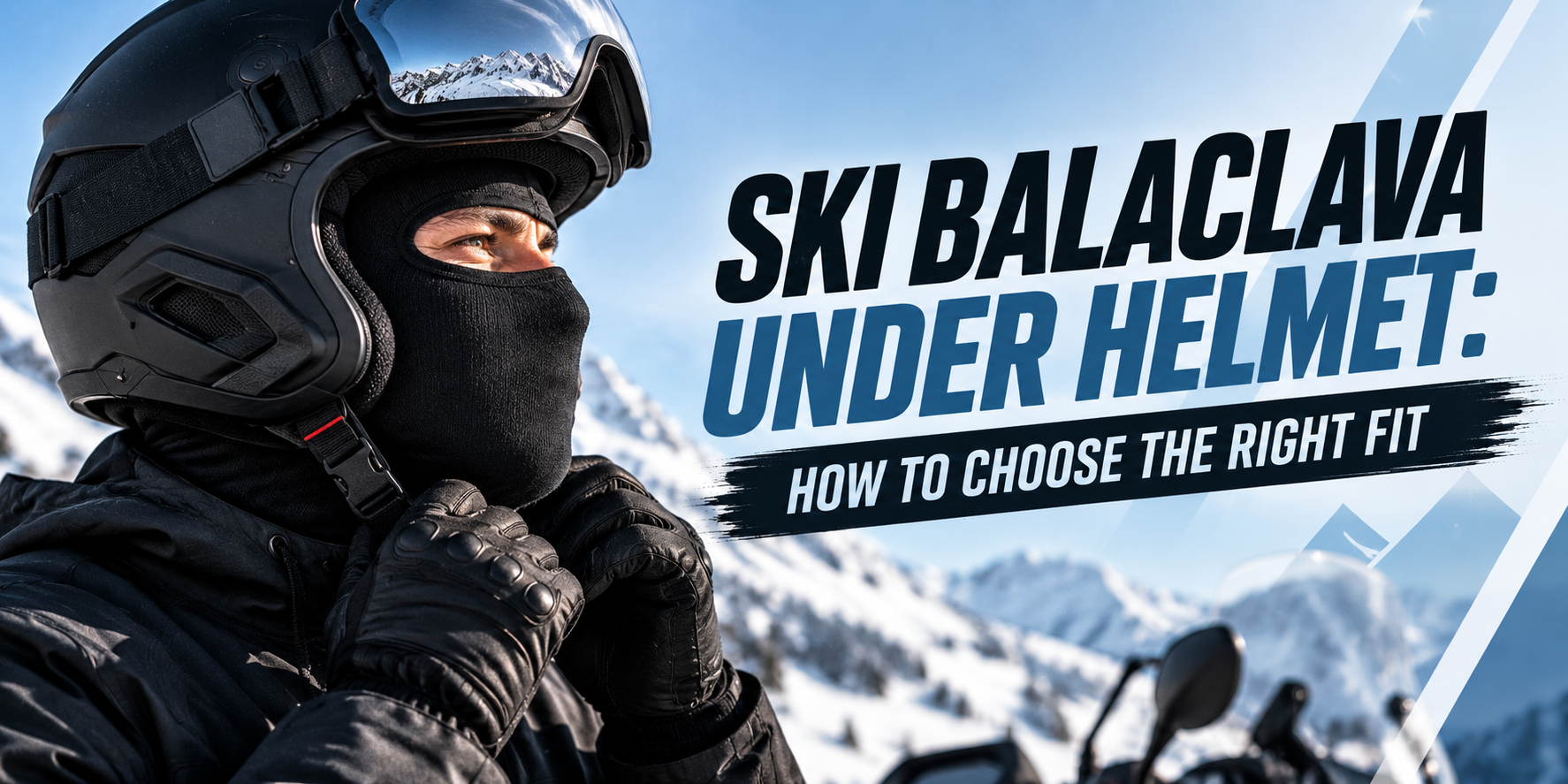
As the winter season starts and helmets come out of storage, many skiers and snowboarders want one more layer for the chairlift and the wind on the ridge. A balaclava fills the gap a helmet leaves open: ears, cheeks, chin and neck. The catch is that the wrong balaclava can change how the helmet fits, press on the temples or push the goggles out of place.
This guide explains how to choose and wear a ski balaclava under a helmet: thickness, seams, openings, sizing and the goggle gap. It is written for skiers and for the shops, ski schools, resorts and brands that buy for them this season. For the full range of styles behind the advice, see our overview of the different types of balaclavas.
Can you wear a balaclava under a ski helmet?
Yes. Most ski helmets are designed to be worn with a thin layer underneath, and a close-fitting balaclava is a common choice. The condition is that the helmet still fits as its maker intends: level, stable and without painful pressure.
A helmet protects the head from impact, but cold air still reaches the face and neck, especially on fast runs and exposed lifts. A balaclava under the helmet typically helps with:
- covering the ears, cheeks, chin and neck in wind and blowing snow
- closing the gap between helmet, goggles and jacket collar
- giving a smooth layer between your hair and the helmet padding
- keeping one layer on all day instead of switching hats and neck warmers
A loose winter hat or a chunky knit tends to bunch under the shell. A balaclava cut for helmets follows the head shape and stays put when you turn your head.
Thin or thick: how much balaclava fits under a helmet?
Thin usually wins. A lightweight or midweight balaclava adds warmth without changing the helmet fit much, while a heavy fleece or chunky knit can make the helmet tight, lift it at the front or create pressure points.
Thickness matters most at the crown, forehead and temples, where the helmet padding sits closest. A balaclava that feels pleasant on its own may feel very different after three hours under a snug shell. If your helmet sits noticeably higher or tighter with the balaclava on, choose a thinner fabric before you think about a bigger helmet.
Our article on the thin ski balaclava looks at lightweight options in more detail. As a rule of thumb, save the heavier layers for the neck and lower face, where there is no helmet on top.
| Fabric | Feel under a helmet | Typical use |
|---|---|---|
| Polyester/elastane stretch jersey | Thin, close to the head, stretches with movement | Active days, spring skiing, helmet liners |
| Merino wool jersey | Thin to midweight, soft against the skin | Cold resort days, long days on the hill |
| Polyester microfleece | Midweight, brushed inside, still fairly low-profile | Cold and windy days |
| Polar fleece | Heavier, can feel bulky at the crown | Very cold days; often used on the neck and face only |
| Acrylic rib knit | Stretchy but thicker; the rib can press under padding | Après-ski and town wear more than under a tight helmet |
For a wider comparison of fibres and knits, see balaclava materials compared.

Why do seams matter under a ski helmet?
Because the helmet presses the fabric against your head, a raised seam becomes a line of pressure. Flat seams and a smooth crown are usually more comfortable on a full ski day.
Many cut-and-sew balaclavas use flatlock seams: the fabric edges sit side by side and are joined flat, instead of overlapping into a ridge. Knitted balaclavas are often knitted to shape, which keeps seams to a minimum, although most still have a small seam or closing at the top.
When you try one on, run a finger over the crown and the sides above the ears. Thick overlocked seams, bulky labels or hard trims at the temples are the details that tend to become uncomfortable under padding. Look inside too: a printed care label or a small label at the neck is usually kinder than a stiff one at the crown.
Which face opening works best with a helmet?
It depends on the conditions and how much you talk, eat and breathe hard. One-hole styles give the most coverage, open-face styles breathe most easily, and hinged styles let you switch between the two.
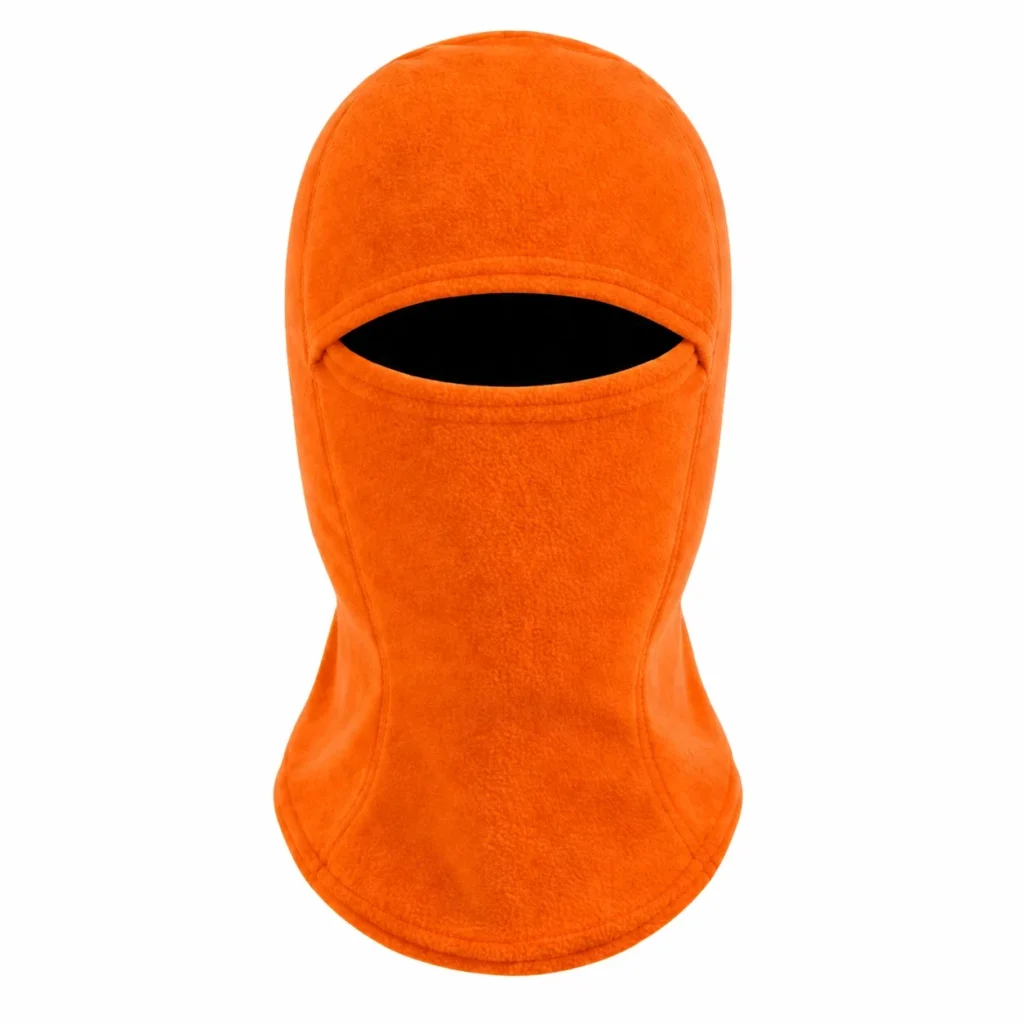
- One-hole (full face): a single opening for the eyes; the fabric covers nose, mouth and chin. Typically chosen for cold, windy days. A wide eye opening helps the goggles sit on skin rather than on folded fabric.
- Open face: covers head, ears and neck and leaves the face free. It breathes easily and tends to fog goggles less, which is why it is a usual choice as a helmet liner on our open-face balaclava page.
- Hinged or fold-down: the face panel is joined at the sides, so the lower part drops under the chin without bunching and lifts back up on the lift. Our convertible balaclava page shows the hinged, fold-down and detachable versions we make to order.
- Three-hole: separate eye and mouth openings. Comfortable for talking, but the bridge of fabric between the eyes can sit awkwardly under goggles.
Our guide to one-hole, two-hole, three-hole and open-face openings compares each style in more depth.
How should a ski helmet fit with a balaclava on?
The helmet should fit the same way with the balaclava as the helmet maker describes without it: level on the head, stable when you shake your head, and with the chin strap closing comfortably. If it does not, the balaclava is too thick or the helmet is the wrong size.
Helmets and balaclavas are both sized by head circumference. Measure around the head just above the eyebrows and ears; our balaclava size guide explains how, and lists our standard sizes: Adult for heads of about 54–61 cm and Kids for about 49–54 cm (roughly 4–12 years).
A practical way to test:
- Put the balaclava on and smooth it so no folds sit under the crown or at the temples.
- Put the helmet on and fasten the chin strap as usual, with the strap over the balaclava.
- Shake and nod your head: the helmet should move with your head, not rock on top of it.
- Wear it for ten to fifteen minutes indoors; pressure points often show up only after a while.
- If you are buying a new helmet, take the balaclava you plan to wear to the fitting.
If the helmet rocks or feels much tighter, go thinner first. A secure helmet fit matters more than an extra layer of warmth, and the helmet maker’s fitting instructions always come first.
How do you avoid a goggle gap?
The goggle gap is the strip of bare forehead between the helmet rim and the top of the goggles. A balaclava that covers the forehead closes it, as long as the fabric is thin enough that the goggles still sit flat.
Put the balaclava on first, then the goggles, then the helmet, and check the frame in a mirror. The goggle foam should rest on a smooth layer or on skin, not on a fold. Thick seams across the nose or forehead can lift the frame and let cold air in.
Fogging is often caused by warm breath travelling up under the goggles. A breathable fabric or a mesh panel at the mouth, and a nose section that sits snugly below the goggle frame, usually help. Our article on the ski balaclava for goggles covers this in detail.
Neck, ears and chin strap: what to check
The neck section should lie flat inside your jacket collar, and the ears should be covered without pushing against the helmet’s ear pads.
A longer neck or bib helps close the gap between helmet and jacket on cold lifts. A thick neck can bunch under the collar, so heavier fabric works better in the neck than at the crown. Around the ears, the fabric should stay in place when you turn to look over your shoulder, and the chin strap should rest on smooth fabric, not on a seam.
Snowboarders tend to look over the shoulder more, so the same checks apply; our guide to the snowboard balaclava under a helmet adds a few board-specific points.
How to choose a ski balaclava for under your helmet
Start with the conditions, then pick the thinnest balaclava that keeps you comfortable in them.
| Conditions | Usually works well | Opening |
|---|---|---|
| Spring skiing, mild resort days | Thin stretch jersey, mesh panels | Open face or one-hole |
| Cold resort days | Merino jersey or microfleece | One-hole or hinged |
| Wind on exposed lifts and ridges | Microfleece, thin crown with heavier neck and face | One-hole or hinged |
| Very cold days | Two-layer build: fleece or merino inner, wind-resistant outer | One-hole with mesh mouth panel |
For deep cold, a two-layer build with a wind-resistant outer usually matters more than a thicker inner layer; see how we make the extreme cold weather balaclava.
Final fit checklist
- The balaclava lies flat under the helmet, with no folds at the crown or temples.
- The helmet sits level and stays secure when you move your head.
- The chin strap closes comfortably over the fabric.
- Goggles sit flat, with no gap at the forehead.
- You can breathe and talk without the fabric pulling.
- The neck section sits smoothly inside your jacket.
For shops, schools and brands: ski balaclavas made to order
We make ski balaclavas to order from 50 pieces per design, in our own factory in Sialkot, Pakistan. You choose the opening, fabric, colours, logo and labels; Mr Balaclava’s name never appears on your products.
For helmet wear we can usually adjust the pattern: a thinner crown, flatlock seams, a wider eye opening for goggles, a longer neck or a hinged mouth panel. Sizes follow our Adult and Kids charts or can be graded to your own size chart. For children’s headwear, avoid cords and drawstrings at the hood and neck.
Planning ahead helps: a pre-paid physical sample takes about 5–7 days, standard production is approximately 14 days after sample approval, and express shipping by DHL, FedEx or UPS typically takes 3–6 working days. Shipping is agreed with you for each order and confirmed before shipment.
What to send for a quote
- Style and opening (one-hole, open face, hinged …) and how it will be used
- Preferred fabric, or the conditions so we can suggest one
- Quantity per design and sizes (Adult, Kids or your own chart)
- Logo files and decoration ideas, plus label and packaging needs
Our guide on how to order custom balaclavas walks through quote, samples, payment and timeline step by step. You can also browse our ski and snowboard balaclava range or read more about made-to-order balaclavas.

Frequently asked questions
What kind of balaclava goes under a ski helmet?
A thin, close-fitting balaclava with flat seams and a smooth crown usually works well. Stretch jersey, merino jersey and microfleece are common choices. Bulky knits and heavy fleece at the crown tend to make the helmet tight.
Does a balaclava under a ski helmet change the helmet size you need?
A thin balaclava usually does not, but a thick one can. Try the helmet on with the balaclava you plan to wear. If it only fits with no layer underneath, choose a thinner balaclava rather than a looser helmet, and follow the helmet maker’s fitting advice.
Should a ski balaclava be tight?
It should be snug but not tight. It should stay in place when you turn your head without pressing on the nose, cheeks or ears. Loose fabric tends to bunch under the helmet and leave gaps around the face.
Is a hinged balaclava good under a ski helmet?
Hinged styles are often helmet-friendly because the face panel drops under the chin without bunching, so you can breathe and talk on the lift and cover up again for the run. Check that the side joins sit flat under the chin strap.
Can I wear a balaclava under a snowboard helmet?
Yes, the same rules apply as for skiing: thin at the crown, flat seams and a helmet that still sits level. Snowboarders often prefer a little more stretch around the neck for looking over the shoulder.
Can you make ski balaclavas with our logo for a shop or ski school?
Yes. We make ski balaclavas to order from 50 pieces per design, with your logo, labels and packaging. Production is approximately 14 days after sample approval, and your quote confirms the price.
Ready to plan your winter range? See our full-face balaclava manufacturing page or ask for a quote with your style, quantity and logo.