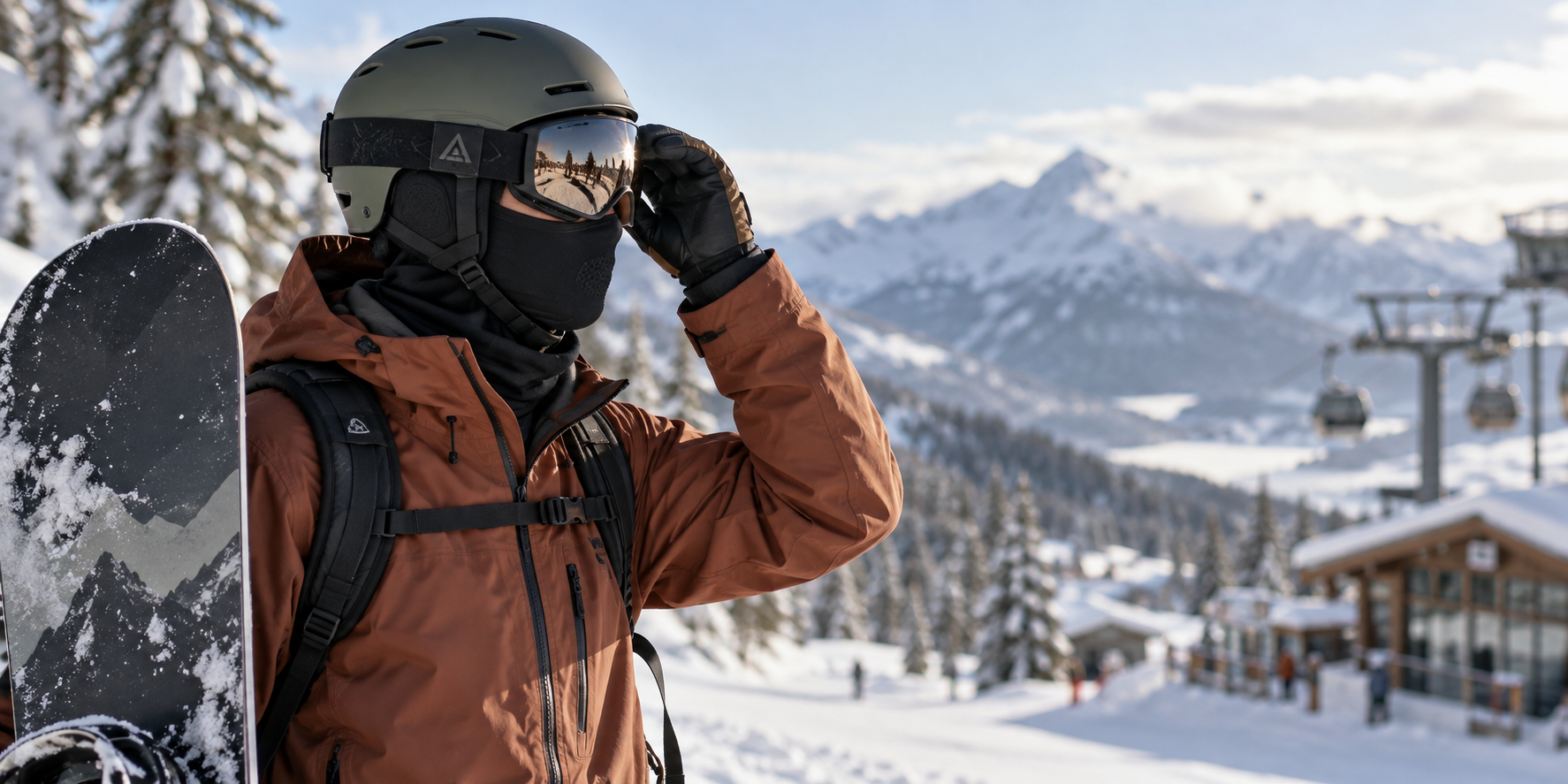
Wearing a balaclava under a snowboard helmet should feel seamless, not like an extra layer fighting against your gear. A well-fitted snowboard balaclava under helmet setup improves warmth, reduces fogging, and keeps you focused on the mountain instead of adjusting your gear mid-run. In this guide, we cover what makes a balaclava work well under a helmet and how to avoid common fit problems.
Why Helmet Compatibility Deserves Extra Attention
Many riders choose a balaclava based on warmth alone and overlook how it interacts with their helmet. Therefore, a great balaclava on its own can still perform poorly once paired with the wrong helmet fit.
Additionally, helmet compatibility affects more than comfort. A balaclava that creates gaps or excess bulk can interfere with helmet stability, which matters for both performance and safety. As a result, riders should evaluate their balaclava and helmet together, not as separate purchasing decisions, especially before committing to a full season of use.
Understanding How Bulk Affects Fit
Bulk is one of the most common issues riders run into when combining a balaclava with a helmet. Thick seams or heavy fabric can push against the helmet’s interior padding, creating pressure points during longer rides.
Choosing Low-Profile Construction
Look for balaclavas built with flat seams and thin, technical fabric rather than bulky, layered designs. This construction style reduces friction against helmet padding and keeps the overall fit closer to your head shape.
Comparing Fabric Thickness Options
Before choosing a specific product, it helps to compare fabric thickness against proven performance benchmarks. This guide to the best balaclava options breaks down fit and fabric criteria that apply directly to helmet compatibility, even though the guide originally focuses on motorcycle riding gear.
Testing Your Balaclava and Helmet Together
Fit testing shouldn’t happen separately for your balaclava and helmet. Riders who try each piece individually often miss compatibility issues that only appear once everything is worn together.
Checking for Gaps Near the Temples
Put on your balaclava, then your helmet, and check for gaps near your temples and forehead. These gaps let cold air in and can cause the balaclava to shift during movement, which becomes distracting during a full day of riding.
Confirming Goggle Alignment
Goggles add another layer to the fit equation. A balaclava that sits smoothly under your goggles reduces fogging and keeps your vision clear. Test your full setup, helmet, goggles, and balaclava together before your first run of the season.
Coverage Levels and Helmet Fit
Coverage style directly affects how a balaclava interacts with your helmet. Full-coverage designs behave differently under a helmet than lighter, partial-coverage options.
Full-Face Coverage for Maximum Protection
Riders who want complete face and neck protection often choose a full-coverage ski mask style. This design works well under most snowboard helmets, provided the fabric stays thin enough to avoid unnecessary bulk near the jaw and neck areas.
Lighter Coverage for Everyday Riding
On milder days, a lighter balaclava with less coverage often fits more comfortably under a helmet while still offering core wind protection. This option suits riders who prioritize breathability over maximum warmth.
Balaclava vs Neck Gaiter Under a Helmet
Some riders wonder whether a neck gaiter offers a simpler alternative to a full balaclava when it comes to helmet compatibility. Both options work, but they behave differently once a helmet enters the equation.
This comparison of the neck gaiter style explains how it differs from a full balaclava in terms of coverage and bulk. Neck gaiters typically sit lower on the face, which can reduce interference near the temples, though they offer less complete protection than a full balaclava during extreme cold.
Managing Warmth Without Adding Bulk
Extreme cold conditions require extra insulation, but added warmth shouldn’t come at the cost of a comfortable helmet fit. Finding the right balance matters for riders facing harsh mountain climates.
This resource on thermal balaclava options explains when extra warmth becomes necessary and how manufacturers manage insulation without significantly increasing bulk. This information helps riders choose gear suited to their coldest riding days without sacrificing helmet compatibility.
Common Mistakes Riders Make
Several recurring mistakes lead to poor snowboard balaclava under helmet compatibility. Recognizing these issues early helps riders avoid discomfort once they’re already on the mountain.
Skipping the Trial Fit
Many riders skip trying their full setup together before their first ride of the season. This mistake often reveals fit issues mid-run, when adjustments become far more difficult to make.
Choosing Fabric Without Enough Stretch
Fabric with limited stretch rarely conforms well to different head shapes under a helmet. Riders with larger or smaller heads than average often notice this issue most, since rigid fabric creates pressure points rather than adapting to natural contours.
Ignoring Seam Placement
Seams positioned directly under helmet padding often cause discomfort during longer rides. Checking seam placement before purchasing helps riders avoid this issue entirely.
Caring for Gear That Fits Well
Proper care helps maintain fit quality over time. Washing your balaclava regularly with a gentle detergent prevents fabric buildup that can affect stretch and shape. Avoid high heat when drying, since it can damage the elasticity that keeps your balaclava fitting well under a helmet season after season.
Final Thoughts
A snowboard balaclava that works well under a helmet comes down to fabric thickness, seam placement, and proper fit testing. It should feel like a natural extension of your gear rather than an added layer competing for space. In short, testing your full setup before hitting the mountain prevents most common fit issues before they start, saving you time and frustration once you’re already on the lift. Use the guidance above to find a balaclava that pairs comfortably with your helmet all season long.
FAQs
Why does my balaclava feel too bulky under my helmet?
Bulk usually comes from thick seams or heavy fabric. Choosing a low-profile design with flat seams typically solves this issue.
Should I test my balaclava with my helmet before the season starts?
Yes, testing your full setup, including goggles, helps catch fit issues early, when they’re much easier to address.
Is a neck gaiter a good alternative for helmet compatibility?
Neck gaiters can reduce bulk near the temples, though they offer less complete coverage than a full balaclava during extreme cold.