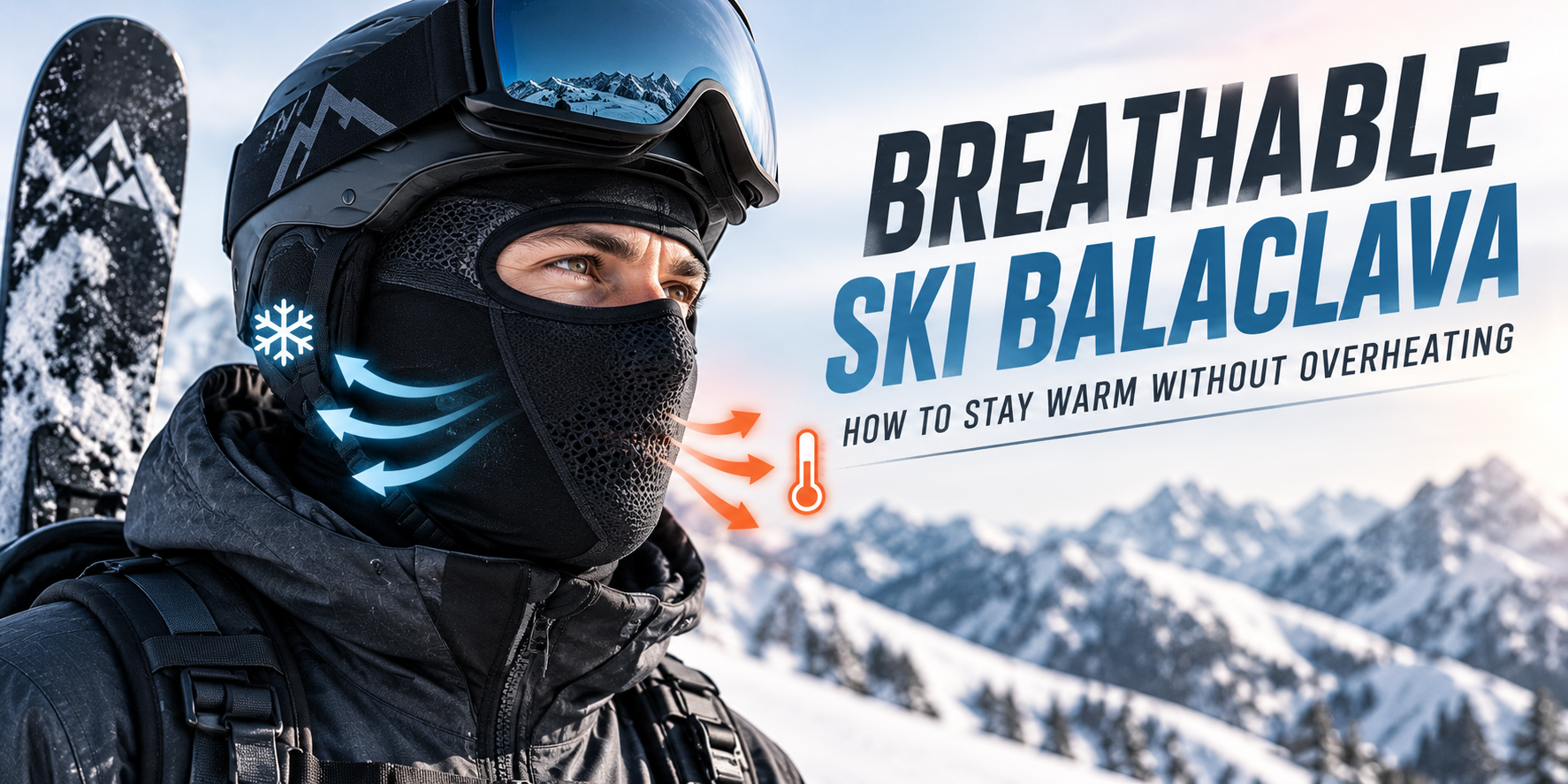
Skating burns a lot of calories. The heat that’s released in your body is rapid during activities such as carving down runs, hiking to a lift line, or doing a run through varying terrain — and it has to go somewhere. A breathable ski balaclava is one of the biggest winter sport annoyances – being warm enough to withstand the cold, yet not so warm that you become sweaty and uncomfortable. The trick isn’t to wear more layers than necessary, but rather to select the fabric and design which will achieve the proper balance.
For a side-by-side look at every yarn and fabric, see balaclava materials compared.
Why Overheating Occurs Under a Balaclava
Ironically, the most frequently reported issue among skiers wearing heavy, non-breathable balaclavas is overheating. If a balaclava retains body heat and moisture from the body and does not allow it to escape, the sweat will be trapped against the skin. Once you slow down or stop moving, all that moisture cools quickly and you become even colder and clammier than if you hadn’t been wearing anything. That is why it is important to consider breathability as well as insulation when making gear selections for the slopes.
The Role of Breathable Fabric
The most important thing to consider for a breathable ski balaclava is its fabric. Synthetic blends such as polyester and spandex allow air to flow through the fabric and allow moisture to evaporate from the skin through the fabric’s capillary action. Merino wool is another great choice, as it is naturally temperature regulating, anti-odour and breathable, with a natural structure that is less bulky than conventional fleece. Thicker double layer fleece is great for insulation, but will hold more heat and moisture, so is more effective for low activity, extreme cold situations than high activity, skiing in hot weather.
Many manufacturers have started to add in more than one fabric to their balaclavas, with a warmer material around the forehead and ears, and a lighter, more breathable material around the mouth and chin where heat and moisture are most concentrated.
The ventilation zones exist to make a difference.
Targeted ventilation is one of the most obvious features of a good breathable hat. Strategically positioned mesh panels get warm, moist breath out of the face rather than on the inside of the fabric or fogging up goggles. Some designs even take this mesh construction one step further and add to the underarm-style vents in the vicinity of the jaw line to achieve even more effective airflow during intense efforts when climbing a slope or pushing through difficult terrain.
Moisture-Wicking Technology
There is a close connection between moisture management and breathability. A good balaclava keeps sweat from dripping down the back of the neck and onto your face, instead distributing it outwards from the skin over the outer surface of the fabric and allowing it to evaporate more rapidly. This is particularly important in the prolonged days on the mountain where there are regular cycles of exertion and rest and therefore regular changes in temperature. If moisture is not wicked, sweat cannot escape, resulting in chills after stopping to rest at the lodge or when you aren’t moving.
Fit: Not too tight, not too loose!
The snugness or tightness of the fit is important in thermoregulation. If the fit is too tight, high pressure can make the fabric trap moisture and block air flow, ruining the fabric’s ability to wick away moisture and circulate air. If it’s too loose, it lets cold air in around the perimeter, defeating the insulation that’s in place. Search for stretchy fabric that moves with your face and conforms to all different head shapes while keeping the fabric even and not bunching/gapping.
Balancing warmth with layering strategy.
A breathable balaclava is most effective in a layered system or as part of an advanced cold weather outfit, rather than as a standalone option to deal with severe cold. A lightweight, breathable balaclava combined with a warm hat or helmet liner means you can layer for different activities and weather conditions. For a complete setup for cold weather, it’s helpful to know how balaclavas work when skiing, particularly in relation to helmets and goggles, as well as wind on the mountain; see our article on cold wind protection when skiing.
The balaclava is a good option when other hats are not available
Balaclavas provide full coverage for the head and face, while others choose versatile convertible styles that they can transform to suit the weather. A garment that works as both a face covering and a neck gaiter gives you greater control over airflow. You can lower it during a challenging ascent to let in cool air, then pull it back up when wind chill increases during the descent.
Mesh Construction for Maximum Airflow
If you are one of those hot skiers that are skiing in cold weather, there is one type of balaclava that is one of the most breathable – it is the dedicated mesh balaclava manufacturer. These designs feature panels of perforated fabric or open-knitted fabric in various areas of the balaclava to allow for optimal ventilation whilst maintaining wind protection and some thermal insulation. They’re especially ideal for use in spring skiing when resorts are still warm, or for high-intensity backcountry touring and where heat management is more important than maximum insulation.
Open face designs are those that allow airflow and visibility
For those who prefer something less restrictive, there is an open-faced type of balaclava which allows more air to circulate through the garment to keep the face, ears, and neck exposed to fresh air. The ski style is appealing to skiers who prefer warmth, but not an enclosed feel, and it is ideal on days with lower wind chill or mild temperature.
Open-Face Designs for Ventilation and Visibility
For those who prefer not to wear a full-coverage hat, an open-face balaclava provides a more breathable option. It still covers the head, ears, and neck while leaving more of the face exposed to fresh air. Many skiers choose this style because it provides warmth without the restrictions of a full-face design. It works especially well on days with lower wind chill or cooler temperatures.
Final Thoughts
Warmth on the slopes doesn’t have to come at the expense of overheating. The right ski balaclava is constructed from a combination of insulating and moisture-wicking material, has the right amount of ventilation, and fits properly to allow your body to regulate its temperature naturally for the entire day. From mesh-panelled to convertible neck gaiter to open face, breathability is key to keeping you warm and dry from the cold.
FAQs
Can a balaclava be both warm and breathable at the same time?
Yes. Balaclavas built with hybrid fabrics — combining insulating panels with mesh or moisture-wicking zones around the mouth and nose — provide warmth while still allowing airflow and sweat evaporation.
What fabric is most breathable for a ski balaclava?
Lightweight synthetic blends like polyester-spandex and merino wool are among the most breathable options, offering moisture control without excessive bulk or heat retention.
Why does my balaclava make my goggles fog up?
Fogging usually happens when warm breath is trapped near the face instead of escaping through ventilation. Choosing a balaclava with mesh panels around the mouth and nose helps redirect breath away from your goggles.