A beanie is one of the simplest products to launch under your own name. It is usually one size or a few sizes, it needs no complicated fit, and a well-made cuffed beanie with a clear logo sells to fashion, outdoor, sports and merchandise customers alike. That is why so many new apparel brands start with headwear.
This guide walks through how to start a beanie brand, from the first idea to the first delivery: who you sell to, which styles and yarns to choose, how to brand them, what a first order involves and how to plan the timing. If you already know your range and want the production steps in detail, our guide on starting a private label beanie line covers the brief, samples and payments.
What do you need to start a beanie brand?
You need a clear customer, a small range of two to four designs, a logo or brand mark, a manufacturer that accepts small runs, and a way to sell. Everything else can grow once the first designs sell.
| Step | What you decide | Covered in |
|---|---|---|
| 1. Niche | Who buys, where they wear it, what they pay | Step 1 |
| 2. Styles | Cuffed, fisherman, slouchy, pom-pom and others | Step 2 |
| 3. Yarn and knit | Feel, warmth, colours, price level | Step 3 |
| 4. Branding | Embroidery, patch, knitted-in logo, labels | Step 4 |
| 5. Sizes | One size, S/M and L/XL, kids | Step 5 |
| 6. Labels | Brand and care labels, hang tags, packaging | Step 6 |
| 7. Sample and order | Sample, quantity per design, costs, timing | Steps 7–10 |
| 8. Selling | Own shop, wholesale, events, merchandise | Step 11 |
Step 1: Who is your beanie brand for?
Start with one type of customer and one reason to buy. A beanie brand for skateboarders looks different, and costs differently, from one for hikers, a football club or a coffee shop selling merchandise.
A few questions help you narrow it down:
- Who wears it? Age group, style, adults or kids.
- Where is it worn? In the city, on the slopes, on the trail, at matches, at work.
- What does it replace? A plain shop-bought beanie, a gift, a uniform item, a team accessory.
- What price feels right to them? This decides your yarn and branding more than anything else.
- What makes yours different? A colour story, a knitted-in pattern, a softer yarn, a community or a design voice.
Write the answers down in a short brand brief. It keeps the range focused and makes every later choice, from yarn to packaging, quicker.
Step 2: Which beanie styles should you start with?
Most new brands begin with one classic cuffed beanie and one or two styles that fit their niche. A small range is easier to sample, photograph and sell than many similar designs.
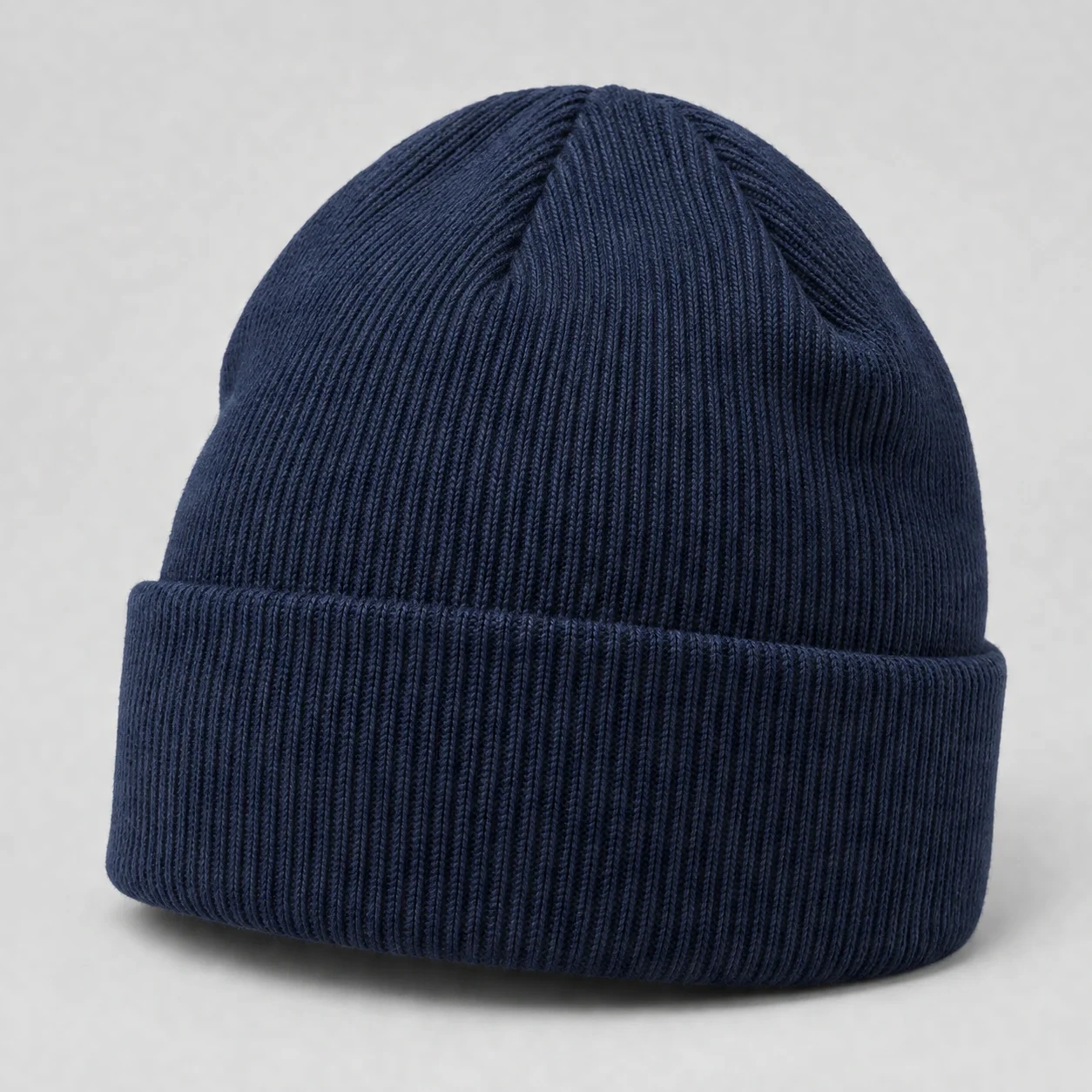
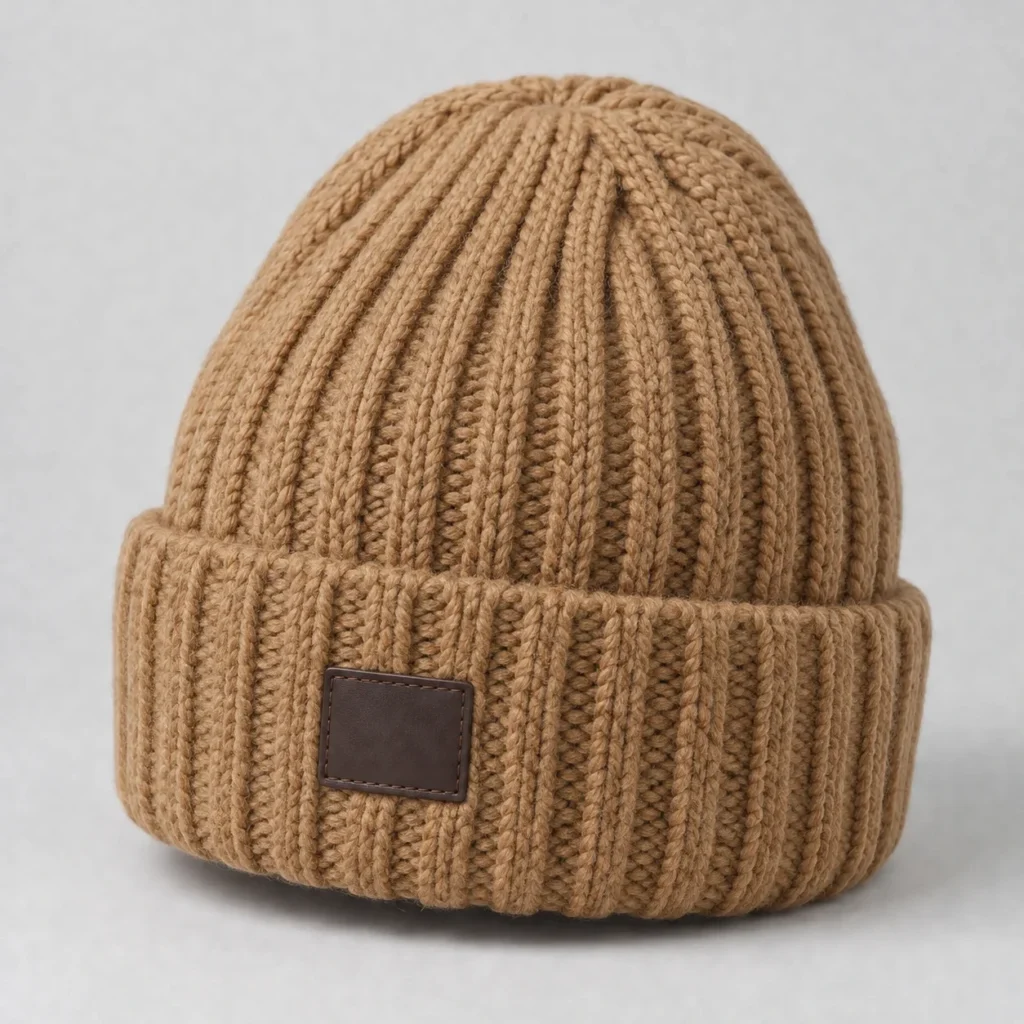
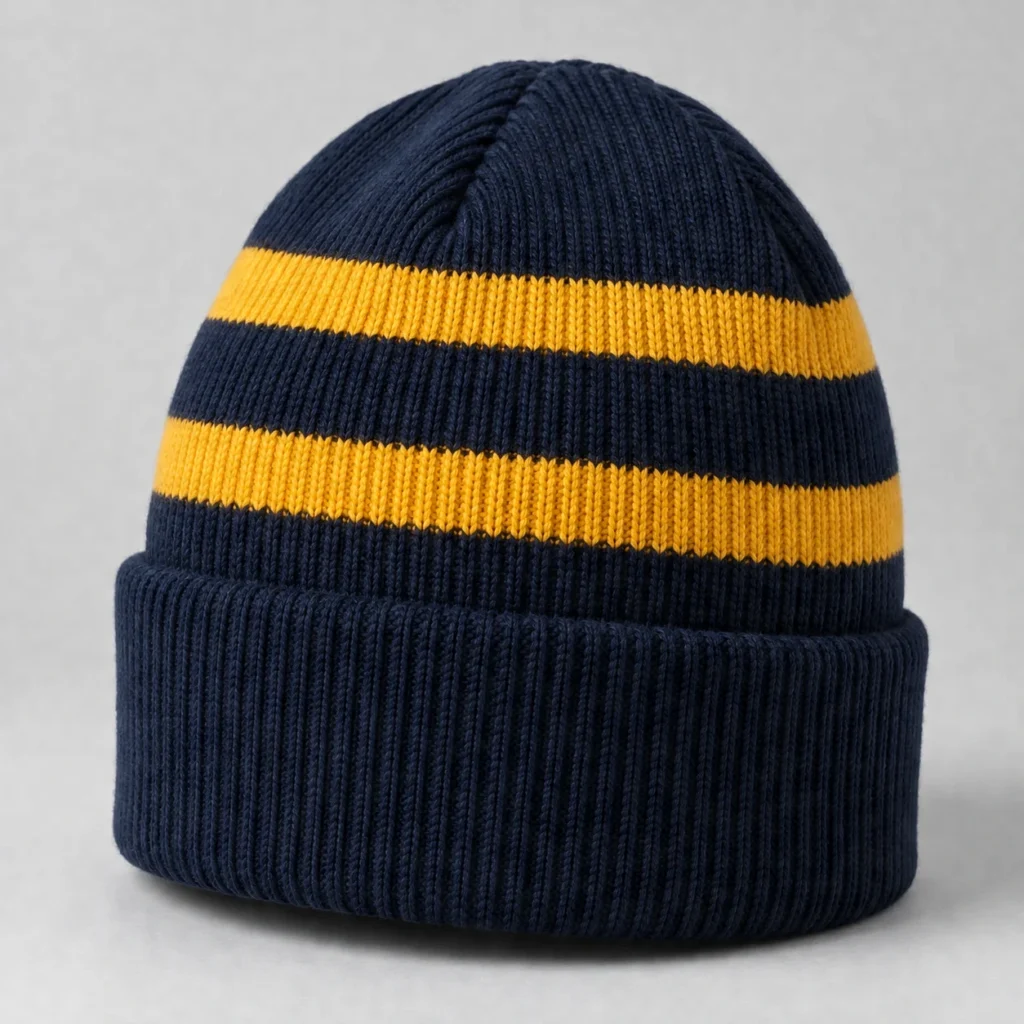
- Cuffed beanie: the classic, with a fold-up cuff that gives the logo a clear place. A safe first design for almost any brand.
- Fisherman beanie: short, cuffed and sitting above the ears; popular with streetwear and lifestyle brands.
- Slouchy or oversized beanie: a relaxed fit for fashion and streetwear ranges.
- Pom-pom beanie: a winter and ski favourite, with a yarn or faux fur pom-pom.
- Fine-knit sports beanie: close-fitting, for runners, cyclists or under a helmet.
Our overview of the different types of beanies explains every shape, knit and trim, and the cuffed and logo beanies in our catalogue are a common starting point for a first design.
Step 3: How do you choose the yarn and knit?
Choose the yarn by your customer’s price expectations and the season, then the knit by the look you want. The yarn decides how the beanie feels, how warm it is and how the colours look.
| Yarn | What it tends to do well | Often chosen by |
|---|---|---|
| Acrylic | Light, soft, easy care, bright colours | Streetwear, merchandise, value ranges |
| Wool blends | Warmer, a natural look and feel | Outdoor and lifestyle brands |
| Merino | Fine and soft, less prickly for most people | Higher-priced and outdoor ranges |
| Cotton | Breathable, less warm | Spring, autumn and mild climates |
| Cashmere blends, mohair, alpaca | Very soft or fluffy hand feel | Fashion and gift collections |
The knit matters as much as the yarn. A fine gauge (more needles per inch on the knitting machine) gives a smooth, close knit that suits small logos; a chunky gauge gives a bold, hand-made look; our guide to beanie gauges and yarns explains both in detail. A classic acrylic rib knit stretches well and keeps its shape. Recycled and organic yarns are available on request, supplied with the mill’s or spinner’s certificate. For every yarn and colour option, see our custom beanies page.
Step 4: How will you put your brand on the beanie?
The usual choices are embroidery, a patch, a knitted-in (jacquard) logo or a woven label on the cuff. Each one gives a different look and suits different yarns.
- Embroidery: flat or 3D, the most common choice for a logo on the cuff.
- Patches: woven, leather-look, rubber or silicone; a clean way to brand chunky or fluffy yarns.
- Knitted-in logo: the design is knitted into the fabric, usually in 2–4 colours; small text needs a fine gauge.
- Labels: a woven label sewn onto the cuff or seam is subtle and works on almost any beanie.
Fluffy yarns such as mohair, alpaca or chenille tend to blur fine detail, so a patch, a label or a bold knitted-in design usually works better on them than small embroidery. Flat prints such as screen printing do not sit well on a knit. Our guide to logo options for custom beanies compares the methods and placements. We only use designs you own or are licensed to use.
Step 5: Which sizes do you need?
Most beanie brands start with one adult size. Our catalogue beanies fit about 54–60 cm head circumference thanks to the stretch of the knit.
If your customers need a closer fit, beanies can be made in adult S/M (about 54–57 cm) and L/XL (about 58–61 cm), in kids’ and baby sizes, or graded to your own size chart. Kids’ beanies have their own pattern, no detachable pom-poms and no cords that could catch. Our beanie size guide lists the measurements and how to check them.
Step 6: What about labels and packaging?
Labels and packaging turn a beanie into a branded product. Plan them at the same time as the design, because they are part of the sample and the quote.
- A brand label: woven, satin or printed, on the cuff, the seam or inside.
- A care and content label: fibre content and country of origin are usually required by law, together with care instructions; check the rules where you sell.
- Hang tags with your story, price or barcode for retail.
- Packaging: polybags, boxes or gift packs, with barcodes if shops ask for them.
Mr Balaclava’s name never appears on your products. Our Help Center page on labels and packaging lists the options.
Step 7: How big does your first order need to be?
Our minimum order is 50 pieces per design. A first range of three designs therefore starts at 150 pieces, and each design can be reordered on its own once it sells.
A small first run keeps your money free for marketing and lets you test which colours and styles your customers really want. Many founders start with fewer designs in deeper quantities rather than many designs in very small ones, because one strong design is easier to photograph and promote. Our Help Center explains the minimum order quantity in more detail.
Step 8: Why order a sample first?
A sample shows you the yarn, the colour, the fit and the logo before bulk production starts. It is the step that saves your brand from surprises later.
There are two options. A pre-paid physical sample takes about 5–7 days, is paid 100% in advance and is sent to you to hold in your hand. A free pre-production sample is made after you confirm the order and pay the 30% advance, and you approve it by photos, videos or a video call. A tech pack makes the sample right the first time; our guide on how to write a beanie tech pack shows what to include, and a reference beanie or photos are enough to start.
Step 9: How much does it cost to start a beanie brand?
The beanies themselves are only part of the cost. The unit price depends on yarn, gauge, size, colours, branding, trims and quantity, and it usually falls as quantities rise.
When you plan your budget, add up the whole landed cost per piece, not just the factory price:
- The unit price of the beanies, including logo and trims.
- The sample, if you choose a pre-paid physical sample.
- Labels, hang tags and packaging.
- Shipping, which is charged by weight and agreed for each order before shipment.
- Import duties and taxes in your country.
- Photography, website or marketplace fees and marketing.
Set your selling price from that landed cost so each sale leaves room for marketing, returns and the next order. Our custom beanie price guide explains what moves the price per piece, and your quote confirms the exact price for your designs.
Step 10: How long does it take, and when should you start?
From an approved sample, bulk production usually takes about 14 days, followed by shipping. The planning before that, from the brief to the approved sample, often takes longer than production itself.
| Stage | Typical time |
|---|---|
| Brief and quote | Agreed for each brief |
| Pre-paid physical sample | About 5–7 days, plus shipping |
| Bulk production | About 14 days after sample approval |
| Express shipping (DHL, FedEx or UPS) | Usually 3–6 working days |
Bulk orders are paid in three steps: 30% in advance, 30% during production and 40% when the goods are ready to ship. Beanie demand peaks in autumn and early winter, so brands that want stock for the next autumn and winter season (FW27) usually plan their range and samples well ahead, leaving time to photograph the beanies and open pre-orders before the cold weather arrives.
Step 11: Where can you sell your beanies?
Most new beanie brands combine two or three channels. Which ones suit you depends on your niche and how much time you can spend on each.
- Your own online shop: full control over the brand, prices and customer contact.
- Online marketplaces: a larger audience, with fees and more competition.
- Wholesale to shops: boutiques, ski, surf and outdoor shops often buy small quantities of a few designs.
- Markets, pop-ups and events: direct feedback on colours and styles, and a chance to meet your customers.
- Merchandise and collaborations: clubs, bands, cafés, companies and creators who want beanies with their own logo.
Whichever you choose, good photos, a clear size note and honest care instructions help customers buy with confidence. Keep your tech pack and approved sample so that every reorder matches the first run.
Starting your beanie brand with Mr Balaclava
We knit and finish beanies in-house in Sialkot, Pakistan, under your label, from 50 pieces per design. You can start from one of our catalogue styles and add your own colours and logo, or send your own design.
What to send for a quote
- Your niche and the styles you have in mind, or a reference beanie or photos.
- Yarn and colours, with Pantone references if you have them.
- Your logo and how you want it applied.
- Sizes, and the quantity per design.
- Labels, hang tags and packaging.
- Your delivery country and the date you need the goods.
Not sure how to turn an idea into a design? Our design support team can help with mockups and placements before the sample.
Frequently asked questions
How do I start my own beanie brand?
Choose one clear customer, design two to four beanies with your logo, pick a yarn that fits your price level and order a sample before bulk. Then plan labels, packaging and where you will sell, and order a small first run.
How many beanies do I need for a first order?
Our minimum is 50 pieces per design. A first range of three designs therefore starts at 150 pieces, and each design can be reordered on its own.
Can I start a beanie brand with no design experience?
Yes. Many brands start from a catalogue style in their own colours with a logo on the cuff. A reference beanie or a few photos are enough for us to quote, and the mockup and sample let you check the design before bulk.
Is it worth starting a beanie brand?
It can be a good first product because beanies are simple to size, easy to ship and sell to many kinds of customers. Success usually depends more on a clear niche, good photos and steady marketing than on the product alone.
How long does it take to make custom beanies?
A pre-paid physical sample takes about 5–7 days. Bulk production usually takes about 14 days after sample approval, and express shipping then usually takes 3–6 working days.
Ready to plan your range? Browse the beanie catalogue or ask for a quote with your styles, colours and quantities.