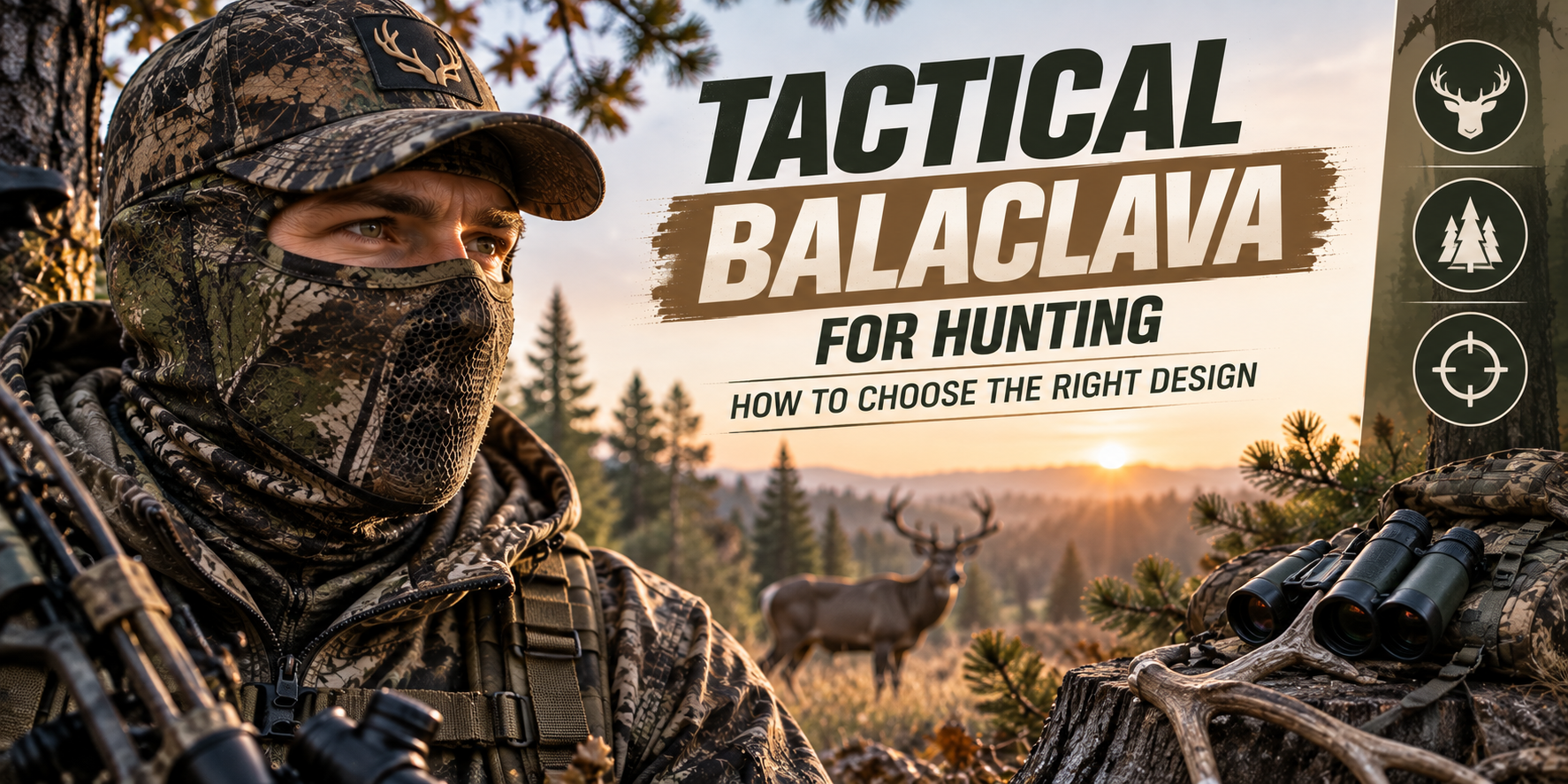
A hunting tactical balaclava should offer a comfortable fit for the face and neck, and should help you control the wind, the cold, the moisture and the activity level. The right design should also be able to fit easily under a hood, cap or helmet without causing any movement or visibility issues. So, hunters should consider fabric, breathability, coverage, fit, and weather protection when making their selection. Also, the color and construction should be appropriate to the environment as mild woodland conditions, cold mornings and high output movement can demand vastly different performance.
Select Fabric for the Weather
The material should be appropriate for temperature and activity. Polyester or nylon blends are good choices if you are active and need to move around frequently, as they tend to dry quickly and absorb sweat well. Meanwhile, fleece and merino wool can provide more warmth during colder conditions. So, a hunting tactical hat should not be based on thickness. Rather, select a fabric that offers sufficient protection without retaining too much heat. Our fabric guide covers the performance properties of technical synthetics, wool and other performance fabrics in harsh outdoor conditions.
Breathe while moving
Body heat can rise rapidly when walking on rough terrain, climbing or carrying equipment. This means that a face covering can feel damp and uncomfortable if it is not well-ventilated. Breathable design lets heat and moisture vapor out while still covering exposed skin. Furthermore, the use of thinner or ventilated fabric around the mouth can facilitate breathing during active use. But over-ventilation can decrease protection in high winds, so the ideal design should optimize airflow and coverage.
Pay attention to effective moisture control
When it comes to long hours outside, sweat management is important. So, the tactical balaclava for hunting you select should wick sweat away from the skin rather than trapping it in one spot. Performance synthetics tend to dry quicker than cotton, and merino wool can naturally handle moisture and temperature. Furthermore, when activity levels vary during the day, quick-drying fabric is more useful. A damp balaclava can be warm when in motion, but cold when at rest.
Match Coverage to the Environment.
Depending on weather and terrain, hunters may require different coverage. Full face designs will help to shield the cheeks, ears, jaw and neck from wind and cold, while open or convertible designs will allow more air to circulate during cooler weather. So, when it comes to hunting, opt for a tactical balaclava that offers sufficient coverage without compromising your hearing, vision, or natural head movements. Also, longer neck coverage can be tucked under a jacket and minimize exposed gaps in colder weather.
Consider Low-Profile Construction
Bulky seams and heavy fabric may cause discomfort when worn under a hood, cap or protective headgear. So, low profile construction is generally more suitable for long-term use. Stretch fabric can minimize bunching and flat seams can minimize rubbing around the forehead, ears and temples. Furthermore, a snug fit will remain more stable when you move your head or adjust other gear. A tactical range is a group of lightweight fabrics, breathable mesh, thermal fleece and other fabrics used in the outdoors.
Select a secure but comfortable fit.
Loose fabric can move around the eyes or mouth, and a mask that is too tight can cause pressure during extended use. Thus, the balaclava should be tight enough to not impede jaw or neck motion. Stretch fibers can help the fabric conform to the shape of the head and restore it to its original position following movement. Also, the lower part should be snugly enclosed in outer garments. The ideal hunting tactical balaclava should be secure enough to not require constant readjustment.
Consider color and concealment
Bright or contrasting colors can be important in hunting situations because they can be conspicuous against the natural background. Thus, hunters tend to favor earth tones, dark neutrals, or camouflage-like patterns that blend in with the surroundings. But the requirements for visibility differ depending on the activity and area, so users should also adhere to the applicable hunting-safety rules. Furthermore, printed fabrics should not introduce a stiff surface layer, but rather retain breathability and flexibility.
Keep the wind out without getting too hot.
Wind protection is important in exposed areas, early morning and colder seasons. A tighter outer surface may help minimize wind around the cheeks, ears and neck. But the hunting tactical hat should still have enough ventilation when in motion. So zoned construction can be effective, with heavier fabric on exposed surfaces and lighter panels around the mouth. This way, the mask will not be too heavy, but it will still minimize wind exposure.
Keep Hearing and Vision Clear
A hunting balaclava should cover the face without compromising situational awareness. Thus, the eye opening should be clear and the ear area should not be too thick. Ears covered with heavy fabric may make it harder to hear sounds, particularly when using the device outdoors in quiet environments. Also, loose fabric around the eyes can move or obstruct eyeglasses. A good fit should be stable and not obstruct natural vision and hearing.
Consider a Full-Coverage Tactical Style
A traditional one-hole design offers wide coverage around the head, neck and lower face, which some hunters prefer. A tactical mask is a full coverage knitted mask that is flexible, warm and wind resistant for outdoor use. But knitted construction can be too hot in high-output activity or in mild weather. So, only use this type of product if the conditions you expect are worth the additional insulation.
Use layering to adapt to changing conditions.
Layering can offer more options than a single bulky face covering. For instance, a lightweight balaclava can be used during movement, and a hood or outer warmer layer can be used when the temperature drops. So, a hunting tactical hat should be part of a complete outfit, not a standalone piece. Furthermore, thinner base layers tend to conform better to rapidly changing conditions.
Care for the Fabric Properly
Regular cleaning helps remove sweat, dirt, and skin oils that can affect comfort and fabric performance. Therefore, follow the care instructions for the specific material. Synthetic fabrics usually dry quickly, while wool may require gentler washing. In addition, allow the balaclava to dry fully before storing it. Our wear guide also covers practical fit and layering considerations for different balaclava styles.
Final Thoughts
Choosing a tactical balaclava for hunting requires a balance of breathability, moisture control, weather protection, fit, coverage, and fabric weight. Therefore, avoid selecting a design based only on appearance or warmth. Instead, consider the season, terrain, activity level, and equipment you normally use. Moreover, look for stretch, low-profile seams, good visibility, and enough neck coverage for your environment. The right design should support comfortable outdoor movement while protecting exposed skin from changing conditions.
FAQs
What material works best for hunting balaclavas?
Lightweight synthetic blends work well for active use, while merino wool and fleece can provide more warmth. Therefore, the best material depends on weather and activity level.
Should a hunting balaclava cover the whole face?
Full coverage can help in cold or windy conditions, while partial or convertible coverage may feel better in mild weather. Choose according to your environment.
Is camouflage necessary?
Not always. Earth tones and neutral colors can also suit outdoor environments. However, users should follow any visibility requirements that apply to hunting in their area.