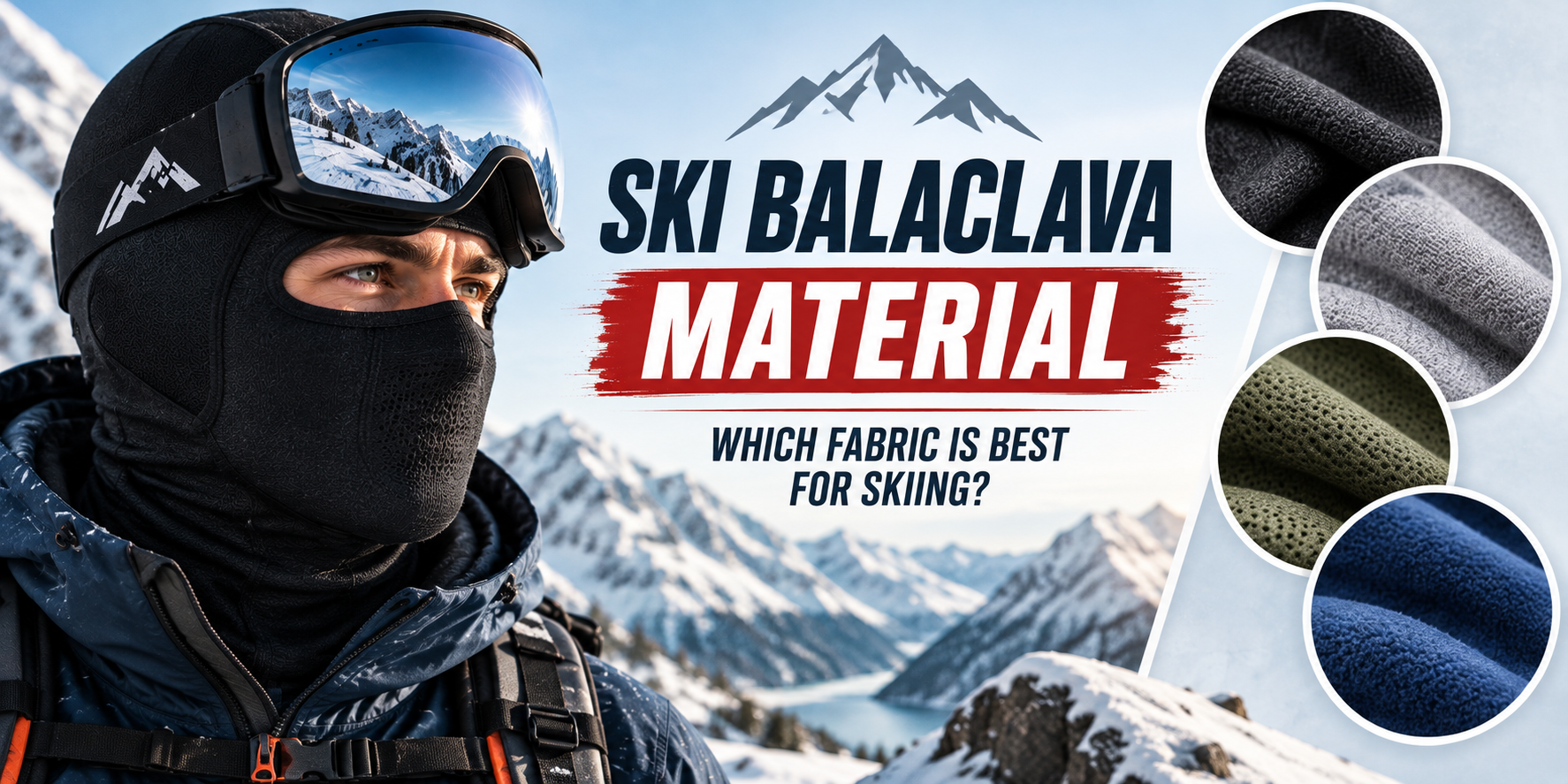
The material a ski balaclava is constructed from is as important as the fit or style. The “best” material varies greatly depending on the type of skiing you do, the weather conditions you encounter, and how much you perspire when you are active. Knowing the pros and cons of each popular ski balaclava material will help you select equipment that will work well from the first chair to the last run of the day.
For a side-by-side look at every yarn and fabric, see balaclava materials compared.
Fleece is the classic winter sports fabric
Fleece is still one of the most popular materials for ski balaclavas and it’s not hard to see why. It is soft, light, warm for its weight and excellent at retaining heat near the body. Fleece balaclavas are particularly suitable for extreme cold or low activity situations, like riding chairlifts or standing around at high altitude viewpoints. The downside is breathability: thicker fleece will hold moisture on days of high output or on warmer days at the resort.
Merino Wool: Natural Performance
Merino wool is a popular choice among skiers seeking natural fiber performance without the itchiness of traditional wool. It maintains temperature well, resists odors for several days of wear, and controls moisture by absorbing vapor and releasing it to the air. Although Merino costs more than synthetic options and takes longer to dry when wet, it offers greater comfort and can last for several days. Therefore, skiers who prefer natural materials often choose Merino as a great option.
Polyester and Synthetic Blends
Polyester and spandex blends are popular for their affordability, quick-drying properties, and stretch. They are a good option for high-intensity skiing where sweat management is important, as they wick moisture away from the skin efficiently. They are also more affordable and less maintenance than natural fibers such as merino wool. The downside is that synthetic fabrics provide less insulation per unit of thickness than fleece or wool. Therefore, many people pair them with a warmer base layer in very cold weather.
Cotton is not recommended for most situations
Cotton is a popular fabric for everyday wear, but it doesn’t work well for ski balaclavas. When sweat or snow wets cotton, the fabric retains moisture and loses its insulating ability, making your skin feel cold and clammy. This is why most ski-specific balaclavas steer clear of cotton and opt for moisture-wicking synthetics or natural fibers such as merino wool, which are much better at absorbing moisture.
Windproof Membranes and Technical Fabrics
Some balaclavas have a windproof membrane under the outer fabric for skiers who are exposed to extreme wind chill. This addition prevents cold air from entering the material selection without adding much bulk. Technical knit fabrics with built-in stretch and moisture control are also becoming more popular, providing a blend of insulation, breathability, and durability that is ideal for challenging outdoor activities such as alpine skiing and backcountry touring.
Matching Fabric to Skiing Conditions
The selection of the appropriate material depends on the conditions and activity level. A resort skier who faces moderate cold and high exertion may find a polyester-spandex combination ideal. However, a skier who faces extreme, prolonged cold at high elevation may prefer fleece or a heavier merino wool weave. A detailed comparison of the fabrics of ski performance can help you understand which properties are most important for your skiing environment, whether it’s wind resistance or breathability during exertion.
Weighing Cost, Durability, and Comfort
In addition to raw performance, cost and durability are also considerations. Synthetic blends are typically the most affordable and low-maintenance, whereas merino wool and technical knit fabrics tend to be more expensive but can offer greater durability and performance in various situations. If buyers wish to compare properties side by side, including weight, breathability and moisture management for each fabric family, they can view a detailed breakdown of the materials to make an informed decision based on their needs.
Where to Find the Right Fabric Match
After determining which properties of the material are most important for your skiing style, the next step is to locate a balaclava designed for that purpose and not a generic face covering. Helmet compatibility, goggle fit, and ventilation are usually taken into account in ski-specific designs, but not in everyday balaclavas. If you’re looking for a dedicated range of ski masks made from performance fabrics, you can narrow down your options to suit your material preferences and your specific winter sports needs.
Final Thoughts
No one fabric is the best for all skiers — it depends on the climate, activity level and comfort level of the skier. Fleece is best for very cold conditions with little activity, merino wool is natural and odor-free for multi-day trips, and polyester blends are affordable, fast-drying and versatile for high-output skiing. Considering these factors with your average weather conditions will help you choose a ski balaclava material that will keep you warm, dry, and comfortable all season long.
FAQs
What is the warmest fabric for a ski balaclava?
Fleece and heavier merino wool weaves tend to offer the most warmth relative to their thickness, making them well suited to extreme cold or low-activity situations on the mountain.
Why is cotton not recommended for ski balaclavas?
Cotton absorbs and retains moisture rather than wicking it away, which causes it to stay damp and lose insulating value once you start sweating or encounter snow.
Is merino wool better than synthetic fabric for skiing?
Merino wool offers superior odor resistance and natural temperature regulation, while synthetic blends are generally more affordable and dry faster. The better option depends on your priorities and budget.