
A kids beanie is not just a small adult beanie. Small heads need their own crown depth and circumference, yarns have to feel soft on sensitive skin, and every trim, from pom-poms to knitted ears, must be sewn on securely. Getting the size right is what turns a cute design into a beanie that sells and stays on.
This guide sets out the sizes we work with, the yarns and trims that suit children and how the fit is confirmed before production. Kids and baby sizes are made to order in any of our custom beanie styles.
What size is a kids beanie?
Kids beanies are sized by head circumference and age group. The table below shows typical head circumferences; we grade every style to your own size chart, or suggest standard sizes for your market.
| Age group | Typical head circumference | Typical styles |
|---|---|---|
| Baby (0–12 months) | About 34–46 cm | Soft cotton or merino beanies with small pom-poms or knitted ears |
| Toddler (1–3 years) | About 46–50 cm | Pom-pom, earflap and character beanies |
| Kids (4–7 years) | About 50–53 cm | Cuffed, pom-pom and character beanies |
| Older kids (8–12 years) | About 52–55 cm | Cuffed, sports and jacquard beanies |
Because the age groups overlap, many brands sell two or three sizes rather than one per age: for example a baby size, a toddler size and a kids size. Knitted beanies stretch, so each size fits a range of heads; rib stretches more than jersey.
One size or graded sizes?
One size works for promotional and school beanies, where a stretchy rib covers a wide range of heads. Graded sizes suit kidswear brands and baby ranges, where the fit and the proportions of ears, faces and pom-poms matter.
When a style is graded, the crown depth, the circumference and the size of each trim change with the size, so a bear face on a baby beanie is smaller than on a kids beanie. We grade each style to baby, toddler and kids sizes or to your own size chart.

Which yarns are best for kids beanies?
Cotton and merino feel softest next to the skin; acrylic is easy to care for and holds bright colours well. A cotton or fleece lining adds comfort under any knit.
- Cotton and organic cotton: smooth, breathable and soft, the usual choice for babies.
- Merino: fine, soft and warm for winter ranges.
- Acrylic: easy care and bright colours for kids and school beanies.
- Fleece or cotton lining: extra comfort in the crown or the earflaps.
How are trims attached on kids beanies?
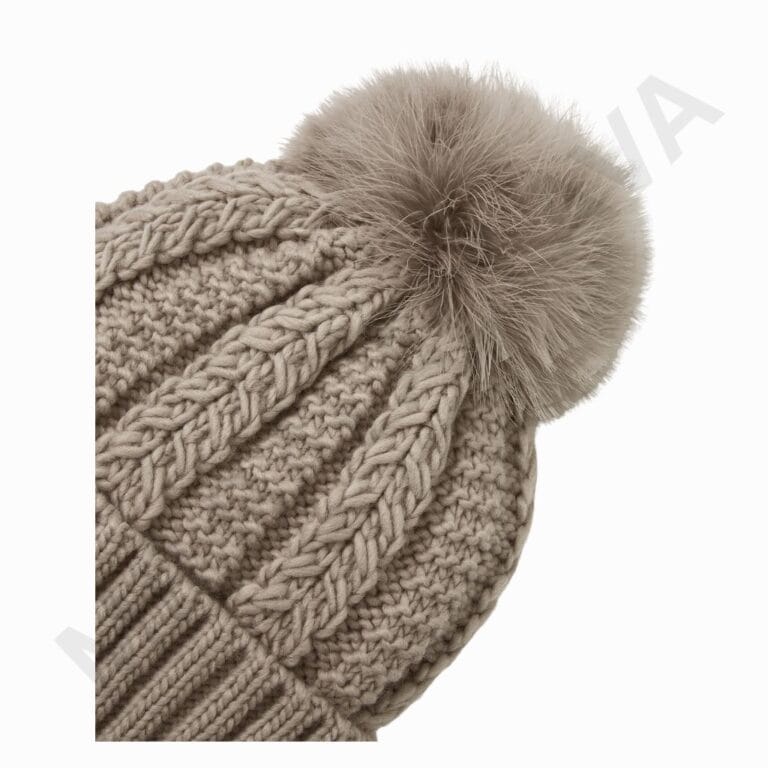
Pom-poms, knitted or plush ears, embroidered faces and appliqués are sewn on securely and checked by hand on every piece. For babies we recommend small, firmly stitched trims or embroidered details instead of loose parts.
Character designs are built on a plain knitted beanie: we knit the base, then add the ears, the face and the pom-poms. Send your artwork or a reference and we develop the design in a mockup and a sample before bulk production.

Can kids beanies be tested for your market?
Yes. Children’s products often have their own requirements, which differ by market. We arrange third-party lab tests for the requirements of your market on request, and you may also test samples with your own lab before production.
Tell us the markets you sell in when you send your brief, so that the yarns, trims and labels can be chosen with the tests in mind.
What to send with your request
- The age groups and sizes you need, or your own size chart.
- Style, yarn and trims: pom-poms, ears, faces or linings.
- Your artwork or a reference for character designs.
- The markets you sell in and any testing you need.
- Quantity per design and size, labels and packing.
What is the minimum order and lead time?
The minimum order is 50 pieces per design. Standard production lead time is approximately 14 days after sample approval; the confirmed schedule is agreed for each order. Express shipping by DHL, FedEx or UPS then takes 3–6 working days.
Frequently asked questions
Can one design be split across several sizes?
Yes. Tell us the quantity per size with your request; the size split is confirmed with the quote.
Do you make matching adult beanies?
Yes. The same design can be made in baby, kids and adult sizes, for family or mini-me ranges.
Are quality certificates available?
Eco Jersey Limited, which powers Mr Balaclava, is ISO 9001 certified and a Sedex member. Yarns from OEKO-TEX® certified mills are available on request; the certificate is the mill’s.
See the styles on our custom beanies page, or send us your size chart for a quote.