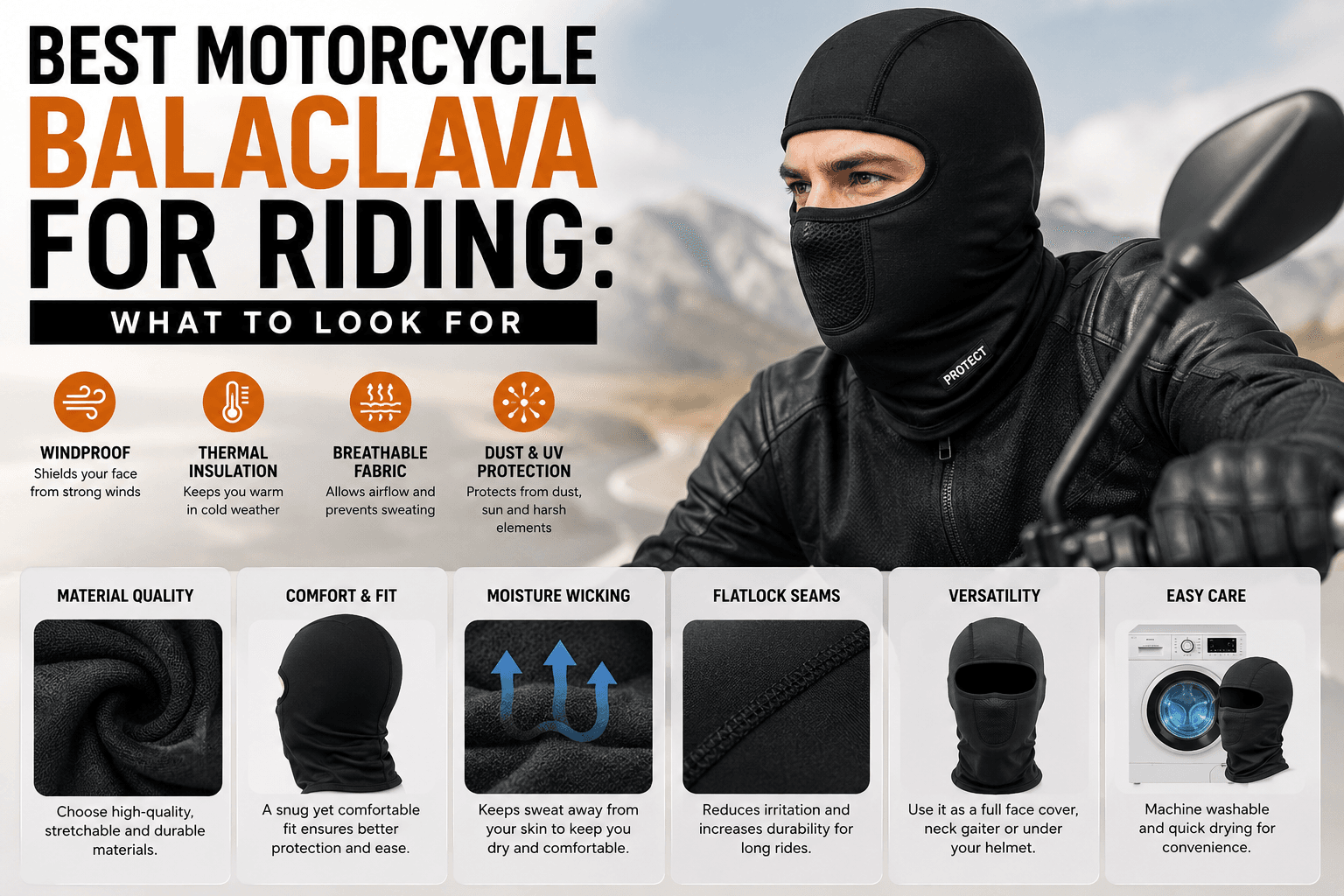
The ideal motorcycle balaclava should sit comfortably under a helmet, wick sweat away, minimize irritation and offer appropriate coverage without obstructing vision and breathing. A motorcycle-specific Balaclava will need to be comfortable while riding and function in conjunction with the helmet as opposed to the thick winter variety which is primarily for warmth.
Fabric, fit, seam placement, breathability, moisture control, and weather conditions all affect performance. Riders looking at different designs can explore Mr Balaclava to understand the wider range of balaclava constructions, materials, and styles available for different applications.
What is a Motorcycle Balaclava?
A motorcycle balaclava is a close-fitting head and face covering worn under a motorcycle helmet. It can cover the head, ears, neck and chin and leave only the eyes or a larger part of the face uncovered. It is not designed to provide impact protection. Rather, it forms a comfortable barrier between the rider’s skin and the helmet lining and helps with sweat, cold air, dust and overall rider comfort. The weather and the kind of riding are significant factors in selecting the best motorcycle balaclava.
Why Wear a Balaclava Under Your Motorcycle Helmet?
The helmet is directly against the head for a long period of time. If you are riding in a warm weather it can lead to dampness around the forehead, hair, and helmet lining. Air leaking through the helmet and jacket can cause discomfort in the head and neck area when wearing the helmet in cooler weather.
A lightweight balaclava adds a buffer between skin and helmet. It can absorb or transfer moisture, minimise direct friction and help keep the helmet’s inner lining clean.
It can also help to make putting on and taking off a tight-fitting helmet easier, especially for riders who have long hair.
Look for a Thin, Helmet-Friendly Fit
The first of the things to consider is thickness. Putting a bulky knitted balaclava under a motorcycle helmet can cause excessive pressure.
Ideally, a motorcycle balaclava should fit under the helmet without noticeably altering the fit of the helmet.
Put on the balaclava and helmet and check the forehead, temples, ears, cheeks and back of the head. There should be no unusual pressure points caused by folded fabric or thick seams.
Choose Breathable Fabric
Breathability is especially crucial in warmer weather riding. The rider produces heat in the helmet and too little ventilation can cause a hot and sweaty head.
Performance fabrics that are lightweight and can be made thin, elastic and fast drying are often suitable. Lightweight cotton is softer, but can also retain moisture for longer than some technical synthetic fabrics.
Thermal fabrics can offer more insulation for cold weather riding. So, the fabric choice really needs to be made based on the type of use you’re planning for your balaclava, summer, winter or all year round.
Moisture Management Matters
Another important aspect is sweat management. Usually when riding for a prolonged period there can be pockets of moisture around the forehead, scalp, neck and face.
A moisture managing fabric has the ability of transporting sweat away from the skin to be distributed over the fabric so it can dry more efficiently. This can help to make the balaclava more comfortable and help to limit the amount of sweat coming in contact with the helmet liner.
Moisture control might be more beneficial than thick insulation during the heat of the day or during the summer months when touring.
Pay Attention to Seam Placement
Even if the fabric is soft, a thick seam between the helmet and skin can cause discomfort. Pressure points can be felt after one hour or more of riding.
Flat seams or carefully placed seams come in handy. Do not use large stitches around the forehead, around ears or anywhere else that the helmet may put pressure.
The ideal motorcycle balaclava should feel smooth under the helmet.
Ensure that Vision is not obstructed
The rider should never need to adjust their field of view when wearing a motorcycle balaclava. While the helmet is worn, the eye opening should not shift or move toward the eyes.
After putting on the balaclava and helmet, check your side vision. Fabric should not bunch near the eyes or get in the way of the helmet padding.
The opening should also not be tight around the nose and cheeks.
Consider Neck Coverage
Longer neck coverage may be helpful due to less skin that will be exposed between the helmet and riding jacket. This can be especially useful on chilly or windy rides.
The bottom portion should sit well under the jacket collar and not roll into thick folds. In warm climates, however, too much neck coverage can be a source of unwanted heat.
Select coverage based on the surroundings in which you ride.
Summer vs Winter Motorcycle Balaclavas
Light and breathable, quick-drying fabrics are commonly used during the summer months. Moisture control and minimizing heat accumulation are the key issues, not insulation.
Riders during the winter season require more insulation from winter temperatures. Thermal synthetics or fleece-backed fabrics or other insulators can give more warmth.
This distinction is crucial in picking the best motorcycle balaclava, as a single style may not work as well in each season.
Consider the Face Opening Style
Balaclavas come with different opening configurations. Some expose only the eyes, while others provide a larger opening around the face.
A wider opening can provide greater ventilation and may feel less restrictive. Smaller openings provide greater facial coverage against cold air.
The right choice depends on helmet style, weather, comfort preference, and how much facial coverage the rider needs.
Comfort Should Come Before Fashion
Balaclavas have also become fashion accessories. Modern designs now use different colors, textures, silhouettes, and premium materials. Our guide to luxury balaclava trends shows how the balaclava has moved beyond purely functional cold-weather use.
For motorcycle riding, however, appearance should remain secondary to helmet compatibility. Thick decorative knits, raised embroidery, bulky labels, beads, or other three-dimensional details can create uncomfortable pressure under a helmet.
A riding balaclava should stay smooth and functional.
Why the Traditional Balaclava Design Still Works
The basic balaclava has existed for generations because its simple construction provides useful head, neck, and facial coverage. Its history also explains why the garment remains strongly associated with cold-weather protection.
Readers interested in that background can explore the British balaclava and how this traditional form became an established piece of practical winter clothing.
Modern motorcycle versions keep the same basic coverage concept while using lighter fabrics, stretch construction, and performance-oriented designs.
Check Stretch and Shape Recovery
A riding balaclava should be snug enough to sit properly on the head, but with enough stretch to return to its shape after it is removed.
If it does not recover its shape, the face opening may loosen over time. However, too snug a fabric can put pressure around the forehead, nose, jaw or neck.
Seek even stretch that will keep the garment from being loose, but also from being so tight as to cause discomfort.
Easy Cleaning Is Important
Motorcycle balaclavas absorb sweat, skin oils, dust and hair product. This means they must be cleaned regularly, particularly in conditions of warm weather riding.
Please read the care instructions before purchase. A practical riding balaclava should be easy to wash and keep its shape after a number of washes.
For riders who ride on a daily basis, it is useful to have a few balaclavas on hand.
When it comes to selecting a motorcycle balaclava, there are some common pitfalls to avoid, such as:
A frequent error is picking an item of clothing just because it is warm. A thick winter knit can be very good for the outdoors, but it may not be comfortable under a tight-fitting motorcycle helmet.
Seams are another error frequently made. While it might not seem like a big deal, thick stitching can lead to discomfort after extended periods of riding.
Riders should not choose a balaclava purely on the basis of its appearance. The main criteria for choosing the best motorcycle balaclava are fit, fabric, breathability, helmet compatibility and weather.
Motorcycle Balaclava Buying Checklist
Before choosing one, check:
- Thin construction for helmet compatibility
- Breathable fabric
- Moisture management
- Flat or carefully positioned seams
- Comfortable stretch
- Stable face opening
- Unrestricted peripheral vision
- Appropriate neck coverage
- Quick-drying performance
- Seasonal suitability
- Easy washing and care
- Comfortable fit during longer rides
Conclusion
The key to selecting the best motorcycle balaclava is achieving the right combination of comfort, helmet fit, ventilation, moisture wicking and wind resistance. A good riding balaclava should go unnoticed on the head, without creating pressure or distraction. Pick a thin, stretchy balaclava with smooth seams and an opening that does not block your vision. Use a breathable, quick-dry material for summer, and for winter choose extra insulation that does not compromise the helmet fit. In the end, the best motorcycle balaclava is the one that fits easily under your helmet, suits your riding conditions, is comfortable to put on and take off, and is easy to care for.
FAQs
What is the best material for a motorcycle balaclava?
It depends on the riding conditions. Lightweight moisture-managing synthetic fabrics are practical for warm weather, while thermal fabrics are more appropriate for colder rides.
Should a motorcycle balaclava be tight?
It should fit closely enough to remain stable but should not create uncomfortable pressure around the head, face, or neck.
Can you wear a balaclava under any motorcycle helmet?
A thin balaclava can work with many helmets, but it should never make a properly fitted helmet excessively tight or interfere with its positioning.