The appropriate motorcycle balaclava material can have a significant impact on the comfort of the helmet, temperature control, sweat management and wind and cold protection. Not all fabrics will be the thickest or warmest. It should be comparable to the weather, duration of the ride, helmet fit, and amount of moisture the rider generates.
For a side-by-side look at every yarn and fabric, see balaclava materials compared.
Lightweight synthetic fabrics tend to be great for warm weather rides because they dry quickly, and merino wool or thermal blends can add extra warmth during the colder months. Cotton is soft, comfortable and has a longer moisture retention time. Having an understanding of these differences can help you select a balaclava that will be comfortable under a motorcycle helmet.
What’s the importance of the material of a balaclava?
Fabric has an impact on nearly every aspect of the performance of a balaclava. This affects how much heat is held in, how fast the sweat evaporates, how stretchy the garment is and how bulky it is under a helmet.
A poor quality fabric can get wet, hot, itchy and uncomfortable for extended periods of time. Fabric should fit snugly against skin, but not overly tight.
The material is equally critical to the balaclava design as is the shape.
Polyester, the material of everyday motorcycle riding
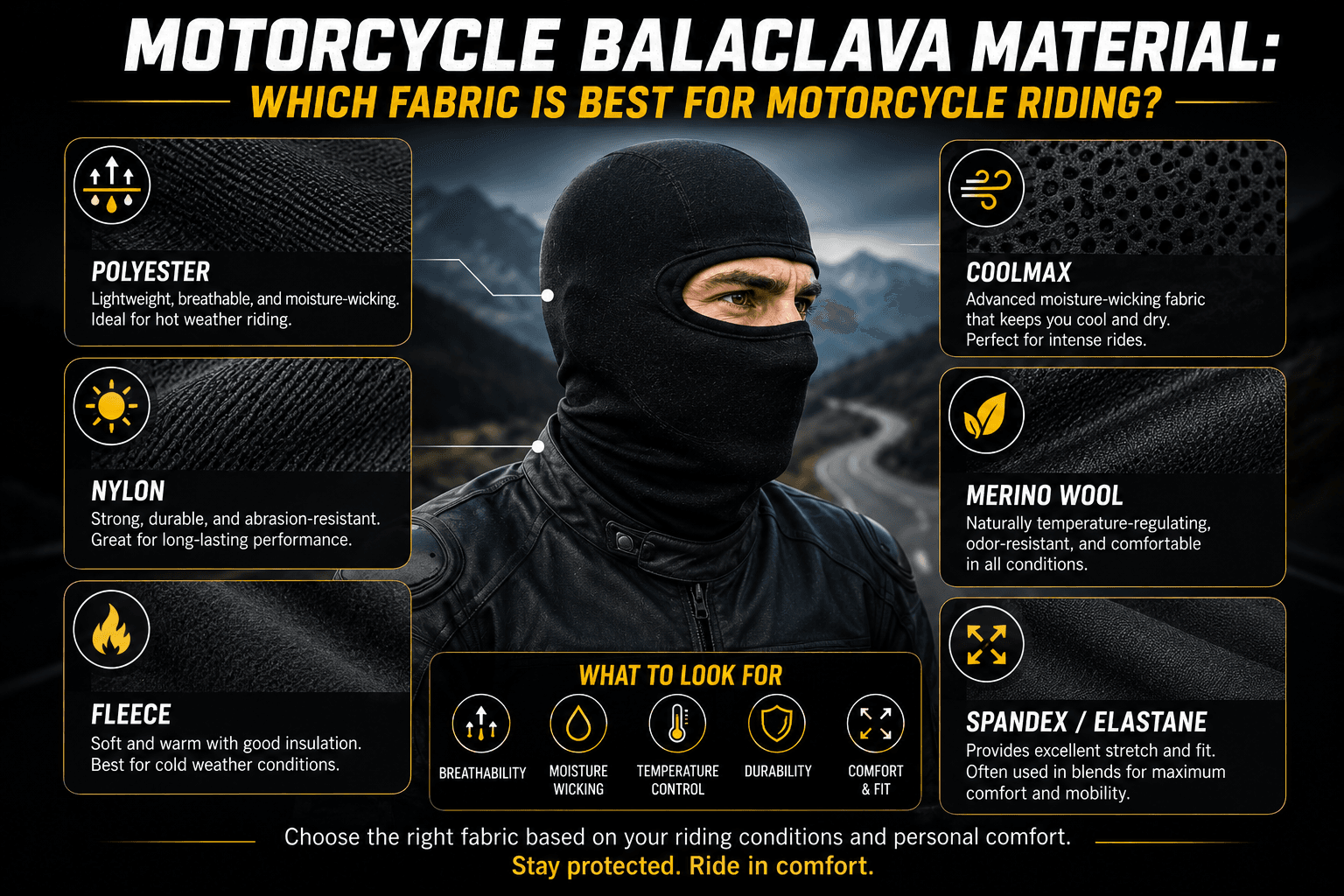
One of the most convenient materials used in motorcycle balaclava making is polyester. It may be light in weight, flexible, long lasting and relatively dry.
Performance polyester fabrics will wick sweat away from skin rather than trapping large amounts of perspiration. This is helpful for commuting, touring, and warmer weather riding.
Polyester can also be mixed with other materials like elastane or spandex to add stretch and shape memory.
Nylon for Strength and Lightweight Comfort
Another synthetic material which is often used in performance clothing is nylon. It can have good durability and be relatively light in weight.
Nylon blends can be effective for motorcycle use as the rider may require a thin layer under a tight-fitting helmet. Adds stretch fibers for a tighter fit around the head and neck.
But it isn’t just the fiber name that determines performance, it’s the actual fabric construction.
Cotton for Softness
Cotton is soft on the skin and can be comfortable for casual or medium duration rides. Those who aren’t a big fan of leather might find the allure of its familiar feel more appealing.
Its main drawback is in regard to moisture retention. Cotton can absorb perspiration and stay moist for a longer time than many technical synthetic fabrics.
This might not be a problem during short or mild rides. If the ride is long and hot, or the activity is more intense, a faster-drying material might offer more comfort.
Merino Wool for Cold Weather
Merino wool can be helpful in colder weather as it will offer insulation and regulate moisture more effectively than a number of traditional heavy wool fabrics.
Finer merino fibres might also be softer than coarser wool on the skin. The lightweight merino balaclava is thus capable of providing warmth without being too thick.
If temperature control is the main consideration, merino or a merino-synthetic blend may prove to be a good material for a motorcycle balaclava during the winter.
For the warmest possible insulation, opt for fleece.
Fleece is popular for winter hats since it catches insulating air. Can offer significantly more warmth than light summer materials.
But a thick fleece is important under a motorcycle helmet. A thick fleece-wearing hat may alter the fit of the helmet and cause pressure around the ears, forehead or cheeks.
Generally, any lightweight construction or strategically placed fleece is better suited for use on a helmet than very bulky construction.
Spandex and Elastane for Stretch
Spandex or elastane does not typically make up the entire content of a yarn; it is typically mixed with an other major fibre. It is designed to provide extension and restoration of the form of a balaclava.
This can provide enhanced fit around the head, jaw and neck. Stretch is also a critical feature to avoid having loose fabric fold under the helmet.
Mr Balaclava’s full face range discusses options including thermal fleece, polyester-spandex blends, lightweight fleece, and merino wool for different applications.
Which Fabric Is Best for Summer?
Polyester or nylon fabrics are generally good choices for hot weather riding. These materials can be made to dry rapidly and to offer good airflow.
The fabric should be thin enough to be able to fit under the helmet, and absorb sweat or move it away from the skin.
Mesh panels can be used to enhance air circulation over specific areas as well. The fabric needs to be smooth, though, so it doesn’t form a texture under the helmet pad.
Which Fabric is the Best for Winter?
It’s a different balance in the winter months. Warmth and wind protection increase in importance, yet it must also wick sweat away.
Lightweight fleece, merino wool, thermal polyester or hybrid materials can be used, depending on the temperature.
The primary principle is that the excess load must be avoided. Even in very cold weather, a motorcycle balaclava should not cause a properly-fitted helmet to be uncomfortable.
Fabric Weight Matters
When using two different types of balaclava, made from the same material, there are differences in performance due to fabric weight and construction.
Lightweight polyester knits can be used for summer, and heavier brushed polyester for winter insulation. Likewise, the thin merino and thick merino products are for different temperature ranges.
That’s why it’s always a good idea to pay attention to how heavy the fabric is as well as its fiber content when choosing a product.
Moisture-Wicking Performance
It’s particularly crucial to sweat management under a helmet. Long rides can cause perspiration to pool around the forehead, scalp, neck and face.
Technical fabrics may have to transport moisture away from the skin and distribute it over a larger area to allow more of it to evaporate more quickly.
Mr Balaclava also highlights moisture-wicking linings, ergonomic paneling, and breathable mesh among performance features used in balaclava construction.
Breathability
Breathability determines how easily heat and moisture can escape through the fabric. This matters in both summer and winter.
A very warm fabric with poor breathability can become damp during a long winter ride. Once that moisture cools, the rider may feel colder.
A good motorcycle balaclava material should therefore balance insulation with moisture and heat management rather than simply blocking all airflow.
Material Around the Nose and Mouth
The mouth and nose produce warm, moist air. A dense fabric in this area may feel damp and can direct more exhaled air toward the helmet visor.
Some balaclavas use lighter or more breathable panels around the lower face. A two-opening design such as this cozy balaclava represents another way of configuring facial openings.
Whatever style is selected, the material should not restrict normal breathing or interfere with vision.
Lessons From Technical Balaclavas
Balaclavas are also used in demanding environments where material choice changes according to the job. Military applications, for example, may prioritize moisture control, insulation, quick drying, concealment, or flame resistance depending on conditions.
The military balaclava discussion shows why different applications require different fibers and fabric weights. For motorcycle riders, the same basic principle applies: choose material according to the actual environment rather than expecting one fabric to perform best everywhere.
Seam Construction Matters Too
Even the best fabric can become uncomfortable if the balaclava uses bulky seams.
Raised stitching may press against the forehead or scalp when compressed by helmet padding. Flat seams or carefully positioned stitching can reduce these pressure points.
The material should also recover after stretching so that seams do not shift toward the eyes or ears during use.
Fabric Comparison
| Material | Best Use | Main Benefit | Main Limitation |
|---|---|---|---|
| Polyester | Everyday/summer | Quick drying | Quality varies |
| Nylon | Warm weather | Lightweight and durable | Limited insulation |
| Cotton | Mild conditions | Soft feel | Holds moisture |
| Merino wool | Cold weather | Warmth and moisture control | Often more expensive |
| Fleece | Winter | Strong insulation | Can become bulky |
| Polyester-spandex | All-round use | Stretch and fit | Depends on fabric weight |
How to Choose the Right Material
When choosing fabrics, begin with the weather. For summer riders, air circulation and quick drying is important, whereas for winter riders, more insulation and wind protection is important.
Next, fit the helmet. Folded materials, when worn alone, might feel warm but when worn under a close-fitting helmet, they may be uncomfortable.
Last but not least, take into account the duration of the rides. Sweating becomes more of a concern during extended periods of riding and it becomes more important to manage moisture.
Common Material Mistakes
A frequent error is to think of cotton as being natural and soft by default, hence superior. While cotton can be comfortable, its ability to hold in moisture might not make it the best choice for extended and sweaty cycling.
The other error is selecting extremely thick fleece for an extremely warm helmet, and then finding out it’s not warm enough under the helmet.
It is also important to riders not to choose the material of a motorcycle balaclava for just the price or looks. It’s more about the fabric’s performance and the helmet’s compatibility.
Conclusion
There isn’t one single perfect material for motorcycle balaclavas; the best material depends on the riding conditions. Lighter materials, such as polyester and nylon blends, dry quickly and are ideal for warm rides; merino wool and thermal fabrics are suitable for colder rides. Cotton is soft but can stay wet longer, and thick fleece adds warmth, but also bulk.
In the end, selecting the perfect motorcycle balaclava fabric involves matching up the fabric weight and performance to the season, duration of the ride, and size of the helmet. If all of the above are considered, then a balaclava can offer more comfort while remaining less distracting on the road.
FAQs
What is the best fabric for a motorcycle balaclava?
For general riding, lightweight polyester or polyester-stretch blends are practical because they can offer breathability, quick drying, and a close fit.
Is cotton good for motorcycle riding?
Cotton can work for shorter or mild-weather rides, but it generally retains moisture longer than many technical synthetic fabrics.
What material is best for winter?
Merino wool, lightweight fleece, and thermal synthetic fabrics are useful options depending on temperature and helmet fit.